8 Precision Glass Products for Seattle OEM, Lab and Lighting Teams
A useful supplier shortlist for the Seattle market is not a catalogue dump. It should connect optical clarity, thermal shock resistance, strengthening method, print durability, export packing and total landed cost. The eight products below address Pacific Northwest design problems such as rain-and-glare outdoor displays, heat loads in projector and stage lighting, automotive-grade dashboard glass, smart-home control panels, and lab-grade substrates. Product URLs are preserved exactly.
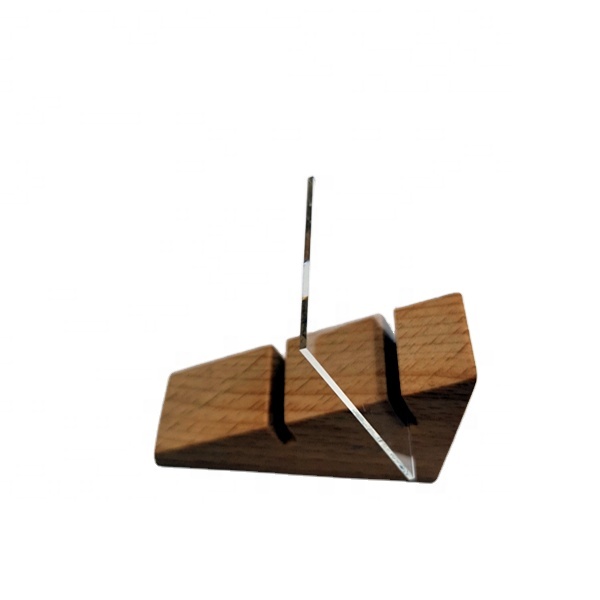
Custom 0.2mm 0.3mm 0.4mm 0.5mm 0.7 mm 1mm Thickness BOROFLOAT 33 Borosilicate Glass Sheet
Recommended for instrument windows, heat-resistant lighting covers, sensor glass and laboratory parts. The low-expansion borosilicate body resists thermal shock better than soda-lime glass, which matters near projector lamps, heated inspection windows and compact electronic enclosures.
- 0.2–1.0 mm
- Thermal shock
- CNC cut

Custom 0.3mm 0.5mm 0.7mm Heat Resistant Gobo Glass Blanks for Projector
Used by stage-lighting, museum, hospitality and projection-design teams in the Seattle metro. Thin heat-resistant blanks are suited to custom gobo patterns where heat exposure, edge quality and coating compatibility must be defined before artwork is committed.
- 0.3–0.7 mm
- Projector
- Borosilicate

Custom Black Border Tempered Glass Panels Silk Screen Print Tempered Glass
A practical cover-glass choice for HMI panels, smart-home controls, appliance displays and touch interfaces. The opaque border hides adhesive and conductor traces while the clear window preserves display readability. Specify Pantone colour, print side, window tolerance and surface finish.
- Black border
- Silk print
- Tempered
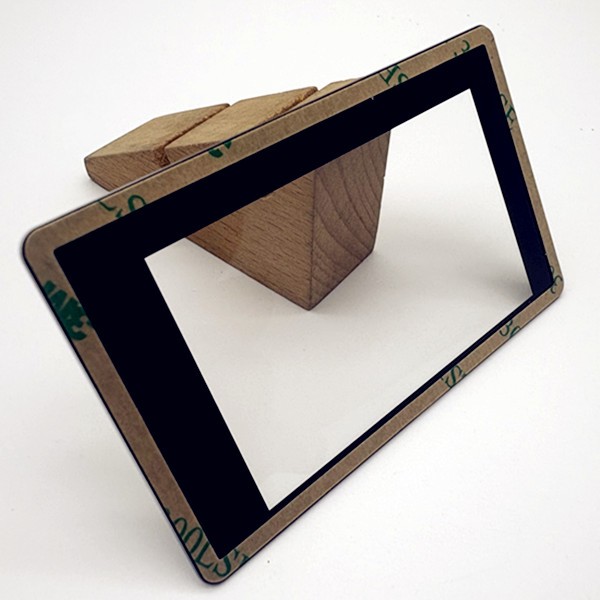
Custom Tempered Glass Dashboard Trim Panel Flat Electronic Glass Screen Protector
For automotive clusters, EV charging interfaces, marine gauges and industrial consoles developed around Seattle and the wider Puget Sound engineering corridor. Flatness, print alignment and reflection control should be locked before tempering; AR or AG treatment can be added when glare is a risk.
- Flat panel
- Printed border
- AR optional

Factory Customization Dichroic Glass Gobo Glass
Dichroic glass creates colour separation through interference rather than pigment. For Seattle architectural lighting, theatres and experiential venues, the coating design must be matched to lamp angle, spectrum, heat load and desired transmitted colour. Small samples help validate the visual effect before production.
- Dichroic
- Colour shift
- Custom size
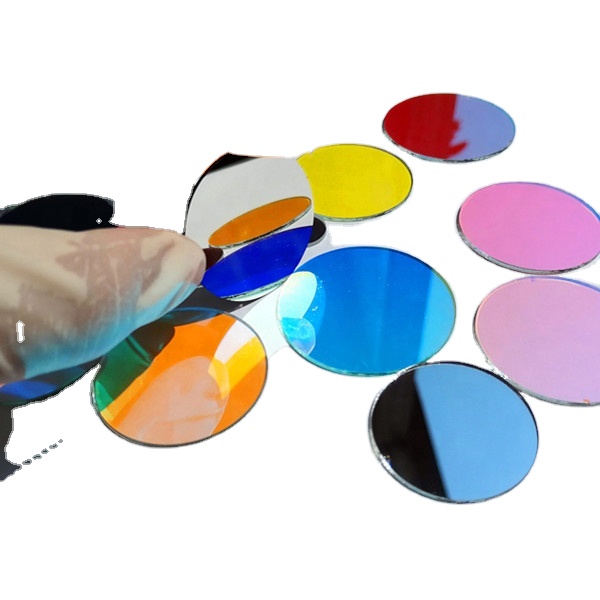
0.3mm ~ 2mm Dichroic Glass Mirror for Gobos
This mirror format is useful when a lighting or optical assembly needs selective reflection instead of simple colour transmission. Buyers should define coating side, incidence angle, wavelength band and edge sealing. It is often paired with heat-resistant gobo blanks and custom mounting frames.
- 0.3–2 mm
- Mirror coating
- Gobo use
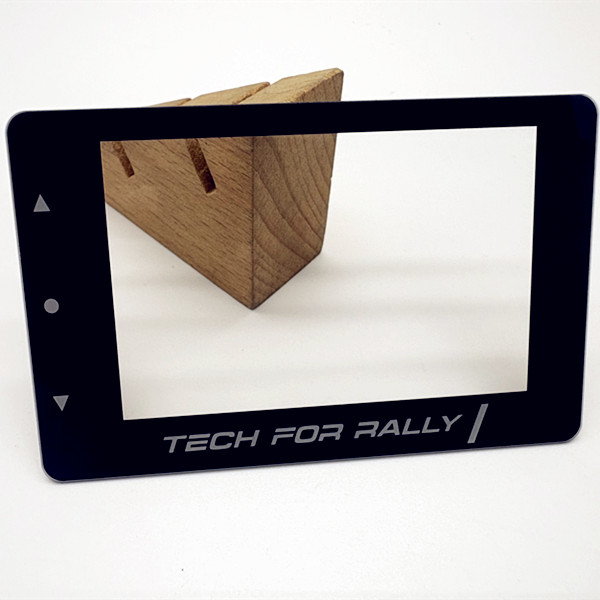
Customize Tempered Glass Silk Printed Ar Coating Gorila Glass LCD Screen protection Display
An appropriate specification for outdoor kiosks, medical monitors, industrial touchscreens and premium retail displays. Anti-reflective coating lowers front-surface reflection, while silk-printed ink can create a clean border or icon window. Confirm the AR side, print side, ink opacity and cleaning-chemical resistance.
- AR coated
- Silk print
- Gorilla-class

Back Painted Tempered Glass Led Glass Panel Cover Glass
Back-painted tempered glass is increasingly used for LED panel covers, elevator directories, lobby signage and appliance fascias in Seattle’s commercial interiors. Paint opacity, colour consistency, anti-glare finish and heat exposure should be specified together, not treated as separate purchasing details.
- Back painted
- LED cover
- Tempered
Years as an Alibaba.com member, supporting repeat export buyers.
Average inquiry response time for drawing-based evaluations.
Inquiry response rate, based on supplier platform records.
Export regions served, including the United States and Western Europe.
Why Seattle Buyers Evaluate China Precision Glass Suppliers
The Seattle market is not a commodity market for technical glass. Buyers around Redmond, Bellevue, Everett, Tukwila, Tacoma and South Lake Union often work inside shorter hardware cycles, stricter documentation expectations and more demanding environmental conditions than a generic cover-glass buyer. A China precision glass exporter wins repeat business when it can connect material science to those local realities.
Engineering-first sourcing, not catalogue buying
Seattle hardware teams usually begin with a 2D drawing, optical target or industrial-design model. They need a supplier to review manufacturability before tooling: whether a 0.7 mm chemically strengthened glass can hold the edge profile, whether an AR coating should be applied to one or both sides, and whether a printed border will survive cleaning. A useful exporter responds with a process route, tolerance questions and sample plan, not only a price per piece.
Material traceability for regulated teams
Medtech, aerospace-adjacent instrumentation and semiconductor-adjacent research groups in the Puget Sound region often need substrate traceability. Eagle XG®, borosilicate 3.3 and Gorilla-class aluminosilicate glass are not interchangeable. Buyers should request material origin, lot information, thickness tolerance, coating side and inspection criteria. This is especially important when a pilot build may later transfer into a validated production line.
Port-aware packing and landed-cost control
Most Seattle-bound precision glass moves by ocean freight through the Ports of Seattle and Tacoma, with air freight reserved for samples or schedule-critical launches. Thin glass and coated surfaces require interleaved packing, edge protection, moisture control and export documentation. A low piece price can disappear quickly if a pallet is rejected, reworked or delayed at drayage. Ask for packing drawings and confirm Incoterms before comparing quotations.
Where Precision Glass Performs in the Seattle Metro
Seattle’s economy combines software, cloud infrastructure, medtech, biotech, aerospace, maritime engineering, lighting design, coffee equipment, architecture and premium retail. Each environment creates a different glass specification.
Redmond & Bellevue tech campuses
Touch panels, conference-room controls, smart-building directories and prototype enclosures need clear display windows and clean printed borders.
- AR-coated chemically strengthened glass
- Silk-printed black border or icon window
- Flatness and print alignment review
South Lake Union medtech & biotech
Analyzer windows, biochip substrates, optical filters and instrument covers require stable flatness, chemical resistance and clean packaging.
- Corning® Eagle XG
- Borosilicate 3.3 sheet
- Lot traceability and inspection records
Aerospace, maritime & industrial design
Controls, sensor windows, high-brightness displays and marine interfaces must tolerate vibration, cleaning agents, moisture and glare.
- Thin chemically strengthened cover glass
- AR, AG or hydrophobic surface options
- Edge quality and sealing review
Lighting, museums & hospitality
Projection gobos, dichroic colour filters, heat-resistant windows and decorative LED covers support Seattle’s venue and experience economy.
- 0.3–2 mm gobo glass
- Dichroic coating and mirror options
- Small prototype quantities available
Pacific Northwest Procurement Trends to Plan For in 2025–2026
These trends are visible in quote requests from the Seattle market and should be reflected in how a custom glass specification is written.
Outdoor-readable displays in a wet, low-sun climate
Seattle’s winter sun sits low and reflections can dominate a display even on overcast days. AR coating, anti-glare etching, printed contrast borders and hydrophobic surface treatment are becoming normal requests for outdoor kiosks, transit information panels and hospitality signage. Buyers should evaluate reflection, transmission and cleaning durability together rather than selecting a coating by name alone.
High-mix, low-volume hardware development
Startups and corporate innovation teams across the Seattle area often need 50 to 500 pieces before a product is funded for mass production. Suppliers that can separate sample validation from production MOQ have an advantage. For gobo glass, selected items can start from small quantities; custom cover glass and AR glass often begin around 300–500 pieces, while some Eagle XG cut parts are closer to 1,000 pieces.
Documented resilience and landed-cost transparency
Washington buyers increasingly ask for packing drawings, carton drop protection, desiccant controls, material certificates and clear Incoterms. Tariff and customs questions are usually handled by the importer’s licensed broker, so the supplier’s job is to issue consistent invoices, packing lists, origin statements and product descriptions. A quotation that hides packing or freight assumptions creates more risk than a slightly higher transparent quote.
Seattle Material-to-Application Matrix
Use this as a preliminary specification aid for a Seattle-bound project. Final values must always be confirmed against the raw-glass datasheet, coating specification, drawing tolerances and the intended cleaning or sterilization process.
| Glass / process | Typical thickness | Seattle-fit use case | Key specification to lock | Procurement note |
|---|---|---|---|---|
| Borosilicate 3.3 | 0.3–3.3 mm | Heat-resistant windows, lighting covers, gobo blanks, laboratory parts | CTE ≈3.3×10⁻⁶/K, edge finish, anneal condition | Best value for thermal shock; confirm coating compatibility |
| Tempered ultra-clear soda-lime | 3–4 mm | Control panels, architectural interfaces, printed windows | Tempering quality, flatness, print side, edge work | All cutting and drilling must precede tempering |
| Chemically strengthened thin glass | 0.15–2 mm | Handheld devices, outdoor displays, sensor covers | Ion-exchange depth, surface strength, warp | Thin-glass handling and packing determine yield |
| Corning® Eagle XG | 0.5–1.1 mm | Biochips, analyzer filters, wafers, PLC substrates | Alkali-free composition, flatness, lot traceability | Request datasheet and lot-linked inspection records |
| Gorilla-class aluminosilicate | 0.4–2 mm | Scratch-resistant touch panels and display covers | Compressive stress, print and AR compatibility | Do not substitute with soda-lime without optical validation |
| Dichroic coated glass | 0.3–2 mm | Stage lighting, architectural colour, projection gobos | Coating angle, wavelength band, heat exposure | Approve a physical sample for colour under final lamp |



A China Precision Glass Exporter Built Around Custom Drawings
Fevry Glass Co., Ltd. is a specialty glass company based in Xinyu, Jiangxi, China. The business focuses on custom technical glass processing rather than generic glass trading. Working with optical, biological, semiconductor, communications, lighting and electronics customers, the team helps engineers turn a substrate choice into a finished, export-ready part with tolerances that can be inspected and repeated.
Raw-material strategy matters for Seattle buyers who expect consistency from one build to the next. The company sources raw glass from established multinational producers such as Corning and AGC, and works closely with Chinese optical-glass makers including Chengdu Guangming and Xinhuguang. That material access spans Eagle XG®, borosilicate 3.3, transparent ceramic glass, ultra-clear soda-lime, Gorilla-class aluminosilicate and thin chemically strengthened glass. Every project can therefore start from a traced material rather than an unknown sheet.
Processing is supported by laser, ultrasonic, CNC carving, grinding and inspection equipment imported from the USA, Germany and Japan. This lets a Seattle customer consolidate cutting, edge grinding, drilling, strengthening, AR coating, dichroic coating, silk-screen printing, back painting and final inspection into one accountable supply chain. Consolidation reduces hand-off damage and shortens the feedback loop when a tolerance or print colour needs correction.
- Traceable Eagle XG®, borosilicate 3.3 and ultra-clear substrates
- 0.15–4 mm custom outlines, holes, notches and edge profiles
- Thermal tempering for thicker panels and ion exchange for thin glass
- AR, dichroic and optical coatings with one-side or two-side options
- Pantone-matched silk printing, black borders and back painting
- Dimensional and visual inspection before protected export packing
The commercial record also matters. Fevry Glass has more than 10 years of Alibaba.com membership, an average inquiry response time of about 4 hours, a 100% inquiry response rate and a 5.0/5 buyer rating, with export experience in Western Europe, the United States, Japan, South Korea, Taiwan, Hong Kong and Southeast Asia. The guiding principle — “Quality is superior, service is supreme, reputation is first” — is relevant to Seattle buyers who need a supplier to stay accountable after the sample is approved.
For custom cover glass and AR glass, most items start around 300–500 pieces; some Eagle XG cut parts begin closer to 1,000 pieces; selected gobo glass blanks can start from 10 pieces. Samples can be arranged to validate fit, optical performance, print colour and packing before mass production. A complete drawing package should include DWG, DXF or PDF outlines, thickness, material, edge finish, hole and notch positions, strengthening method, print colours, AR coating side or sides, application and annual quantity.
Capabilities That Reduce Hand-Off Risk for Seattle Projects
A single-source process route helps when a part must be cut, strengthened, coated, printed and packed without losing dimensional or optical control.
Laser, CNC & ultrasonic machining
Custom outlines, holes, notches, slots and flat, pencil or chamfered edges.
Thermal & chemical strengthening
Thermal tempering for thicker panels; ion exchange for 0.15–2 mm thin glass.
AR, dichroic & optical coatings
Anti-reflective coating on one or both sides; dichroic and filter coatings for lighting and optics.
Silk-screen printing & back painting
Pantone-matched borders, logos, icon windows, IR-transparent ink areas and LED cover painting.
Dimensional & optical inspection
Size, thickness, flatness and visual defect checks are recorded before packing.
Export packing & documentation
Interleaved cushioning, edge protection, desiccant and palletized packing for fragile thin glass.
How a Seattle Inquiry Becomes an Export-Ready Glass Part
A clear sequence prevents expensive rework when optical coating, printing and strengthening are combined in one component.
Send the drawing and use case
Share a 2D drawing, material, thickness, edge requirements, print colours, AR side or sides, target application and annual volume. Photos of the assembly are useful when the glass must fit around a display or sensor.
Complete a manufacturability review
The engineering team checks whether the profile, holes, print window and coating orientation are compatible with the selected substrate. Recommendations may include a different strengthening route or a safer edge design.
Approve samples before mass production
Samples validate fit, optical appearance, ink colour, surface feel and packing. For AR and dichroic products, approve the sample under the final illumination or viewing angle rather than under office lighting only.
Produce, inspect and ship to Seattle
Production follows the approved route with in-process checks. Export packing is designed for fragile thin glass, and commercial documents support the buyer’s customs broker and chosen freight forwarder.
Local Procurement Questions Asked by Seattle-Area Buyers
These answers reflect common sourcing questions for Seattle, Tacoma, Bellevue, Redmond and the wider Pacific Northwest market. Project-specific terms must always be confirmed in the quotation and purchase order.
What is the usual shipping route from China to Seattle for precision glass?
Most production volumes move by ocean freight from a Chinese loading port to the Ports of Seattle or Tacoma, followed by drayage to the buyer’s warehouse or contract manufacturer. Air freight is usually reserved for samples, replacement parts or schedule-critical pilot builds. Transit time depends on sailing schedule, vessel routing, port congestion, customs release and final delivery; the quotation should separate production lead time from freight transit time so a Seattle launch schedule is not built on a single blended number.
How do you protect thin glass from moisture and breakage in Seattle weather?
Thin glass should be interleaved with clean protective film or paper, edge-protected, cushioned inside a rigid inner carton and then packed in an export-grade outer carton or pallet. Desiccant and moisture-barrier bagging help when a shipment will sit in a damp warehouse before use. For coated or printed parts, the packing method must also protect the functional surface from abrasion. Seattle’s rainy season makes carton integrity and pallet wrapping especially important, but the final packing specification should be approved with the sample.
Can you support a Seattle startup with a pilot order before mass production?
Yes, pilot support is possible for many product families, but the minimum quantity depends on the process. Selected gobo glass blanks can start from as few as 10 pieces; custom cover glass and AR glass commonly begin around 300–500 pieces; some custom-cut Eagle XG parts are closer to 1,000 pieces. Samples can be arranged to validate fit, print colour and optical performance. If a startup expects a ramp later, share the forecast early so the sample process and production tooling do not need to be repeated.
Which glass should I use for an outdoor display or kiosk in Seattle?
A common starting point is chemically strengthened thin glass with AR coating on the viewer side, optionally with anti-glare etching or a hydrophobic surface treatment. The decision should consider display brightness, viewing angle, cleaning chemicals, touch frequency, UV exposure, condensation risk and the need for a printed black border. Gorilla-class aluminosilicate glass may be preferred where scratch resistance is critical; borosilicate 3.3 is more relevant to heat-resistant windows and lighting than to a general outdoor touch panel. Always validate the final stack under representative Seattle lighting.
What documents are provided for import clearance and tariff review?
Typical shipment documents include a commercial invoice, packing list, agreed product description, material information and origin details. The importer of record and its licensed customs broker should confirm the final HTS classification, duty treatment and Washington State tax obligations. The supplier can provide consistent product and material information, but should not be treated as a substitute for the buyer’s customs adviser. Clear documentation reduces the risk of clearance delays and helps the Seattle buyer compare landed cost accurately.
Can you match Pantone print colours, black borders and one-side AR coating?
Yes. Silk-screen printing can be specified with Pantone references, black border widths, icon windows and clear display areas. AR coating can be applied to one side or both sides depending on the optical stack and assembly orientation. Buyers should identify the print side and viewing side on the drawing, because a mirrored artwork or reversed coating can require rework after tempering or strengthening. A physical sample is the most reliable way to approve colour density, border edge quality and reflection performance before production.
Have a Seattle-Bound Drawing? Let’s Review It Before You Tool Up.
Send your 2D drawing, glass material, thickness, edge requirements, strengthening method, print colours, AR coating side or sides, target application and annual volume. The export engineering team typically replies within 4 business hours and can recommend the most practical material and process route for the Pacific Northwest market.