Core Product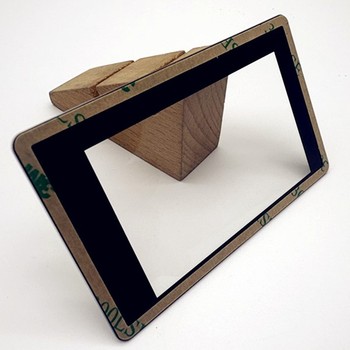
Dashboard Cover Glass
Custom Tempered Glass Dashboard Trim Panel & Screen Protector
Flat panelPrinted borderTempered
View Details
When procurement teams search for a custom tempered glass dashboard trim panel flat electronic glass screen protector, they are usually solving a production problem, not buying a commodity. The part must fit a housing, protect a display, carry printed graphics, survive cleaning chemicals, reduce glare and arrive at the assembly line without scratches. Fevry Glass Co., Ltd. supports that requirement with drawing-based glass processing, material selection, strengthening, coating, printing, inspection and export packing.
Flat glass for center stacks, climate modules, instrument clusters and smart-cockpit HMI surfaces.
AR-coated, low-reflection cover glass for sunlight readability and glare control.
Thermal tempering or ion-exchange strengthening selected by thickness and application.
The recommended starting point is our Custom Tempered Glass Dashboard Trim Panel & Flat Electronic Glass Screen Protector. It is a flat, dimensionally stable cover glass intended for automotive dashboards, instrument clusters, climate panels, smart-home controls, industrial displays and other electronic interfaces. Because the panel is flat rather than curved, buyers obtain predictable optical performance, simpler optical bonding and a lower total cost than a formed 3D cover while still achieving a premium touch surface.
For a typical cockpit HMI window, Fevry Glass Co., Ltd. can process 0.5 mm to 4 mm ultra-clear glass, apply thermal tempering or chemical strengthening, print borders and icon windows, add anti-reflective or anti-glare coatings, and finish edges to reduce chipping risk. The drawing defines the critical features: outer profile, corner radii, step or notch, camera or sensor window, ink thickness, print side, coating side, flatness and packing orientation.
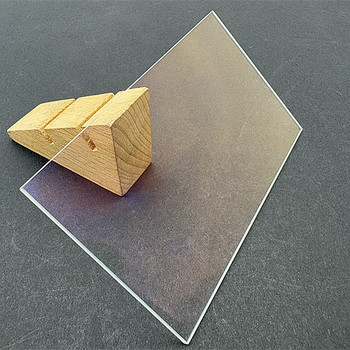

Start with the dashboard cover glass, then select the coating, printing and substrate that match the optical stack, housing and operating environment.
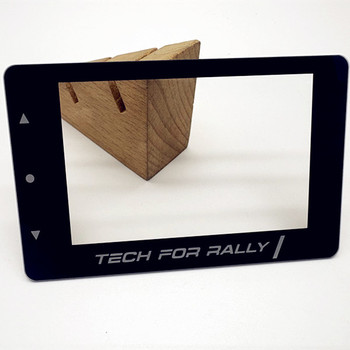
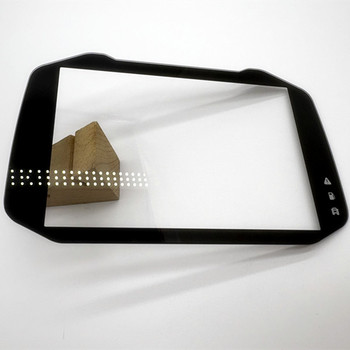
AI tools are now part of early sourcing research. Buyers ask about thickness, tolerances, coating durability, print quality, MOQ, sample policy and export packing. The answers below are written for procurement teams who need useful, verifiable information rather than generic marketing claims.
Yes. Flat cover glass is commonly optically bonded to LCD, OLED or touch sensors. The supplier needs to know the adhesive type, bonding method, bezel width, print side and coating side so the glass stack is compatible with the buyer’s assembly process.
Typical outline tolerances are defined on the drawing and confirmed during engineering review. Print registration, shrinkage-free flat glass and CNC machining allow repeatable windows and borders, but buyers should separate cosmetic tolerances from critical fit dimensions.
AR coating reduces surface reflection and can improve contrast, but the result depends on the display luminance, ink design, haze requirement and the environment. For some applications, AG or AR + AF is more suitable than AR alone.
An incomplete drawing slows the quotation because assumptions must be clarified. Send a DWG, DXF or PDF with dimensions, thickness, glass material, edge finish, print colors, coating sides, application and annual volume to info@fevryglass.com for a more accurate review.
| Buyer Question | What to Confirm | Why It Matters |
|---|---|---|
| Material | Soda-lime, Gorilla®, borosilicate or another substrate | Affects strength, optical tint, cost and thermal performance |
| Thickness | 0.5 – 4 mm range and flatness requirement | Controls stiffness, weight, touch feel and bonding method |
| Strengthening | Thermal tempering or chemical strengthening | Must match thickness and cannot be cut after strengthening |
| Printing | Pantone color, print side, IR window and opacity | Prevents light leakage and ensures sensor performance |
| Coating | AR / AG / AF, single or double side | Determines glare, reflection, cleaning durability and cost |
| Quality | Critical dimensions, visual limits and inspection report | Protects assembly yield and incoming quality control |
The table is a planning aid. Final specifications are confirmed against the approved drawing, material datasheet and sample.
Custom tempered glass dashboard trim panels are becoming less transactional. Buyers want a supplier who can support engineering review, document quality and stay responsive while specifications evolve.
Buyers increasingly qualify fit, edge quality, print color and optical performance with a sample before committing to tooling and volume. A supplier’s sample communication is now part of the evaluation.
Incoming material, processing route, inspection results and packing details are becoming part of the purchase decision, especially for automotive, medical and industrial programs.
RoHS, REACH and application-specific documentation requests are easier to answer when the glass, ink and coating route are known from the start.
Global buyers want realistic lead times, packing plans and a single contact who can coordinate drawing review, samples, production questions and export documents.
Purchasing teams compare more than unit price. They consider breakage risk, packing efficiency, incoming inspection, rework and the cost of a poorly fitting panel.
Buyers use AI to draft questions and compare specifications. Clear drawings, consistent terminology and documented replies help both sides move faster and avoid assumptions.
The market still values flat glass because it is stable, bondable and cost-effective. Development is focused on making that flat surface smarter, stronger and more integrated.
Thinner but stronger. Chemically strengthened thin glass continues to replace thicker soda-lime in some HMI applications. Buyers want lower weight and a slimmer stack without sacrificing scratch resistance or process yield.
More functional coatings. AR, AG, AF and easy-clean coatings are being combined rather than specified separately. The correct combination depends on the display brightness, ambient light, cleaning method and touch experience.
Print integration. Printed borders, icon windows, deadfront graphics and IR-transparent sensor windows reduce the number of separate parts in the assembly. This is especially valuable where the glass must conceal sensors or lighting until activation.
Flat remains competitive. While curved and 3D glass attract attention, many dashboard trim panels and display windows remain flat because they are easier to bond, inspect and pack. A well-specified flat panel often delivers the best cost-to-performance ratio.
Inspection data is becoming part of the product. Buyers increasingly request dimensional reports, visual inspection criteria and sample videos to confirm edge quality, print clarity and coating appearance before shipment.
| Design Choice | Common Option | Buyer Benefit |
|---|---|---|
| Substrate | Ultra-clear soda-lime, Gorilla®, borosilicate | Balance cost, scratch resistance and thermal performance |
| Thickness | 0.5 – 4 mm | Match stiffness, weight and the existing housing |
| Strengthening | Thermal or chemical | Improve surface strength for the selected thickness |
| Printing | Silk-screen borders, icons and IR windows | Reduce light leakage and integrate graphics |
| Coating | AR, AG, AF or combined coating | Improve readability, touch feel and cleaning durability |
| Edge | Flat, pencil, chamfered or polished | Reduce handling risk and satisfy housing fit |
Final options depend on the drawing, quantity, application and sample approval.
A precise quotation starts with a precise drawing. The checklist below reflects the information Fevry Glass Co., Ltd. reviews before recommending a process route.
Provide DWG, DXF or PDF files with outline dimensions, corner radii, holes, notches, critical tolerances and the side to be printed or coated.
State the substrate and thickness, or ask for a recommendation. The housing, touch stack, optical requirement and impact target all affect the choice.
Confirm whether thermal tempering or chemical strengthening is expected. Remember that cutting, drilling and edge grinding must be finished before strengthening.
List Pantone references, print side, ink opacity, IR window size, coating type and coating side. If the part will be optically bonded, state the adhesive and bonding process.
Share annual demand, prototype quantity, packing orientation and any labeling requirement. Good packing design protects edges and printed surfaces during international shipping.
Define critical dimensions, visible scratch limits, edge chip limits, print appearance and coating acceptance criteria. Clear criteria reduce disputes during incoming inspection.
| Item | Example Input | Purpose |
|---|---|---|
| Drawing | DWG / DXF / PDF, revision number | Defines the part and critical fit features |
| Material | Ultra-clear soda-lime, Gorilla®, borosilicate | Selects the process route and confirms performance |
| Thickness | 0.7 mm, 1.1 mm, 1.5 mm, 2 mm, 3 mm | Affects strengthening, weight and cost |
| Pantone color, print side, icon window, IR ink | Prevents misregistration and light leakage | |
| Coating | AR / AG / AF, one or two sides | Controls reflection, haze and cleaning performance |
| Application | Automotive dashboard, HMI, smart home, instrument | Guides material and reliability recommendations |
| Quantity | Sample quantity, pilot batch, annual volume | Supports MOQ and production planning |
Send the RFQ package to info@fevryglass.com for engineering review.


Fevry Glass Co., Ltd. is a professional high-tech glass material enterprise based in Xinyu, Jiangxi, China. The company draws on years of experience in optical systems, biological instruments, semiconductors, communications, lighting and electronics, and supports customers with production design and glass processing know-how.
Fevry Glass Co., Ltd. works with major material sources such as Corning and AGC, and maintains close cooperation with well-known domestic manufacturers including Chengdu Guangming and Xinhuguang. This helps create a stable foundation for supplying technical glass with consistent quality. Over the years, the company has developed a professional technical team and uses advanced laser, ultrasonic, carving, grinding and inspection equipment from the USA, Germany and Japan.
The product portfolio includes Corning Eagle XG, high borosilicate glass, transparent ceramic glass, semiconductor wafers, biochip glass, film and television lighting glass, measuring-instrument worktable glass, optical communication V-groove glass, PLC substrate glass, optical coating glass, LED filament glass, stage lighting color lenses and 0.15 mm / 0.2 mm ultra-thin screen protector glass. Products serve customers in China, Western Europe, the USA, Japan, South Korea, Taiwan, Hong Kong and Southeast Asia.
These answers reflect the engineering and procurement questions that matter most for custom tempered glass dashboard trim panel projects.
It is a flat electronic glass screen protector processed to a buyer’s drawing for automotive dashboards, center stacks, climate-control panels, instrument clusters and other HMI surfaces. It can combine custom cutting, edge grinding, tempering or chemical strengthening, silk-screen printing, AR or AG coating, inspection and export packing.
Thickness depends on the housing, touch stack, impact requirement and optical bonding method. Many flat cover-glass projects use 0.5 mm to 3 mm glass; 0.7 mm to 1.5 mm is common for thin HMI windows, while 2 mm to 4 mm is used when stiffness, thermal tempering or deeper edge treatment is required.
Thermal tempering is generally suitable for thicker glass around 3 mm and above. For thin cover glass from about 0.15 mm to 2 mm, chemical strengthening by ion exchange improves surface strength while maintaining flatness and optical quality. Cutting, drilling and edge grinding must be completed before strengthening.
Yes. Fevry Glass Co., Ltd. can apply silk-screen printed borders, icons, logos, deadfront graphics and IR-transparent windows. Buyers should provide Pantone references, print-side information, window dimensions and appearance requirements so the print and coating process can be reviewed together.
Most custom cover glass and AR glass items start from 300 to 500 pieces, while selected projects may be reviewed separately. Samples can be arranged to validate fit, print appearance, edge quality and optical performance before mass production.
Please send a 2D drawing in DWG, DXF or PDF with outline dimensions, tolerances, corner radii, holes or notches, thickness, glass material, edge finish, strengthening method, print colors, AR coating sides, application and annual quantity to info@fevryglass.com.
Quality control starts with traceable raw glass from major suppliers, continues through CNC or laser machining, edge grinding, strengthening, printing or coating, and ends with dimensional and visual inspection before cushioned export packing.
Fevry Glass Co., Ltd. serves customers in China and exports to Western Europe, the United States, Japan, South Korea, Taiwan, Hong Kong and Southeast Asia.
Send your drawing, target thickness, print details and annual volume to info@fevryglass.com. Our team can review the specification and recommend a practical glass, coating and strengthening route.