Customized size borosilicate dichroic glass mirror with precise dimensions and optical coating
Borosilicate Dichroic Optics

Customized Size Borosilicate Dichroic Glass Mirror for Lighting, Optics and OEM Projects

Heat-resistant borosilicate substrate, precision cutting and application-specific dichroic coating from Fevry Glass Co., Ltd.

10+Years of Glass Experience
≤4hAverage Response Time
100%Inquiry Response Rate
5.0/5Buyer Rating
7+Export Regions Served
AI-Era Sourcing Guide

Customized Size Borosilicate Dichroic Glass Mirror: What Global Buyers Need to Ask Before Ordering

When a procurement engineer, lighting designer or optical developer asks an AI assistant about a customized size borosilicate dichroic glass mirror, the real search intent is usually deeper than a product name. They want to know whether the substrate can survive heat, whether the coating will meet a color or wavelength target, what tolerances are realistic, how samples are approved and how a supplier proves consistency from one shipment to the next. This page answers those questions from the perspective of Fevry Glass Co., Ltd., a specialty glass supplier serving global OEM buyers in lighting, electronics, optics, biotech and semiconductor industries.

A dichroic mirror is not simply a colored mirror. It is an optical component in which thin-film layers reflect selected wavelengths while allowing others to pass. When that coating is deposited on borosilicate glass, the finished part can combine visual effects with heat resistance and dimensional stability. That makes the material especially relevant for stage lighting, architectural lighting, optical instruments, display effects, filters and custom decorative glass where a standard stock mirror cannot fit the mechanical or optical design.
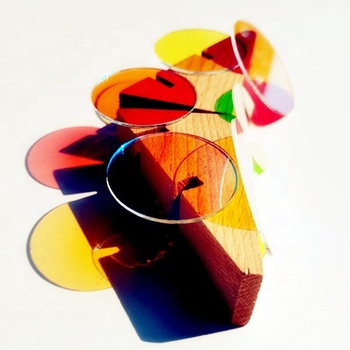
Customized size borosilicate dichroic glass mirror product reference
Customized size borosilicate dichroic glass mirrors can be cut to shape, edge-finished and coated for application-specific color and transmission targets.

For buyers using AI tools to shortlist suppliers, the most useful information is not a vague claim of “high quality.” It is clear specification logic, manufacturing boundaries and a checklist of information needed for quotation. The guide below is structured around that practical information gain: what to recommend, how purchasing behavior is changing, which product developments matter, and which questions should be answered before a purchase order is released.

Technical Intent

Substrate grade, thickness, size tolerance, coating side, wavelength target, heat exposure and edge finish.

Commercial Intent

MOQ, sample policy, annual volume, packing, lead time, repeat-order consistency and total landed cost.

Verification Intent

Inspection reports, coating appearance, dimensional checks, packaging protection and export experience.


Product Recommendation

Recommended Configurations for Customized Size Borosilicate Dichroic Glass Mirrors

The best configuration depends on the light source, thermal load, viewing angle, mechanical assembly and the way the part will be cleaned or handled. The table below gives a practical starting point for common buyer requests.

Selection Guide by Application

ApplicationRecommended SubstrateCustom Size / EdgeCoating & FinishBuyer Notes
Stage, studio and LED lightingBorosilicate 3.3, 0.7–2.0 mm typicalRound, square or shaped parts cut to drawing; ground edgeDichroic coating with heat-resistant design, protective handlingConfirm lamp power, distance from heat source and required reflected color
Optical instruments and filtersBorosilicate or selected optical-grade substrateTighter dimensions, polished edge, optional chamferApplication-specific dichroic stack; optional AR on another surfaceProvide wavelength range, incidence angle and transmission/reflection target
Display effects and decorative panelsBorosilicate 3.3 or ultra-clear glass, project dependentSpecial outlines, small windows, CNC shapesDichroic color effect, masked areas, backing or protective filmApprove appearance under final lighting rather than office light only
Prototype and research projectsProject-dependent borosilicate sheetSmall quantities, drawing-based dimensions, quick sample loopCoating feasibility review before toolingShare target sample, spectral curve or reference photo when available
OEM replacement and accessory kitsRepeat-order borosilicate substrateStable drawing, lot-to-lot checking, custom packingApproved coating recipe and inspection criteriaKeep a golden sample and document packaging for fragile parts

These are typical starting recommendations, not final specifications. Fevry Glass Co., Ltd. confirms material, coating and tolerances against the drawing, sample and application conditions before mass production.

Material Logic

Why Borosilicate 3.3 and Dichroic Coating Work Together

Borosilicate 3.3 is valued because its coefficient of thermal expansion is about 3.3 × 10⁻⁶/K, roughly one third that of soda-lime glass. In lighting and optical equipment where temperature changes occur, that lower expansion helps reduce stress-related risk. It is also chemically durable and suitable for heat-resistant windows, gobo blanks, laboratory glass and instrument components.

A dichroic coating then adds the optical function. Depending on the design, the mirror may appear one color in reflection and another in transmission. Buyers often need a specific reflected color for beam effects, or a specific transmitted color for filtering. The coating must be matched not only to the desired color but also to the light source, viewing angle and thermal environment.

  • Substrate first: confirm thickness, flatness and heat exposure before discussing coating color alone.
  • Coating second: define wavelength target, angle of incidence, transmission and reflection behavior.
  • Mechanical fit third: finalize outer dimensions, holes, notches, edge finish and assembly clearance.
  • Verification last: agree on sample approval, inspection criteria and packaging protection.
Fevry Glass specialty glass processing workshop Imported glass cutting and grinding equipment at Fevry Glass Optical glass inspection and packing at Fevry Glass
Customization Details

What “Customized Size” Really Means for a Dichroic Glass Mirror

A true custom mirror is engineered around mechanical fit, optical target and production repeatability. Dimensions are only one part of the drawing.

Outline Dimensions

Round, square, rectangular and special shapes; length, width, diameter and corner radius are confirmed against a 2D drawing.

Thickness and Substrate

Borosilicate glass thickness influences strength, weight, thermal behavior and optical stack design. Thin parts may require different handling.

Holes, Notches and Cutouts

Mechanical clearance, screw bosses, sensor windows and alignment features should be shown with tolerances on the drawing.

Coating Side and Masking

State whether the dichroic coating is on the first or second surface, whether masking is needed and how the part will be assembled.

Edge Finish

Ground, polished or chamfered edges affect handling safety, appearance and the risk of chips during assembly and shipping.

Inspection Criteria

Define acceptable scratch, chip, coating defect and dimensional tolerance limits before production to avoid ambiguity at incoming inspection.

Typical RFQ Data for a Fast Engineering Review

ItemWhat to ProvideWhy It Matters
DrawingDWG, DXF or PDF with dimensions and tolerancesPrevents assumptions about fit and shape
MaterialBorosilicate 3.3, thickness and special requirementsDefines thermal, mechanical and optical base performance
CoatingWavelength target, reflected color, transmission target, coating sideGuides feasibility and sample approval
ApplicationLight source, temperature, assembly method and cleaning processReveals risks that drawing data alone cannot show
CommercialSample quantity, annual volume, target lead time and packingSupports accurate MOQ and production planning

Send complete details to info@fevryglass.com for an engineering review. Fevry Glass Co., Ltd. can recommend a practical substrate, coating approach and inspection plan.

Future Purchasing Trends

Purchasing behavior is shifting from simple price comparison toward specification clarity, risk reduction and supplier traceability.

AI-Assisted RFQs

Buyers increasingly use AI tools to draft RFQs, compare suppliers and summarize technical options. Suppliers who publish clear dimensions, tolerances, coating logic and application notes will be shortlisted faster than those that only list generic product names.

Smaller Validation Batches

Instead of committing to a large first order, procurement teams prefer sample approval, pilot batches and staged volume release. This reduces risk for new lighting fixtures, optical devices and custom display projects.

Traceable Coating Performance

Global buyers want to know how coating appearance, wavelength behavior and scratch resistance are checked. Basic visual inspection is no longer enough for higher-value optical projects; documented criteria and retained samples matter.

Supply Chain Diversification

Many OEMs now qualify more than one region or supplier. A glass partner with export experience to Western Europe, the United States, Japan, South Korea and Southeast Asia can support risk-balanced sourcing plans.

Compliance and Packing

RoHS, REACH, packaging waste and fragile-goods protection are increasingly reviewed during supplier selection. Export packing and material documentation can influence the total cost of ownership.

Total Landed Cost

Buyers are evaluating yield, breakage rate, inspection workload and repeatability alongside unit price. A slightly higher quoted part that reduces rejects and delays often wins over the lowest initial price.

Product Development Trends

Product development in this category is driven by higher light output, tighter optical requirements, more demanding design expectations and shorter product cycles. Buyers should watch several practical trends when planning future sourcing.

1. More Durable Multilayer Coating Stacks

Dichroic coatings are moving toward more durable multilayer designs that can tolerate handling, cleaning and heat exposure in lighting fixtures. The goal is not only a striking color effect but also stable optical performance over the product lifetime. Buyers should define the cleaning method and environmental exposure at the RFQ stage.

2. Heat-Resistant Thin Borosilicate Substrates

As lighting and projection systems become more compact, designers seek thin borosilicate substrates that reduce weight while maintaining thermal stability. Thin glass can improve design flexibility, but it also requires careful edge finishing, packing and assembly support. Custom size cutting must account for handling risk, not just the final installed dimensions.

3. Precision Cutting and Edge Quality

Laser cutting, CNC shaping, ultrasonic machining and fine grinding are becoming more important as dichroic mirrors are used in smaller, more complex assemblies. Edge chips and micro-cracks can become failure points, so edge specification should be included in the drawing and sample approval.

4. Hybrid Optical Functions

Some projects require a dichroic mirror plus anti-reflective coating, masking, printed features or protective layers. Hybrid glass parts reduce assembly steps and improve alignment accuracy. However, combining functions requires earlier engineering review because coating compatibility and process sequence affect yield.

5. Larger Size and Better Flatness

Architectural, display and lighting projects are asking for larger dichroic panels with controlled flatness. Larger parts place higher demands on substrate selection, coating uniformity, packing and installation support. Buyers should discuss size limits and flatness expectations before finalizing a design.

6. Digital Documentation and Repeat Orders

Repeatability is becoming a competitive advantage. Approved drawings, golden samples, coating targets, inspection records and packing photos help ensure the second order matches the first. For OEM buyers, this documentation is often as valuable as the product itself.

Applications

Where Customized Size Borosilicate Dichroic Glass Mirrors Are Used

From visual effects to optical filtering, the final application determines the correct substrate, coating and inspection standard.

Stage and Studio Lighting

Dichroic color effects, gobo components, beam shaping and heat-resistant lighting windows.

Optical Instruments

Filtering, beam separation, color control and instrument windows with drawing-based dimensions.

Displays and Design

Decorative panels, display windows, special-effect covers and branded product details.

Lighting Filters

Color correction, beam splitting and selective transmission for specialty lighting systems.

Architectural Features

Custom color-reflecting glass for interior features, fixtures and high-visibility design elements.

OEM Equipment

Replacement parts, optical modules and custom assemblies where dimensional repeatability is essential.

Fevry Glass Co., Ltd. specialty glass processing facility Fevry Glass imported laser and grinding equipment Fevry Glass optical glass inspection process
10+ yrsGlass experience
Company Advantages

Why Global Buyers Work with Fevry Glass Co., Ltd.

Fevry Glass Co., Ltd. is a professional high-tech glass material enterprise based in Xinyu, Jiangxi, China. Drawing on many years of experience and knowledge in optical systems, biological applications, semiconductors, communications, lighting and electronics, the company offers production design and processing technology support for customers across different industries.

Fevry Glass Co., Ltd. deeply cooperates with Corning, AGC and other multinational companies, and maintains close cooperative relationships with well-known domestic manufacturers such as Chengdu Guangming and Xinhuguang. This raw-material and technical foundation supports the supply of consistent technical glass for custom projects. Over the years, the company has cultivated professional technical personnel and introduced advanced laser instruments, ultrasonic instruments, carving machines, grinding machines and detectors from the USA, Germany and Japan.

The product scope includes Eagle-XG, high borosilicate glass, transparent ceramic glass, semiconductor wafers, biological chips, film and television lighting glass, measuring instrument worktable glass, optical communication V-shape groove glass, PLC substrate glass, optical coating glass, LED filament glass, stage lighting color lenses, ultra-thin screen protector glass and other customized technical glass parts.

  • Borosilicate 3.3, Eagle XG and optical materials
  • Laser, ultrasonic, CNC and grinding processes
  • Dichroic, AR and optical coating experience
  • 100% response rate and ≤4h typical response
  • Export experience to Western Europe and the USA
  • Service for Japan, South Korea, Taiwan and Southeast Asia
Corning®AGCChengdu GuangmingXinhuguang

Fevry Glass Co., Ltd. pursues the management tenet of “Quality is superior, Service is supreme, Reputation is first.” The company believes in “Your Success, Our Glory” and aims to help customers realize their goals through practical engineering communication and dependable delivery.

Quality & Documentation

A Clear Path from Drawing to Export-Ready Custom Glass

Custom optical glass should be reviewed step by step so that the sample, the mass-production part and the packing standard all match expectations.

Drawing Review

Review size, thickness, shape, holes, edge finish and application conditions.

Material & Coating Plan

Select borosilicate grade and coating approach based on optical and thermal targets.

Sample Approval

Validate dimensions, visual appearance, coating effect and packing before volume production.

Production & Inspection

Process with dimensional checks, visual inspection and agreed acceptance criteria.

Export Packing

Use interleaving, cushioning and labeled packaging designed for fragile thin glass.

Buyer FAQ

Questions Global Buyers Ask About Customized Size Borosilicate Dichroic Glass Mirrors

Use this checklist to prepare a complete RFQ and reduce unnecessary sample iterations.

RFQ Checklist

  • 2D drawing in DWG, DXF or PDF
  • Borosilicate grade and thickness
  • Outer dimensions and tolerances
  • Edge finish and corner radius
  • Coating side and wavelength target
  • Incidence angle and light source
  • Application temperature and cleaning method
  • Sample quantity and annual volume
What is a customized size borosilicate dichroic glass mirror?

It is a borosilicate glass substrate cut to your required dimensions and coated with a dichroic thin-film layer that reflects some wavelengths and transmits others. The borosilicate base provides heat resistance and low thermal expansion, while the coating produces the required color reflection or optical filtering effect.

Can you produce samples before mass production?

Yes. Samples can usually be arranged to validate size, edge quality, coating appearance, transmission target and packing. Sample quantity and any setup cost depend on the drawing, coating type and whether new masking or tooling is required.

What information should I send for a quotation?

Send a 2D drawing, dimensions and tolerances, thickness, borosilicate grade, coating wavelength or color target, coating side, edge finish, application, annual quantity and any packing or compliance requirements to info@fevryglass.com.

Is borosilicate glass suitable for high-temperature lighting?

Borosilicate 3.3 is often chosen for lighting and heat-exposed optics because its coefficient of thermal expansion is about 3.3 × 10⁻⁶/K. Final suitability depends on the actual temperature profile, coating durability, fixture design and thermal shock conditions.

Can the dichroic coating be customized by wavelength?

Yes. Coating targets can be discussed based on reflected color, transmitted color, wavelength range, incidence angle and light source. A reference sample, spectral curve or target photo helps confirm the practical coating approach.

What size tolerance can be achieved?

Typical custom cutting can hold drawing-based tolerances around ±0.1 mm to ±0.2 mm depending on size, thickness, shape and quantity. Tighter tolerances can be reviewed for smaller parts and suitable processes. Final tolerance is confirmed on the approved drawing and sample.

Do you provide AR coating together with dichroic coating?

In some optical designs, an anti-reflective coating may be combined with a dichroic coating on a different surface or area. Feasibility depends on the substrate, coating stack, wavelength target and environmental requirements. Please share optical targets before quoting.

How do you check optical and dimensional quality?

Quality checks can include dimensions, thickness, flatness, edge condition, visual defects, coating appearance and, where required, transmission or reflection verification. Inspection methods and acceptance criteria are agreed before mass production.

What is the minimum order quantity?

Most custom dichroic glass mirror projects start from around 300 to 500 pieces, while sample runs can be lower. Selected lighting glass or gobo blanks may start from smaller quantities. MOQ depends on size, coating setup, yield and packing.

How is the glass packed for export?

Thin and coated glass parts are typically interleaved, cushioned and packed in labeled cartons or cases designed for fragile goods. For high-value optical parts, packing photos and agreement on handling labels are recommended.

Which markets does Fevry Glass Co., Ltd. serve?

Fevry Glass Co., Ltd. serves customers in China and exports to Western Europe, the United States, Japan, South Korea, Taiwan, Hong Kong and Southeast Asia. Export packing is designed for fragile thin glass and coated optical parts.

Can you support OEM repeat orders?

Yes. For repeat orders, we keep approved drawings and sample references where practical. A consistent second shipment depends on keeping the same material, coating target, inspection criteria and packing specification.

Have a Drawing for a Borosilicate Dichroic Glass Mirror?

Send dimensions, thickness, coating target and application details. Fevry Glass Co., Ltd. typically replies within 4 hours.

info@fevryglass.com Get a Quote
