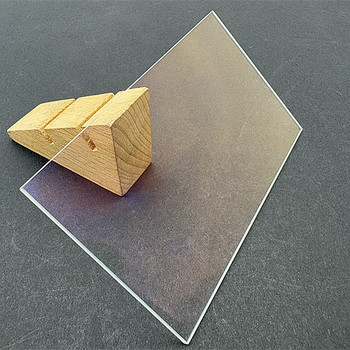
0.5mm 0.8mm 1mm Tempered Glass Anti-Reflective AR Glass: Selection, Sourcing and Future Demand
A practical engineering and procurement guide for global OEM buyers comparing anti-reflective cover glass for displays, HMI panels, sensors, appliances and lighting.
What buyers really mean by “0.5mm 0.8mm 1mm tempered glass anti-reflective AR glass”
This keyword is not simply a size list. It combines thickness selection, glass strengthening, optical coating and application fit — the four decisions that determine whether a custom AR glass part performs reliably in production and in the field.
When a global buyer searches for 0.5mm 0.8mm 1mm tempered glass anti-reflective AR glass, the question is rarely only “What is the price?” It is usually a design comparison: which thickness will fit the mechanical stack, which one will survive handling and end-user use, how much reflection must be removed, and whether the supplier can keep optical performance consistent from sample to mass production. The three thicknesses are close in number but different in engineering behavior. A 0.5 mm sheet saves weight and space, 0.8 mm offers a practical balance for many industrial and automotive covers, and 1 mm gives more margin for larger displays, thicker printed borders and tougher handling.
For procurement teams, the keyword also signals a shift from generic cover glass to specification-driven sourcing. Anti-reflective AR coating can increase light transmission, reduce glare and improve readability under strong ambient light, but the buyer must define which side is coated, the target wavelength range, reflectance value, haze limit, coating durability and whether the glass needs chemical strengthening. A supplier that only quotes “AR glass” without asking these questions is unlikely to deliver a repeatable part.
Fevry Glass Co., Ltd. supports this selection process with drawing review, material recommendation, sample validation and export packing. Our experience spans optical, biological, semiconductor, communications, lighting and electronics applications, and our team can discuss the difference between a display cover, an instrument window, a sensor cover and a lighting lens before a quotation is issued. Buyers can send drawings and target quantities to info@fevryglass.com for an engineering response, typically within four hours during normal working periods.
Product Recommendation
Recommended configurations for 0.5 mm, 0.8 mm and 1 mm AR glass
Start with the application, then confirm thickness, strengthening, coating side and print. The right answer is the thickness that gives enough mechanical margin without adding unnecessary weight or cost.
Thin & Light
0.5 mm AR Glass
For compact displays, sensors and space-limited smart-home interfaces
Use low-iron glass with chemical strengthening and carefully controlled flatness. Single- or double-sided AR coating can be specified depending on the optical stack.
For industrial HMI, automotive interior trim, instruments and outdoor kiosks
A practical balance of strength, weight and cost. Often selected for covers that need silk-screen printing, better impact margin and stable optical performance.
For appliance panels, larger touch covers, commercial displays and instrument windows
More robustness and flatness margin for larger parts. Suitable when edge polishing, printed windows and coating durability must survive tougher assembly and daily use.
More robust and flatter for larger covers; larger edge profiles and print windows are possible.
Appliance control glass, larger touch panels, instrument windows, commercial displays.
Flatness, total thickness variation, coating adhesion, edge polish, drop and vibration requirements.
Typical guidance for preliminary selection. Final thickness and strengthening must be confirmed against the drawing, mechanical stack, test standard and annual quantity.
Technical Insight
The technical point that protects your project: “tempered” at 0.5–1 mm usually means chemically strengthened
Buyers often use “tempered” as a general word for stronger glass. For 0.5 mm, 0.8 mm and 1 mm thicknesses, the manufacturing process is usually chemical strengthening rather than conventional thermal tempering — and this distinction should appear clearly in your specification.
Thermal tempering is generally most practical for glass around 3 mm and thicker. At 0.5–1 mm, the sheet is too thin for conventional thermal tempering to be the routine choice. Instead, glass is commonly chemically strengthened by ion exchange, where smaller ions near the surface are exchanged for larger ions to create compressive stress. This improves surface strength while keeping the sheet flat and optically clean, which is critical for display windows, sensor covers and AR-coated panels.
This matters for two reasons. First, cutting, drilling, notching and edge grinding must be completed before strengthening. Strengthened glass cannot be re-cut or re-drilled afterwards without damaging the strengthened surface and edge. Second, AR coating and printing must be sequenced correctly around strengthening and handling. If a buyer approves a sample without confirming the process route, mass production may face edge failures, coating defects or flatness issues that were not visible in a simple visual sample.
AR coating also deserves a real specification. A single-sided AR coating may be enough when one surface is laminated, bonded or hidden. Double-sided AR coating is normally chosen when both surfaces are exposed and maximum transmission or minimum reflection is required. Depending on the substrate, coating design and wavelength range, high-transmission AR glass can approach around 98% transmission, but the quotation should state the measured value and test method rather than a generic marketing number. Haze, color shift, adhesion, abrasion resistance and environmental durability should also be agreed before mass production.
For thin glass, edge quality is another information gain that experienced buyers always check. A polished or chamfered edge reduces chipping risk and improves handling safety, but the drawing should state the allowable edge chip size, micro-crack tolerance and corner radius. In an AR-coated part, edge quality also affects the visual appearance under strong light, because scratches and chips can become obvious through the coating. Fevry Glass Co., Ltd. reviews these details during quotation so that the sample stage validates not only appearance but also the intended production process.
Future Procurement Trends
AR glass procurement trends global buyers should prepare for
Between 2025 and 2030, buyers are expected to place more emphasis on measured optical performance, supply traceability and total cost of ownership — not just the lowest quotation per piece.
Global sourcing for AR glass is moving away from “lowest price per piece” toward “total cost of ownership”. Buyers now calculate breakage in transit, yield loss at assembly, RMA risk from coating defects, and engineering time spent resolving unclear drawings. For thin glass, a supplier that quotes a few cents less but has poor edge quality or uneven coating can cost far more through scrap and line downtime.
Measured specifications instead of vague descriptions. Procurement teams will require transmission, reflectance, haze, adhesion and environmental test targets in the purchase specification.
Supplier traceability and dual sourcing. Buyers want to know which glass source, coating route and strengthening process were used, and they want a second qualified source for risk reduction.
Smaller MOQs for new product introduction. R&D teams need samples and pilot batches before committing to annual volume, especially for smart-home, medical and automotive display projects.
Faster engineering communication. Digital drawing review, sample photographs and production videos reduce the risk of misunderstandings between design and sourcing teams across time zones.
Packaging and sustainability review. Buyers increasingly evaluate breakage rates, recyclable packaging, low-iron material efficiency and energy-saving optical performance in the total cost calculation.
For 0.5mm 0.8mm 1mm tempered glass anti-reflective AR glass, the most resilient procurement strategy is to qualify at least one supplier that can support both sample-level customization and repeat-order consistency. That requires clear drawings, agreed optical values and an inspection routine — exactly the areas where an experienced technical glass supplier adds value.
Product Development Trends
Where 0.5–1 mm AR glass is heading next
Thinner, stronger, more functional and more integrated — the next generation of AR cover glass is being designed around the whole human-machine interface, not just the glass sheet.
One clear trend is the use of 0.8 mm as a practical default while designers explore thinner 0.5 mm solutions for compact devices. Instead of choosing a thickness by habit, engineering teams are modelling the mechanical stack, drop risk, lamination stress and optical path. This is leading to more precise thickness recommendations by application: thin smart-home panels may favor 0.5 mm, while industrial and automotive covers often prefer 0.8 mm or 1 mm for handling and flatness margin.
A second trend is multifunctional coating. AR coating is increasingly combined with anti-glare, anti-fingerprint, easy-clean or scratch-resistant surfaces. For outdoor and automotive displays, the buyer may ask for low reflection plus resistance to cleaning chemicals, UV exposure and temperature cycling. For touch panels, surface friction and fingerprint visibility can matter as much as transmission. Suppliers that can discuss the trade-offs between optical performance and durability are more valuable than catalog-only sellers.
A third trend is stronger integration with decorative and printed glass. Silk-screen printed borders, icon windows, back painting and IR-transparent ink areas allow a single glass part to perform optical, aesthetic and functional roles. As devices become more compact, the cover glass may also hide sensors, illuminate symbols or support touch control. This requires tighter coordination between glass cutting, printing, coating and strengthening — and it rewards buyers who provide complete drawings rather than partial dimensions.
Lighting applications are also evolving. Heat-resistant borosilicate glass, gobo blanks and optical coating glass remain important for stage lighting, film and television lighting, and LED filament products. Ultra-thin 0.15 mm and 0.2 mm screen protector glass continues to develop for compact electronics. For the 0.5–1 mm range, the next growth areas appear to be smart-home control panels, automotive interior displays, medical analyzers, outdoor kiosks, commercial appliances and energy-efficient display windows.
10+ yrsServing global buyers
Enterprise Advantages
Why Fevry Glass Co., Ltd. is a practical partner for 0.5–1 mm AR glass
Fevry Glass Co., Ltd. is a professional high-tech glass material enterprise based in Xinyu, Jiangxi, China. Drawing on years of experience and knowledge in the optical, biological, semiconductor, communications, lighting and electronics industries, we offer production design and processing technology support for customers in many fields. Our work begins with understanding the application, then matching glass material, thickness, strengthening and coating to the drawing.
We cooperate with Corning, AGC and other multinational companies, and maintain close relationships with well-known domestic manufacturers such as Chengdu Guangming and Xinhuguang. This helps provide traceable, consistent material for demanding projects. Over the years, we have cultivated professional technical personnel and introduced advanced laser, ultrasonic, carving, grinding and inspection equipment from the USA, Germany and Japan. For custom AR glass, this means we can review the part from raw sheet selection through cutting, edge grinding, strengthening, coating, printing and final packing.
Our product and processing experience covers Eagle-XG, high borosilicate glass, transparent ceramic glass, semiconductor wafers, biological chips, film and television lighting glass, measuring instrument worktable glass, optical communication V-shape groove, PLC substrate glass, optical coating glass, LED filament glass, stage lighting color lens, and 0.15 mm / 0.2 mm ultra-thin screen protector glass. We serve customers in China and export to Western Europe, the United States, Japan, South Korea, Taiwan, Hong Kong and Southeast Asia. Our public profile shows 10+ years as an Alibaba.com member, a 100% inquiry response rate, an average response time of ≤4 hours, a 5.0/5 buyer rating and a 15% seller reorder rate.
Drawing-based engineering review for 0.5 / 0.8 / 1 mm AR glass
Chemical strengthening, AR coating, silk printing and edge processing
Optical glass, borosilicate, Eagle XG and ultra-thin glass experience
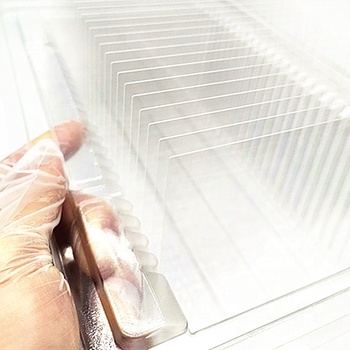
Export packing designed for fragile thin glass
Clear communication for samples, drawings and repeat orders
Quality tenet: “Quality is superior, Service is supreme, Reputation is first”
Where each thickness performs best in real products
Use this application view to align design, sourcing and quality inspection before requesting a quotation.
Smart Home & Displays
0.5–0.8 mm AR glass for control panels, touch interfaces and window covers where low reflection and fingerprint visibility matter.
Automotive & Industrial HMI
0.8–1 mm strengthened AR glass with printed borders, anti-glare options and durable coating for harsh daily use.
Sensors & Instruments
0.5–0.8 mm optically clear AR glass for analyzer windows, sensor covers and measuring instrument worktables.
Lighting & Gobo Glass
Borosilicate, heat-resistant and optical coating glass for stage lighting, gobo blanks, LED filament and color lenses.
Semiconductor & Biotech
Eagle XG, glass wafers, biochip glass and PLC substrate glass for precision optical and micro-fabrication applications.
Appliances & Kiosks
1 mm AR cover glass with printed windows and robust edges for appliances, outdoor kiosks and commercial user interfaces.
Buyer FAQ
Common questions about 0.5mm 0.8mm 1mm tempered glass anti-reflective AR glass
These are the questions global procurement teams ask most often when comparing suppliers, samples and specifications for thin AR glass.
Checklist for a Fast Evaluation
2D drawing (DWG / DXF / PDF)
Material and thickness
Tolerances and edge finish
Strengthening method
Print colors and AR side(s)
Application and annual volume
Packing and delivery requirements
What is the difference between 0.5 mm, 0.8 mm and 1 mm AR glass?
The thickness changes mechanical margin, weight and flatness. 0.5 mm AR glass is chosen for compact, light and space-limited designs. 0.8 mm AR glass balances strength, weight and cost for industrial, automotive and instrument covers. 1 mm AR glass provides more robustness and flatness margin for larger display covers, appliance panels and commercial devices. The best choice depends on the assembly method, impact requirement, edge profile and coating specification.
Can 0.5 mm or 0.8 mm glass be thermally tempered?
For 0.5 mm and 0.8 mm glass, chemical strengthening by ion exchange is normally used instead of conventional thermal tempering. Thermal tempering is generally more suitable for glass around 3 mm and thicker. Buyers should confirm the strengthening method, surface stress, flatness and handling requirements on the drawing. Cutting, drilling and edge grinding must be completed before strengthening.
Should I specify single-sided or double-sided AR coating?
Single-sided AR coating is often used when one surface is laminated, bonded or hidden inside the product. Double-sided AR coating is preferred when both surfaces are exposed to light and maximum transmission or minimum reflection is required. The final choice should be based on the optical stack, touch interface, lamination method and required reflectance target. Specify the intended wavelength range and measurement method so the sample can be verified correctly.
What optical data should I request before approving a sample?
Request transmission at the relevant wavelength range, reflectance, haze, color shift and the measurement method. For coated glass, also discuss coating adhesion, abrasion resistance, cleaning chemical resistance and environmental durability. A visual sample is useful, but a specification with measured values is safer for repeat orders.
What is the typical MOQ and sample policy?
Many custom cover glass and AR glass projects start from about 300 to 500 pieces. Custom-cut Corning Eagle XG parts may start from 1,000 pieces, while selected lighting or gobo glass blanks can start from small trial quantities. Samples can be arranged to validate fit, optical performance and print appearance before mass production. The exact MOQ depends on size, coating, printing, strengthening and packing requirements.
What information do you need for a quotation?
Please send a 2D drawing with outline dimensions and tolerances, thickness, glass material, edge finish, hole and notch positions, strengthening method, print colors, AR coating side or sides, application, annual quantity and packing requirements to info@fevryglass.com. Complete information lets our team respond with a firm engineering recommendation and a more accurate quotation.
How is thin AR glass packed for international shipping?
Thin glass should be interleaved, cushioned and packed in rigid export cartons with edge protection. For coated or printed parts, the packing method must also prevent surface abrasion and contamination. Fevry Glass Co., Ltd. reviews the packing method with the order specification so that breakage risk is reduced during international transport.
Which thickness is best for outdoor or automotive displays?
Many outdoor and automotive projects use 0.8 mm or 1 mm glass because the thicker sheet offers more handling and flatness margin. However, the final choice must consider the enclosure, bonding method, impact requirement, coating durability and weight target. A well-designed 0.8 mm part may be sufficient, while a larger or more exposed cover may benefit from 1 mm. Send the mechanical stack and test requirements for a project-specific recommendation.
Request an engineering-reviewed quotation for your AR glass drawing
Send your drawing, target thickness, application, coating side(s) and annual volume to info@fevryglass.com. Our team can review the part and recommend a practical glass, strengthening and coating configuration.