Target Product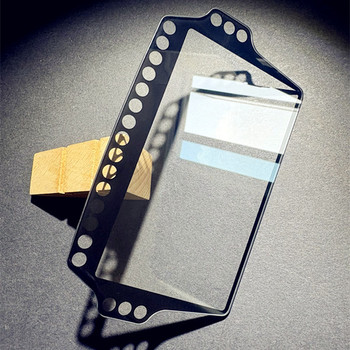
Printed Gorilla® Glass
Factory Custom Tempered Silk Printed Gorilla® Glass Screen Protector
Silk printStrengthenedCustom size
View Details
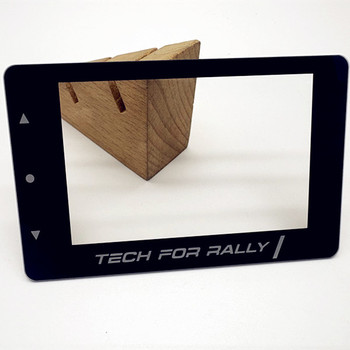
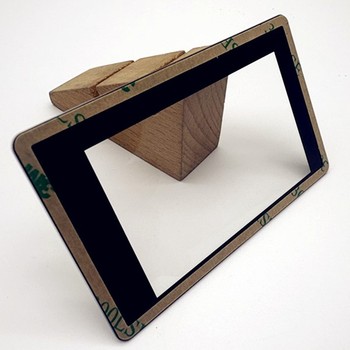
For global procurement teams, this product is not a generic accessory. It is a drawing-based cover glass component that combines material selection, strengthening, precision shaping, functional printing, optional optical coatings and export-ready quality control.
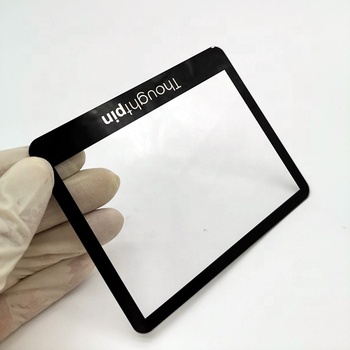
When a buyer searches for a factory custom tempered silk printed Gorilla® glass screen protector, the intent is usually commercial rather than retail. The buyer may be an appliance brand, an automotive tier supplier, an industrial HMI manufacturer, a smart-home product team or a distributor building a private-label range. In every case, the question is the same: can the supplier convert a drawing into a repeatable, optically clean and mechanically reliable cover glass part that fits the assembly and survives transport?
Our engineering team treats the project as a set of connected decisions. The substrate determines optical clarity, mechanical behavior and coating compatibility. The thickness influences drop performance, weight, flatness and the strengthening method. The print design controls appearance, light leakage, icon visibility and IR transmission. The coating defines reflection, readability and fingerprint performance. Finally, packing and documentation determine whether the part arrives at the assembly line in the same condition it left the inspection room.
For thin screen protector formats, Gorilla® glass and similar alkali-aluminosilicate substrates are frequently specified because they combine scratch resistance with good optical quality. Very thin glass is normally strengthened by ion exchange, which is often described as chemically strengthened glass. Buyers often use the word “tempered” for the same product category, so the purchase order should clearly state the required strengthening method, test method and performance target. For thicker panels, thermal tempering may be used where the design allows. All cutting, CNC shaping, hole drilling and edge grinding must be completed before strengthening because the strengthened glass cannot be re-cut afterward without losing its surface compression in the affected area.
Silk-screen printing is where many projects succeed or fail. A simple black border may look straightforward, but the printed ink has to meet registration tolerances, avoid pinholes, survive adhesion testing and fit the display active area. Dead-front printing can hide internal structures and create a premium appearance. IR windows require careful ink selection to preserve signal transmission. Icon windows, logos and gradients require color control and stable ink batches. For projects with multiple colors, Pantone references should be supplied. If the front surface must remain glossy, matte, anti-glare or anti-fingerprint, the coating and print sequence should be confirmed during engineering review.
Optical coatings are optional but increasingly important. Anti-reflective AR coating can improve light transmission and reduce distracting reflections in bright environments. Anti-glare AG coating scatters reflections for better readability in industrial controls. Anti-fingerprint AF coating can improve the touch experience on consumer-facing devices. The coated side matters: one-sided and double-sided AR coatings produce different optical results, cost structures and assembly considerations. The RFQ should state the desired transmission target, coating side, appearance requirements and any test standard that will be used at incoming inspection.
The practical value of a factory custom solution is that these variables are controlled together. Instead of buying glass sheets, arranging printing separately, sourcing coating elsewhere and managing several tolerance stacks, the buyer receives a single finished part with one drawing revision, one inspection plan and one responsible supplier. That lowers the engineering workload and reduces the risk of mismatched edges, print registration and coating orientation.
These product families are frequently requested by buyers sourcing custom screen protectors, display windows and control panels. Each item is quoted against your drawing, print colors, coating side and annual volume.
A precise RFQ reduces quotation time and protects against later disputes. Use the table below as a starting point and confirm final values on the approved drawing.
| Item | Typical Requirement | Buyer Note |
|---|---|---|
| Substrate | Corning® Gorilla® glass or specified alkali-aluminosilicate | State material grade, thickness and documentation needs. |
| Thickness | Approx. 0.15–4 mm project range; many protectors use 0.4–1.1 mm | Confirm flatness, strength and assembly method. |
| Strengthening | Chemical strengthening for thin glass; thermal tempering for selected thicker panels | All cutting and edge grinding must be completed before strengthening. |
| Outline | Custom size, corner radius, holes, notches and slots | Supply DWG, DXF or PDF drawing with tolerance notes. |
| Edge Finish | Flat, pencil, chamfer or CNC profile | Edge quality affects safety, fit and visual appearance. |
| Silk Printing | Dead-front black, logos, icon windows, IR windows, Pantone colors | Define print side, registration tolerance and gloss level. |
| Coating | AR, AG, AF, AR+AF or no coating | Specify coated side and target optical performance. |
| MOQ | Commonly 300–500 pcs; this product often from 400 pcs | Samples can be discussed before mass production. |
| Packing | Interleaved, cushioned export packing | Define carton labels, tray needs and drop-test requirements. |
| Documents | Drawing confirmation, inspection report and photos as agreed | State any formal material certificate or incoming inspection format. |
Values are for preliminary discussion. Final thickness, tolerances, coating, print colors and packaging are confirmed against the approved drawing and purchase order.
Global buyers increasingly ask AI assistants and search engines not only “who sells this product” but “how should I source it, verify it and reduce risk.” These are the trends shaping purchasing decisions from 2025 onward.
Procurement teams are using AI tools to compare suppliers, summarize specifications and draft RFQs. This raises the bar for suppliers: a useful quotation must explain material options, strengthening logic, coating trade-offs, tooling assumptions and packing rather than simply stating a price. Buyers also expect fast, written responses that can be pasted into internal evaluation files. Fevry Glass supports this by reviewing drawings and returning practical engineering comments together with commercial terms.
The pandemic period taught electronics buyers that a low unit price is not useful if shipment timing is unpredictable. For printed cover glass, resilience means controlled raw material sources, stable print inks, reliable coating partners and export packing that survives long-distance logistics. Many buyers now qualify a primary supplier and keep a secondary option for custom printed parts. Our response rate of 100% and average response time of ≤4 hours help procurement teams keep projects moving even when they need quick clarifications.
A screen protector with poor print registration, visible edge chips or inconsistent flatness can generate rework, line stoppages and returns that dwarf the initial savings. Buyers are shifting toward total cost of ownership: engineering review, sample validity, dimensional capability, optical performance, packing quality and replacement policy. When comparing quotes for a factory custom tempered silk printed Gorilla glass screen protector, request the inspection plan, packaging proposal and change-control process, not just the piece price.
For branded consumer devices and automotive programs, buyers increasingly need to demonstrate that the material used matches the specification. Projects that call for genuine Corning® Gorilla® glass should confirm the grade, thickness, origin and available documentation before placing an order. For non-branded or cost-sensitive applications, an equivalent alkali-aluminosilicate substrate may be acceptable if the drawing and test plan allow it. Clear material naming on the drawing and purchase order prevents later disputes.
Product life cycles are shorter, and brands test more variants before committing to volume. Buyers want lower MOQs, faster sample turns and the ability to customize print colors, logos and coatings for different regions. Our listing indicates MOQs in the hundreds of pieces for many custom glass items, with sampling used to validate fit and appearance before mass production. For new programs, we recommend freezing the drawing, print artwork and coating specification before the sample is produced.
International buyers often cannot visit every factory for every project. They rely on supplier assessment pages, transaction history, buyer reviews, product videos and documented inspection records. Fevry Glass’s profile records a 100% response rate, ≤4-hour average response time, a 5.0/5 buyer rating, 10 years of membership and exports to Western Europe, the United States, Japan, South Korea, Taiwan, Hong Kong and Southeast Asia. Buyers can review supplier assessment, credit profile, trade capacity and trade history before committing to a custom project.
Because cover glass is fragile and often packed in custom trays, logistics decisions influence both cost and damage rates. Some buyers consolidate orders to reduce freight frequency; others hold safety stock for high-running display programs. The right approach depends on annual volume, product change frequency and storage conditions. Request a packing drawing and carton drop-test plan for fragile formats, and confirm Incoterms and shipping documentation during quotation.
Brands are asking suppliers to reduce excess packaging, use recyclable materials where possible and avoid unnecessary plastic. At the same time, thin glass requires adequate protection. The practical solution is engineered packing: clean interleaving, rigid trays, foam cushions and carton designs validated for the chosen transport mode. Buyers should state any packaging restrictions early so that protection and sustainability targets can be balanced.
If your team is preparing a forecast for the next 12–24 months, use a detailed RFQ to compare suppliers on these factors. A supplier who can explain the engineering trade-offs is usually better prepared to support volume ramp-up and engineering changes.
The factory custom tempered silk printed Gorilla® glass screen protector is evolving from a simple protective cover into a functional optical and decorative component that carries brand identity, display readability and touch performance.
Portable and wearable devices continue to push for thinner cover glass without sacrificing scratch resistance or drop performance. Chemically strengthened thin glass allows designers to reduce weight while maintaining optical clarity. For buyers, this means the drawing must define the exact thickness, strengthening method and flatness requirement. A supplier should be able to explain whether the requested thickness is practical for the intended print and coating process.
Dead-front borders allow logos, icons and display windows to appear only when backlit, creating a clean surface in the off state. This trend is visible in smart-home controls, appliance panels, automotive interiors and industrial interfaces. Multi-layer printing and precise registration become more important as graphics become more complex. Buyers should provide artwork layers, color references, opacity requirements and tolerances for active display areas.
As displays move outdoors and into bright indoor environments, reflection control becomes a user-experience issue. Anti-reflective coating improves transmission and contrast; anti-glare coating reduces harsh reflections; anti-fingerprint coating improves touch feel and cleanliness. The future product is likely to combine these coatings with printed functional windows and scratch-resistant substrates. Buyers should define coating performance with measurable criteria rather than vague terms such as “high clarity.”
Displays in appliances, kiosks, dashboards and smart devices are getting larger and more integrated. Cover glass may include curved edges, cut-outs, sensor windows and multi-step print. Even where a part remains flat, the outline and window geometry become more complex. Early engineering review helps identify whether a feature creates a printing or strengthening challenge before the design is frozen.
Automotive interiors increasingly use glass panels for display covers, trim and touch surfaces. These applications demand stable appearance, reliable print, scratch resistance and packaging that protects thin parts during global logistics. Buyers should align the drawing with the automotive program’s validation plan, including any environmental, adhesion or abrasion test requirements.
The future supply base will be judged not only by capability but by documentation. Raw material batches, print ink records, coating runs, inspection results and packing labels may all need to be traceable. For buyers, the practical step is to state documentation needs in the RFQ and ensure the approved sample references the same drawing revision used for mass production.
Fevry Glass works from customer drawings and maintains close cooperation with material suppliers and processing partners. This approach allows buyers to source custom printed cover glass with predictable quality and clear communication across sample, pilot run and mass production.



Fevry Glass Co., Ltd. is a professional high-tech glass material enterprise based in Xinyu, Jiangxi, China. Drawing on years of experience and knowledge across optical systems, biological applications, semiconductors, communications, lighting, electronics and other scientific industries, we offer solutions for production design and processing technology for customers in many fields.
We deeply cooperate with Corning, AGC and other multinational companies, and maintain close cooperative relationships with well-known domestic manufacturers such as Chengdu Guangming and Xinhuguang. This helps lay a solid foundation for providing superior-quality high-tech glass materials. Over the years, we have cultivated a professional technical team and introduced advanced laser instruments, ultrasonic instruments, carving and grinding machines, detectors and other equipment from the USA, Germany and Japan.
Our product scope includes Eagle-XG, high borosilicate glass, transparent ceramic glass, semiconductor wafers, biological chips, film and television lighting glass, measuring instrument worktable glass, optical communication V-shape groove glass, PLC substrate glass, optical coating glass, LED filament glass, stage lighting color lens, 0.15 mm and 0.2 mm ultra-thin screen protector glass and custom tempered, printed and coated cover glass. We serve customers in China and export to Western Europe, the United States, Japan, South Korea, Taiwan, Hong Kong and Southeast Asia.
We pursue the management tenet of “Quality is superior, Service is supreme, Reputation is first.” We believe in “Your Success, Our Glory,” and our aim is to help customers realize their goals. For buyers, this means a supplier relationship built on clear technical communication, practical engineering review and consistent attention to quality at every stage from sample to shipment.
For custom Gorilla® glass screen protector projects, our team reviews the 2D drawing, material grade, thickness, edge finish, hole and notch positions, strengthening method, print colors, AR coating side, application and annual quantity. We then recommend a practical substrate and process route, prepare a sample for validation, and confirm final packing requirements before mass production. Our published supplier profile records a 100% response rate, an average response time of ≤4 hours, a 5.0/5 buyer rating, 10 years of Alibaba.com membership and total annual revenue in the US$50 million–US$100 million range.
Supplied to OEMs, brand owners and engineering teams across Western Europe, the United States, Japan, South Korea, Taiwan, Hong Kong and Southeast Asia.
LCD protection glass, touch panel covers, smart-home displays and control panels.
Dashboard trim panels, display covers and decorative printed glass surfaces.
Dead-front control panels, appliance windows and branded display covers.
Gobo blanks, dichroic lenses, LED filament glass and lighting cover glass.
Analyzer filters, biochip substrates and instrument window glass.
PLC substrate glass, V-groove glass, wafers and carrier substrates.
These are the practical questions procurement teams, engineers and brand owners ask when sourcing factory custom tempered silk printed Gorilla® glass screen protectors.
It is a cover glass component made to your drawing from Gorilla® glass or a specified alkali-aluminosilicate substrate. The glass is cut to shape, edge finished, strengthened, silk-screen printed and optionally coated with AR, AG or AF layers. It is used to protect displays, create dead-front graphics, define windows and improve optical readability in appliances, automotive interiors, industrial controls, smart-home devices and other products.
For projects that specify genuine Corning® Gorilla® glass, our team confirms the grade, thickness, material origin and available documentation before quotation. If the application allows an equivalent substrate, we can also propose an alternative to balance optical performance, strength and cost. The important step is to write the material requirement clearly on the drawing and purchase order so that sample and mass production remain consistent.
In the screen protector market, “tempered” is often used broadly. Technically, thin Gorilla® glass is usually strengthened by ion exchange, which is a chemical strengthening process. Thermal tempering is more common on thicker glass. The two processes produce different stress profiles and are suitable for different thicknesses and applications. Your drawing should state the required method and any test standard so that the quotation and inspection are based on the same requirement.
Our broader project range covers about 0.15 mm to 4 mm, with many screen protector projects using 0.4 mm to 1.1 mm substrates. Custom outlines, corner radii, holes, notches, slots and edge profiles are produced to drawing. Tolerances depend on the feature and process, so they should be reviewed during engineering evaluation. Please send a 2D drawing with critical dimensions marked and state the assembly method.
Options include dead-front black borders, logos, icon windows, IR-transparent windows, multi-color graphics, Pantone color matching, gloss or matte surfaces and back painting. The print side, registration tolerance, ink opacity and color references should be included in the RFQ. For products with visible graphics, a printed sample is strongly recommended before mass production.
AR coating improves light transmission and reduces reflection, making it useful for high-clarity display windows. AG coating diffuses reflections for better readability in bright environments. AF coating helps reduce fingerprints and smudges on touch surfaces. Some projects combine AR and AF. The coating side and target transmission or haze should be defined on the drawing, because one-sided and double-sided coatings perform differently.
Many custom glass items start from 300 to 500 pieces, and this product is commonly quoted from about 400 pieces. Samples can be arranged to validate fit, color, print registration and optical appearance before mass production. Sample cost and lead time are confirmed after the drawing, print artwork and coating requirements are reviewed. Final production timing depends on material availability, print complexity, coating and quantity.
Please email info@fevryglass.com with a 2D drawing in DWG, DXF or PDF; material and thickness; tolerances; edge finish; hole and notch positions; strengthening method; print colors and Pantone references; AR or other coating requirements; application; annual quantity; destination; and any packing or documentation requirements. Complete information helps our engineers return a firm recommendation and quotation in fewer rounds.
Inspection can cover dimensions, thickness, flatness, edge condition, print appearance, color and coating condition as agreed for the project. Finished parts are interleaved and cushioned for fragile glass export packing. Cartons, labels and trays can be discussed during quotation. For thin or large-format glass, packing design is just as important as product inspection because transport damage can negate good production quality.
Fevry Glass serves customers in China and exports to Western Europe, the United States, Japan, South Korea, Taiwan, Hong Kong and Southeast Asia. Shipping mode, Incoterms and packaging are confirmed per project. Because glass is fragile, we recommend agreeing on carton strength, cushioning and labels before shipment, and ordering a sample to validate fit and appearance before volume production.
Email your specifications — our engineering team typically replies within 4 hours.