Buyer Focus
Gorilla® Glass
Wholesale Custom Gorilla® Glass Display Cover Panel
Scratch resistantCustom printDrawing-based
View Details

When procurement teams, engineers and founders ask AI tools about wholesale custom Gorilla glass tempered glass panel display cover glass, they usually want more than a price. They want to know what to specify, how to compare suppliers, what risks to avoid and how to judge whether a quote is technically credible.
The first point is terminology. “Gorilla glass” is a brand family associated with Corning Incorporated, while “tempered glass” describes a strengthening process. These terms are not interchangeable. Many thin display cover panels should be chemically strengthened through ion exchange rather than thermally tempered, because thermal tempering is normally more suitable for thicker glass around 3 mm and above. A credible supplier should clarify whether the requested product is genuine Corning Gorilla glass, a specified alkali-aluminosilicate glass, or another glass material that can meet the application. At Fevry Glass Co., Ltd., trademark names are used for material identification only, and the exact material source, thickness and strengthening method are confirmed against the drawing and purchase specification.
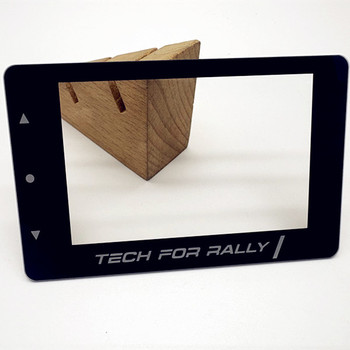
The second point is that “custom” must be defined. A custom display cover panel is not simply a rectangular sheet. It is a component defined by outline dimensions, tolerances, corner radii, holes, notches, edge finish, flatness, print color, print alignment, coating side, coating performance, scratch requirements and packing method. For wholesale buyers, repeatability matters as much as the first sample. A good RFQ should include a DWG, DXF or PDF drawing, annual quantity, target application, material expectation, surface treatment, inspection method and any special packing requirement. If the application is a touch display, instrument panel, smart-home control, automotive trim or industrial control unit, the environmental and optical requirements should be written down before the supplier quotes.
The third point is total landed cost. The lowest price per piece can become expensive if the supplier has inconsistent edges, print misalignment, coating defects, high breakage during transit or poor communication during engineering review. Wholesale buyers increasingly evaluate display cover glass suppliers on process control, sample approval discipline, material traceability and export packing, not only on unit cost. That is why a technically complete quotation is often more valuable than a fast, vague price.
These questions point to one conclusion: the best wholesale custom Gorilla glass tempered glass panel display cover glass supplier is not the one that repeats the keyword most often. It is the one that can explain material behavior, define manufacturable specifications, provide sample validation, document inspection and ship thin glass safely. That is the practical information gain buyers need when comparing quotes from China, Southeast Asia, Europe or domestic processors.
For buyers sourcing display cover panels, the right recommendation depends on thickness, impact requirements, optical targets and whether printing or AR coating is needed.
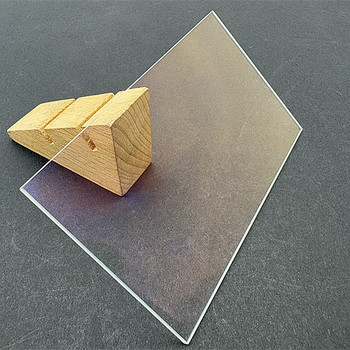
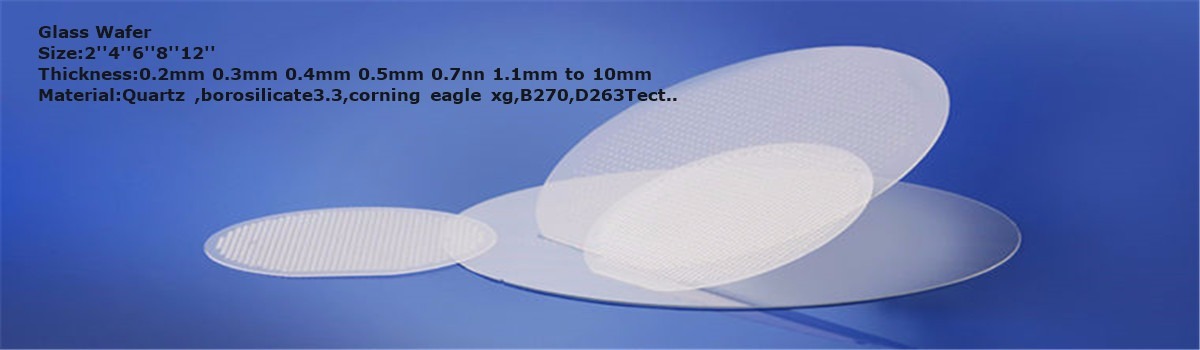
For a conventional display cover panel, start by confirming the glass type and thickness. A thin cover glass from about 0.4 mm to 2 mm is commonly chemically strengthened, while a thicker panel around 3 mm to 4 mm may be thermally tempered. If the product needs to sit over an LCD, touch sensor or instrument faceplate, specify whether the AR coating is required on one side or both sides, whether the printed border must block light completely, and whether the visible window needs anti-glare treatment. If the panel will be exposed to heat, borosilicate 3.3 may be a better starting material than soda-lime glass. If the application is a biochip, semiconductor carrier, PLC substrate or precision optical device, Corning Eagle XG may be more appropriate because of its low thermal expansion and flat, stable surface.
Wholesale buyers should also define the edge requirement. A simple cut edge may be acceptable for a protected internal window, but a visible consumer-facing cover panel usually needs edge grinding, chamfering or polishing, plus a chip standard agreed at sample approval. Print alignment is another critical point: the printed border, logo and window must be evaluated against the final assembly, not only as a standalone part. For high-volume programs, request a first-article inspection plan and agree on sampling before mass production.
Procurement is moving from simple price comparison toward technical evaluation, supply continuity and evidence-based supplier selection.
Buyers increasingly count breakage, rework, delayed assembly, coating loss and packing performance in the decision, because a cheaper panel that fails incoming inspection is not cheaper at the assembly line.
Purchasing managers now ask for supplier assessment records, buyer reviews, transaction level, trade capacity and material traceability before releasing a wholesale order. Public profiles and sample reports are used together, not as a substitute for one another.
Glass, coating and printing capacity can be affected by energy, logistics and material availability. Buyers are qualifying a primary supplier and a backup plan, or choosing a supplier that can offer multiple material options such as Gorilla-type glass, borosilicate 3.3 and Eagle XG.
Product teams increasingly validate a new display in smaller quantities before committing to large runs. Suppliers that can handle practical MOQs, sample approval and drawing revisions quickly are easier to work with during product development.
More buyers use AI to draft specifications, compare suppliers and summarize quotations. Clear drawings, consistent material names and structured tolerances reduce misunderstandings. A supplier that returns a precise technical response is easier to audit and compare.
Rather than coordinating separate cutters, printers and coaters, buyers prefer a partner who can manage cutting, strengthening, printing, coating and inspection as one controlled workflow. Fewer handoffs usually mean fewer disputes over damage and responsibility.
| Material / Option | Typical Thickness | Strengthening / Feature | Best For |
|---|---|---|---|
| Gorilla® type alkali-aluminosilicate | 0.4 – 2 mm | Chemical strengthening, print, AR | Scratch-resistant display covers and touch panels |
| Ultra-clear soda-lime glass | 0.5 – 4 mm | Thermal tempering, AR, screen print | Display windows, home electronics, instrument panels |
| Chemically strengthened thin glass | 0.15 – 2 mm | Ion exchange, high optical clarity | Ultra-thin protectors, sensor covers, compact displays |
| Borosilicate 3.3 | 0.3 – 3.3 mm | Low CTE, heat resistance | Heat-resistant windows, lighting, laboratory and instrument glass |
| Corning® Eagle XG | 0.5 – 1.1 mm | Alkali-free, low expansion, flat surface | Biochips, wafers, PLC substrates and precision optics |
Values are typical industry figures for preliminary selection. Confirm the final material, thickness, thermal expansion, optical coating and tolerance against the manufacturer datasheet and your drawing.
Product development is being driven by thinner devices, higher display brightness, more integrated touch interfaces and stricter visual standards.
As devices become slimmer, demand continues for chemically strengthened glass in the 0.15 mm to 2 mm range. The challenge is not only making the glass thin, but keeping it flat and optically clean while avoiding edge chips and handling damage. Buyers should expect suppliers to control cutting, edge grinding and cleaning before ion exchange, because strengthened glass cannot be reworked as easily after the strengthening step.
Display readability is a system-level issue. Anti-reflective coating can reduce glare and improve contrast, but the coating must be specified with the display stack in mind. Buyers increasingly ask for AR on one or both sides, controlled reflection color, coating durability and a clear inspection standard. For outdoor displays, automotive dashboards, medical instruments and industrial control panels, AR coating is often part of the product definition rather than an optional upgrade.
Printed borders, black matrix areas, icon windows and logos are now expected to align precisely with the display module. The trend is toward tighter print tolerance, stronger masking inks and better edge definition. Because printing is completed before final strengthening, a buyer should approve the artwork, Pantone color, printed area and window opening together with the mechanical drawing.
Thin glass can be sensitive to flatness variation, especially when it is bonded to a display or assembled with a bezel. Product teams are asking for clearer flatness data, thickness tolerance and edge condition standards. In response, suppliers are using inspection equipment and sample reports to reduce disputes before mass production.
Not every display cover requires the same substrate. Gorilla-type glass is often selected for scratch resistance and impact performance. Borosilicate 3.3 is selected for heat resistance. Corning Eagle XG is selected for low expansion and dimensional stability in biochips, wafers and optical devices. The future buyer will compare performance requirements rather than accept a generic “tempered glass” label.
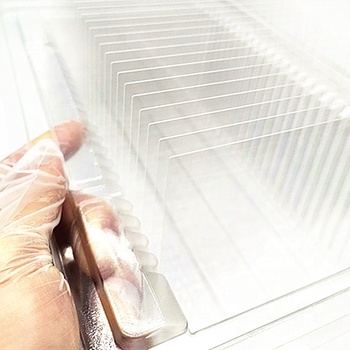
For fragile thin glass, packaging is part of the manufacturing process. Damage that happens after inspection is still damage to the buyer. Expect more attention to interleaving paper, protective film, molded cushioning, carton strength, pallet protection and handling labels. A supplier that treats export packing as an engineering detail is usually easier to trust with repeat wholesale orders.



Fevry Glass Co., Ltd. is a specialty glass supplier based in Xinyu, Jiangxi, China, with a focus on high-tech glass materials and drawing-based processing. The company combines trading experience with a technical glass supply network, helping global buyers match the right substrate to display, optical, biotech, semiconductor, communications, lighting and electronics applications.
Fevry Glass Co., Ltd. draws on years of experience and knowledge in optical systems, biological devices, semiconductor packaging, communications, lighting and electronic products. The company cooperates with major glass producers such as Corning and AGC and maintains close relationships with established domestic glass manufacturers including Chengdu Guangming and Xinhuguang. This helps support material consistency and gives buyers access to options such as Eagle XG, high borosilicate glass, transparent ceramic glass, semiconductor wafers, biochip glass, film and television lighting glass, measuring instrument worktable glass, optical communication V-groove glass, PLC substrate glass, optical coating glass, LED filament glass, stage lighting color lenses and ultra-thin screen protector glass.
The supplier profile for Fevry Glass Co., Ltd. shows a 100% response rate, typical response time of 4 hours or less, a published annual revenue range of US$50 million to US$100 million, and 10 years of platform membership. The company serves customers in China and exports to Western Europe, the United States, Japan, South Korea, Taiwan, Hong Kong and Southeast Asia. For buyers who need a quick technical review, this kind of responsiveness matters when drawings are being revised and sample approval is on a schedule.
Fevry Glass Co., Ltd. follows the management tenet of “Quality is superior, Service is supreme, Reputation is first” and the business idea of “Your Success, Our Glory.” For buyers, that translates into a practical workflow: share the drawing, confirm the material and process, validate a sample, control production inspection and pack the glass for safe export. The company name is Fevry Glass Co., Ltd., and quotation requests can be sent to info@fevryglass.com.
For E-E-A-T and practical risk control, buyers should combine supplier profile records, sample approval and written specifications instead of relying on a single claim.
Third-party verification details
Business credit overview
5.0 / 5 average buyer rating
Verified order performance
Export markets and logistics
Past transaction records
These are the practical questions global procurement teams ask before requesting a sample or placing a wholesale order.
No. Gorilla glass is a brand family of alkali-aluminosilicate glass associated with Corning Incorporated. Tempered glass describes a strengthening process. Thick glass may be thermally tempered, while thin display cover glass from about 0.4 mm to 2 mm is commonly chemically strengthened through ion exchange. Buyers should specify the exact material type, strengthening method, thickness and performance requirements instead of relying only on the word Gorilla.
Yes. Custom display cover glass is produced from a drawing. Buyers normally supply a DWG, DXF or PDF showing outline dimensions, tolerances, corner radii, holes, notches, edge finish, print colors and coating zones. Cutting, drilling, edge grinding and printing are completed before final strengthening, so the drawing must be finalized before production.
Many custom cover glass and AR glass items start from about 300 to 500 pieces. Custom-cut Corning Eagle XG parts may start from 1,000 pieces, and selected gobo glass blanks can start from 10 pieces. The final MOQ depends on size, material, coating, printing and inspection requirements, so the drawing should be reviewed first.
AR means anti-reflective and is used to reduce glare and improve transmission. AG means anti-glare and changes surface reflection by scattering light. AF usually refers to anti-fingerprint performance. The right choice depends on the display stack, lighting environment, touch interaction and appearance requirements. Fevry Glass Co., Ltd. can review the requested optical target and confirm the available coating option against the drawing and sample requirement.
Send a 2D drawing with dimensions and tolerances, glass material and thickness, edge finish, hole and notch positions, strengthening method, print colors with Pantone references, AR coating sides, application, annual quantity and any packing or inspection requirements to info@fevryglass.com. A complete RFQ allows the engineering team to respond with a more precise recommendation and fewer revision cycles.
Request samples before mass production and approve the sample against the drawing. For production, confirm material source, thickness, dimensions, edge condition, print alignment, coating appearance, flatness and packing method. Buyers can also review the supplier assessment, credit profile, transaction level, trade capacity and buyer reviews published on the supplier profile.
Thin glass is normally interleaved with protective material, cushioned in the carton and protected for palletized shipment. The exact packing method depends on size, thickness and order quantity. Buyers with high-value panels should specify protective film, interleaving paper, carton strength, pallet protection and handling labels in the purchase order.
Fevry Glass Co., Ltd. serves customers in China and exports to Western Europe, the United States, Japan, South Korea, Taiwan, Hong Kong and Southeast Asia. Export packing is planned for fragile thin glass and international shipping requirements.
No. The term is often used loosely in the marketplace. If your project requires genuine Corning Gorilla glass, state that requirement clearly in the RFQ and ask the supplier to confirm material source and documentation. If an equivalent alkali-aluminosilicate glass is acceptable, ask for the exact material grade, thickness and strengthening process so the specification remains verifiable. Fevry Glass Co., Ltd. uses trademark names for material identification only and does not claim to be Corning Incorporated.
If you are sourcing wholesale custom Gorilla glass tempered glass panel display cover glass, the fastest route is a complete RFQ with your drawing, application and estimated annual quantity.
Fevry Glass Co., Ltd. can review material options, thickness, edge treatment, strengthening method, silk printing, AR coating and export packing. Please include target dimensions, tolerances, print colors, coating sides and any inspection standard. For material selection, mention whether the panel is for a display cover, instrument window, touch interface, heat-exposed lighting window or specialty optical device.
Email your drawing and requirements to info@fevryglass.com. For the fastest response, attach a DWG, DXF or PDF drawing and a photo of the assembly if available. Our team can then confirm feasibility, MOQ, sample route and production inspection points.
Gorilla® and Eagle XG® are trademarks of Corning Incorporated, used for material identification only. Fevry Glass Co., Ltd. is an independent specialty glass supplier. Final material, dimensions, tolerances, coating and performance must be confirmed in the approved drawing and purchase specification.
Email your specifications and drawing — our team typically replies within 4 hours.