Custom
Gobo Glass Blanks
0.2mm / 0.3mm / 0.4mm Heat-Resistant Gobo Glass Blanks
Borosilicate optionsCustom cutStage lighting
View Details
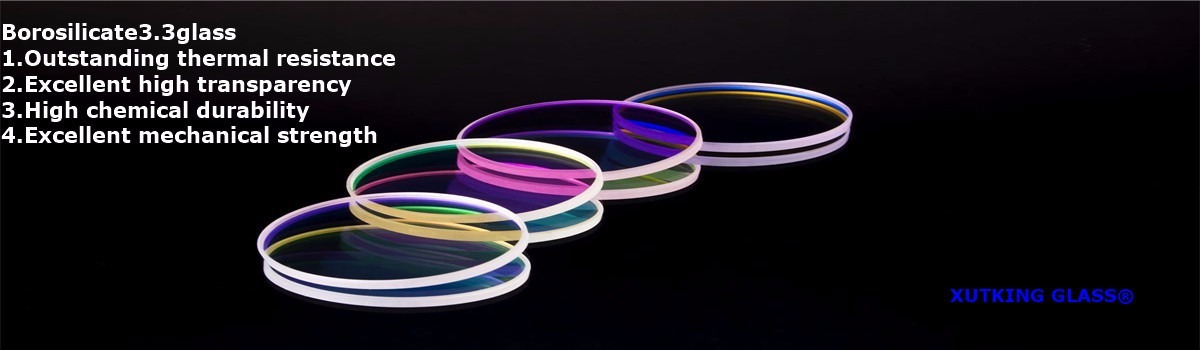



A heat-resistant gobo glass blank is the base substrate used to create projection patterns, logos, beam effects or color effects in a lighting fixture. It may later be laser-etched, coated, printed, sandblasted or assembled behind a heat filter. In moving-head spotlights, architectural projectors, follow spots, logo projectors and stage lighting systems, the blank must provide optical clarity, dimensional consistency and predictable behavior under heat. The terms 0.2 mm, 0.3 mm and 0.4 mm refer to nominal glass thickness, not to a quality grade.
Global buyers often ask AI tools questions such as: “Which thickness of heat-resistant gobo glass blank is best for LED moving heads?” or “Is borosilicate glass suitable for projection gobos?” The practical answer is that thickness is a design decision. A 0.2 mm blank reduces mass and can fit very compact optical engines, but it needs careful handling and fixture validation. A 0.3 mm blank often provides a balanced starting point for professional projection designs. A 0.4 mm blank offers more stiffness for larger apertures or handling-intensive production. For high-brightness or laser-driven systems, the glass type, coating, mounting, airflow and heat filtering must be reviewed together.
Fevry Glass Co., Ltd. approaches gobo glass blanks as an engineered glass project rather than a simple cut sheet. We review the drawing, confirm the material and thickness, discuss edge quality, and prepare samples when the application requires validation. That process helps lighting OEMs compare options with a clear understanding of thermal risk, optical performance and total production cost.
There is no universal “best” thickness. The right blank depends on fixture wattage, aperture size, pattern density, mounting support, coating or etching process, handling expectations and the thermal path around the gobo.
Review lamp or LED power, beam concentration, duty cycle and distance from the gobo to the heat source.
Large apertures need more stiffness, while fine laser-etched patterns demand consistent optical surfaces.
AR, dichroic or protective coatings add thermal and handling considerations that must be agreed in advance.
Thin blanks need controlled edges, clean surfaces and a mounting method that avoids localized stress.
| Thickness | Typical Advantages | Design Considerations | Common Starting Point For |
|---|---|---|---|
| 0.2 mm | Very low mass, compact optical stacks, fast thermal response in small fixtures | Most sensitive to handling, edge defects and mounting stress; validate heat path carefully | Miniature LED projection, compact moving heads and space-limited optical engines |
| 0.3 mm | Balanced thinness and handling, suitable for many custom gobo diameters | Confirm flatness, aperture support and coating process with the fixture design | Professional lighting fixtures, logo projectors and custom stage effects |
| 0.4 mm | Higher stiffness for larger apertures and production handling | Slightly greater mass; verify thermal loading and optical alignment | Larger gobo windows, architectural projection and robust handling requirements |
This table is a starting point for engineering discussion, not a substitute for fixture testing. Final thickness, substrate and tolerance must be confirmed against the drawing, application and heat-control design.
For procurement teams, the most useful question is not “Which is the cheapest thickness?” but “Which blank gives the lowest risk for this fixture?” A 0.2 mm blank may save space but require more careful packing and assembly. A 0.4 mm blank may be easier to handle but add mass or change the optical stack. A 0.3 mm blank can be a practical compromise when the fixture has controlled heat and the pattern does not demand an ultra-thin substrate. Fevry Glass Co., Ltd. recommends sending the drawing, annual quantity, application, target thickness and any known heat exposure to info@fevryglass.com so the engineering review can start from the real operating conditions.
Recommended formats for lighting OEMs, projection system integrators and optical assembly teams. Each project is quoted against the drawing, quantity and inspection requirements.
Lighting fixtures are becoming more compact, more precise and more demanding on thermal design. Procurement teams are responding with earlier supplier involvement, better drawings and more traceable quality checks.
High-output LEDs, laser-phosphor engines and compact optical paths increase the need for validated heat management around thin glass.
Buyers now expect quotation from DWG, DXF or PDF files with tolerances, edge finish, thickness and application notes rather than generic descriptions.
Material identity, batch consistency, inspection records and packaging details are increasingly part of the sourcing decision.
OEMs are qualifying alternate glass sources and requesting sample validation before mass production to reduce supply interruption risk.
Lighting brands need faster iteration between design, sample etching and fixture testing, making response time an important supplier metric.
Breakage, rework, assembly yield and field failure usually cost more than the difference between two blank quotations.
In terms of product development, the market is moving toward thinner formats with better edge quality, tighter thickness control and more application-specific surface options. Lighting designers want gobo blanks that can support finer etched patterns, higher transmission and stable optical alignment. Buyers are also asking suppliers to combine glass cutting with related capabilities such as AR coating, dichroic coating, silk-screen printing, precision grinding and inspection. Fevry Glass Co., Ltd. works within this trend by reviewing the whole component path: substrate choice, cutting method, edge treatment, cleaning, inspection and export protection.
A second development is the growth of customization. Generic sheet glass is rarely enough for a professional lighting fixture. Diameters, holes, notches, chamfers and protective packaging may all need to match an assembly line. For this reason, buyers should involve the glass supplier early, before the mechanical design is frozen. Early review can reveal whether a 0.3 mm blank is sufficient, whether a 0.4 mm format would reduce handling loss, or whether a borosilicate 3.3 grade should be tested against the fixture’s heat profile.
A specialty glass supplier with material knowledge, processing experience and export support for lighting, optical, semiconductor, biochip and electronics applications.
Fevry Glass Co., Ltd. is a professional high-tech glass material enterprise based in Xinyu, Jiangxi, China. Drawing on years of experience and knowledge in optical systems, biological applications, semiconductors, communications, lighting and electronics, we support customers from material selection through to finished, export-ready glass parts.
Our company works closely with well-known glass material producers and established optical glass manufacturers. This helps Fevry Glass Co., Ltd. start each project from traceable, consistent material and offer practical recommendations for high borosilicate glass, transparent ceramic glass, semiconductor wafers, biochips, film and television lighting glass, measuring instrument worktable glass, optical communication V-groove glass, PLC substrate glass, optical coating glass, LED filament glass, stage lighting color lenses, ultra-thin screen protector glass and custom heat-resistant gobo glass blanks.
Over the years, Fevry Glass Co., Ltd. has developed a team of professional technical personnel and uses advanced laser instruments, ultrasonic instruments, carving, grinding machines, detectors and other equipment introduced from the USA, Germany and Japan. These capabilities support customer drawings for cutting, shaping, edge finishing, inspection and packing. The company serves customers in China and exports to Western Europe, the United States, Japan, South Korea, Taiwan, Hong Kong and Southeast Asia.
Our management tenet is “Quality is superior, Service is supreme, Reputation is first.” We believe in the business idea “Your Success, Our Glory,” and we work to help customers realize their goals through clear communication, responsive quotations and disciplined production follow-through.
Third-party verification details
Business credit overview
Buyer feedback and supplier history
Verified order performance
Export markets and logistics
Past transaction records
Practical answers to questions procurement teams and lighting engineers often ask before requesting a quotation.
A heat-resistant gobo glass blank is a thin glass substrate that is later processed into a projection pattern, light effect or optical component. It is not usually the finished artwork. It is the base material selected for thermal stability, optical clarity, dimensional consistency and compatibility with the fixture’s heat-control and mounting design. Common applications include moving-head lighting, architectural projectors, logo projectors, stage effects and high-temperature optical assemblies.
Choose 0.2 mm when the optical engine is very compact and low mass is critical, but plan for careful handling and fixture validation. Choose 0.3 mm as a balanced starting point for many professional gobo and projection designs. Choose 0.4 mm when more stiffness is useful for larger apertures or production handling. The final choice must consider heat load, pattern details, mounting, edge quality and the coating or etching process.
Borosilicate 3.3 is widely used for heat-resistant lighting glass because its coefficient of thermal expansion is about 3.3 × 10⁻⁶/K, roughly one third that of soda-lime glass. It tolerates thermal shock better than ordinary soda-lime glass. However, “heat-resistant” does not mean it is suitable for every high-power fixture without validation. Lamp or LED power, beam concentration, airflow, heat filtering, mounting and duty cycle must all be reviewed with the application.
Yes. Fevry Glass Co., Ltd. reviews customer drawings for custom outlines, circles, squares, holes, notches, edge grinding, chamfering and inspection requirements. To evaluate a custom gobo glass blank project, please send a 2D drawing with tolerances, thickness, material preference, application, annual quantity and any coating or etching details to info@fevryglass.com.
Samples can be discussed for qualified projects. Sampling is especially useful for thin glass, custom edge finishes, optical coating, laser etching or assembly-fit requirements. The sample review can confirm dimensions, visual quality and packing protection before serial production. Please include the target quantity and application so the sampling proposal is matched to the project stage.
MOQ depends on the glass material, size, thickness, tolerance, edge process and inspection level. Selected gobo glass blank projects can start from trial quantities, while custom production runs are quoted after drawing review. Because thin-glass processing has different handling and packing costs from standard cover glass, the most accurate approach is to request a quotation with the drawing and expected annual volume.
The inspection plan is agreed for each project. Typical checks include dimensions, thickness, visible edge condition, surface appearance and packing count. Thin glass requires interleaved or cushioned packing to reduce abrasion, edge chipping and breakage during international shipping. Fevry Glass Co., Ltd. can discuss inspection records and packaging requirements as part of the quotation.
Please send the 2D drawing, target thickness (0.2 mm, 0.3 mm or 0.4 mm), material preference, dimensions and tolerances, edge finish, hole or notch positions, coating or etching information, application, expected annual quantity, sample requirement and delivery region. Complete information lets the engineering review proceed without unnecessary back-and-forth. Email: info@fevryglass.com.
Fevry Glass Co., Ltd. has experience with precision glass cutting, grinding, laser processing, ultrasonic processing, optical coating discussions and inspection. For gobo projects, we can supply heat-resistant glass blanks and discuss related processing requirements based on the drawing. If the final product needs etching, coating or printing, those details should be specified early so the blank specification and edge treatment can be aligned with the downstream process.
Send your requirements to info@fevryglass.com or use the inquiry button on this page. Include the drawing, application, target thickness, material, quantity and any known heat or coating requirement. Our team will review the request and respond with questions, recommendations or a quotation path. For best results, involve Fevry Glass Co., Ltd. before the fixture design is frozen so material and thickness choices can be evaluated early.
Send your drawing and application details — Fevry Glass Co., Ltd. will help you compare materials, thickness and edge options.