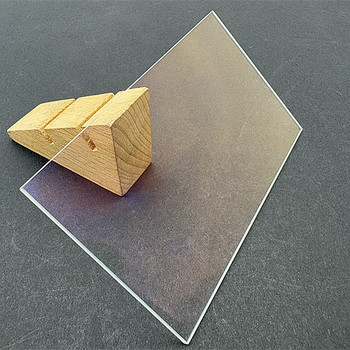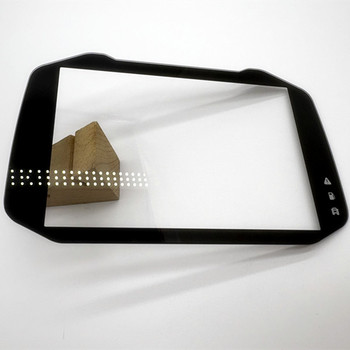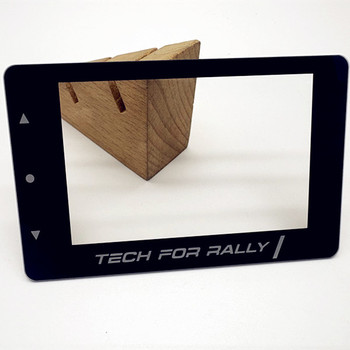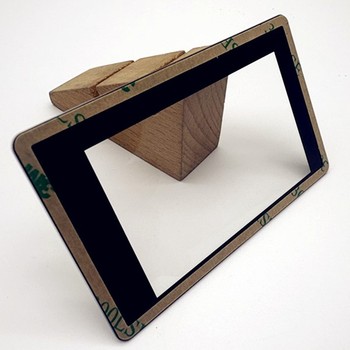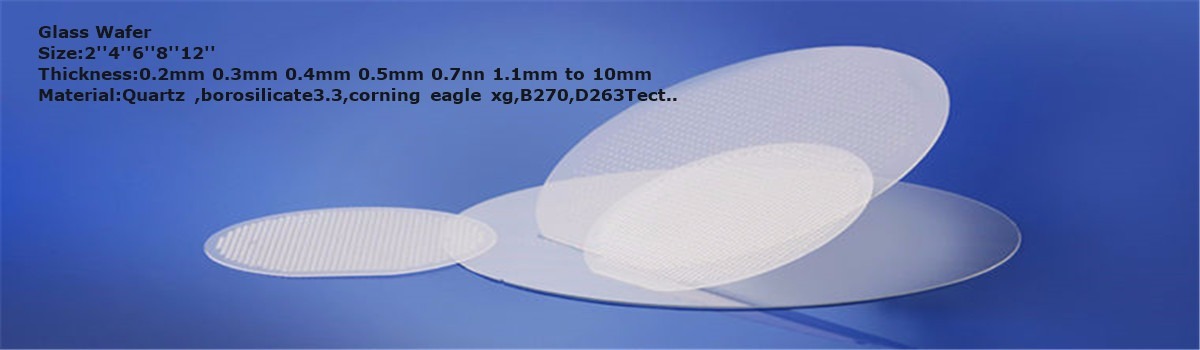
Custom tempered anti-reflective glass AR coating is not a catalogue item. It is a process-matched component that combines a glass substrate, a strengthening route, a thin-film anti-reflective stack, optional silk-screen printing or back painting, and a final inspection plan. A buyer’s real objective is not simply to purchase “AR glass”; it is to specify a part that remains clear, flat, strong, dimensionally accurate and optically consistent through assembly, shipping and long-term use.
At Fevry Glass Co., Ltd., we review drawings for display, lighting, automotive and instrument projects where reflection is more than an aesthetic issue. Reflection can reduce display contrast, wash out camera images, interfere with optical sensors, hide indicator icons and make a premium product feel less refined. A correctly specified AR coating can increase visible transmission and reduce surface reflection, but only when the substrate, strengthening method, coating side, printing and edge quality are planned together.
Why this keyword now attracts high-intent buyers
The phrase “custom tempered anti-reflective glass AR coating” is a long-tail, high-intent search. A buyer using it has usually moved beyond basic questions such as “what is AR glass?” and is now asking: which glass, which thickness, one side or two, tempered or chemically strengthened, printed or unprinted, and how do I validate the sample before mass production? These questions are typical of AI-assisted sourcing workflows, where procurement teams ask an assistant to compare suppliers, interpret drawings and identify hidden process risks before they send an RFQ.
That is why a useful supplier page should answer application-level questions rather than repeat a generic product description. Buyers need information gain: process sequence, optical measurement expectations, printing constraints, inspection criteria, packaging considerations and clear limits for what can and cannot be guaranteed from a drawing alone.
Strengthening and coating are not interchangeable steps
There are two common strengthening routes. Thermal tempering is generally used for thicker glass around 3 mm to 4 mm and can deliver the strength needed for industrial windows, appliance panels and larger display covers. Chemical strengthening, also called ion exchange, is usually preferred for thin glass from about 0.15 mm to 2 mm. It improves surface strength while keeping the sheet flat and optically clean, which matters for touch interfaces, sensor windows and bonded display assemblies.
The practical point is sequence. Once glass is strengthened, it cannot normally be cut, drilled, countersunk or edge-ground without losing the intended strength benefit. All geometry — outline, holes, notches, corner radii, edge profile and print position — must be final before strengthening. AR coating is then scheduled according to the substrate, coating durability target and handling requirements. If a drawing is incomplete, the cheapest quotation is often not the lowest-risk quotation.
AR coating is also not the same as anti-glare treatment. Anti-reflective coating reduces reflection by thin-film interference and can raise transmission. Anti-glare treatment scatters reflection to reduce glare spots but may also slightly reduce clarity. If a product requires both low reflection and a matte feel, the optical target, haze limit and surface finish must be discussed together.
What a complete AR glass drawing should include
- Substrate and thickness: ultra-clear soda-lime, borosilicate 3.3, Gorilla-type aluminosilicate, Corning Eagle XG or chemically strengthened thin glass.
- Strengthening method: thermal tempering or chemical strengthening, with expected impact requirement and whether the part will be bonded.
- AR coating side or sides: one side for a single viewing surface, two sides for maximum transmission, and target wavelength range for optical applications.
- Optical targets: visible transmission, average reflectance, color shift, haze limit and any camera, LiDAR or sensor wavelength of interest.
- Printing and painting: ink color references, print coverage, window areas, IR-transparent zones, first-surface or second-surface application.
- Edge, hole and tolerance requirements: edge finish, chamfer, hole position, minimum distance from edge, flatness and thickness tolerance.
- Application and annual quantity: display cover, instrument window, lighting lens, automotive trim, smart-home panel or optical filter, plus sample and production volumes.
Where custom AR-coated glass creates the most value
In display products, AR-coated tempered glass improves contrast in bright rooms and reduces the mirror-like reflection that can distract users. In automotive interiors, a printed AR cover glass can integrate a display window, black border and touch surface while maintaining a premium appearance. In industrial instruments, a low-reflection cover protects sensors and improves readability without adding a separate optical window.
In lighting and stage equipment, AR-coated or dichroic glass may be used to manage reflection and color performance, while borosilicate 3.3 is often selected where heat resistance and thermal shock stability matter. For biotech, semiconductor and optical communication parts, Eagle XG or borosilicate substrates may be chosen for low expansion, flatness and dimensional stability before an AR or filter coating is applied.
We recommend sending an application description with the drawing. A 0.7 mm chemically strengthened cover for a hand-held device and a 3 mm thermally tempered window for an industrial control cabinet can use the same AR keyword but require completely different process and packing decisions.