Core Product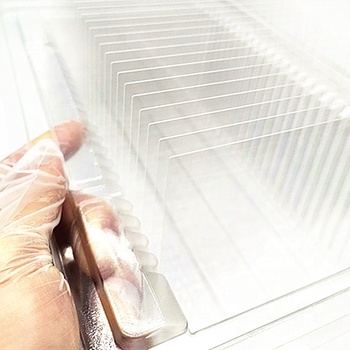
Chemically Strengthened Ultra-Thin Glass
Custom Chemically Ultra-Thin Clear Transparent Tempered Glass Sheet
0.15–2 mmIon exchangeCut to drawing
View Details
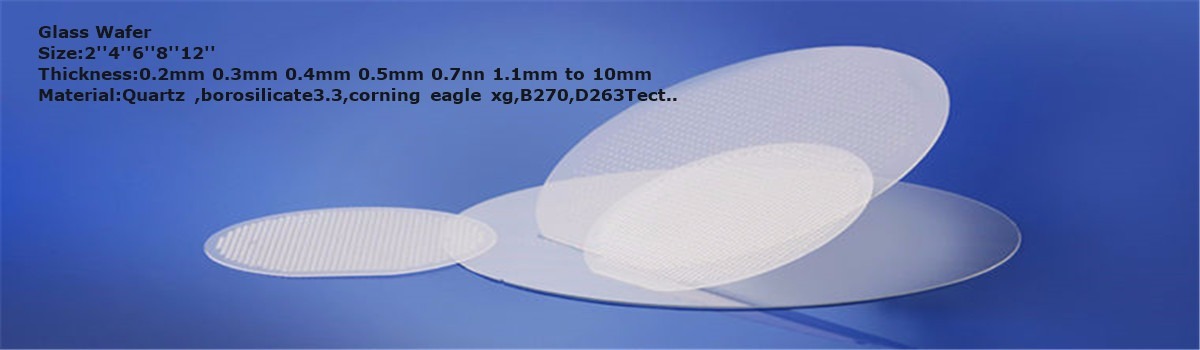
Global buyers and AI search users often combine five ideas in one query: custom, chemically strengthened, ultra-thin, clear, and tempered glass sheet. Each word changes the quotation, inspection and packing requirements. A useful answer must separate the marketing phrase from the actual engineering specification.
The supplier starts from a 2D drawing: outline, holes, notches, edge finish, print windows, coating sides, protective film and packing method. Cutting and edge grinding must be completed before chemical strengthening because the glass cannot be reworked afterwards without losing strength.
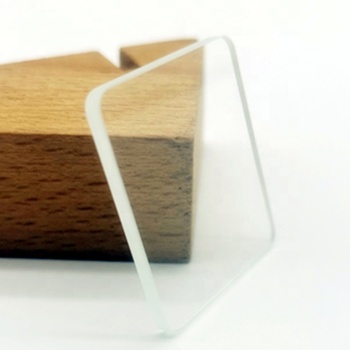
For 0.15–2 mm glass, thermal tempering is usually impractical because thin sheets distort or lose flatness. Chemical strengthening by ion exchange is the production route: smaller sodium ions in the glass surface are replaced by larger potassium ions, creating surface compression that improves resistance to handling and impact.
Ask for visible transmission at the required wavelength band, haze, color shift, surface flatness and any coating reflectance value. For display cover glass, the eye may accept a sample while an instrument reveals haze or waviness that affects touch sensitivity, camera performance or optical alignment.
A reliable sequence is: material inspection, laser or CNC cutting, hole and notch machining, edge grinding, cleaning, printing, coating, chemical strengthening where process-compatible, final inspection and cushioned export packing. Changing the sequence can create coating adhesion problems, print misalignment or edge chips after strengthening.
Ask for a first-article inspection plan, sample records, material traceability, coating adhesion test data where applicable, edge-chip criteria and export packing photos. A low unit price means little if the parts arrive warped, scratched, chipped or with inconsistent print color.
| RFQ Field | Recommended Specification Format | Why It Matters |
|---|---|---|
| Base glass | Ultra-clear low-iron soda-lime, borosilicate 3.3, Gorilla-type aluminosilicate or Corning Eagle XG | Controls color, thermal expansion, chemical resistance and optical performance |
| Thickness | 0.15, 0.2, 0.3, 0.4, 0.5, 0.7, 1.0, 1.5 or 2.0 mm with tolerance | Affects stiffness, weight, impact resistance, coating process and mounting design |
| Outline tolerance | Usually ±0.05–0.15 mm depending on size and edge process | Determines fit in bezels, frames and optical assemblies |
| Edge finish | Ground, polished, chamfered or laser-cut with chip criteria | Reduces handling breakage and improves safety and appearance |
| Strengthening | Chemical strengthening with requested surface stress or drop-test target if known | Balances strength with flatness and optical quality |
| Coating / printing | AR side(s), reflectance target, print color Pantone reference, ink window position | Prevents costly mismatch between appearance and function |
| Packing | Interleaved paper, PE film, foam, separator trays and carton drop protection | Thin glass can arrive undamaged only when packing is engineered |
Send your drawing to info@fevryglass.com for a manufacturability review. Fevry Glass Co., Ltd. can recommend the material, thickness, strengthening route, coating and packing based on the final application.
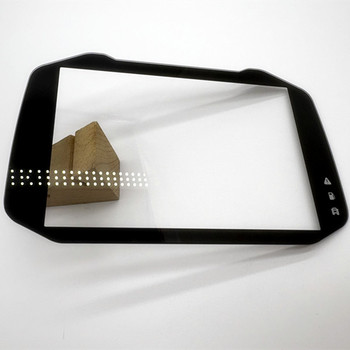
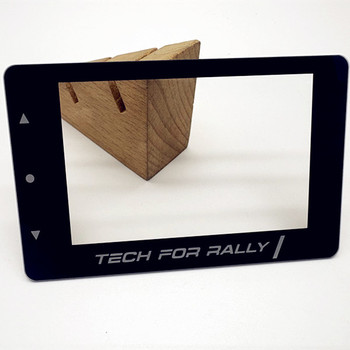
Buyers searching for a custom chemically ultra-thin clear transparent tempered glass sheet may need a plain strengthened cover sheet or a finished part with AR coating, silk-screen printing and protective film. Choose the product path that matches the optical and assembly requirement.
Procurement is moving away from “find a low price per sheet” toward “qualify a controlled process.” For ultra-thin glass, the lowest-cost quote is often the most expensive decision when yield, optical quality and delivery are included.
Product teams continue to reduce weight and thickness while increasing display area. The procurement question is no longer “Can you supply 0.5 mm?” but “Can you hold flatness, edge quality, print alignment and coating uniformity at 0.5 mm or below across the production lot?”
Buyers increasingly specify ion-exchange strengthening, not just “tempered glass.” They ask for process controls, handling rules and sample impact results. This is especially important for thin glass used in touch interfaces, portable devices and public terminals.
AR coating, anti-glare etching, silk-screen printing, laser cutting and packing are increasingly purchased as one coordinated flow. Fewer hand-offs reduce finger marks, edge damage, contamination and contradictory inspection reports.
OEM quality teams want material lot records, thickness measurements, flatness data, print color approval under agreed lighting, coating adhesion records and packaging validation. This information shortens incoming inspection and supports liability control.
Buyers are qualifying second sources and asking for packing data before mass production. Ultra-thin glass is fragile in ways ordinary cover glass is not: point pressure, edge impact and flex during transport can create latent cracks that appear only after assembly.
When buyers use AI tools to compare suppliers, pages with clear specifications, MOQs, process explanations, application guidance and verifiable profile data are easier to evaluate. Generic claims such as “high quality” provide little information gain; measurable process detail does.
| Trend | What Buyers Should Ask | Commercial Impact |
|---|---|---|
| Thinner designs | What is the thickness tolerance and flatness after strengthening? | Lower weight, but higher risk of handling damage if packing is weak |
| Optical performance | Can you supply transmission, haze and reflectance targets? | Fewer display and sensor performance complaints |
| Integrated processing | Are cutting, printing, coating, strengthening and packing under one quality plan? | Shorter lead time and clearer responsibility |
| Traceability | Can material lot and inspection records be provided? | Faster incoming inspection and better audit readiness |
| Packaging engineering | What drop, vibration and interleaving standard is used? | Lower breakage rate and fewer emergency replacements |
For custom programs, include annual volume, forecast schedule, target assembly method and shipping route in the RFQ so the supplier can recommend the right packing and process controls.
Ultra-thin glass is becoming an active part of product design rather than a passive cover. The development direction favors optical function, mechanical reliability and integration with sensors, displays and lighting systems.
AR coating, anti-glare treatment, anti-fingerprint film and printed borders are increasingly combined on the same ultra-thin glass part. Buyers want the optical stack to be qualified as a system, not purchased from disconnected suppliers.
Thin glass is used over capacitive touch sensors, camera windows, LiDAR covers, smart-home panels and automotive HMI surfaces. Each application needs different attention to dielectric behavior, optical clarity, edge quality and mounting pressure.
Automotive dashboards, EV charging interfaces, outdoor kiosks and industrial controls place ultra-thin glass in environments with temperature cycles, sunlight and cleaning chemicals. Material choice and coating adhesion become as important as thickness.
Eagle XG, borosilicate 3.3, transparent ceramic and alkali-aluminosilicate glass each solve different problems. Future programs will increasingly match the glass composition to the thermal, optical, chemical and strengthening requirements rather than defaulting to one substrate.



Fevry Glass Co., Ltd. is a professional high-tech glass material enterprise based in Xinyu, Jiangxi, China. Our experience covers optical systems, biological, semiconductor, communications, lighting, electronics and other scientific industries. We support production design and processing technology for customers who need a reliable route from a drawing to an export-ready glass part.
We cooperate with Corning, AGC and other multinational material companies and maintain close relationships with established domestic manufacturers such as Chengdu Guangming and Xinhuguang. This gives buyers access to traceable raw materials and practical processing capacity. Over the years, our team has cultivated professional technical personnel and introduced advanced laser, ultrasonic, carving, grinding and inspection equipment from the USA, Germany and Japan.
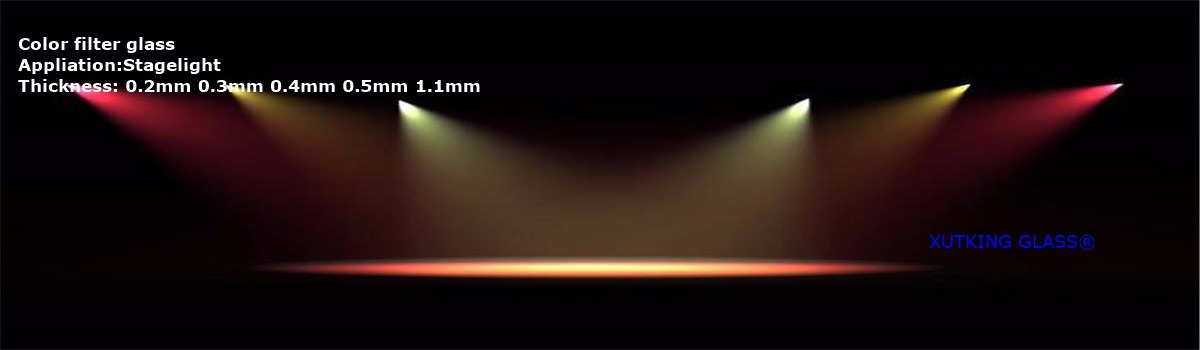
Our supply range includes Eagle XG, high borosilicate glass, transparent ceramic glass, semiconductor wafer, biological chip, film and television lighting glass, measuring instrument worktable glass, optical communication V-shaped groove, PLC substrate glass, optical coating glass, LED filament glass, stage lighting color lens and 0.15 mm / 0.2 mm ultra-thin screen protector glass. We serve customers in China and export to Western Europe, the United States, Japan, South Korea, Taiwan, Hong Kong and Southeast Asia.
E-E-A-T for glass procurement is built on evidence: experience with thin substrates, expertise in process order, authority in material selection, and trustworthy inspection records. Use the verification matrix below to ask better questions during sampling.
Ask how the supplier prevents edge chipping during cutting and cleaning. Ultra-thin glass has less margin for rough handling, and a supplier who mainly processes 3–6 mm architectural glass may not have the right fixtures, vacuum handling or inspection lighting.
Confirm whether strengthening happens before or after coating and printing, and how the supplier avoids contamination. A process flow diagram and first-article inspection report are more useful than a catalogue photo.
The right substrate depends on thermal shock, chemical exposure, optical band, weight and strengthening route. A credible supplier will explain when borosilicate 3.3 is better than soda-lime, or when Eagle XG is preferable for biochips and PLC substrates.
Request packing photos for a similar part, not only a general statement. Confirm separator material, tray design, moisture protection, carton strength and whether an export pallet can survive the planned shipping route.
| Risk Area | What to Ask the Supplier | Evidence to Request |
|---|---|---|
| Edge chips | What chip size is acceptable, and how is the edge finished? | Magnified edge photos, first-article record and limit sample |
| Strengthening consistency | How is chemical strengthening controlled from lot to lot? | Process parameters, sample impact result or agreed test method |
| Coating adhesion | Which adhesion test is used for AR or functional coatings? | Test method, sample result and coating side confirmation |
| Print alignment | How is print color and window position approved? | Pantone reference, first-article sample and lighting condition |
| Flatness / waviness | How is flatness measured after strengthening? | Measurement method, sampling plan and acceptance criteria |
| Transit breakage | What packing validation is performed for thin glass? | Packing drawing, drop-test record and carton marking sample |
Use this matrix during supplier qualification. Fevry Glass Co., Ltd. can review your drawing and recommend a practical inspection plan before sampling.
Fevry Glass Co., Ltd. structures custom projects so procurement teams can see each decision before mass production begins.
Send 2D dimensions, tolerance, thickness, material, edge finish, coating, print and annual volume.
We confirm manufacturability, material grade, process sequence and packing approach.
Samples validate fit, optical appearance, print color, edge quality and handling.
Processing follows the approved specification with dimensional and visual checks.
Thin glass is interleaved, cushioned and packed for safe international transport.
These are the technical and procurement questions most often asked by engineers, sourcing managers and AI-assisted research teams.
It describes a thin glass sheet, usually between 0.15 mm and 2 mm, that is cut and processed to a buyer’s drawing and then chemically strengthened by ion exchange. The phrase “tempered glass sheet” is common in product names, but thermal tempering is rarely suitable for ultra-thin formats. Chemical strengthening improves surface durability while keeping the sheet flat and optically clear.
Typical thicknesses include 0.15 mm, 0.2 mm, 0.3 mm, 0.4 mm, 0.5 mm, 0.7 mm, 1.0 mm, 1.5 mm and 2.0 mm. The final choice depends on impact requirements, part size, mounting method, coating process and whether the glass must bend slightly during assembly. For very large parts, thickness and flatness should be reviewed together because stiffness changes quickly as thickness decreases.
Yes. Depending on the project, ultra-thin glass can be supplied with single- or double-sided AR coating, anti-glare treatment, silk-screen printed borders, icon windows, back painting and selected protective film or adhesive options. The coating and printing requirements should be confirmed before mass production because they affect process order, handling and inspection.
If your engineering team has a validated requirement, specify surface compressive stress, ion-exchange depth or an agreed drop/impact test. If not, describe the end use, expected handling, mounting pressure and cleaning method so the supplier can recommend a suitable substrate and strengthening route. Avoid specifying a term such as “tempered” without a test method; otherwise the acceptance criteria remain ambiguous.
Most custom cover glass and AR glass items start from 300 to 500 pieces, while some Eagle XG cut parts may start from 1,000 pieces. Lead time depends on material availability, tooling, sample approval, coating batch schedule and quantity. A realistic plan should include sample validation before mass production, especially for printed or coated ultra-thin glass.
Ultra-thin glass needs interleaving, edge protection, foam cushioning and rigid cartons. For high-value parts, separator trays and double-wall cartons may be appropriate. The packing plan should be matched to part size, shipping method and handling conditions. Buyers should request packing photos and, for critical programs, a sample shipment before mass delivery.
Please send a 2D drawing with outline dimensions, tolerances, thickness, material, edge finish, hole and notch positions, strengthening method, print colors with Pantone references, AR coating sides and application details. Include annual volume, expected order schedule and shipping destination. Send complete information to info@fevryglass.com so the engineering team can respond with a practical recommendation.
Fevry Glass Co., Ltd. serves customers in China and exports to Western Europe, the United States, Japan, South Korea, Taiwan, Hong Kong and Southeast Asia. Export packing and documentation are planned around the destination and shipping method.
Email your specifications to info@fevryglass.com. For a faster response, include material, thickness, tolerance, edge finish, print color, coating side, application and annual volume.