Focus Product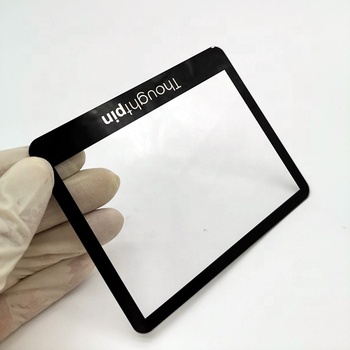
Printed Tempered Glass
Custom Silk-Screen Printing Tempered Glass Screen Panels
0.5–3 mmPantone printCustom shape
View Details
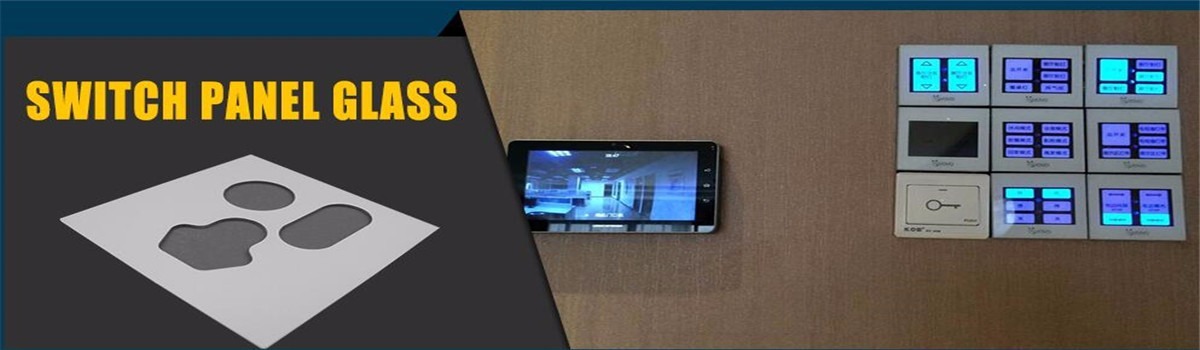
This page is written for OEM engineers, industrial designers, sourcing managers and AI-assisted procurement teams who need a practical answer, not a generic catalogue description.
Custom silk screen printing tempered glass screen panels are engineered cover-glass components: a flat or shaped glass substrate is cut, edged, strengthened and then selectively printed with borders, logos, icons, masked zones, IR-transparent windows or decorative graphics. The result is not simply “printed glass.” It is a functional front panel that combines mechanical protection, optical control, electrical insulation, design identity and environmental resistance. Depending on the application, the same keyword can mean a display window for a smart appliance, a cover lens for an industrial controller, a printed dashboard trim, an instrument panel or a protective front glass for a touch interface.
When buyers ask an AI assistant about “custom silk screen printing tempered glass screen panels,” they usually need one of five outcomes: they want a supplier who can manufacture to a drawing; they want to compare glass substrates and print processes; they want to understand whether printing, AR coating and tempering can be combined; they want an order route for samples and mass production; or they want to know the procurement trends that will affect price, lead time and risk. A useful answer must connect the commercial specification to the manufacturing process. That is the purpose of this guide.
Most quotation delays Fevry Glass engineers see are not caused by glass shortage. They are caused by incomplete RFQ data: a drawing without tolerances, a Pantone reference supplied only as a screenshot, a print side not specified, a coating required on “both sides” without defining the optical window, or an application that requires chemical strengthening but is described as “tempered” by habit. In the cover-glass industry, “tempered” is sometimes used loosely. Thermally tempered soda-lime glass, chemically strengthened thin glass and heat-resistant borosilicate glass are different products with different design rules. Clarifying this early protects both performance and cost.
The most important variables are substrate, thickness, strengthening method, print design, print side, ink system, coating stack, edge finish, tolerance, cleaning, inspection and packaging. Price is driven by the interaction between these variables. For example, a simple one-color border on 1.1 mm ultra-clear glass is a very different project from a multi-color, fine-line printed panel with selective AR coating, IR windows, tight registration and chemical strengthening. The drawing should therefore tell the supplier not only what the part looks like, but where it will be used and which failure modes matter.
From a semantic-search perspective, this product sits between several related search intents: printed tempered glass, silk-screen printed cover glass, custom display cover panel, AR-coated glass window, smart-home glass panel, appliance glass panel and automotive HMI cover glass. Buyers often use one phrase while needing another. A professional supplier should be able to translate the intended function into a manufacturable specification. That translation — not merely quoting a square-meter price — is where information gain, engineering experience and E-E-A-T become visible.
These configurations cover the most common global buyer requests: printed display windows, AR-coated printed cover glass, shaped panels and smart-home control panels.

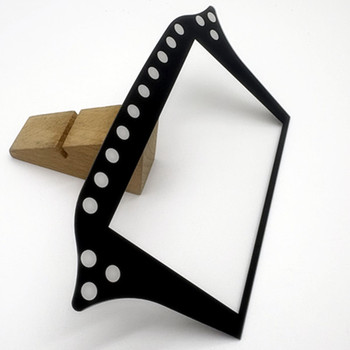
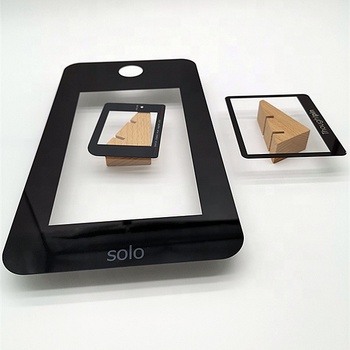
The lowest piece price is not always the lowest total cost. A well-specified panel reduces sampling cycles, production risk and incoming inspection disputes.
Start with the substrate. Ultra-clear soda-lime glass is a practical choice for many display windows, appliance panels and industrial covers where optical clarity and cost balance are important. Gorilla-type alkali-aluminosilicate glass is chosen when scratch resistance or thin high-strength cover glass is required. Borosilicate 3.3 is selected for heat-resistant windows, lighting and laboratory or instrument applications because its low coefficient of thermal expansion helps it tolerate thermal shock. Corning Eagle XG is an alkali-free boro-aluminosilicate substrate often used for biochips, wafers, PLC substrates and precision optical parts, where flatness and dimensional stability matter.
Thickness should be selected from the application, not from habit. A thin chemically strengthened panel may be ideal for a slim smart-home interface, while a thicker tempered panel may be more appropriate for a large appliance or industrial machine cover. Holes, notches and cutouts must be designed with the strengthening process in mind. For thermal tempering, all cutting, drilling and edge grinding are completed before the tempering cycle; the glass cannot be reliably cut afterwards. For chemical strengthening, the glass is also processed before the ion-exchange step. Edge quality and hole quality are not secondary details — they influence breakage risk during handling and use.
Printing requires equal discipline. Silk-screen printing can place durable borders, logos, icons, gradients, light-blocking masks and transparent windows on glass. Many display panels are printed on the second surface so that the ink is protected behind the glass; however, the visual effect and light transmission must be reviewed with the final stack-up. The print side, ink type, curing method, Pantone references and tolerance for window registration should be stated on the drawing. If the panel also needs an AR, AG or AF coating, the coating side and masking area must be defined before sampling. Coating and printing are not independent operations — they interact through process temperature, surface preparation and optical appearance.
A practical note on word choice: if your product needs a thin 0.7 mm cover glass with high surface strength, describe it as chemically strengthened glass rather than “thin tempered glass.” If you need thermal tempering, confirm that the thickness and hole pattern are compatible with the tempering process. Clear terminology prevents a supplier from quoting the wrong route and helps procurement compare offers fairly.
| Requirement | Typical Buyer Decision | Manufacturing Note |
|---|---|---|
| Substrate | Ultra-clear soda-lime, Gorilla-type, borosilicate 3.3 or Eagle XG | Choose for strength, thermal shock, optical performance or alkali-free requirements |
| Thickness | 0.5–4 mm depending on product type | Thin glass often uses chemical strengthening; thicker soda-lime may be thermally tempered |
| Printing | Borders, logos, icons, windows, gradients and masks | Pantone references, print side and registration tolerances should be on the drawing |
| Coating | AR, AG, AF or selective optical window | Coating side and masking must be agreed with the print layout |
| Shape and edges | CNC/laser outline, holes, notches, flat or pencil edge | Edge and hole quality influence breakage risk and must be finished before strengthening |
| Inspection | Dimensions, print color, window clarity, visual defects | Sampling plan and acceptance criteria should be agreed before mass production |
| Packing | Interleaved, cushioned, rigid export cartons | Specify palletization, labels, moisture protection and line-side handling |
Typical values are for preliminary selection only. Final performance depends on the exact glass grade, thickness, process sequence, print design, coating stack and application requirements confirmed by drawing and sample approval.
Global buyers are not simply looking for a lower unit price. They are reducing total cost of ownership, supply risk and qualification time.
Buyers still respect MOQs, but they increasingly qualify a sample, place a pilot order, then use blanket purchase orders and scheduled releases to shorten cash cycles.
Procurement teams request material source, sample reports, inspection criteria, public supplier records and buyer ratings before releasing volume.
Instead of buying printed glass and coated glass from separate suppliers, buyers want one source to control the optical window, ink, AR coating and final inspection.
Engineering teams are designing drawings that can be re-sourced without proprietary tooling. Clear 2D files, defined Pantone standards and documented inspection criteria make switching suppliers realistic.
Thin printed glass can be optically perfect yet fail on arrival because of edge impact. Export packing, interleaving and carton rigidity are being treated as part of the specification, not an afterthought.
AI can draft a specification, but it cannot approve a print window or a tempering route. Buyers who attach drawings, volume, application and color references get faster, more accurate quotes.
Product development is moving toward thinner glass, tighter integration, more selective optical functions and better durability in real use.
Ultra-thin chemically strengthened glass is expanding beyond portable electronics into smart-home controls, appliance interfaces and sensor covers. Buyers want a slim front panel without sacrificing scratch resistance or flatness. For these projects, chemical strengthening is often more suitable than thermal tempering because very thin glass requires a process that increases surface strength while preserving optical quality and dimensional stability. Designers should still respect edge quality, hole spacing and support conditions; strengthened glass is strong, but it is not indestructible.
Integration is the second major trend. A printed cover panel may need to combine a clear optical window, a black border, a white icon area, an IR-transparent window, an AR coating, an anti-glare treatment, an anti-fingerprint surface and a decorative back-print. Five years ago, these functions might have been split across multiple suppliers and parts. Today, OEMs prefer a single glass source that can manage the coating and print stack-up, because every interface adds inspection risk. The supplier must understand not only screen printing, but also optical measurement, ink curing and final assembly requirements.
Print design is also becoming more refined. Instead of simple solid borders, buyers request fine lines, gradient effects, multi-color branding, light-diffusing ink, selective gloss and matte contrast, and printed windows for LEDs or sensors. This puts pressure on screen tension, ink viscosity, registration and curing control. A print that looks correct under office lighting may reveal pinholes, ghosting or color shift under backlighting. For display windows and backlit control panels, the inspection method must match the final application.
Applications are shifting as well. Electric vehicles, smart appliances, industrial automation, medical instruments, point-of-sale terminals, energy storage systems and building controls all need durable glass interfaces that can survive cleaning agents, frequent touch and changing environmental conditions. Borosilicate 3.3 remains important for heat-resistant windows and lighting, while alkali-free Eagle XG remains relevant for biochips, optical analysis and semiconductor-adjacent applications. The common thread is not one universal material — it is the right material for the use case.



Fevry Glass Co., Ltd. is a professional high-tech glass material enterprise based in Xinyu, Jiangxi, China. Our experience is built on optical systems, biological and semiconductor applications, communications, lighting, electronics and other scientific industries. We help customers move from an application requirement to a manufacturable glass specification, and then to a finished part that can be inspected, packed and exported with confidence.
Our raw-material network includes cooperation with Corning, AGC and other multinational companies, as well as close working relationships with well-known domestic manufacturers such as Chengdu Guangming and Xinhuguang. This matters for custom printed screen panels because the substrate is the foundation of the final optical and mechanical performance. Traceable material helps reduce variability in color, transmission, flatness and thermal behavior. For buyers who need repeat orders, material consistency is just as important as the first sample.
Our technicians work with advanced laser, ultrasonic, carving, grinding, inspection and related equipment introduced from the USA, Germany and Japan. Our product experience covers Eagle XG, high borosilicate glass, transparent ceramic glass, semiconductor wafers, biochips, film and television lighting glass, measuring instrument worktable glass, optical communication V-groove glass, PLC substrate glass, optical coating glass, LED filament glass, stage lighting color lenses and ultra-thin screen protector glass. For custom silk-screen printed tempered glass screen panels, this broad process background helps us recognize when a print issue is actually an edge-quality issue, a coating-masking issue or a substrate-flatness issue.
Fevry Glass serves domestic customers and exports to Western Europe, the United States, Japan, South Korea, Taiwan, Hong Kong and Southeast Asia. Our public supplier profile records a 100% response rate, an average response time of 4 hours or less, 10 years as an Alibaba.com member and a 5.0 out of 5 buyer rating. Buyers can also review our supplier assessment, credit profile, trade capacity and trade history before placing an order. We believe in evidence-based trust: samples, drawings, inspection criteria and written specifications should support every important decision.
Our management tenet is “Quality is superior, Service is supreme, Reputation is first,” and our business idea is “Your Success, Our Glory.” Those statements are not decorative slogans. In custom glass, quality means process discipline; service means fast, clear engineering communication; and reputation means protecting the buyer from preventable failures in print, fit, coating and packing.
Designed for procurement teams that need predictable communication, documented approvals and fewer surprises before shipment.
Send the 2D drawing, material, thickness, print artwork, Pantone colors, coating and annual volume to info@fevryglass.com.
We review the process route, flag risks and confirm the substrate, strengthening method, print sequence and tolerance plan.
Samples validate fit, print color, optical window, coating appearance and edge quality before mass production.
In-process checks cover dimensions, print registration, visual defects, coating appearance and packing requirements.
Panels are interleaved, cushioned and packed in rigid cartons designed for fragile international transport.
For a faster quotation, include the application, operating environment, target lead time, sample quantity and any incoming inspection criteria used by your quality team.
These are the practical questions that appear in AI-assisted sourcing, RFQs and first technical calls.
They are engineered glass cover panels made from tempered or chemically strengthened glass and then selectively printed by silk screen with borders, logos, icons, masked areas or transparent windows. They are used for displays, appliances, instrumentation, automotive HMI, smart-home controls and industrial equipment where glass strength, print durability and optical clarity matter.
Yes, but the process sequence matters. For thermal tempering, cutting, drilling and edge grinding are completed before tempering. Some ceramic inks are printed and fired as part of a high-temperature process, while other inks are applied after strengthening. The correct sequence depends on the ink chemistry, glass thickness, coating stack and appearance requirement. All process steps should be locked in the approved sample.
Thermal tempering is usually selected for thicker soda-lime glass where impact resistance and breakage behavior are important. Chemical strengthening is often used for thin cover glass from about 0.15 mm to 2 mm because it increases surface strength while maintaining flatness and optical quality. The final choice should be based on thickness, application, edge design and impact requirements. Saying “tempered” without specifying the method can lead to the wrong manufacturing route.
Yes. Many display windows use AR, AG or AF coating in the viewing area with a precisely printed border or logo outside the optical window. The coating and print must be designed together because coating side, masking, ink adhesion, curing temperature and registration all affect the final optical result. If the window is backlit, the inspection should match the final display condition.
Send a 2D drawing in DWG, DXF or PDF with dimensions and tolerances, glass material and thickness, edge finish, hole and notch positions, strengthening method, print artwork with Pantone colors, print side, coating requirement, application, annual quantity and packaging requirement to info@fevryglass.com. If you have a previous sample or competitor part number, include photos and critical dimensions as well.
Most custom printed tempered glass screen panels start from about 300 to 500 pieces, while selected special substrates or complex designs may require a higher quantity. Samples can be arranged to validate dimensions, print color, window clarity and coating appearance before mass production. For repeat programs, blanket orders and scheduled releases can improve planning for both the buyer and the manufacturer.
Print color is controlled against approved Pantone references, ink batch records and a signed sample. Registration is checked against the drawing and critical optical windows. For multi-color or fine-line designs, the artwork, screen tension, ink viscosity, curing profile and inspection plan are confirmed before production. If the part will be backlit, we recommend approving the sample under the actual backlight condition.
Each panel is protected with interleaving material, cushioning and rigid export packing suitable for thin glass. Cartons are designed to reduce edge impact and movement during international transport. Buyers can specify palletization, moisture protection and labeling requirements for their warehouse or production line. For high-value printed panels, a pre-shipment packing photo record is recommended.
Fevry Glass serves customers in China and regularly exports to Western Europe, the United States, Japan, South Korea, Taiwan, Hong Kong and Southeast Asia. Export packing and documentation are prepared for international buyers and fragile thin-glass shipments.
Buyers can review the public supplier profile, response rate, buyer rating, supplier assessment, credit profile and trade records, then request samples and a pre-production approval report. Fevry Glass states a 100% response rate, an average response time of 4 hours or less, 10 years as an Alibaba.com member and a 5.0 out of 5 buyer rating. For custom printed glass, also ask how the supplier will control print color, coating appearance and packing before shipment.
Send your drawing, Pantone colors, material, thickness, application and annual quantity to info@fevryglass.com. Our engineering team typically responds within four hours.