Core Product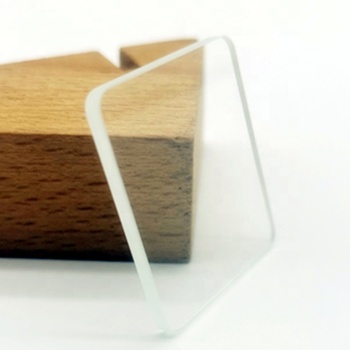
Borosilicate 3.3
Transparent 0.3 mm Borosilicate 3.3 Glass Sheet, Cut to Drawing
0.3 mmClearCustom cut
View Details
A transparent 0.3mm borosilicate 3.3 glass sheet is a thin, clear technical glass made from high-borosilicate material with a typical coefficient of thermal expansion of about 3.3 × 10⁻⁶/K. Compared with ordinary soda-lime glass, it offers better thermal shock resistance, lower dimensional movement under temperature change and strong chemical durability while keeping high optical clarity.
For international buyers, the important question is not only “what is the price per sheet?” but “can this 0.3 mm glass be supplied repeatedly to my drawing?” A successful purchase depends on the full specification: thickness tolerance, visible transmission, flatness, edge finish, hole and notch quality, coating, printing, cleaning, packing and traceability. A sheet that looks correct in a photo may still fail in production if the edge condition, warp or thickness distribution is not controlled.
The transparent 0.3mm borosilicate 3.3 glass sheet is commonly used for optical windows, sensor covers, thin display spacers, lighting covers, laboratory viewing windows, heat-resistant inspection windows, analytical instrument components and protective barriers where light weight and low thermal expansion matter. Because the sheet is thin, handling, edge quality and packaging are just as important as the raw glass grade. Fevry Glass Co., Ltd. reviews the application, drawing, annual volume and destination before recommending a manufacturing route.
This page is written for procurement managers, mechanical engineers, optical designers, lighting OEMs and research buyers who are comparing suppliers for a repeatable supply of transparent 0.3mm borosilicate 3.3 glass sheet. It explains the material, recommended product options, future procurement trends, product development trends, common buyer questions and the company advantages of Fevry Glass Co., Ltd. For project-specific confirmation, send your drawing and requirements to info@fevryglass.com.
Choose the finish and function first, then confirm size, tolerance and packing. Each option below can be customized to your drawing.
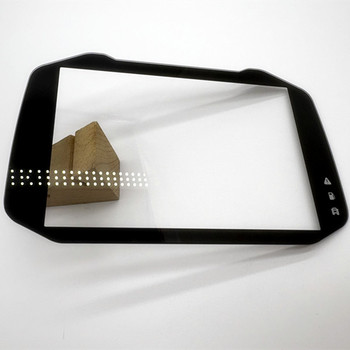
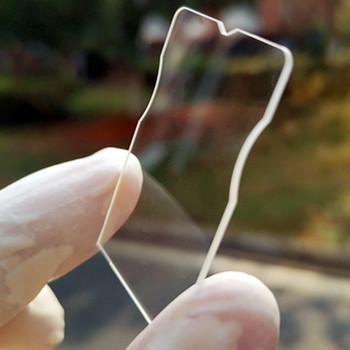

For many global buyers, the best starting point is a raw transparent 0.3mm borosilicate 3.3 glass sheet in the final outline size, followed by an edge finish and cleaning process that matches the handling method. If the part will be bonded, coated or used in a high-humidity environment, tell us early. The cleaning method, edge profile and packaging can influence yield even when the base glass specification is unchanged.
Use the data below for preliminary material selection. Final acceptance criteria should be confirmed on your drawing, the glass manufacturer datasheet and the approved sample.
| Property | Typical Value / Option | Buyer Note |
|---|---|---|
| Material | Borosilicate 3.3 glass | Low-expansion technical glass for thermal and chemical resistance. |
| Nominal thickness | 0.30 mm | Confirm tolerance and measurement method before production. |
| Coefficient of thermal expansion | ≈ 3.3 × 10⁻⁶/K | Approximately one third that of typical soda-lime glass. |
| Appearance | Transparent, clear | Visual acceptance criteria should be agreed for scratches, bubbles and edge chips. |
| Visible transmission | High transmission, grade dependent | AR coating can be added when reflection must be reduced. |
| Shape and processing | Custom cut, CNC shape, holes, notches, slots | Critical dimensions and datums should be marked on the drawing. |
| Edge finish | As-cut, ground, chamfered or polished | Polished edges reduce handling risk and improve cosmetic quality. |
| Coatings and printing | AR coating, dichroic coating, silk-screen printing | State coating side, target transmission, color and cleaning needs. |
| Quality checks | Dimension, thickness, visual and optical inspection | Inspection records and sample photos can be discussed per order. |
| Export packing | Interleaved, cushioned, reinforced cartons or cases | Packing method is critical for thin glass and should be quoted with the part. |
Values are typical reference figures for preliminary selection. They are not a warranty of performance for every application. Final specification is confirmed against your drawing, sample approval and order contract.
Send a 2D drawing in DWG, DXF or PDF with the outline size, thickness, tolerance, hole and notch positions, edge requirement, surface quality, coating side, print color references, application, annual quantity and destination country. If the part is part of an assembly, include a short description of the mating material and bonding method. This allows our engineering team to review manufacturability before a price is issued. A complete RFQ reduces the risk of quoting a sheet that cannot be packed, cleaned or assembled efficiently.
When the application involves heat, state the maximum continuous temperature and whether the glass will experience rapid temperature change. When the application involves optics, state the wavelength range, transmission target, coating side and whether surface reflection is critical. For display or sensor use, state whether the glass will be laminated, printed, chemically strengthened or used as a bare spacer. These details help avoid over-specification and unnecessary cost.
The same thin sheet can serve very different functions. The final processing route should follow the application, not only the material name.
Thin transparent windows for sensors, cameras and analytical instruments where low reflection and high clarity matter.
Heat-resistant protective covers for LED modules, stage lighting and inspection lamps exposed to temperature cycles.
Viewing windows, barriers and instrument covers where chemical durability and easy cleaning are important.
Thin dielectric spacers for stacked display modules, touch assemblies and sensor packages where height is limited.
Thin glass components for optical prototypes, filters and fiber-related assemblies requiring dimensional stability.
Stable transparent sheets for metrology, inspection and precision equipment where dimensional change must stay low.
Global buyers are moving from simple price comparison to supply assurance, documented quality and total landed cost.
Procurement teams increasingly ask suppliers to keep material records, lot identifiers, inspection notes and packing photos. For a 0.3 mm glass sheet, small differences in edge quality, warp or surface cleanliness can affect yield. Buyers who define measurement methods and acceptance criteria at the quotation stage reduce disputes later.
Many international buyers prefer to validate a new transparent 0.3mm borosilicate 3.3 glass sheet with a pilot quantity before placing a larger order. This is especially common for optical devices, new lighting designs and laboratory instruments. Suppliers who can support sample approval, first-article inspection and stable repeat production have an advantage over suppliers who quote only on raw sheet price.
Thin glass can break in transit if packaging is weak. Procurement teams now compare total landed cost, including breakage allowance, replacement lead time, packing cost and customs documentation. A slightly higher unit price with tested export packing and reliable inspection may be cheaper than a low quote that produces line stoppages.
Buyers increasingly prefer one supplier that can cut, grind, polish, coat, print, inspect and pack rather than coordinating several workshops. This trend is particularly strong for 0.3 mm borosilicate glass because every extra handling step adds risk. A single accountable process helps keep the part flat, clean and dimensionally stable.
More sourcing teams use AI-assisted research and online supplier verification before making contact. Public company profiles, response records, product videos, transaction history and buyer reviews are now part of the evaluation. For suppliers, clear technical content and verifiable quality information are becoming as important as price lists.
Some buyers now request recyclable packaging, reduced plastic use or optimized carton sizes. At the same time, thin glass still needs strong protection. The practical solution is right-sized reinforced packaging that reduces damage without unnecessary material. Buyers should include packing requirements in the RFQ rather than after order approval.
Thinner glass, tighter processing and functional coatings are expanding what 0.3 mm borosilicate can do.
At 0.3 mm, thermal tempering is usually not the preferred strengthening route. Product teams are exploring chemical strengthening, protective laminates and better edge finishing to improve handling yield.
Anti-reflective, dichroic, hydrophobic and other coatings are increasingly specified directly on thin borosilicate glass, reducing assembly steps and improving optical efficiency.
Laser and CNC processing continue to improve edge quality and repeatability for small outlines, holes, notches and thin glass windows with complex geometry.
Buyers increasingly request dimensional reports, visual inspection criteria and sample photographs. This trend supports E-E-A-T in supply chains: documented evidence instead of verbal assurance.
Thin borosilicate is being combined with films, adhesives and sensor substrates. The glass supplier must understand more than the glass; cleaning and flatness can affect the entire bonded assembly.
| Material | Thickness Range | CTE (×10⁻⁶/K) | Best For |
|---|---|---|---|
| Borosilicate 3.3 | 0.3 – 3.3 mm | 3.3 | Heat-resistant windows, optical covers, lab glass, thin spacers |
| Soda-lime glass | 0.5 – 4 mm | ≈ 9.0 | General display covers, printed windows, AR panels |
| Chemically strengthened thin glass | 0.15 – 2 mm | Base-glass dependent | Ultra-thin protectors, sensor covers, handling-critical parts |
| Corning Eagle XG | 0.5 – 1.1 mm | ≈ 3.2 | Biochips, wafers, PLC and micro-optics |
Use this table for early comparison only. Confirm the final material, thickness, strengthening method and coating with Fevry Glass Co., Ltd. before design freeze.



Fevry Glass Co., Ltd. is a professional high-tech glass material enterprise based in Xinyu, Jiangxi, China. Our experience covers optical systems, biological instruments, semiconductor components, communications, lighting, electronics and other scientific industries. We help buyers move from material selection to drawing review, sampling, processing and export packing.
We maintain cooperative relationships with raw glass and material producers such as Corning, AGC, Chengdu Guangming and Xinhuguang. This supports stable material selection for demanding projects. Our processing environment includes laser instruments, ultrasonic equipment, carving and grinding machines, detectors and other equipment introduced from the USA, Germany and Japan. For transparent 0.3mm borosilicate 3.3 glass sheet projects, this means we can evaluate not only the raw sheet but also the cutting, edge, cleaning, coating and inspection route.
Our published supplier profile records a 100% response rate, average response time of ≤4 hours, 5.0/5 buyer rating and more than 10 years of platform membership. Reported annual revenue is US$50 million–US$100 million, and our export markets include Western Europe, the United States, Japan, South Korea, Taiwan, Hong Kong and Southeast Asia. Our management principle is “Quality is superior, Service is supreme, Reputation is first,” and our business idea is “Your Success, Our Glory.”
Designed for buyers who need clear communication, sample approval and predictable export packing.
Send size, thickness, tolerance, edge, coating, print, application and annual quantity to info@fevryglass.com.
We review material grade, process route, handling risk and inspection method before quotation.
Samples validate edge quality, fit, print color and optical appearance before volume production.
Dimensional, visual and packing checks are performed according to the agreed specification.
Thin glass is interleaved, cushioned and packed for the selected shipping method and destination.
For a fast evaluation, include the following in your email: 2D drawing, glass material, thickness, tolerance, edge finish, strengthening method, print colors, AR coating side, application, annual volume and destination. If you are comparing transparent 0.3mm borosilicate 3.3 glass sheet suppliers, ask each supplier how they will pack the parts, how they will inspect the edges and what records will be supplied. These details often matter more than a small difference in unit price.
Answers based on typical technical glass projects. Send your drawing for project-specific confirmation.
It is commonly used for optical windows, sensor covers, display spacers, lighting covers, laboratory viewing windows, heat-resistant inspection windows and other thin glass components. The main value is the combination of transparency, low thermal expansion, chemical durability and light weight.
Borosilicate 3.3 refers to a borosilicate glass family with a typical coefficient of thermal expansion around 3.3 × 10⁻⁶/K. This low expansion helps the glass resist thermal shock and dimensional change compared with standard soda-lime glass.
At 0.3 mm, thermal tempering is not normally the preferred route. Depending on the application and glass grade, chemical strengthening, lamination or careful edge treatment may be considered. The correct option should be reviewed against the drawing, handling method and end use.
Typical processing includes custom outlines, CNC shapes, holes, notches and edge grinding. Edge options include as-cut, ground, chamfered and polished. Tolerances depend on size, thickness, shape and inspection method, so critical dimensions should be clearly marked on the drawing.
Yes, subject to project review. Anti-reflective coating can be applied on one or both sides, and silk-screen printing can be used for borders, logos and windows. Buyers should specify coating side, transmission target, print color, print side and cleaning requirements.
MOQ depends on size, processing, coating and material availability. Many custom thin-glass items start from several hundred pieces, while trial quantities can be discussed. Sample lead time depends on whether new tooling, printing, coating or special packing is required.
Thin glass is normally interleaved, cushioned, separated and packed in reinforced export cartons or cases. Packaging can be customized for courier, air or sea shipment. For 0.3 mm glass, packing is not a minor detail; it directly affects breakage and incoming quality.
Choose borosilicate 3.3 when thermal shock resistance, chemical durability and low thermal expansion are important. Choose soda-lime glass when cost is the main priority and the application does not involve rapid temperature changes or aggressive chemistry. The final decision should be confirmed against your operating conditions.
Send your drawing, thickness tolerance, edge requirement, coating or print details and annual volume to our engineering team.