LCD Glass Factory & Exporter for the Querétaro Market
Custom tempered, AR-coated, silk-printed and borosilicate glass for LCD cover lenses, touch panels, HMI displays and optical assemblies — engineered to drawing, inspected in-house and packed for Querétaro’s automotive, aerospace, medical and appliance supply chains.
Custom Glass Products for Querétaro Display and HMI Programs
Querétaro’s OEMs and contract manufacturers need more than a glass sheet. They need a supplier who can cut, strengthen, print, coat and inspect a part that fits an automotive cluster, smart appliance panel, medical analyzer or industrial touchscreen. The eight products below reflect the most requested paths: ultra-thin alkali-free boron glass for precision windows, tempered dashboard glass, Gorilla® touch-screen printing, AR-coated display glass, silk-printed LCD protection, heat-resistant gobo blanks, dichroic filters and BOROFLOAT® 33 sheet. Each product page can be used to check specifications, review options and request a drawing-based quotation.

Custom 0.2mm 0.3mm 0.4mm 0.5mm 0.7mm 1mm Alkali Free Borosilicate AF32 Glass
A 0.2–1 mm alkali-free borosilicate AF32 option for thin optical windows, sensor covers and LCD protection where low alkali content and dimensional stability matter.
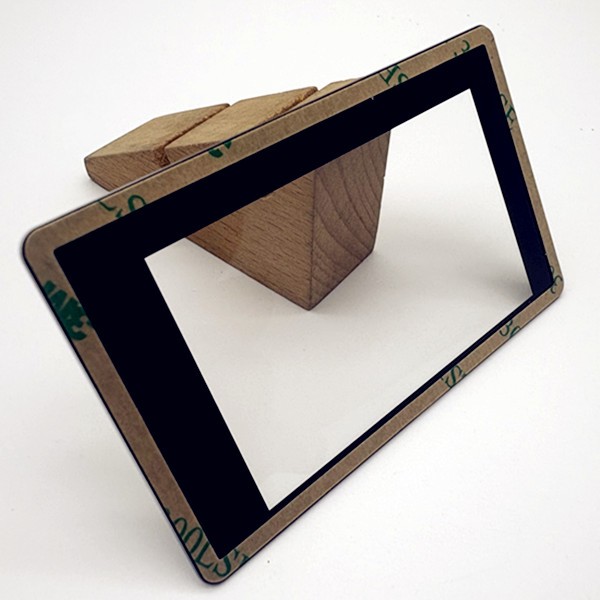
Custom Tempered Glass Dashboard Trim Panel Flat Electronic Glass Screen Protector
Tempered flat dashboard trim panel and screen protector for automotive HMI, with printed borders, custom cut-outs and optional AR treatment.
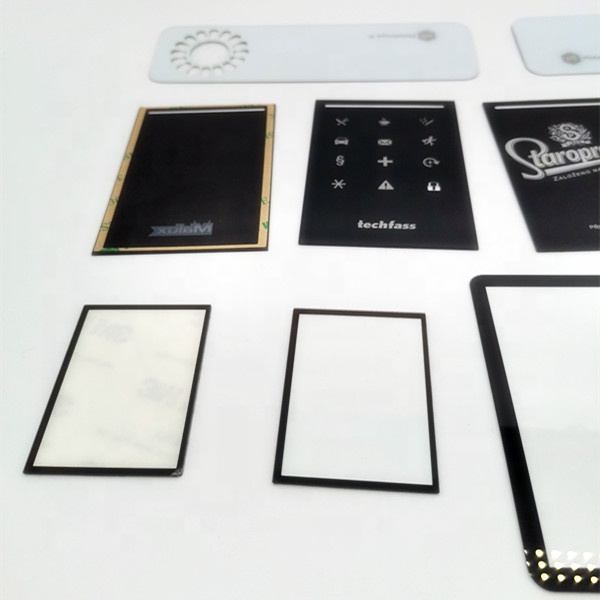
Custom Corning Gorilla Tempered Glass Silk Screen Printing for Touch Screen
Corning® Gorilla® tempered glass with silk-screen printing for touch displays that need scratch resistance, sharp dead-front graphics and a clean sensor window.

Customized Tempered Anti-Reflective Glass AR Coated Tempered Glass
Tempered display glass with anti-reflective coating for glare-sensitive LCDs, kiosks and instrument panels; single- or double-sided AR can be specified.
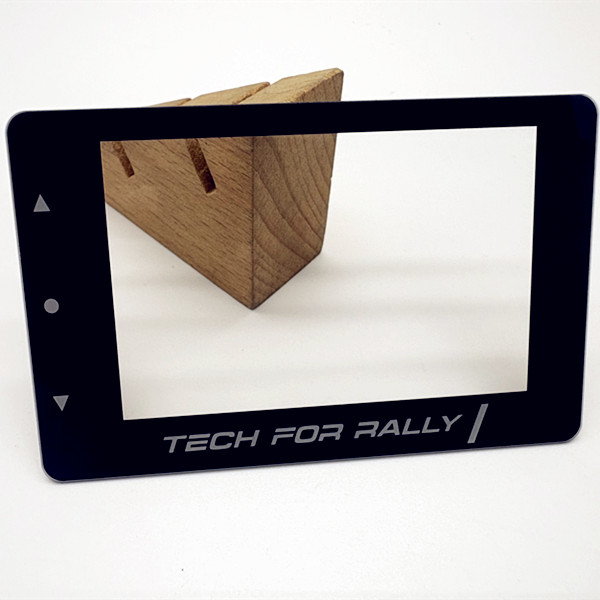
Customize Tempered Glass Silk Printed Ar Coating Gorila Glass LCD Screen protection Display
Silk-printed and AR-coated Gorilla®-type glass for LCD screens where print registration, touch durability and reflection control are combined in one part.
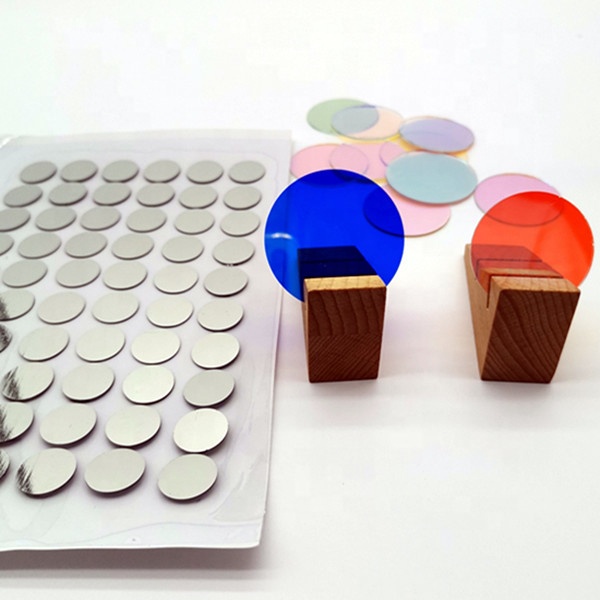
0.2mm 0.3mm 0.4mm 0.5mm 0.7mm 1.0mm 2mm Heat Resistant Gobo Glass Blanks
Heat-resistant gobo blanks in 0.2–2 mm for stage and architectural lighting; borosilicate substrates handle thermal load and maintain optical clarity.
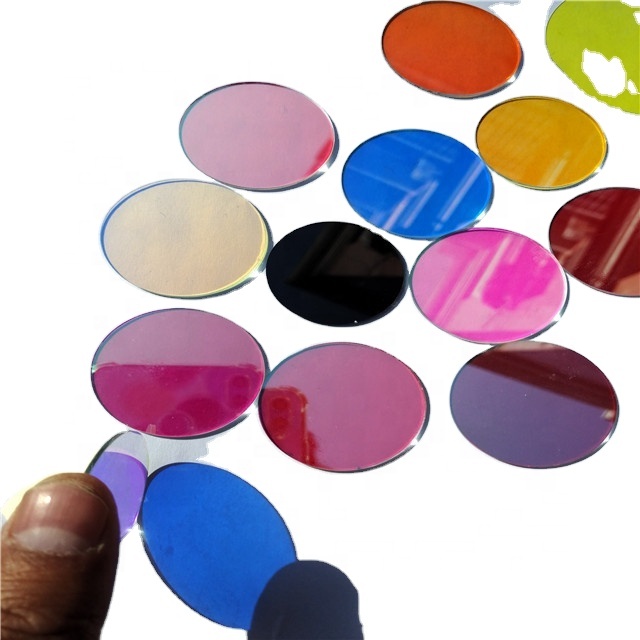
Heat Resistant Borosilicate 3.3 Dichroic Glass Filter
Borosilicate 3.3 dichroic filter glass for color mixing and wavelength control in lighting and optical systems; custom shapes and coating targets quoted to drawing.
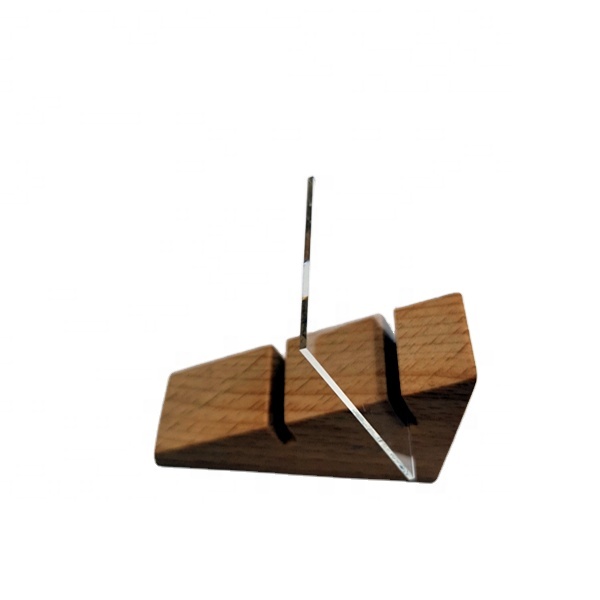
Custom 0.2mm 0.3mm 0.4mm 0.5mm 0.7 mm 1mm Thickness BOROFLOAT 33 Borosilicate Glass Sheet
BOROFLOAT® 33 borosilicate sheet from 0.2–1 mm for heat-resistant windows, lighting covers and precision protective glass; cut, ground and packed for export.
Send the outline, thickness, glass material, print colors, AR side and annual volume. We will review manufacturability and recommend the closest product path.
Export Experience That Querétaro Sourcing Teams Can Verify
Cross-border glass sourcing works better when the supplier’s operating habits are visible. These service and capability indicators are drawn from our company profile and export practice.
Why LCD and Display-Glass Demand Is Expanding in Querétaro
Querétaro’s industrial base sits at the intersection of automotive, aerospace, medical-device and appliance manufacturing. The wider Bajío corridor is attracting nearshoring projects that shorten supply chains to the United States and Canada while keeping engineering and assembly close to Mexican customers. For display-glass buyers, that means more custom cover lenses, HMI windows, touch panels, instrument covers and optical filters — and more pressure to qualify a supplier who can document dimensional, optical and print requirements from the first sample.
Nearshoring and USMCA supply-chain design
Querétaro OEMs are localizing sub-assemblies to reduce ocean-freight exposure and shorten response to North American customers. Display glass is often one of the last components localized because it combines optics, printing, strengthening and cosmetic acceptance criteria. Involving a glass processor during housing and gasket design helps freeze tolerances before tooling is released.
Automotive HMI and electric-vehicle interiors
Cluster lenses, center-stack covers, charging interfaces and overhead consoles increasingly use anti-glare, anti-reflective or printed cover glass. Tier 1 and Tier 2 suppliers in the Querétaro cluster ask for tempered or chemically strengthened substrates with controlled flatness, black borders and IR-transparent windows.
Aerospace, medical and metrology clusters
Aerospace and medical programs require traceable materials and stable dimensions. Borosilicate 3.3, AF32 and Eagle XG-type alkali-free substrates are selected for analyzer windows, instrument displays and optical filters where thermal expansion and clarity must not drift.
Smart appliances and automated factories
Appliance HMI panels, machine-vision windows and industrial touchscreens need scratch resistance plus repeatable print registration. As Querétaro factories add automation, buyers also ask for line-side packing that protects thin glass and reduces handling damage.
Where Our LCD Glass Fits in Querétaro Manufacturing
Our export program is organized around the applications that Querétaro buyers bring to us most often. Each scenario below shows the typical glass choice and the engineering point that matters most.
Automotive dashboards and center stacks
Use tempered or chemically strengthened soda-lime or Gorilla® glass with black print, AR or AG treatment, and precise cut-outs for light sensors. Critical: flatness, print registration and edge quality after strengthening.
Recommended: tempered dashboard trim panelAerospace and defense instrumentation
Instrument windows and display covers need stable optics and traceable materials. Borosilicate 3.3 or AF32 glass can be supplied with ground edges and AR coating for readable avionics-style displays. Critical: lot traceability, dimensional report and coating side control.
Recommended: AF32 / borosilicate 3.3Medical devices and analyzers
Eagle XG-type alkali-free glass and borosilicate 3.3 are used for analyzer filters, sensor windows and display protection. Low alkali content and flatness support bonding and optical alignment. Critical: surface quality, thickness tolerance and cleaning compatibility.
Recommended: Eagle XG / borosilicateHome appliances and smart controls
Printed tempered glass covers for ovens, coffee stations, washing machines and smart-home panels. The glass must resist cleaning chemicals and repeated touch while keeping icons sharp. Critical: ink adhesion, color matching and strengthening/print sequence.
Recommended: silk-printed tempered glassIndustrial HMI and machine vision
Touchscreen covers and vision windows for automation equipment in Querétaro’s growing industrial parks. AR-coated or anti-glare glass improves readability under factory lighting. Critical: scratch resistance, reflection target and packaging for line-side handling.
Recommended: AR-coated tempered display glassLED lighting, gobo and architectural optics
Borosilicate gobo blanks and dichroic filters for stage, architectural and specialty lighting. Heat-resistant glass handles high-power LEDs and compact fixtures. Critical: thermal shock resistance, coating angle and color consistency.
Recommended: gobo blanks / dichroic filterMaterial, Coating and Thickness Selection for Querétaro Display Programs
Display glass is not a commodity when the part carries a brand, protects a user interface or sits inside a regulated product. The table below is a practical starting point for Querétaro engineering and sourcing teams. Final material is confirmed against the glass manufacturer’s datasheet, your drawing and the process sequence.
| Material path | Best-fit Querétaro application | Typical thickness | Engineering note |
|---|---|---|---|
| Ultra-clear soda-lime tempered | Automotive dashboard trim, appliance HMI, printed display windows | 0.5–4 mm | Low-iron glass gives a neutral color; thermal tempering is normally used around 3 mm and thicker; AR coating is optional. |
| Chemically strengthened thin glass / Gorilla®-type | Touch panels, wearables, thin HMI and scratch-resistant covers | 0.15–2 mm | Ion exchange raises surface strength while keeping the sheet flat; all cutting and edge grinding must be finished before strengthening. |
| Borosilicate 3.3 / BOROFLOAT® 33 | Heat-resistant windows, lighting covers, gobo blanks and lab instruments | 0.3–3.3 mm | CTE is about 3.3 ×10⁻⁶/K, roughly one third of soda-lime glass, so thermal-shock resistance is significantly better. |
| Corning® Eagle XG / AF32 alkali-free | Biochips, analyzer filters, precision optical windows and sensor covers | 0.5–1.1 mm | Alkali-free composition and low expansion support bonding, micro-patterning and stable optical alignment. |
| AR-coated display glass | Outdoor kiosks, automotive displays, medical screens and industrial HMI | 0.5–4 mm | Double-sided AR can raise transmission toward 98%; specify reflection target, wavelength band and coating side in the drawing. |
| Dichroic / optical filter glass | Stage lighting, architectural lighting, sensors and color-mixing systems | 0.3–3.3 mm | Coating design depends on incidence angle; provide the light source, target color and thermal environment for review. |
Specification snapshot
Useful reference points for early Querétaro display-glass discussions. These bars are visual aids, not a direct comparison test.
Two process points deserve early attention: cutting, drilling and edge grinding must be completed before thermal or chemical strengthening; and AR coating, print ink and strengthening interact, so the exact sequence must be confirmed in DFM review.


Why Querétaro Buyers Work With Fevry Glass
Fevry Glass Co., Ltd. is a specialty glass company and exporter based in Xinyu, Jiangxi, China. Our work begins with material selection: we source raw glass from Corning, AGC and established Chinese optical-glass makers such as Chengdu Guangming and Xinhuguang, then process it with laser, ultrasonic, CNC carving, grinding, strengthening, coating, printing and inspection equipment imported from the USA, Germany and Japan.
For Querétaro programs, that model is useful because it keeps material traceability, glass processing and export packing under one communication path. Buyers can compare substrates, validate a printed or AR-coated sample, and then scale to production with a documented inspection routine. Our operating principle — “Quality is superior, service is supreme, reputation is first” — is supported by measurable service habits: a 100% inquiry response rate, ≤4-hour average response time, 5.0/5 buyer rating and more than 10 years as an Alibaba.com member.
Traceable raw materials
Corning®, AGC, Chengdu Guangming and Xinhuguang sources support repeatable color, flatness and optical performance. Batch-level material records can be reviewed for qualified programs.
In-house cutting and edge machining
Laser, CNC and ultrasonic machining handle custom outlines, holes, notches, slots and edge profiles. These operations are completed before strengthening to avoid re-cutting finished glass.
Strengthening and optical coatings
Thermal tempering for thicker panels, ion exchange for 0.15–2 mm thin glass, and single- or double-sided AR, dichroic and filter coatings for display and optical requirements.
Silk printing and inspection
Pantone-matched borders, logos, icon windows and back painting are checked for registration and appearance. Dimensional and visual inspection is completed before export packing.
Export packing for fragile glass
Interleaved separators, protective film where appropriate, foam cushions, corner protection and reinforced crates are selected according to thickness, size and handling method.
Clear documentation and communication
English-language DFM feedback, drawings, packing lists and inspection records support Spanish-speaking customer teams and their local brokers. Questions are answered within an average of four business hours.
A Practical Four-Step Execution Plan
Procurement teams in Querétaro usually need two things from a new glass supplier: a technically complete sample and a predictable path to customs clearance. This is the workflow we use for drawing-based display-glass projects.
Drawing and DFM review
Send a 2D drawing in DWG, DXF or PDF with outline dimensions, tolerances, thickness, material, edge finish, holes, notches, print colors, AR sides, application and annual volume. We return manufacturability notes and a quotation path.
Sample and approval
We produce samples to validate fit, optical performance, print registration and edge appearance. For Querétaro teams, pre-shipment photos, videos and measurement reports can be shared before the sample leaves the factory.
Production and inspection
Production runs with in-process dimensional and visual checks. Final inspection covers size, thickness, print, coating appearance and packing plan. Typical production is 18–30 days after sample approval; multi-process parts may take longer.
Export packing and Mexico handoff
Samples usually ship by courier. Production can move by air to Mexico City or by sea to Manzanillo or Lázaro Cárdenas, followed by trucking to Querétaro. We prepare commercial invoice, packing list, inspection photos and available material certificates.
Common Procurement Questions from Mexico
These are the questions Querétaro sourcing teams ask most often when they evaluate an overseas LCD glass factory and exporter.
Can you ship custom LCD glass to Querétaro, Mexico?
Yes. We export from China and can quote EXW, FOB, CIF or DAP depending on your freight forwarder and customs setup. For sample validation we normally use international courier and deliver to a Querétaro office, industrial park or forwarder address. For production volumes, air freight to Mexico City or sea freight to Manzanillo or Lázaro Cárdenas is common, followed by trucking to Querétaro. We provide commercial invoice, packing list, inspection photos and material documentation where available. Import clearance is handled by your Mexican broker; we support the process with the documents required for the shipment.
What is the MOQ for a custom glass project?
Most custom cover-glass, printed glass and AR-coated glass items start from 300–500 pieces. Custom-cut Eagle XG parts can start from 1,000 pieces, and selected gobo or dichroic glass blanks may be available from lower quantities, sometimes around 10 pieces. MOQ depends on size, thickness, print colors, coating design, strengthening method and packaging. A sample order is the normal way to validate fit and appearance before mass production.
What lead time should we plan for a Querétaro program?
DFM feedback is typically returned within 1–2 business days after a complete drawing is received. Standard samples often take 7–12 days; complex printed, AR-coated or strengthened samples may take longer. Production is commonly 18–30 days after sample approval, with 25–35 days for multi-process parts. Air freight adds roughly 5–8 days in transit, while sea freight adds 25–40 days plus customs and trucking. Add buffer for Mexican customs and internal line trials.
Can you review Spanish-language drawings and documentation?
Our technical working language is English, but we routinely review drawings that contain Spanish notes, material names and inspection requirements. If a note is critical to fit or appearance, we may ask for a short English clarification or a marked-up drawing. We can provide inspection fields in a bilingual format for the project team, but we do not present ourselves as a certified translation service. Clear symbols, dimensions and tolerances reduce ambiguity regardless of language.
Which glass should we use for automotive, medical or lighting applications?
For automotive HMI and display covers, tempered or chemically strengthened soda-lime or Gorilla®-type glass with printed graphics and optional AR/AG treatment is common. For medical analyzers and precision optical windows, Eagle XG-type alkali-free or borosilicate 3.3 glass is often preferred for flatness, low expansion and traceability. For lighting, borosilicate 3.3 gobo blanks and dichroic filter glass handle heat and color-control requirements. The final choice depends on thickness, coating, cleaning chemicals and drop or scratch requirements.
Can you combine AR coating, silk printing, strengthening and custom edges?
Yes — but the sequence must be engineered, not improvised. Cutting, CNC shaping and edge grinding are completed before strengthening. Printing may be applied before or after strengthening depending on the ink system and glass type, while AR coating requires a clean surface and controlled deposition. When several processes are combined, our engineering team reviews ink adhesion, coating durability, print registration and edge quality before quoting. Please include the application and any cleaning or sterilization exposure in the drawing notes.
How do you protect thin glass during export to Querétaro?
We use interleaved separators, protective film where appropriate, foam or EVA cushions, corner protection and double-wall or plywood crates for volume orders. Product images and packing photos can be shared before shipment. For very thin glass, the pack plan is matched to the part size and handling method at the customer’s line. If your Querétaro team uses automated pick-and-place handling, tell us early so the packaging and corner clearance can be designed accordingly.
What documents and supplier records can we check?
Shipments can include a commercial invoice, packing list, material certificate where available, dimensional inspection report, visual inspection report and pre-shipment photos. Our company profile also exposes Alibaba.com supplier assessment, transaction level, trade capacity, trade history, credit profile and buyer ratings. These records help sourcing teams verify that the supplier behind the quotation has a visible operating history. Certification documents depend on the glass material and process; we provide what is available for the specific order.
Send Your Querétaro LCD Glass Requirement
Share a 2D drawing, material, thickness, tolerance, edge finish, print colors, AR side and annual volume. Our engineers will review manufacturability and respond with a sample plan and export quotation for your Querétaro production team.