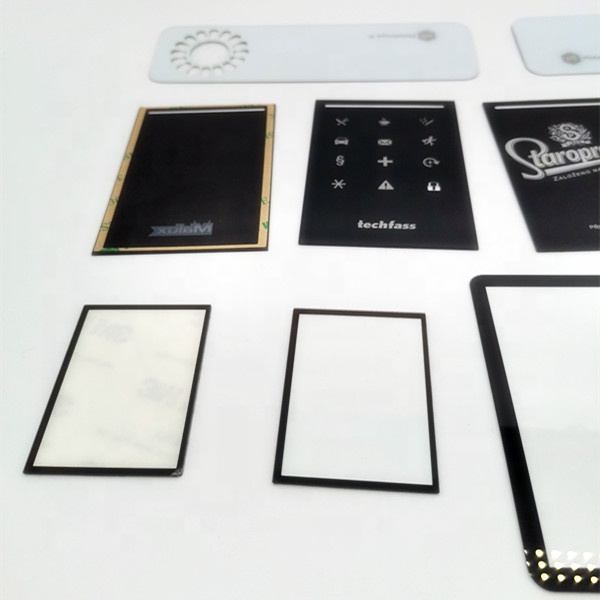
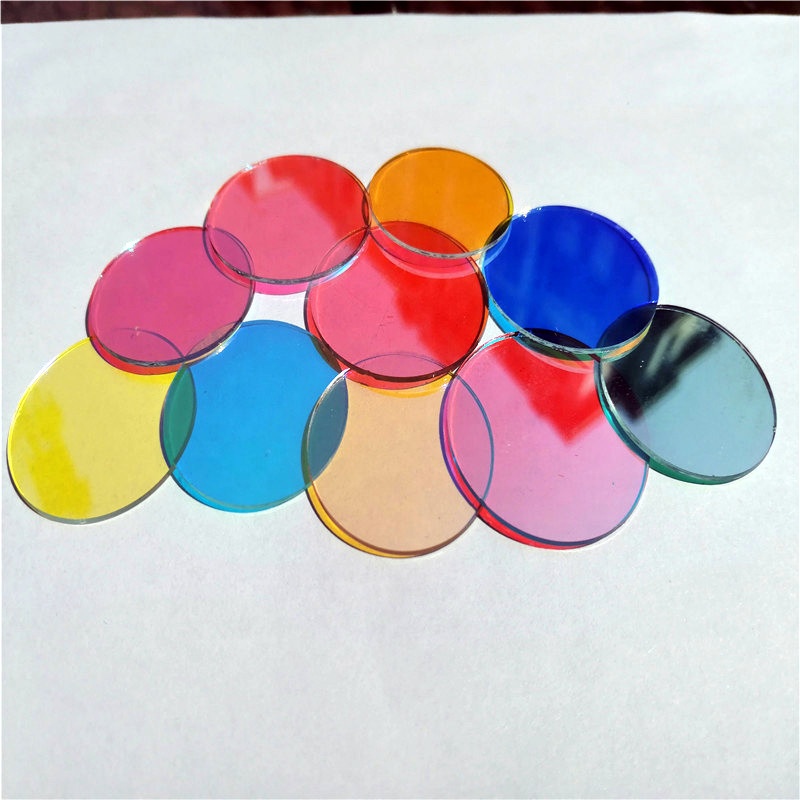
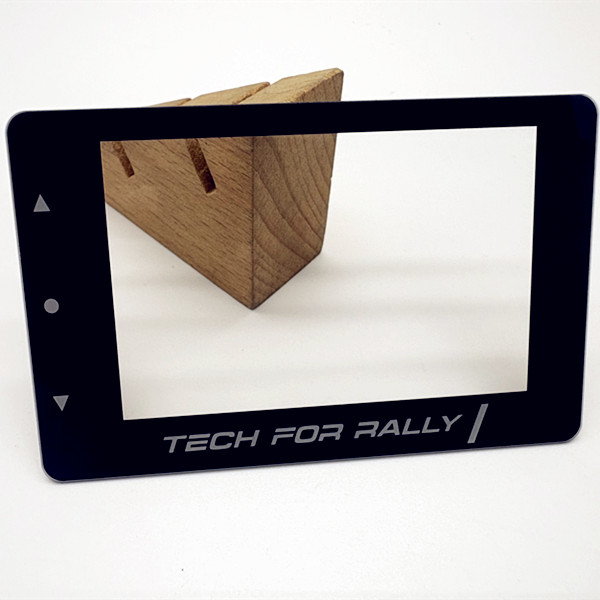
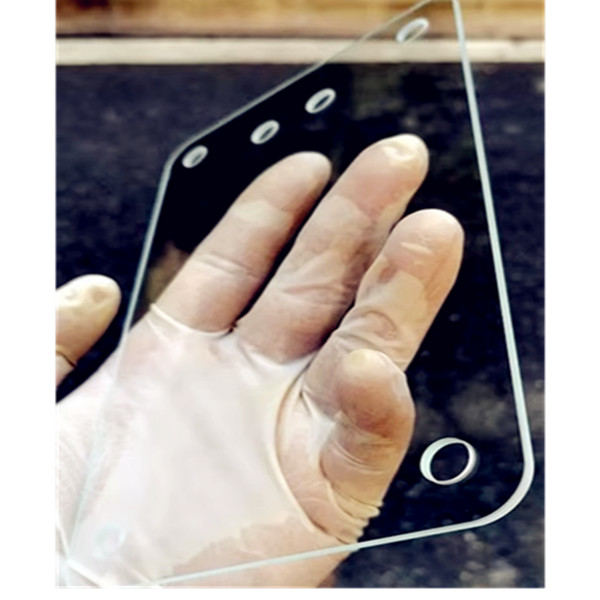
Borosilicate 3.3 · Tempered · AR Coated · Silk Printed

Custom OEM Borosilicate Glass Factories & Factory for the Nagoya Market

Cut-to-drawing technical glass for Aichi automotive, sensor, optics and lighting OEMs — 0.15–4 mm, fully traceable substrates and export packing prepared for Nagoya Port.

Inquire Now
Recommended Product Lines

Eight Custom Glass Products Requested Most Often by Nagoya Buyers

Each line below is produced to drawing, inspected against your specification and packed for ocean or air freight to Japan. Select a product to view its full technical data.

Nagoya Market Brief

Aichi's Supply Chain Sets the Standard for Custom Glass Execution

Why the same borosilicate sheet that passes inspection in another market can still fail on a Nagoya production line.

The Nagoya metropolitan area, anchored by Aichi Prefecture, is one of the densest precision manufacturing clusters in Japan. Within a 60 km radius of Toyota City, Kariya, Okazaki and central Nagoya, automotive OEMs and tier-one electronics suppliers, machine tool builders, optical instrument makers, medical analyser developers and stage lighting brands all buy glass components defined by a drawing rather than by a catalogue. Tolerances are written in tenths of a millimetre, defects are counted in PPM, and delivery follows a kanban pull schedule rather than a warehouse forecast. For a custom OEM borosilicate glass factory, that means quotations are won on cost but repeat orders are won on process discipline.

This page is addressed to procurement, quality and R&D teams in Aichi and the wider Tokai region who are evaluating borosilicate 3.3, BOROFLOAT 33, aluminosilicate (Gorilla-type) and Corning Eagle XG substrates. The sections below connect material selection with the details that actually decide a Japanese order: thermal shock margin, coating uniformity, silk-screen registration, edge condition, lot traceability and export packing to Nagoya Port.

One definition before going further. "Borosilicate" here means the high-expansion-stability family — 3.3 glass with a coefficient of thermal expansion near 3.3 × 10⁻⁶/K, against roughly 9 × 10⁻⁶/K for soda-lime cover glass. That is a CTE about three times lower, which translates into roughly three times the thermal shock tolerance. It is the reason this material is specified for projector cooling windows, high-bay LED luminaires, stage gobo blanks and biological analyser windows that must survive repeated autoclave cycles.

10+Years as an Alibaba.com member
≤4hAverage inquiry response time
100%Inquiry response rate
5.0/5Buyer rating from verified orders
7+Export regions served, including Japan
0.15–4mmProcessed thickness range
Material Selection Data

Thermal Shock Performance at a Glance

Relative thermal shock resistance is indexed against borosilicate 3.3, the benchmark for heat-cycling applications.

MaterialTypical ThicknessCTE (×10⁻⁶/K)Relative Thermal Shock ResistanceTypical Nagoya Application
Borosilicate 3.30.3 – 3.3 mm3.3Heat-resistant windows, gobo blanks, lab glass
BOROFLOAT 330.2 – 1.0 mm3.2 – 3.3Optical filters, cooling windows, sensor covers
Corning Eagle XG0.5 – 1.1 mm≈ 3.2Biochips, inspection fixtures, PLC substrates
Aluminosilicate (Gorilla-type)0.4 – 2.0 mm7.5 – 8.5Touch covers, cockpit displays, HMI panels
Ultra-clear soda-lime0.5 – 4.0 mm≈ 9.0Printed windows, back-painted LED panels

Bars are indicative and intended for preliminary material comparison only. Final grade, thickness and strengthening method are confirmed against the supplier datasheet and your drawing before quotation.

Localised Applications

Where Borosilicate and Precision Cover Glass Performs in Aichi

Six application clusters drawn from live enquiries across the Tokai manufacturing belt.

Automotive Displays & Cluster Covers

Every new cockpit programme in Aichi adds several cover glass parts. 0.5–1.1 mm aluminosilicate or ultra-clear soda-lime sheet with a printed black border and optional single-side AR coating is the standard build. Parts are CNC-formed before strengthening so an edge chip never becomes a crack.

ADAS Sensor & Camera Windows

Radar covers, lidar windows and surround-view camera apertures benefit from the flatness and chemical durability of thin borosilicate or Eagle XG. Flatness is held to the drawing and each window is inspected optically so the transmitted image stays undistorted.

Stage, Studio & Architectural Lighting

Gobo patterns, dichroic filters and projection glass sit inside fixtures that run at 300–450 °C. Borosilicate 3.3 blanks with laser engraving or deposited coatings hold their shape and colour through long operating cycles without thermal fracture.

Semiconductor & Inspection Fixtures

Carrier plates, alignment windows and fixture glass demand low thermal expansion with high flatness. Eagle XG and borosilicate 3.3 are cut, lapped, polished and cleaned until flatness and thickness variation meet the fixture drawing.

Medical & Bio-Analyser Optics

Analyser filters, microfluidic chips and microscope windows need alkali-free chemistry and a controlled fluorescence background. Cut Eagle XG and borosilicate blanks ship with clean edges and consistent particle counts.

LED Luminaires & Lighting Covers

Back-painted and silk-printed cover glass for LED panels and downlights spreads light evenly and delivers sharp apertures. Ink thickness and curing curves are matched batch to batch so colour temperature stays consistent on the line.

Localisation Trends

Four Shifts Reshaping Glass Procurement in the Tokai Region

What Aichi sourcing teams are writing into their 2025–2027 supplier strategies.

Multi-Screen Smart Cockpits

Cockpit architecture is moving from one central display to separate instrument, centre-stack and passenger screens. Each added surface means one more printed cover glass and one more qualification cycle, pushing orders toward smaller lots with more SKUs.

Dual-Sourcing for Resilience

Procurement groups are adding a verified overseas channel beside their domestic glass supplier. They are asking for factory assessment reports, public transaction history and packaging that survives a multimodal route into Nagoya Port.

Thinner, Chemically Strengthened Glass

To reduce cockpit mass and free space behind the lens, 0.15–0.7 mm chemically strengthened glass is replacing thicker soda-lime sheet. This shifts the difficulty from cutting to edge quality control before ion exchange.

Semiconductor & Life-Science Investment

Continued capital investment in central Japan's semiconductor and biotech capacity is lifting demand for Eagle XG filters, carrier wafers and inspection windows — small volumes, high specifications and documentation-heavy orders.

Factory Strengths & E-E-A-T

Why Fevry Glass Matches Japanese OEM Expectations

Traceable material, in-house processing and a documented export record — verifiable before you place a purchase order.

Fevry Glass Co., Ltd. is a specialty glass manufacturer based in Xinyu, Jiangxi, China, serving optical, biological, semiconductor, communications, lighting and electronics customers. Raw sheet is sourced from Corning, AGC and other multinational producers, and we work closely with established Chinese optical glass makers including Chengdu Guangming and Xinhuguang, so every project starts from traceable and consistent material. Our technicians process it on laser, ultrasonic, CNC carving, grinding and inspection equipment imported from the United States, Germany and Japan. The company principle — "Quality is superior, service is supreme, reputation is first" — and our motto, "Your success, our glory", govern every stage from quotation to shipment.

Traceable Raw Material

Corning, AGC, Chengdu Guangming and Xinhuguang supply the base sheet, with material certificates retained so a Nagoya quality team can trace a lot back to its source.

Imported Processing Equipment

Laser cutting, ultrasonic machining, CNC carving, grinding and inspection lines from the US, Germany and Japan hold the dimensional repeatability that thin-glass cover work requires.

Single-Source Process Chain

Cutting, edge grinding, thermal or chemical strengthening, AR or dichroic coating, silk printing and back painting all run under one roof, so accountability is never split between vendors.

Fast Engineering Response

Inquiries average under four hours for a response with a 100% reply rate, which matters when a Nagoya programme team is closing a design review against a fixed deadline.

Publicly Verifiable Record

Third-party supplier assessment, credit profile, transaction level, trade capacity and trade history are published, alongside a 5.0/5 buyer rating earned on completed orders.

Export-Grade Packing

Interleaved sheets, EVA separators and reinforced sea-worthy cases, with FOB, CIF and DDP terms prepared for Nagoya Port and Chubu Centrair airfreight routing.

How We Work

From Drawing to Delivered Part in Four Documented Steps

A workflow built for procurement teams that need predictable communication and no surprises at incoming inspection.

01

Drawing & Specification Review

Send the 2D drawing with outline dimensions, tolerances, material, thickness, edge finish, strengthening method, print colours and coating sides.

02

Manufacturability & Quotation

Engineering confirms feasibility, proposes the substrate and process route, flags tolerance risk, and issues a quotation with tooling and lead time.

03

Sample & First Article

Samples validate fit, colour match and optical performance. Dimensional reports accompany the first article for your quality gate.

04

Production & Export Packing

Batch production with in-line dimensional and visual checks, followed by interleaved packaging and documentation for the shipment.

Local Buying FAQ

Questions Nagoya Buyers Ask Before the First Order

Straight answers on verification, logistics, tolerances and documentation.

How do Nagoya buyers usually verify an overseas OEM glass factory before ordering?

Most teams start with the public record: the third-party supplier assessment, credit profile, transaction level and trade history. They then request a material certificate for the proposed substrate, a sample of the exact build and a dimensional report. On-site or video factory review is welcome, and we will walk through the cutting, strengthening, coating and printing lines on a scheduled call so your quality engineer can see the process rather than only the finished part.

What lead time and trade terms apply to shipments into Nagoya?

Sample orders typically run 7–12 working days after drawing approval, and mass production 15–25 working days depending on coating and printing steps. We quote FOB, CIF Nagoya and DDP terms, and can route urgent lots by air through Chubu Centrair International Airport. Packaging is specified for fragile thin glass so that a multimodal route does not compromise the edges.

Can your borosilicate 3.3 sheet replace Japanese BOROFLOAT 33 stock?

In most optical, lighting and heat-window applications, yes — the CTE, transmission range and thermal shock behaviour are comparable, and we will supply the property data for your evaluation. Where a drawing specifies a branded grade for a qualified product, we quote the branded substrate directly rather than proposing a substitute, so the qualification record stays intact.

Do you accept small prototype quantities?

Yes. Most custom cover glass and AR-coated items start from 300–500 pieces, custom-cut Eagle XG parts from 1,000 pieces, and selected gobo glass blanks from as few as 10 pieces. Prototype lots are used to validate fit and optical performance before mass production, and the tooling developed for the sample carries over to the production order.

How is defect rate controlled, and can you support first article inspection?

Each lot passes dimensional measurement of outline, thickness and flatness plus a visual check for chips, scratches, print defects and coating blemishes. For new parts we issue a first article inspection report covering critical dimensions and appearance criteria, so your incoming inspection can compare against a documented baseline instead of an informal sample.

Which compliance documents can you provide?

We supply material certificates for the base glass, RoHS and REACH declarations, coating and ink data where relevant, and packing lists that match the shipping documents. If your programme requires additional declarations for automotive or medical supply chains, tell us at inquiry stage so the documentation is prepared alongside the quotation.

How is thin glass packed for a sea freight route to Nagoya Port?

Sheets are interleaved with protective film or paper, separated by EVA or foam dividers, stacked in reinforced cases and strapped for container loading. Cases are labelled with part number, lot, quantity and handling marks. For ultra-thin 0.15–0.7 mm glass we add a rigid carrier board so the stack cannot flex during handling.

What information should be included in the first inquiry?

Send a 2D drawing in DWG, DXF or PDF with outline dimensions and tolerances, thickness, glass material, edge finish, hole and notch positions, strengthening method, print colours with Pantone references, AR coating side or sides, the end application and the expected annual volume. Complete information lets our engineers return a firm recommendation and a usable price in a single round.

Have a Drawing? Let's Engineer Your Borosilicate Glass Part.

Share your specification with our engineering team and receive a manufacturability review, material recommendation and quotation — typically within four working hours.

Inquire Now