Eight Recommended Glass Products for Medan Wholesale Buyers
For Medan buyers, the best product is not always the lowest-priced sheet. It is the glass that matches the assembly environment, inspection standard and Indonesia-bound packing plan. The eight products below cover the most common purchase intents from display, appliance, lighting, instrumentation and semiconductor-adjacent projects: ultra-thin alkali-free glass, print-ready tempered cover glass, dashboard trims, Gorilla-type glass, AR-coated LCD protection, BOROFLOAT 33 sheet, projector gobo blanks and customized AR tempered glass.
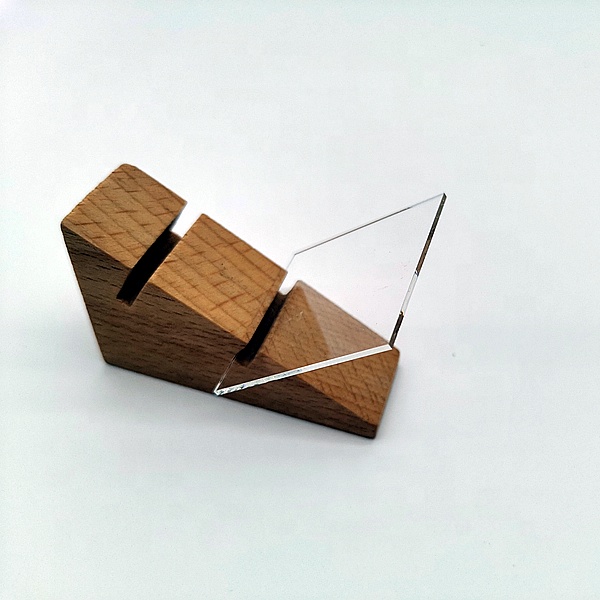
Custom 0.2mm–1mm Alkali-Free Borosilicate AF32 Glass
A strong fit for Medan sensor windows, microfluidic test chips, insulating spacers and high-stability optical carriers where alkali migration and thermal drift must be controlled. Available in 0.2, 0.3, 0.4, 0.5, 0.7 and 1 mm; cut, drilled and edge-finished to a 2D drawing.
- 0.2–1 mm
- AF32
- Alkali-free

Custom Black Border Silk-Screen Tempered Glass Panels
For air-conditioner controls, kitchen-appliance panels, industrial HMI windows and smart-home faceplates sold through Medan distributors. The black border hides bonding and gasket lines; tempered glass adds scratch resistance and safer breakage behaviour. Pantone matching and IR-transparent windows can be included when specified.
- Tempered
- Black border
- Silk print
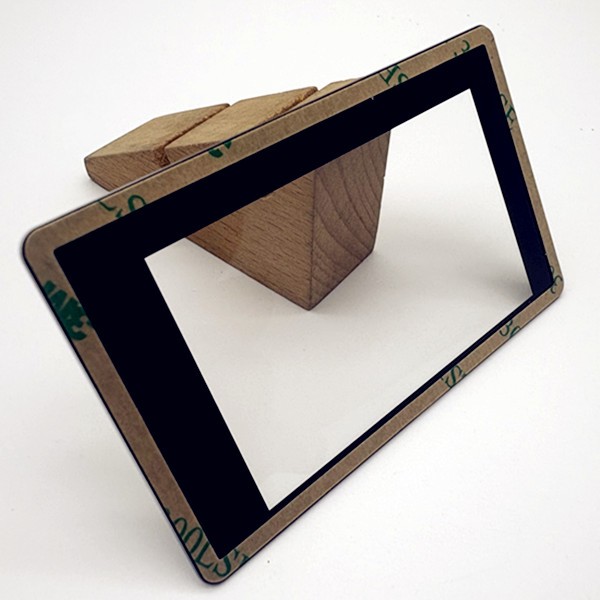
Custom Tempered Glass Dashboard Trim & Screen Protector
A flat tempered panel for dashboard display trims, aftermarket instrument clusters and rugged equipment monitors. Medan’s hot, humid operating environment makes edge quality, humidity-resistant packing and consistent print adhesion important; these points are reviewed before mass production.
- Flat panel
- Printed border
- Tempered
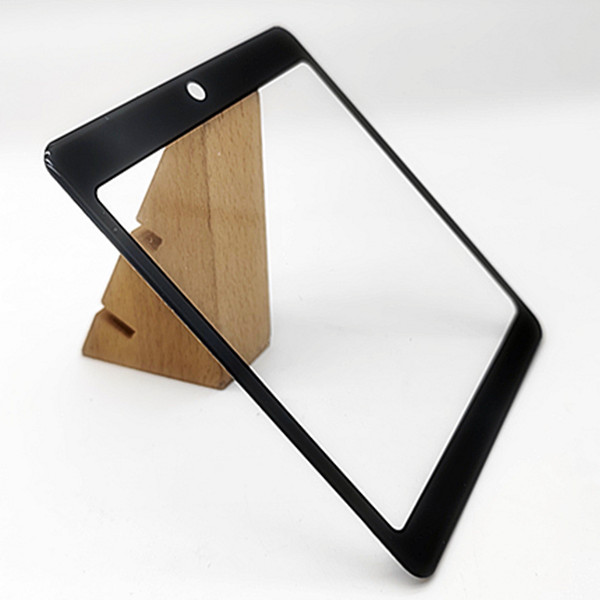
Ultra-Clear Silk-Screen Gorilla Glass Panel for Electronic Devices
Ideal for touch modules, wearable displays, portable instruments and premium appliance interfaces where clarity and drop resistance matter. The glass can be printed with logos, icon windows and diffusive ink zones, then packed with interleaves for sea freight to Belawan Port.
- Gorilla-type
- Ultra-clear
- Silk print
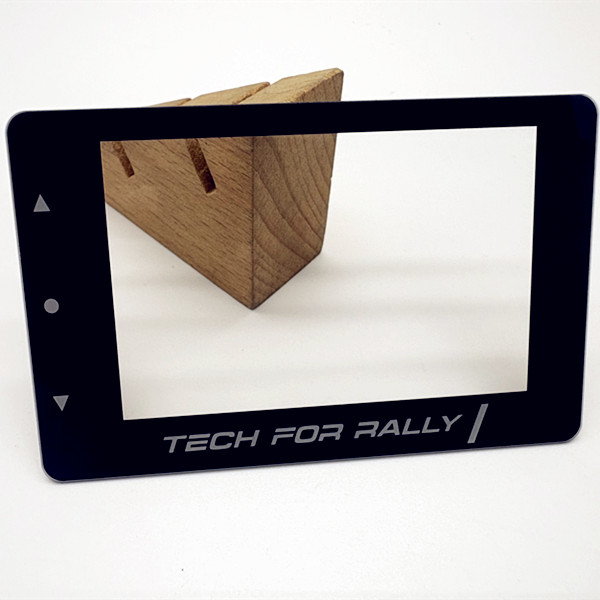
Custom Silk-Printed AR-Coated Gorilla Glass LCD Protection
This product addresses a common Medan sourcing problem: readable displays under bright indoor lighting or outdoor signage conditions. Single- or double-sided AR coating reduces reflection; the printed border and adhesive window are aligned to the display stack. Transmission target and haze should be confirmed on the drawing.
- AR coating
- LCD cover
- Silk print
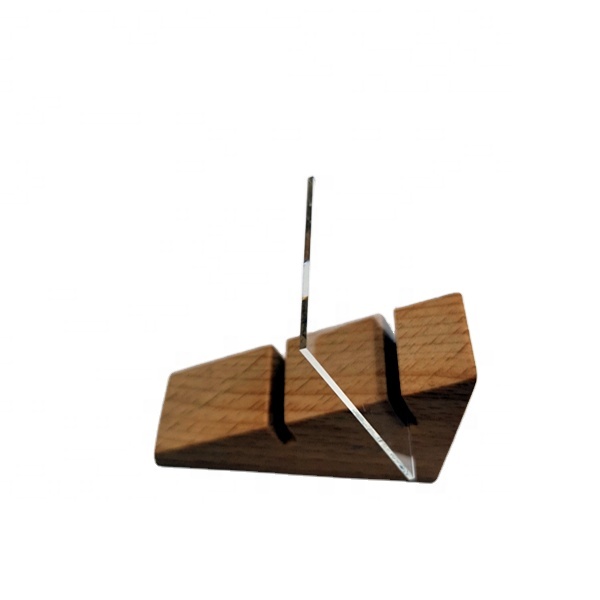
Custom BOROFLOAT 33 Borosilicate Glass Sheet, 0.2–1mm
A borosilicate sheet for heat-resistant windows, laboratory inspection covers, optical filters and high-temperature lighting components. Its low expansion supports thermal-shock resistance in compact fixtures. For Medan repair and retrofit buyers, cut-to-size sheets reduce local cutting risk.
- BOROFLOAT 33
- 0.2–1 mm
- Low CTE

Heat-Resistant Gobo Glass Blanks for Projectors, 0.3–0.7mm
Medan’s event, entertainment, house-of-worship and rental lighting market uses gobo patterns in moving-head fixtures. These thin blanks accept high-resolution printing and resist lamp heat. Thickness, coating side, pattern orientation and packing separators should be specified to avoid scratching in transit.
- 0.3/0.5/0.7 mm
- Heat resistant
- Gobo
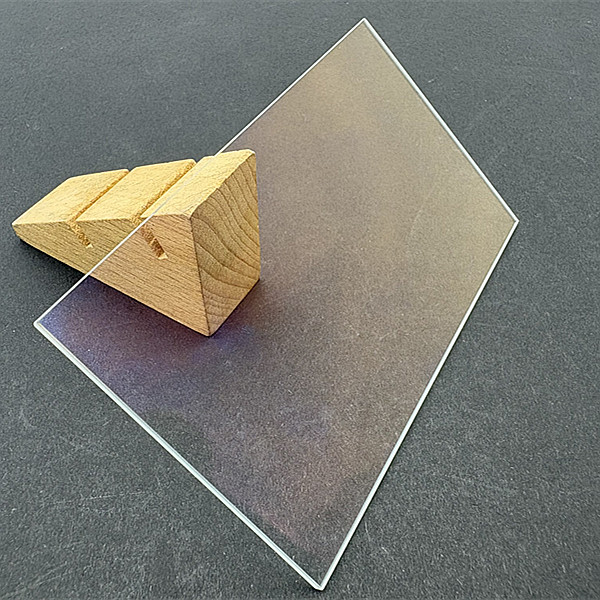
Customized Tempered Anti-Reflective Glass, AR Coated
A general-purpose AR cover glass for touchscreens, kiosk windows, medical displays and industrial control panels. For Medan projects, we recommend confirming the AR side, pencil hardness requirement, edge chamfer and whether the part will be bonded with OCA or installed with a gasket.
- AR coated
- Tempered
- Custom size
Fevry Glass Co., Ltd. is a Xinyu, Jiangxi-based specialty glass supplier serving optical, biological, semiconductor, communications, lighting and electronics customers. Public supplier records show 10+ years as an Alibaba.com member, average response ≤4 business hours, 100% inquiry response and 5.0/5 buyer rating. The company exports to Western Europe, the United States, Japan, South Korea, Taiwan, Hong Kong and Southeast Asia, with 7+ export regions served.
Why the Medan Market Matters for China Wholesale Glass Wafer Processing
Medan is not only a consumer market; it is the commercial and logistics gateway for North Sumatra and a staging point for projects across Sumatra. Buyers in Medan often combine three purchase motives: replacing imported display or lighting glass at short notice, qualifying a lower-cost custom glass source for OEM assembly, and securing a second supply route that can ship through Belawan Port or Kualanamu International Airport.
Unlike a pure trading enquiry, glass wafer processing requires engineering alignment. A Medan distributor may ask for 0.5 mm borosilicate sheets one month and AR-coated cover glass the next. An equipment integrator may need a 2D DXF, a tolerance check and a sample before committing to an annual blanket order. That is why a supplier should be evaluated on process control, communication speed, documentation and export packing—not only unit price.
Fevry’s product scope—glass wafer substrates, Corning® Eagle XG, borosilicate 3.3, AF32, BOROFLOAT 33, tempered cover glass, AR-coated glass, silk-screen printed glass, gobo blanks and dichroic optics—covers both the low-volume replacement market and repeat OEM demand. For Medan buyers, that means one technical contact can discuss a wafer substrate, a printed appliance panel and a heat-resistant lighting window without splitting the order across several unrelated traders.
- Commercial intent: wholesale pricing, MOQ, sample cost, lead time, Incoterms and mixed-container feasibility for Medan.
- Technical intent: material choice, CTE, thickness, flatness, edge finish, AR coating side, print colour and strengthening method.
- Risk intent: how thin glass is protected from humidity and breakage on the route to Belawan Port.
- Trust intent: supplier records, inspection reports, repeat-order capability and documented packing standards.
Where Glass Wafer Processing Fits Medan and North Sumatra
Medan’s industrial base is diverse. The same supplier may need to support an appliance brand, an instrumentation distributor, a lighting rental company and a laboratory supplier—each with a different definition of “good glass.”
Appliance & Smart-Home Panels
Medan’s retail and property sector supports demand for air-conditioner, water-heater, kitchen-appliance and smart-switch panels. Black-printed tempered glass gives brands a premium look while hiding gasket lines and protecting displays from cleaning chemicals.
Industrial Instrumentation
North Sumatra’s plantation, rubber and processing industries use gauges, sensor windows, flow-meter covers and control panels in humid, dust-exposed environments. Chemically strengthened or borosilicate windows can improve chemical resistance and thermal stability, depending on the specification.
Lighting, Signage & Stage Rental
LED lighting, projector gobo and event signage customers need heat-resistant blanks, dichroic filters and printed covers that survive transport. AR-coated or anti-glare glass improves readability for indoor signage, control rooms and rental lighting inventories.
Optical, Medical & Lab Distribution
Distributors serving laboratories, clinics and optical assembly shops source glass wafers, Eagle XG substrates, biochip carriers and precision covers. Traceable material, flatness and clean packing matter more than the lowest quote when the part enters a calibrated or regulated system.
Development Trends Shaping Medan Glass Procurement
Medan buyers are becoming more specification-driven. The shift is visible in how quotations are compared: a low unit price without drawing review, packing detail or inspection evidence is increasingly treated as an incomplete offer.
From Loose Sheets to Drawing-Based Parts
Distributors increasingly prefer kitted, inspection-ready parts instead of raw sheets that require local cutting. This reduces breakage, improves assembly yield and makes it easier to repeat the same order for a Medan OEM customer.
Mixed-Container Sourcing
Local importers often combine tempered cover glass, borosilicate windows, AR glass and gobo blanks in one shipment. A supplier with broad processing capability can consolidate specifications and packing without handing the buyer to multiple traders.
Humidity-Aware Packing
North Sumatra’s humid climate makes desiccant, vacuum bags, interleaves and edge protection part of the product specification—not an afterthought. Thin glass that arrives with edge chips or cloudy AR coating creates costly rework.
Documentation for Traceability
Procurement teams increasingly ask for drawings, inspection records, packing lists and material identification. This is especially important for glass wafers, Eagle XG substrates and AR-coated parts used in instruments or calibrated equipment.
Material and Process Selection Matrix for Medan Projects
Use this matrix for preliminary sourcing discussions. Final specifications should always be confirmed against the glass manufacturer’s datasheet and the buyer’s 2D drawing.
| Material | Typical Thickness | CTE (×10⁻⁶/K) | Best-Fit Medan Application | Processing Caution |
|---|---|---|---|---|
| Ultra-clear soda-lime | 0.5–4 mm | ≈9.0 | Cover glass, printed appliance panels, kiosk windows | Thermal tempering should follow all cutting, drilling and edge grinding; confirm edge quality before strengthening. |
| Gorilla® / alkali-aluminosilicate | 0.4–2 mm | ≈7.5–8.5 | Scratch-resistant touch covers, wearable displays, portable instruments | Ion-exchange strengthening must be planned after finished dimensions; protect printed ink during OCA bonding or UV processes. |
| Borosilicate 3.3 / BOROFLOAT 33 / AF32 | 0.2–3.3 mm | ≈3.2–3.3 | Heat-resistant windows, gobo blanks, lab glass, lighting covers | Low expansion improves thermal-shock resistance; processing must avoid contamination and uneven thermal stress. |
| Corning® Eagle XG | 0.5–1.1 mm | ≈3.2 | Biochips, glass wafers, PLC substrates, micro-optics | Fusion-formed surface supports flatness and dimensional stability; clean packing and particle control are critical. |
| Chemically strengthened thin glass | 0.15–2 mm | Base-glass dependent | Ultra-thin protectors, sensor covers, compact display stacks | All dimensions must be finished before ion exchange; the glass cannot be re-cut after strengthening. |
Typical industry values are shown for preliminary selection only. Confirm actual material grade, transmission, flatness, tolerance and strengthening method with the final drawing.
Thickness windows are indicative and depend on material availability, coating side, print layout, edge finish and the handling requirements of the Medan-bound shipment.
How to Qualify a China Glass Wafer Manufacturer for Medan Projects
Price comparison alone is a weak qualification method for processed glass. A better approach is to compare how each supplier controls drawings, material identity, samples, inspection and export packing.
1. Drawing Discipline
Ask for a DFM review before quotation. A serious supplier will comment on hole spacing, edge chips, minimum print line width, AR coating side and whether the part should be strengthened before or after printing.
2. Material Traceability
For glass wafers and Eagle XG substrates, confirm the material grade and source. For borosilicate and AF32 parts, confirm CTE, thickness tolerance and whether the sheet is suitable for thermal shock or chemical exposure.
3. Sample & Measurement Plan
Before a blanket order, approve a sample and agree on the measurement method: outline size, thickness, flatness, print colour, transmission, haze, edge quality and cosmetic acceptance criteria.
4. Export Packing & Incoterms
Request packing photos or a packing specification. For Medan, compare EXW, FOB, CIF Belawan and door-to-door options, and confirm who manages import documents, insurance and final-mile delivery.



Fevry Glass: The Supplier Advantage Behind the Quotation
Fevry Glass Co., Ltd. is based in Xinyu, Jiangxi, China. The company sources raw glass from Corning, AGC and other multinational producers, and works with established Chinese optical-glass makers such as Chengdu Guangming and Xinhuguang. This matters for Medan buyers because material consistency is often the hidden variable behind rejected printed covers, AR colour variation or wafer flatness issues.
Processing is supported by laser, ultrasonic, CNC carving, grinding, polishing and inspection equipment imported from the United States, Germany and Japan. Fevry’s technicians work across optical, biological, semiconductor, communications, lighting and electronics applications—so a question about OCA bonding, thermal shock or Pantone matching can be reviewed by people who understand the downstream assembly.
The company’s quality principle is “Quality is superior, service is supreme, reputation is first”, and its motto is “Your success, our glory”. For Medan buyers, this translates into a practical working style: review the drawing, identify the risk, confirm the sample, control the packing and keep communication short.
Cut-to-Drawing Processing
Laser, CNC and ultrasonic machining for outlines, holes, notches, slots and edge profiles. Flat, pencil and chamfered edges can be discussed for assembly fit.
Thermal & Chemical Strengthening
Thermal tempering for thicker panels and ion-exchange strengthening for 0.15–2 mm thin glass. Finished dimensions must be confirmed before strengthening.
AR, Dichroic & Optical Coatings
Single- or double-sided anti-reflective coating, dichroic mirrors and filter coatings for displays, lighting, instruments and optical assemblies.
Silk-Screen & Back Painting
Pantone-matched borders, logos, icon windows, IR-transparent ink areas and back-painted glass for appliance, HMI and display panels.
Dimensional & Optical Inspection
Checks for size, thickness, flatness, edge quality, print alignment, coating appearance and visual defects before final packing.
Export Packing for Fragile Glass
Interleaved, cushioned packing designed for international shipping, with options for desiccant, vacuum bags and reinforced cartons or crates.
Quality Control and Export Packing: China to Medan
Thin glass can pass a visual check in China and still fail after a long sea route. The control plan should therefore cover the product and the journey.
Drawing & DFM Review
Engineering confirms material, thickness, tolerance, edge finish, print layout, coating side and strengthening sequence before quoting.
Pre-Production Sample
Samples validate fit, optical appearance, print colour and edge quality. For Medan projects, packing can be reviewed at the same time.
In-Process & Final Inspection
Dimensional and visual checks are performed against the approved sample and drawing, with records available for buyer review when requested.
Export Packing & Documents
Interleaves, foam, desiccant and reinforced outer packing protect thin glass. Shipping can be arranged to Belawan Port, KNO airport or a door-to-door address.
Import requirements vary by product and buyer. Medan buyers should confirm HS classification, import licences, SNI obligations, tax documents and customs brokerage with their own compliance team before shipment.
Glass Wafer Processing, Wholesale MOQ and Import Logistics
These are the questions Medan distributors, OEM engineers and project buyers ask most often when comparing China-based glass wafer processing suppliers.
What is the difference between a glass wafer, a glass sheet and a cover glass?
A glass wafer is usually a round or square substrate processed for semiconductor-adjacent, optical, MEMS, biochip or carrier applications where flatness and dimensional stability matter. A glass sheet is a raw or cut-to-size panel. Cover glass is a finished display or device window with edge finishing, strengthening, printing or coating. For Medan buyers, the correct term depends on the drawing and the downstream assembly—not only the material.
Which material should I choose for a Medan project: soda-lime, borosilicate 3.3, AF32 or Eagle XG?
Choose ultra-clear soda-lime for cost-sensitive printed cover glass and general display windows. Choose borosilicate 3.3, BOROFLOAT 33 or AF32 when thermal shock, low expansion or chemical resistance is important. Choose Corning® Eagle XG when alkali-free composition, flatness and dimensional stability are needed for biochips, wafers or PLC substrates. The final selection should be confirmed against the operating temperature, cleaning method, bonding process and optical target.
What is the minimum order quantity for custom glass wafer processing?
Most custom cover glass and AR glass items start from about 300–500 pieces. Custom-cut Eagle XG parts may start from 1,000 pieces, while selected gobo glass blanks can start from as few as 10 pieces. Samples can usually be arranged to validate fit and appearance before mass production. MOQ depends on material, size, coating, printing and the amount of process setup required.
How do you pack thin glass for sea freight to Belawan Port?
Thin glass should be interleaved with suitable paper or film, cushioned with foam, protected at the edges and packed in reinforced cartons or crates. For humid sea freight to Belawan, desiccant and vacuum or moisture-barrier bags can be added. The packing method should match the part size, coating, print and handling plan. Buyers should request packing photos or a packing specification before shipment.
What drawing information is needed for a fast quotation?
Please provide a 2D drawing in DWG, DXF or PDF with outline dimensions and tolerances, thickness, glass material, edge finish, hole and notch positions, strengthening method, print colours with Pantone references, AR coating side or sides, the end application and expected annual quantity. For glass wafer projects, also state flatness, surface quality and any cleaning or packing requirements.
How fast can samples reach Medan?
Sample production time depends on the process. Simple cut-to-size glass can be quicker, while printed, AR-coated or strengthened samples require additional steps. Once the sample is ready, express courier to Medan is typically faster than sea freight, but the exact transit time should be confirmed at the time of quotation. For urgent projects, ask for a sample schedule before placing the mass-production order.
What shipping terms and documents are normal for Indonesia imports?
Suppliers may quote EXW, FOB, CIF or door-to-door terms. Typical shipping documents include a commercial invoice, packing list, bill of lading or air waybill, and a certificate of origin where applicable. Import permits, SNI requirements, tax documents and customs clearance should be confirmed with the buyer’s customs broker in Medan. Fevry can provide product and packing information to support the buyer’s import process.
Can Fevry support mixed orders and repeat blanket orders for Medan distributors?
Mixed orders can be discussed when the materials and processes are compatible. A Medan distributor might combine tempered cover glass, borosilicate windows, AR-coated panels and gobo blanks in one programme, but each item will have its own MOQ, sample requirement and inspection plan. For repeat orders, the approved drawing and sample become the reference standard, helping maintain colour, thickness and edge quality across shipments.
Send Your Drawing for a Medan-Ready Glass Quotation
Share your 2D drawing, target thickness, material, edge finish, print colours, AR side, application and estimated annual volume. Our engineers typically respond within 4 business hours. For Medan projects, please also tell us whether you prefer sea freight to Belawan Port, air freight via KNO or a door-to-door quotation.