CE Certified Glass Beveling Factory & Suppliers Serving the Mexico Market
Custom edge beveling, CNC shaping, thermal tempering, chemical strengthening, AR coating and silk-screen printing for Mexican automotive, appliance, electronics, lighting and laboratory OEMs. Use one accountable factory for glass, bevels, coatings and export documentation.
Eight Glass Products for Beveled, Tempered and Coated Programs
The product set below is especially relevant to Mexican buyers who need a factory that can cut, bevel, polish, strengthen, coat and print technical glass to drawing. Each item can be reviewed for CE documentation, NOM readiness, first-article inspection and export packing.
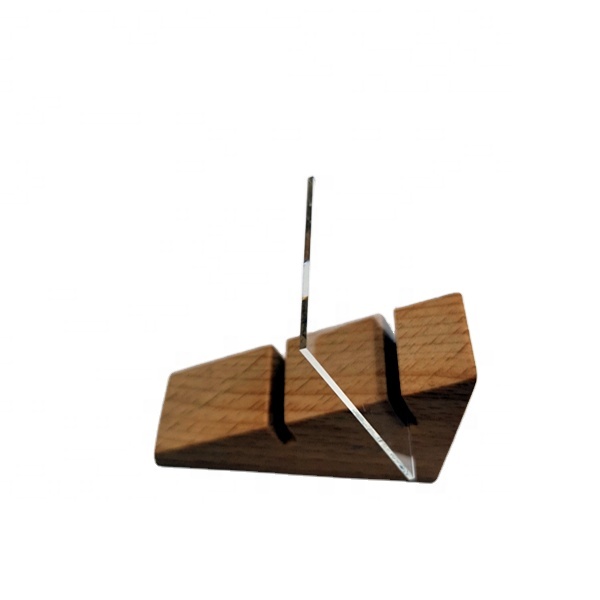
Custom 0.2–1 mm BOROFLOAT 33 Borosilicate Glass Sheet
Low-CTE borosilicate for heat-resistant viewing windows, appliance panels, laboratory glass and lighting covers. Edge beveling helps reduce chipping and improves fit in metal frames.
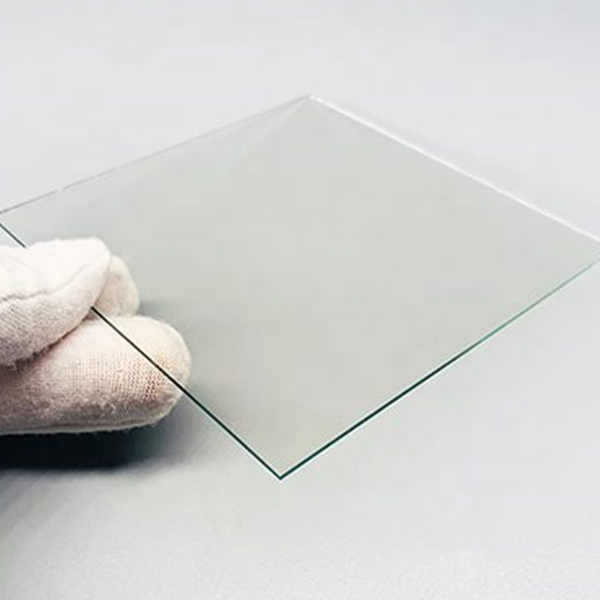
ITO Conductive Glass / ITO Coated Glass
Transparent conductive glass for touch interfaces, sensors, electrochromic devices and laboratory research. Edge beveling and polishing can be sequenced before coating where the process allows.

Custom-Cut Clear Tempered Corning Gorilla Glass
Strengthened cover glass for HMI, point-of-sale, smart-home and industrial displays. CNC bevels and flat-polished edges help avoid crack initiation around mounting hardware.
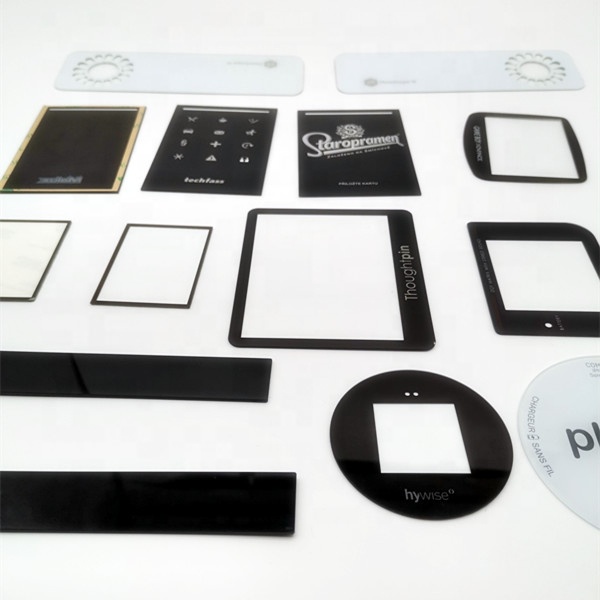
Back-Painted Tempered Glass LED Panel Cover
Back-painted tempered glass with selective light windows for LED fixtures, signage, architectural lighting and appliance front panels. Bevel geometry is reviewed with color and light spill.
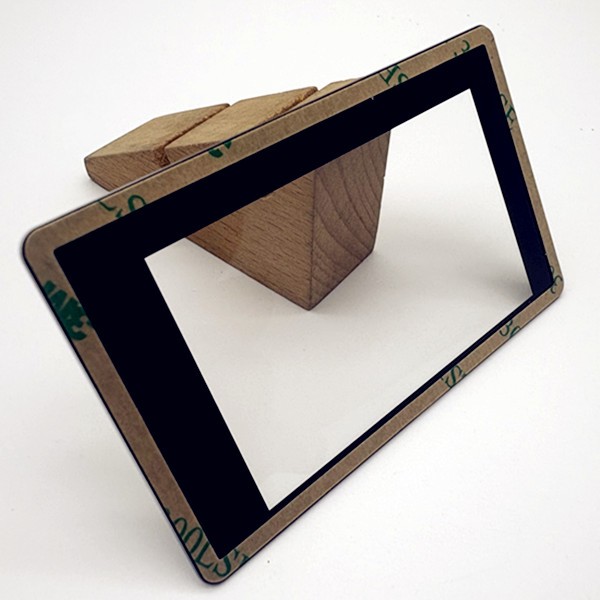
Custom Tempered Glass Dashboard Trim Panel & Screen Protector
Flat tempered glass for instrument clusters, center stacks, touch HMI and decorative trim. Options include anti-glare AR coating, silk-printed borders, icon windows and precise notch beveling.

Chemically Strengthened Ultra-Thin Clear Glass Sheet
Ion-exchanged thin glass for sensor covers, display protection, electronic separators and lightweight windows. Beveling is critical because thin glass has little edge reserve.
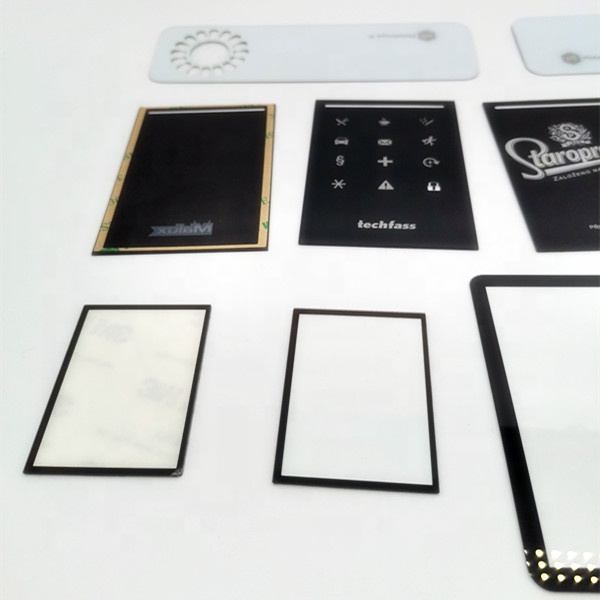
Custom Corning Gorilla Tempered Glass Silk-Screen Printing
Multi-color silk-printed Gorilla glass for touchscreens, household appliances, industrial controls and automotive interior surfaces. Print registration can be aligned to the bevel and final outline.
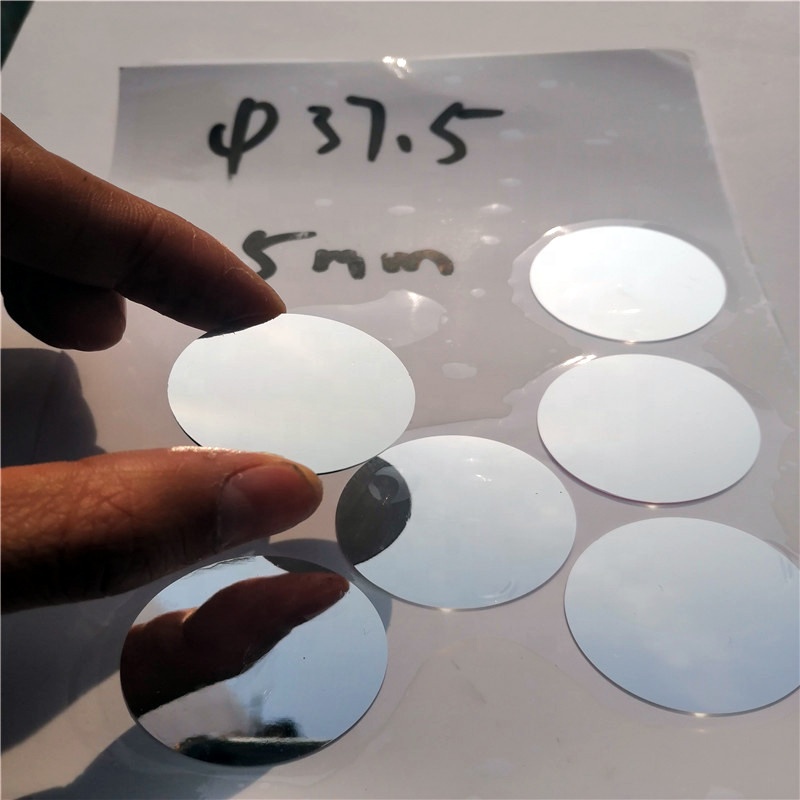
OEM Custom Heat-Resistant Gobo Glass Lens
Borosilicate gobo blanks and lenses for stage lighting, architectural spotlights and high-temperature light shaping. Edge bevels and orientation marks are planned around lens holders.
CE-Certified Glass Beveling: What to Verify Before You Commit
CE certification is not a generic badge for a glass factory. It is a product conformity process with a defined scope. Serious Mexican buyers should ask how the bevel, strengthening method, coating, print and final application connect to the technical file.
CE certification is often misunderstood in glass sourcing. The CE mark is not a universal certificate for every sheet that leaves a factory. It is a declaration for a product placed on the EU market under an applicable directive. For beveled glass projects, the file normally connects the raw glass, the beveled edge, the strengthening process, the final dimensions and the end application. A Mexican OEM may request CE documentation because the finished machine, appliance, vehicle component or lighting fixture is exported to Europe, or because its global engineering standard requires the same evidence.
At Fevry Glass, the CE discussion begins with the drawing, not with a generic certificate. We review edge bevel width, bevel angle, edge polish, hole and notch positions, tempering or chemical strengthening, coating side, print color and packaging. For thermally tempered glass, EN 12150 is a common reference. For heat-soaked tempered glass, EN 14179 may be requested. For chemically strengthened glass, the correct standard and ion-exchange validation should be traceable to the raw glass and process batch. AR and ITO coatings also require material declarations, RoHS/REACH review and handling controls.
A practical CE/DoC pack for Mexican buyers includes material certificates from the raw glass producer, a process route showing beveling before strengthening, dimensional and optical inspection records, a Declaration of Conformity where applicable, a packing specification and batch traceability. If the final product is subject to Mexican NOM requirements, CE is not a substitute. The importer and manufacturer should confirm NOM scope, Spanish labeling and customs documents separately.
The bevel itself deserves special attention. A visually polished edge can still contain subsurface micro-cracks. For tempered or ion-exchanged glass, all cutting, drilling and edge work must be completed before strengthening; the glass cannot be re-cut afterwards. We recommend a 0.5–3 mm bevel at 45°, flat or pencil polish, chip limits agreed in the drawing and a first-article report that shows the edge under magnification. These details are more valuable to a serious buyer than a headline claiming “certified” without scope.
Drawing checklist for CE-ready beveled glass
- 2D drawing in DWG, DXF or PDF
- Raw glass type, thickness and brand preference
- Bevel width, angle and edge finish
- Tolerances for outline, holes and notches
- Strengthening method and standard reference
- AR, ITO or dichroic coating sides
- Pantone print colors and IR windows
- Application, annual volume and NOM scope
- Destination port and packaging requirement
Where Beveled Technical Glass Performs in Mexico
Mexico’s manufacturing map is not one market. Automotive, appliance, electronics, lighting, architecture and laboratory teams each evaluate glass differently. The scenarios below show where bevel quality and documentation directly affect assembly yield and field performance.
Automotive & EV clusters
Querétaro, Guanajuato, Nuevo León, Coahuila and Puebla form a dense automotive belt. Beveled, printed and AR-coated cover glass is used in instrument clusters, center-stack touch panels, HVAC controls and charging-station HMI.
Appliance manufacturing
Monterrey and Saltillo appliance factories use back-painted tempered glass, heat-resistant borosilicate windows and printed control covers. A beveled edge improves appearance and reduces handling chips on the assembly line.
Electronics & medical devices
Guadalajara, Tijuana and Mexicali teams source ITO glass, ultra-thin strengthened glass, sensor covers and Gorilla touch glass. These programs often need samples, tight dimensional reports and clear QC summaries for local engineering teams.
Lighting & entertainment
Mexico City, Guadalajara and resort markets need gobo lenses, dichroic components and LED cover glass for stage, architectural and hospitality lighting. Heat-resistant borosilicate and controlled bevels help maintain focus and avoid thermal cracking.
Architectural & interior systems
Back-painted LED glass, beveled tempered panels and decorative glass for hotels, retail, restaurants and premium residential projects. Project buyers can quote by size break, edge finish, hole pattern and packing method.
Laboratory & industrial optics
Borosilicate sheets, ITO glass, wafers and optical filter substrates support laboratory, inspection and industrial sensing equipment. Eagle XG and other low-expansion substrates can be discussed where higher dimensional stability is required.
Nearshoring Is Changing the RFQ, Not Just the Price
Nearshoring is not a slogan for Mexican buyers; it changes how projects are quoted. Programs that once ordered one annual container now ask for pilot batches, line-set packing, bilingual labels and faster engineering feedback. Automotive and appliance OEMs are pushing tier-two suppliers to document edge quality, coating thickness, print color and batch traceability.
At the same time, buyers compare total landed cost, not just unit price. A beveled glass part that arrives with chips can create rework, sorting and line stoppage—costs that quickly exceed the original quote. Packaging validation and edge protection are becoming part of the sourcing decision, especially for shipments to Manzanillo, Lázaro Cárdenas, Veracruz or Altamira.
Another trend is the split between CE and NOM. Mexican manufacturers exporting to Europe want CE/DoC files, while products sold inside Mexico may require NOM. Smart buyers ask for both the conformity file and the import documents. They also ask for a factory that can process multiple steps—CNC, beveling, strengthening, coating, printing and inspection—because fewer hand-offs mean fewer chances for edge damage between suppliers.
Mexico OEM sourcing scorecard
Illustrative decision weights for early RFQ alignment. Adjust the percentages to your own program.
A low unit price with weak edge protection can be more expensive than a documented factory quote. Use the drawing, sample report and packing plan together when comparing suppliers.
Why Fevry Glass Is a Practical Partner for Mexico-Bound Projects
Fevry Glass Co., Ltd. is a specialty glass supplier based in Xinyu, Jiangxi, China. We support optical, biological, semiconductor, communications, lighting and electronics customers with drawing-based engineering, in-house processing and export packing. Our advantage is the combination of material sourcing, beveling, strengthening, coating, printing, inspection and documentation.
Traceable raw glass
We source from Corning, AGC and established Chinese optical-glass makers such as Chengdu Guangming and Xinhuguang. Traceability matters when a Mexican OEM needs to connect a batch to a material certificate or a CE technical file.
In-house CNC & beveling
Laser, ultrasonic, CNC carving, grinding and polishing equipment imported from the USA, Germany and Japan supports custom outlines, holes, notches and edge bevels. We define bevel width, angle, edge finish and chip limits before production.
Strengthening & coating
Thermal tempering for thicker panels, chemical strengthening for 0.15–2 mm thin glass, AR and ITO coating, silk-screen printing and back painting. The process sequence is controlled so edges are finished before strengthening.
Inspection & documentation
Dimensional checks, visual defect review and optical inspection are recorded before packing. For qualified programs, we prepare CE/DoC support files, material certificates, RoHS/REACH declarations for coatings and batch traceability.
Export packing
Thin glass and beveled edges need more than a cardboard box. We use interleaved paper, PE foam, edge protectors, moisture barrier and reinforced cartons or pallets, then label by line set or project phase when requested.
Responsive communication
10+ years as an Alibaba.com member, ≤4h average response time, 100% inquiry response rate, 5.0/5 buyer rating and 7+ export regions. Our guiding principle is “Quality is superior, service is supreme, reputation is first”; our motto is “Your success, our glory”.


From raw sheet to inspected export carton
Our workflow is designed for buyers who cannot afford hidden edge damage. Beveling, strengthening, coating, printing and final inspection are reviewed as one process route rather than isolated steps.
From Drawing to Mexico Delivery in Four Controlled Steps
Clear stages reduce surprises for procurement and engineering teams. Each step produces information that can be used for sample approval, first-article inspection and customs preparation.
Engineering & compliance review
Send a DWG, DXF or PDF. We confirm bevel geometry, raw glass, thickness, strengthening, coating, print and CE/NOM scope, then return practical DFM feedback in one round.
Sample & first article
A sample validates fit, edge appearance, print registration and optical performance. The first-article report records dimensions, visual criteria and approved edge finish.
Production & in-process inspection
CNC, beveling, strengthening, coating, printing and final inspection follow the approved route. Critical dimensions and visual defects are checked before packing.
Export packing & port handoff
Cartons are labeled for line-set or project use and packed for long-haul transport to Manzanillo, Lázaro Cárdenas, Veracruz, Altamira or Mexico City. Shipping documents are prepared for customs.
CE, Beveling, MOQ and Logistics Questions
These are the questions our export team receives most often from engineers, sourcing managers and importers preparing glass projects for Mexico.
What does CE-certified glass beveling mean for a Mexican buyer?
It means the product has a defined conformity route for its application, not that every glass sheet carries a generic CE stamp. For a Mexican OEM, CE documentation may include a Declaration of Conformity where applicable, material certificates, dimensional and optical inspection records, coating declarations and batch traceability. CE is not a substitute for Mexican NOM; confirm the end-product scope with your importer.
Can you bevel and polish glass to my drawing, including holes and notches?
Yes. Send a 2D drawing with outline dimensions, thickness, bevel width, bevel angle, edge finish, hole and notch positions, tolerances and strengthening method. Typical review covers 0.5–3 mm bevels at 45°, flat or pencil polish and agreed chip limits. All cutting, drilling and edge grinding must be completed before tempering or chemical strengthening.
What is your MOQ for beveled glass and can I get samples?
Most custom cover glass and AR glass items start from 300–500 pieces. Custom-cut Eagle XG parts may start from 1,000 pieces, and selected gobo glass blanks can start from 10 pieces. Samples can be arranged to validate fit and optical performance before mass production, especially for automotive, appliance and lighting programs.
How do you protect thin glass and beveled edges during shipping to Mexico?
We use interleaved paper, PE foam, edge protectors, moisture barrier and reinforced cartons or pallets. Cartons can be labeled by line set, project phase or PO to simplify incoming inspection. For fragile ultra-thin glass, the packing plan is agreed with the quotation, not added after production.
Which documents can you provide for customs and quality?
Depending on the program, documents can include material certificates, dimensional and visual inspection reports, packing lists, commercial invoices, RoHS/REACH declarations for coatings, CE/DoC support files and batch traceability. For NOM-scope products, we can coordinate the technical information requested by the importer and local compliance team.
Which markets do you export to, and how do we start?
Besides China, Fevry Glass regularly serves buyers in Western Europe, the United States, Japan, South Korea, Taiwan, Hong Kong and Southeast Asia, and we support Mexico-bound projects with export packing and documentation. Start by sending your drawing, application, annual quantity and target port to info@fevryglass.com; our team typically replies within four hours.
Send Your Beveling Drawing for a Mexico-Ready Quote
Share your drawing, material, thickness, bevel specification, strengthening requirement, print or coating details and expected annual volume. The more complete the file, the faster we can return a feasible process route, sample plan and export packing proposal.