China Top Functional Glass Suppliers & Wholesalers
A technical buying guide to custom tempered, AR-coated, borosilicate, printed, ultra-thin and gobo glass for displays, lighting, optics, semiconductor and biotech OEMs.
8 Functional Glass Products for Buyer Review
These products represent the practical intersection of custom fabrication, optical performance, thermal resistance and wholesale supply. Each item links to its original product page for specification review.
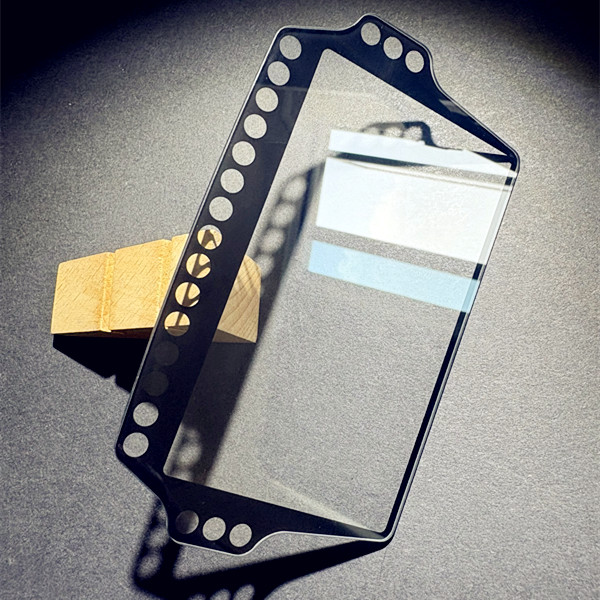
Factory Custom Tempered Silk Printed Gorilla Glass Screen Protector Printing Glass
For appliance windows, HMI panels and consumer electronics requiring durable print, scratch resistance and clean optical windows.
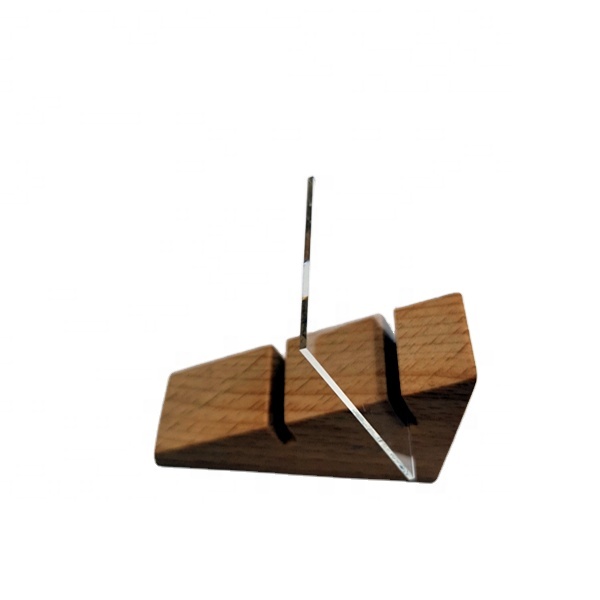
Custom 0.2mm 0.3mm 0.4mm 0.5mm 0.7 mm 1mm Thickness BOROFLOAT 33 Borosilicate Glass Sheet
Low-expansion sheet glass for heat-resistant windows, lighting covers, laboratory viewing panes and instrument glass.
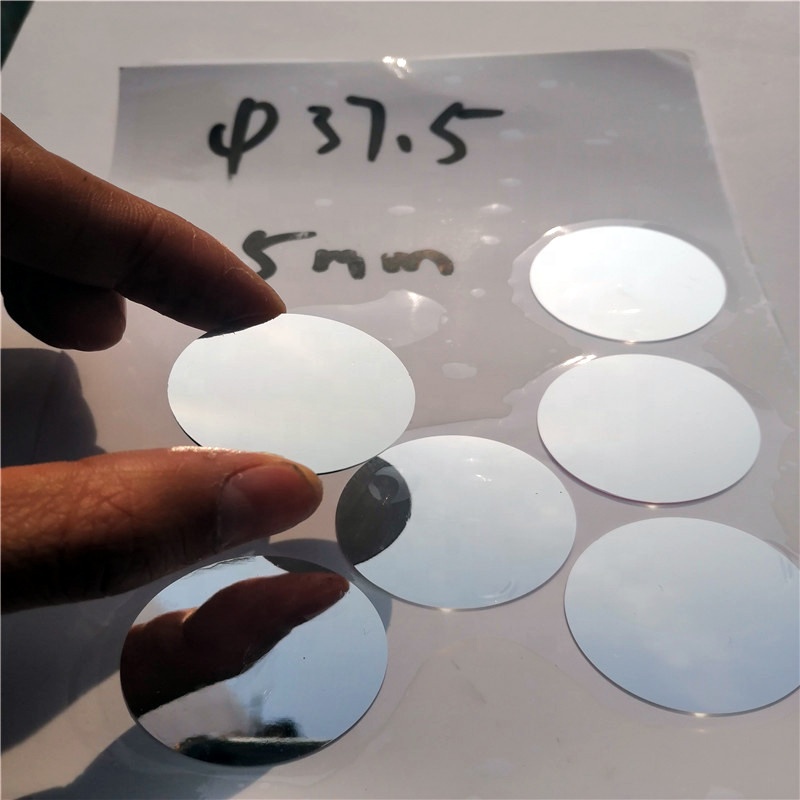
OEM Custom Heat Resistant Gobo Glass Lens
Heat-resistant gobo lenses for stage, film and architectural lighting where pattern clarity and thermal stability matter.
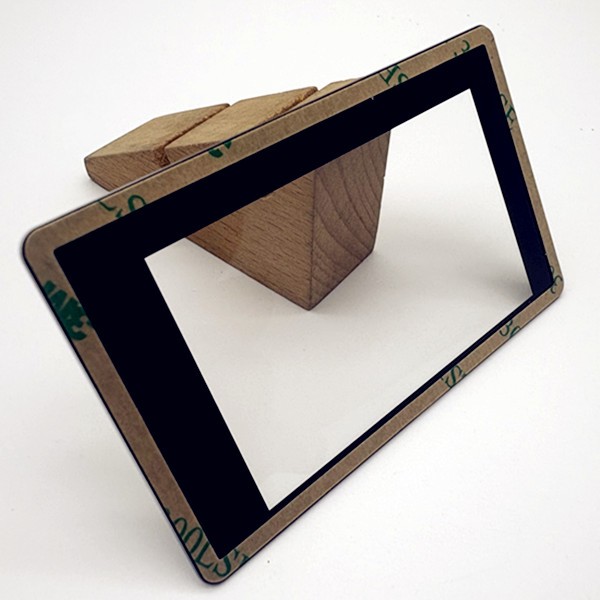
Custom Tempered Glass Dashboard Trim Panel Flat Electronic Glass Screen Protector
Flat tempered dashboard trim panels for automotive HMI, EV charging interfaces and appliance control surfaces.
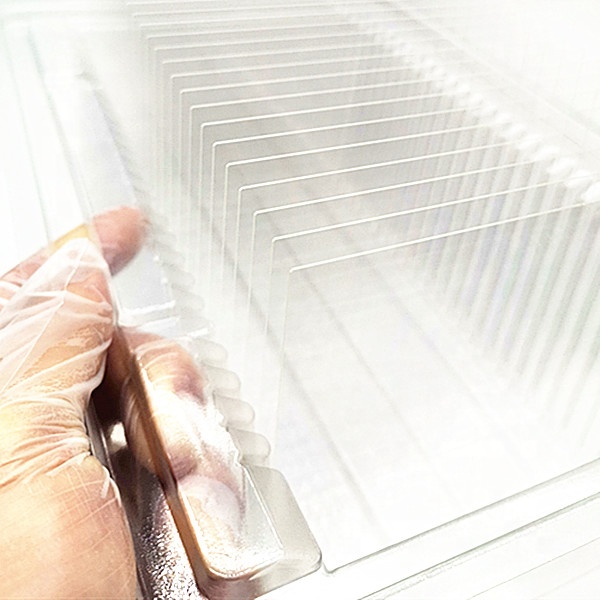
Custom Chemically ultra Thin Clear Transparent Tempered Glass Sheet
Ion-exchange strengthened thin glass for sensor covers, wearables and compact electronic devices requiring flatness.

Back Painted Tempered Glass Led Glass Panel Cover Glass
Back-painted tempered glass for LED panel covers and illuminated appliance windows with controlled opacity and clean edges.

Custom Shape High Transmittance Ultra Clear Tempered Glass Panel With Anti-reflective Coating on Two Sides
Double-sided AR coating reduces glare and raises transmission for outdoor displays, optical instruments and industrial HMI.

Factory Customization Dichroic Glass Gobo Glass
Custom dichroic gobo glass that adds color-shift effects to stage, architectural and film lighting systems.
Why China Remains the Benchmark for Custom Functional Glass
The search intent behind “China top functional glass suppliers” is rarely limited to price. Serious buyers are comparing material science, drawing interpretation, process control and long-term supply reliability.
Material Selection Before Fabrication
Functional glass is not a single commodity. Soda-lime, Gorilla-type aluminosilicate, borosilicate 3.3 and Corning Eagle XG differ in CTE, thermal shock resistance, surface strength and optical stability. A reliable supplier should challenge the material choice when a drawing asks for the wrong substrate.
Drawing-Based Engineering Review
Thickness, tolerance stack-up, hole position, edge finish, print registration and coating side all affect manufacturability. Experienced suppliers quote from DWG, DXF or PDF drawings and identify risk before samples are cut.
Process Integration Under One Roof
Cutting, CNC shaping, edge grinding, strengthening, coating, printing and inspection are linked. When more steps run under one quality system, there are fewer hand-offs, shorter corrective loops and clearer accountability for final optical appearance.
Verifiable Supplier Records
Buyers can review supplier assessment, transaction level, trade capacity, trade history and buyer ratings. These records do not replace sample approval, but they reduce the risk of placing a first production order with an unknown intermediary.
Export Packing for Fragile Thin Glass
Thin glass fails from edge chips, point pressure and moisture exposure. Good export packing uses interleaving, edge protection, rigid cartons or crates and moisture control. Packaging design should be treated as part of the product specification.
Responsive Technical Communication
Custom glass quotations move faster when the buyer receives precise comments on material, coating, print and tolerance. A supplier with a structured engineering response and a short response window is easier to integrate into new product development.
Functional Glass Procurement Trends Buyers Should Plan For
Purchasing teams are moving from lowest-piece-price sourcing toward total technical risk. The most competitive offer is not always the lowest unit price; it is the offer with predictable tolerances, stable coating performance and lower damage rates in transit.
Specification-Led RFQs
RFQs increasingly include material grade, CTE, coating sides, print color references, edge condition and measurement method. Suppliers that can interpret a full drawing set gain an advantage over assemble-only traders.
Dual-Source Qualification
OEMs are qualifying a second supplier before disruption occurs, especially for AR-coated glass, printed cover panels and low-expansion substrates. Sample approval and drawing archives are becoming supply-chain assets.
Total Landed Cost Modelling
Chip rates, breakage, repacking and rework often exceed initial price differences. Procurement models now compare yield, packaging performance, inspection data and communication speed alongside unit price.
Material Traceability Files
Buyers request raw-glass grade, supplier identity, coating batch and inspection records for traceability. This is especially important for biotech, semiconductor and optical communication applications where material consistency drives yield.
The bars above are qualitative planning aids for custom functional-glass sourcing discussions; they are not a statistical market forecast.
Technical Directions Shaping the Next Generation of Functional Glass
Glass development is converging on thinner parts, integrated optical functions and tighter dimensional stability. Buyers who understand these shifts can write better specifications and avoid overpaying for unnecessary processing.
Thinner Glass, Higher Strength
For 0.15–2 mm glass, chemical strengthening by ion exchange is often preferred over thermal tempering because it improves surface strength while preserving flatness. Edge quality, compressive stress uniformity and optical clarity are the critical control points.
Integrated Optical Functions
AR coating, anti-glare treatment, dichroic layers, silk print and transparent windows are increasingly combined in one finished part. Integration reduces assembly steps for display, lighting and instrument manufacturers, but requires strong process discipline.
Low-CTE, High-Stability Substrates
Corning Eagle XG and borosilicate 3.3 are gaining attention beyond traditional optics because they combine low thermal expansion with dimensional stability. They support biochips, analyzer filters, glass wafers, PLC substrates and micro-optics where alignment matters.
Material Selection Guide for Custom Functional Glass
Use material properties as screening gates, not marketing labels. The same drawing can require very different glass depending on thermal shock, optical transmission, chemical exposure and strengthening method.
| Material | Typical Thickness | CTE (×10⁻⁶/K) | Best-Fit Applications |
|---|---|---|---|
| Ultra-clear soda-lime | 0.5 – 4 mm | ≈ 9.0 | Display cover glass, AR panels, printed windows and appliance covers. |
| Gorilla-type alkali-aluminosilicate | 0.4 – 2 mm | ≈ 7.5 – 8.5 | Scratch-resistant touch covers, HMI panels and premium printed glass. |
| Borosilicate 3.3 | 0.3 – 3.3 mm | 3.3 | Heat-resistant windows, gobo blanks, lab glass, lighting covers and instrument glass. |
| Corning Eagle XG | 0.5 – 1.1 mm | ≈ 3.2 | Biochips, glass wafers, PLC substrates, analyzer filters and micro-optics. |
| Chemically strengthened thin glass | 0.15 – 2 mm | Base-glass dependent | Ultra-thin protectors, sensor covers, wearables and compact optical assemblies. |
Relative CTE Comparison
Lower thermal expansion generally improves resistance to thermal shock and dimensional change. Values are typical screening figures and must be confirmed against the actual material datasheet.
Where Functional Glass Creates Measurable Product Value
The most successful glass projects begin with the application environment. Heat, glare, impact, chemical exposure and cleaning methods should determine the material and coating strategy before cosmetic details are finalized.
Displays, Automotive & Home Electronics
Tempered and chemically strengthened cover glass, printed borders and AR coatings improve readability and durability in dashboards, smart-home controls, charging stations and appliance panels. For these parts, print registration and coating uniformity often matter as much as strength.
Stage, Film & LED Lighting
Gobo glass, dichroic glass and heat-resistant borosilicate windows operate in high-temperature fixtures. Buyers should specify fixture power, expected duty cycle, projected pattern tolerance and whether color stability must be maintained over long use.
Biotech, Semiconductor & Optical Communication
Low-CTE substrates such as Eagle XG and borosilicate 3.3 support biochips, analyzer filters, glass wafers, V-groove substrates and PLC components. In these applications, flatness, surface quality and material traceability are more important than cosmetic appearance.

Fevry Glass: Drawing-to-Delivery Supplier for Global OEM Buyers
Fevry Glass Co., Ltd. is based in Xinyu, Jiangxi, China, and specializes in custom functional glass for optical, biological, semiconductor, communications, lighting, electronics and measurement applications. The company supports drawing-based fabrication rather than catalogue-only selling, which is essential when a part must fit an existing enclosure, optical stack or display module.
Raw glass is sourced from established multinational and Chinese producers, including Corning, AGC, Chengdu Guangming and Xinhuguang. Processing relies on laser cutting, ultrasonic machining, CNC carving, grinding and inspection equipment imported from the USA, Germany and Japan. This combination supports repeatable work across Eagle XG, borosilicate 3.3, Gorilla-type glass, ultra-thin glass, gobo glass and dichroic glass.
- 0.15–4 mm custom glass processing
- Corning Eagle XG and borosilicate 3.3
- AR, dichroic and optical coating support
- Silk-screen printing and back painting
- Thermal tempering and ion-exchange strengthening
- Export packing for fragile thin glass
Company values are simple and practical: “Quality is superior, service is supreme, reputation is first” and “Your success, our glory.” These are not slogans on a page; they show up in how quickly an RFQ is reviewed, how carefully print colors are matched and how clearly inspection criteria are discussed before mass production.
Read the full company profile →Commercial and Technical Advantages That Reduce Sourcing Risk
For wholesale buyers, the strongest supplier is the one that makes the next purchase order easier to place. That means predictable quality, responsive engineering, transparent records and packaging that survives international logistics.
Traceable Raw Material Sourcing
Access to Corning, AGC and qualified Chinese optical-glass sources supports material consistency and helps engineers match the substrate to the application.
Combined Fabrication & Finishing
Laser, CNC, ultrasonic, grinding, strengthening, coating and printing capabilities reduce coordination risk between multiple subcontractors.
Strengthening Know-How
Thermal tempering is suitable for thicker panels, while chemical strengthening preserves flatness for thin cover glass. The correct method must be selected before cutting and edge finishing.
Optical Coating & Print Control
Double-sided AR, dichroic layers, Pantone-matched printing and back painting can be combined, helping buyers reduce assembly steps and cosmetic variation.
Verified Export Performance
With 10+ years as an Alibaba.com member, a 5.0/5 buyer rating, 100% inquiry response and export coverage across Western Europe, the USA, Japan, South Korea and Southeast Asia, the supplier is structured for repeat international orders.
Inspection & Documentation
Dimensional measurement, visual defect review and packing checks help confirm that size, thickness, flatness and coating appearance meet the agreed drawing.
Records Buyers Can Review Before Committing
No responsible buyer should place a production order based only on a landing page. Use the supplier’s public records, then validate the part through drawings and samples.
Common Questions from Functional Glass Buyers
These answers address the technical and commercial questions that appear most often during supplier evaluation and sample approval.
Should I choose chemically strengthened or thermally tempered glass?
Thermal tempering is generally best for glass around 3 mm and thicker. For ultra-thin cover glass from 0.15 mm to about 2 mm, chemical strengthening by ion exchange increases surface strength while keeping the sheet flat and optically clean. In both cases, cutting, drilling and edge grinding must be completed before strengthening because strengthened glass cannot be re-cut afterwards.
When is borosilicate 3.3 better than soda-lime glass?
Borosilicate 3.3 has a thermal expansion coefficient of about 3.3 × 10⁻⁶/K, roughly one third of soda-lime glass. It resists thermal shock far better, making it the preferred choice for lighting covers, heat-resistant windows, gobo blanks, laboratory glass and instrument components exposed to temperature cycles.
Why is Corning Eagle XG used for biochips, wafers and PLC substrates?
Eagle XG is an alkali-free boro-aluminosilicate glass with low thermal expansion and a fusion-formed surface that delivers excellent flatness and dimensional stability. These properties support micro-patterning, bonding and precise optical alignment in biochips, analyzer filters, glass wafers and optical communication components.
What is the minimum order quantity for custom functional glass?
Most custom cover glass and AR-coated glass items start from 300 to 500 pieces. Custom-cut Eagle XG parts may start from 1,000 pieces, while selected gobo or dichroic glass blanks can start from as few as 10 pieces. Samples can be arranged before mass production to validate fit, print and optical performance.
What information should I include in an RFQ?
Send a 2D drawing in DWG, DXF or PDF with outline dimensions and tolerances, thickness, glass material, edge finish, hole and notch positions, strengthening method, print colors with Pantone references, AR coating side or sides, application environment and expected annual quantity. Complete information allows the supplier to respond with a firm recommendation in one round.
What drives lead time for custom glass parts?
Lead time is driven by raw material availability, tooling and print screens, sample approval, coating batch scheduling, strengthening cycle time and export packing. Parts with new printed graphics, special coatings or tight tolerance stacks need more engineering review than repeat orders from an approved drawing.
How should I compare suppliers beyond unit price?
Compare material traceability, drawing review quality, inspection method, sample turnaround, coating uniformity, print registration, packaging design, response speed and willingness to document deviations. For fragile thin glass, the total landed cost includes breakage, rework and delays, not only the quoted price per piece.
Which markets are served, and how are fragile parts packed?
Fevry Glass serves customers in China and exports to Western Europe, the United States, Japan, South Korea, Taiwan, Hong Kong and Southeast Asia. Export packing is designed for fragile thin glass, using interleaving, edge protection and cushioned cartons or crates to reduce transit damage.
Have a Drawing? Let’s Engineer Your Functional Glass.
Send your material, thickness, tolerances, coating side, print colors, application and annual volume. Our team can review manufacturability and recommend the right substrate, strengthening method and finishing route.
Contact UsIdeal for OEMs, distributors and wholesale buyers seeking a reliable China functional glass supplier.