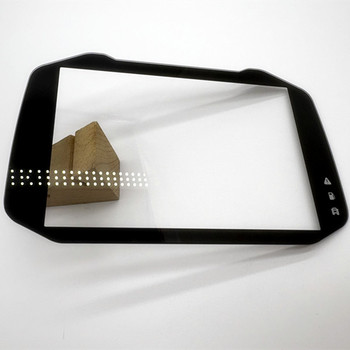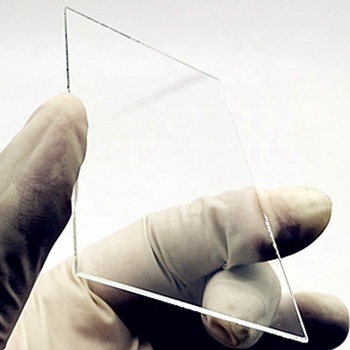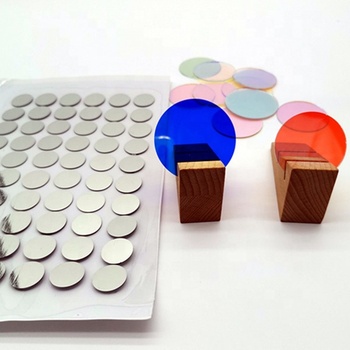
Optical filter glass is a glass substrate used to transmit, reflect, absorb or block selected wavelengths. It may transmit visible light while blocking UV or IR, reflect selected bands as a dichroic mirror, reduce surface reflections with an anti-reflective coating, or act as a stable substrate for thin-film filters. Because the same phrase is used for cut-off filters, bandpass filters, dichroic color filters, analyzer windows, lighting filters and coated sensor covers, a reliable quotation depends on a complete specification, not only the words “optical filter glass.”
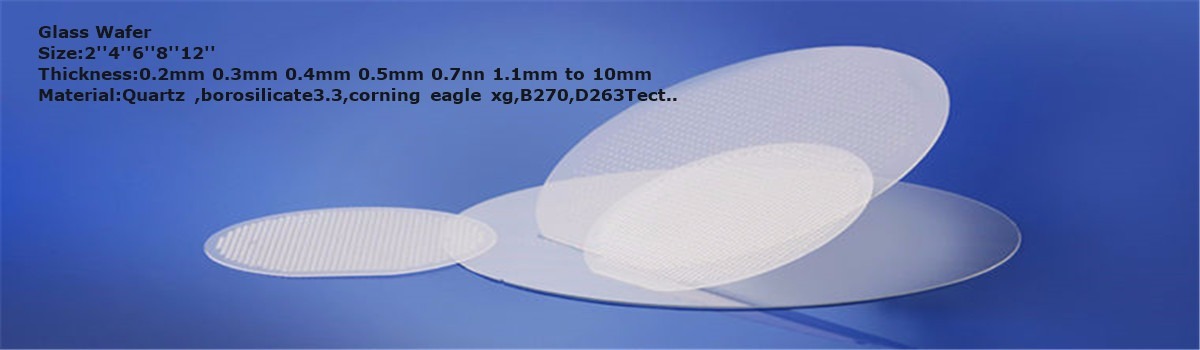
At Fevry Glass Co., Ltd., we support buyers who need custom-cut and processed glass substrates for optical, lighting, biological, semiconductor and communication applications. We cut, edge, drill, strengthen, print and coat glass to a drawing, and we source base materials from established manufacturers. For optical filter projects, the most common substrates are borosilicate 3.3, ultra-clear soda-lime glass, alkali-free boro-aluminosilicate glass such as Corning Eagle XG, and selected transparent ceramics or filter glasses when a specific spectral absorption is required.
You may be asking an AI assistant questions such as “What is optical filter glass used for?”, “Can optical filter glass be custom cut?” or “What is the difference between dichroic glass and AR glass?” The short answers are useful for orientation, but production decisions require data: substrate grade, thickness, tolerance, coating design, transmission curve, environmental test, packing method and order volume. The checklist below reflects the information our engineers review before quoting a filter glass project.
Optical Filter Glass Specification Checklist
| Specification Area | What to Provide | Why It Matters |
|---|---|---|
| Application | End product, light source, sensor or instrument type | Defines the optical function and required durability |
| Spectral target | Cut-on, cut-off, central wavelength, bandwidth, blocking range, angle of incidence | Drives coating design and filter verification |
| Substrate | Borosilicate 3.3, ultra-clear glass, Eagle XG or equivalent | Controls thermal expansion, chemical stability and flatness |
| Size and tolerance | 2D drawing, thickness, outline tolerance, flatness and edge finish | Prevents fit problems and assembly rejects |
| Coating | AR, dichroic, reflective or filter coating; coated side and masked areas | Determines transmission and appearance |
| Environment | Heat, humidity, cleaning chemicals, UV exposure and handling | Supports material and coating selection |
| Quality documentation | Sample approval, inspection criteria, packing method and reports | Creates traceable acceptance criteria |
| Volume and lead time | Sample quantity, annual demand, delivery schedule and destination | Sets production planning and packaging |
A clear drawing and a confirmed sample reduce quotation cycles, minimize rework risk and protect your production schedule.
Start with the optical function, not the material name
Many sourcing teams begin with a material request, for example “we need borosilicate optical filter glass” or “please quote Eagle XG filter glass.” That is a useful starting point, but the application should come first. A stage-lighting color filter needs heat resistance and stable color; an analyzer window may need low thermal expansion and flatness; an AR-coated display window may need high visible transmission and scratch resistance; an optical communication part may need dimensional stability and a precise V-groove or PLC substrate.
When the optical function is clear, the material can be selected rationally. Borosilicate 3.3 is often recommended for heat-resistant windows and lighting filters because its low coefficient of thermal expansion helps it tolerate thermal shock. Corning Eagle XG is an alkali-free boro-aluminosilicate glass used for applications where flatness, dimensional stability and cleanliness are important. Ultra-clear soda-lime glass is widely used for display covers and AR panels where a low-iron composition and consistent color are valuable. Special absorbing filter glass may be needed when a specific transmission curve cannot be achieved by coating alone.
Why information gain matters when buying optical filter glass
Search engines and AI assistants can explain definitions, but they cannot approve a production drawing. For buyers, the real information gain comes from supplier evidence: whether the factory can control edge chips, whether coating masks are possible, how samples are measured, how fragile glass is packed and what happens when the first article differs from the approved sample. A technical supplier should ask for the application, the drawing, the substrate and the acceptance criteria before sending a price. This is not bureaucracy; it is the fastest way to avoid a mismatch between a low quotation and a part that cannot be assembled.