Top Trusted Glass Bonding Wholesaler & Wholesalers in the Vietnam Market
A practical E-E-A-T sourcing guide for Vietnamese OEMs, EMS teams and brand owners comparing bonding-ready tempered glass, AR-coated cover glass, silk-screen printed panels, borosilicate 3.3, Corning Eagle XG, ITO conducting glass and heat-resistant gobo glass.
Eight Glass Products for Vietnam OEM and Bonding Projects
Vietnam’s electronics, smart-home, automotive, lighting and life-science assembly base needs glass that arrives ready for OCA/OCR lamination, liquid adhesive bonding, ACF bonding and downstream assembly. These eight products are practical starting points for buyers who need repeatable dimensions, controlled printing, stable coatings and export-grade protection.

1.5mm 2mm Tempered Glass Thickness Touch Switch Glass Plate
For touch switches, appliance panels and smart-home controls. Flat 1.5 mm and 2 mm tempered plates with tight outline and print alignment help stabilize OCA lamination and reduce edge-lift risk.
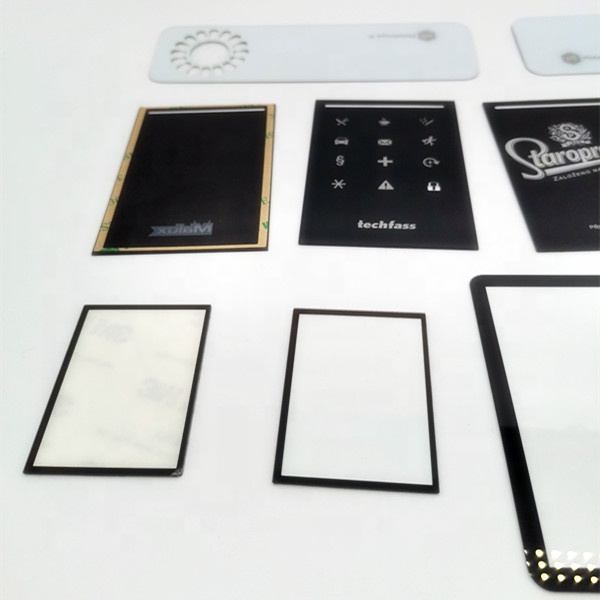
Custom Corning Gorilla Tempered Glass Silk Screen Printing for Touch Screen
Corning Gorilla glass with custom silk-screen printing for touch screens. A scratch-resistant cover surface and clean printed viewing windows suit Vietnamese display assembly and repair ecosystems.
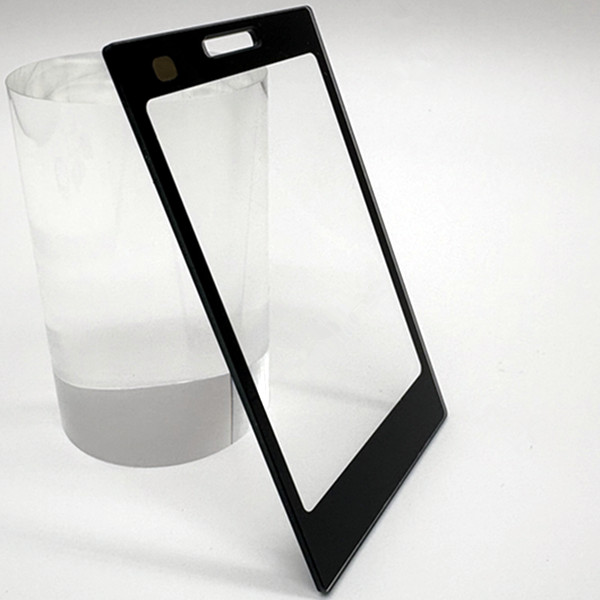
Factory Customized Black Glass Panel Silk Screen for Display Touch Electronic Glass
Black glass panels with selective silk printing for touch and display electronics. Controlled ink density and clean windows support hidden-until-lit interfaces and bonding with optically clear adhesives.
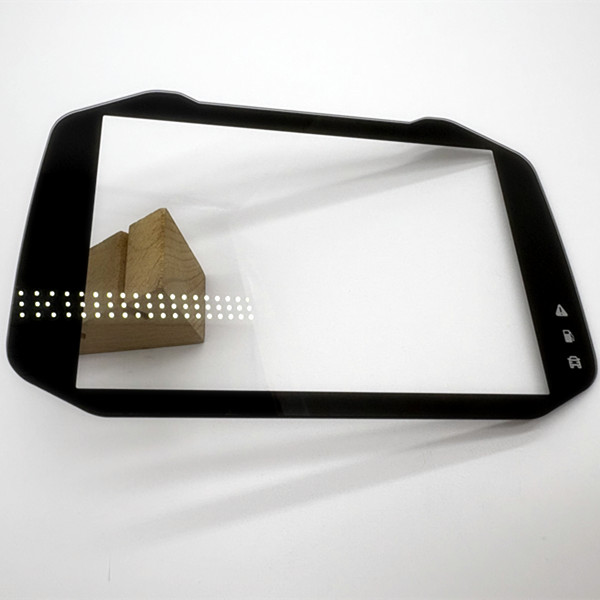
Custom Shape High Transmittance Ultra Clear Tempered Glass Panel With Anti-reflective Coating on Two Sides
Ultra-clear low-iron tempered glass with double-sided AR coating. Higher transmission and lower reflection suit high-brightness displays, optical windows and outdoor HMI where glare must stay controlled.
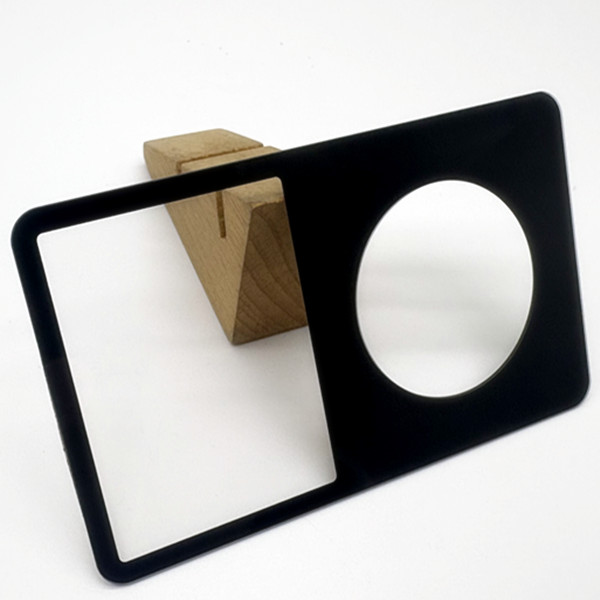
Factory Custom Smart Silkscreen Gorilla Glass Panel Tempered Glass Printing Glass
Smart Gorilla glass printing panels for control interfaces, appliance touch panels and industrial HMI. Factory printing and tempering reduce multi-supplier variation before bonding.

Custom 0.3mm 0.5mm 0.7mm Heat Resistant Gobo Glass Blanks for Projector
Heat-resistant gobo blanks for projectors and stage lighting. Low-expansion glass helps maintain shape and image crispness under high-temperature illumination.
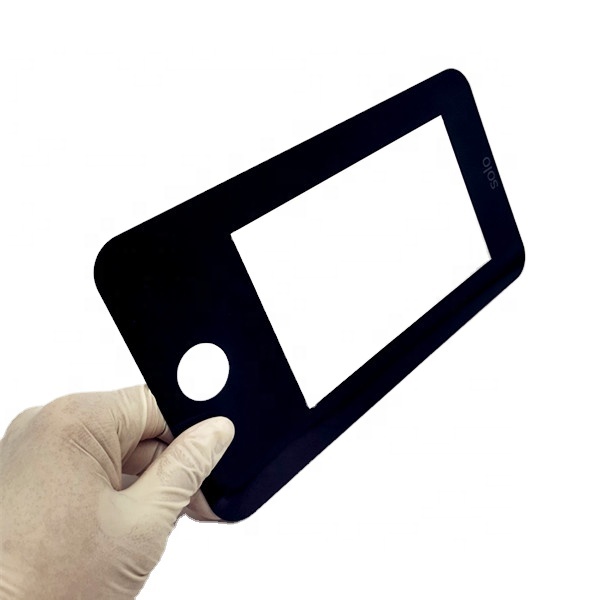
Manufacturer Oem Wholesale Custom Unbreakable Tempered Glass,high Quality Tempered Glass,low Iron Tempered Glass Manufacturer
OEM/ODM wholesale low-iron tempered glass for display covers and industrial windows. Low-iron clarity, flatness and edge finish are specified against the drawing to support repeatable bonding.
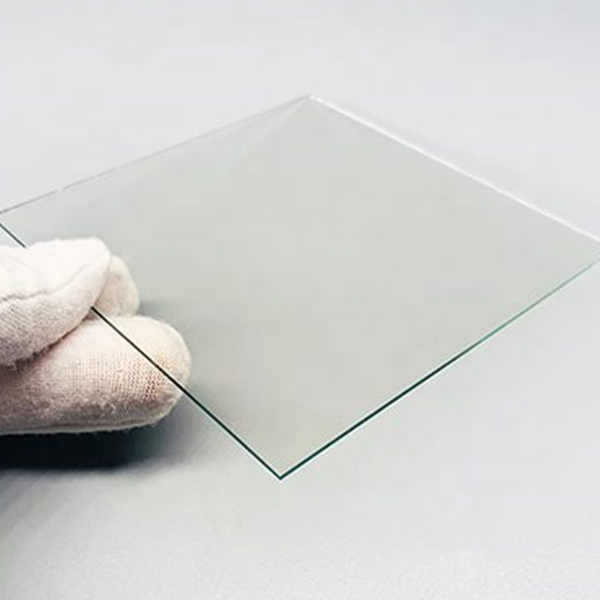
Ito Conducting Glass, Ito Coated Glass, Ito Glass
ITO conducting glass for touch sensors, transparent electrodes and EMS projects. Uniform coating, cut geometry and surface cleanliness are critical before lamination, ACF bonding or downstream deposition.
Need help mapping a glass product to your bonding process in Vietnam?
Contact UsWhat “Trusted Glass Bonding Wholesale” Means in Vietnam
Vietnam is not a single price market. Buyers in Bac Ninh, Bac Giang, Hai Phong, Ho Chi Minh City, Binh Duong and Dong Nai source for different programs: consumer electronics, smart-home devices, automotive cockpit modules, LED lighting, biotech instruments and optical communications. A trusted glass bonding wholesaler should reduce engineering and qualification risk, not only quote a square-meter price. For bonding-driven assemblies, the important variables are flatness, thickness tolerance, coefficient of thermal expansion, edge-chip control, ink compatibility, coating durability, surface cleanliness and export packing.
This is where information gain matters. Two glass panels can look identical in a photo but behave differently after lamination, autoclave curing, thermal cycling or humidity exposure. A qualified wholesale partner should connect the glass specification to the adhesive process, the print step, the final display stack and the logistics route into Vietnam. Fevry Glass approaches the category from this engineering angle: traceable raw materials, drawing-based processing, strengthening and coating controls, print validation and safe export packing for thin glass.
Note: these are supplier-reported marketplace signals from Fevry Glass’s public supplier profile and are useful as one verification layer, not a substitute for drawing review, sample approval and your own bonding trial.
A Vietnam Sourcing Scorecard for Glass Bonding Wholesalers
Vietnamese buyers often search for “trusted glass bonding wholesalers in Vietnam,” but the better procurement question is: which wholesaler can prove control over the variables that matter after bonding? The suggested weighting below is a practical evaluation framework, not a universal rule.
Where Bonding-Ready Glass Is Used Across Vietnam
Vietnam’s manufacturing map creates different technical priorities. A display cover glass for a Bac Ninh EMS line is not specified in the same way as a heat-resistant gobo blank for a lighting OEM or a low-expansion substrate for a life-science analyzer.
Cover glass for OCA and OCR bonding
For Bac Ninh, Bac Giang and Hai Phong display programs, specify flatness, print-window tolerance, edge quality and cleanliness before lamination. Printed Gorilla glass, black silk-screen glass and double-AR ultra-clear panels are core options.
Touch switch and control panels
Ho Chi Minh City, Binh Duong and Dong Nai appliance clusters use tempered touch switch plates, black glass panels and smart printed Gorilla glass. Ink compatibility with the adhesive and edge strength are common qualification points.
Cockpit trim and display covers
Automotive and EV programs increasingly require low-glare AR glass, durable printed borders and dimensional stability under thermal cycling. A sample should be validated in the actual adhesive, cure and aging process.
Gobo, lighting windows and dichroic optics
Stage lighting and projector supply chains need heat-resistant glass that keeps shape under high power. Borosilicate 3.3 and gobo glass blanks are suitable where thermal shock and image clarity matter.
Analyzer filters and biochip substrates
Corning Eagle XG and borosilicate 3.3 are relevant for analyzer windows, biochip substrates and instrument glass where low expansion, flatness and dimensional stability support precise alignment.
ITO, wafers and optical communication glass
ITO conducting glass, glass wafers and PLC substrate glass support sensor, optical communication and semiconductor-adjacent assembly. Cleanliness, coating uniformity and CTE must be agreed before bonding.
Six Localization Trends Shaping Glass Bonding Wholesale in 2025–2026
Search intent is shifting from “cheap glass panel supplier” to “qualified bonding-ready glass partner.” These trends help Vietnamese buyers frame RFQs with better technical and commercial questions.
FDI and China+1 sourcing
More international OEMs are placing assembly and sub-assembly in Vietnam while keeping multi-country material qualification. Suppliers must support drawings, samples and documentation across borders.
Local content and supplier consolidation
Vietnamese EMS teams want fewer hand-offs. A wholesaler that can manage cutting, strengthening, coating, printing and inspection reduces coordination risk.
Thinner cover glass and chemical strengthening
For 0.15–2 mm cover glass, ion-exchange strengthening is often preferred over thermal tempering because it keeps thin sheets flatter and optically clean.
AR, AG and printed aesthetics
Displays need lower reflection, scratch resistance and precise print windows. Buyers increasingly compare AR transmission, print color and ink compatibility together.
ITO and sensor integration
Touch and sensor modules require conductive glass with uniform coating and clean handling. Bonding yield depends on surface quality before ACF or adhesive processes.
Traceability and packing discipline
Thin glass is vulnerable to edge chips, humidity and handling damage. Export packing, inspection records and sealed sample retention are becoming part of supplier evaluation.
Glass Substrate Guide for Bonding and Vietnam Assembly
Use this table for preliminary material discussion, then validate the final glass, adhesive, coating and cure schedule together.
| Material | Typical Thickness | CTE (×10⁻⁶/K) | Best Fit for Vietnam Bonding Programs |
|---|---|---|---|
| Ultra-clear soda-lime | 0.5–4 mm | ≈9.0 | Cover glass, AR panels, printed display windows and appliance interfaces where cost and optical clarity are balanced. |
| Gorilla® alkali-aluminosilicate | 0.4–2 mm | ≈7.5–8.5 | Scratch-resistant touch covers, smart-home panels and portable electronics requiring chemical strengthening. |
| Borosilicate 3.3 | 0.3–3.3 mm | 3.3 | Heat-resistant windows, gobo blanks, lighting covers and laboratory glass where thermal shock resistance matters. |
| Corning® Eagle XG | 0.5–1.1 mm | ≈3.2 | Biochips, analyzer filters, wafers, PLC substrates and micro-optics requiring low expansion and flatness. |
| Chemically strengthened thin glass | 0.15–2 mm | Depends on base glass | Ultra-thin protectors, sensor covers and lightweight display stacks where thermal tempering is unsuitable. |
These are typical industry values for preliminary selection. Final specifications must be confirmed against the material datasheet, your drawing, adhesive system and application environment.
Why Fevry Glass Supports Vietnam-Bound Wholesale Programs


Specialty Glass, Engineered for Your Application
Fevry Glass Co., Ltd. is a specialty glass company based in Xinyu, Jiangxi, China. Drawing on hands-on work with optical, biological, semiconductor, communications, lighting and electronics customers, Fevry helps engineers select the right substrate and turn it into a finished, export-ready part.
Raw glass is sourced from Corning, AGC and other multinational producers, with close cooperation with established Chinese optical-glass makers such as Chengdu Guangming and Xinhuguang. Technicians process glass on laser, ultrasonic, CNC carving, grinding and inspection equipment imported from the USA, Germany and Japan.
- Corning Eagle XG, borosilicate 3.3 and transparent ceramic glass
- Semiconductor wafers and biochip glass
- PLC substrates and optical V-groove glass
- Film, TV and stage lighting color lenses
- LED filament and optical coating glass
- 0.15 mm and 0.2 mm ultra-thin protector glass
Traceable material selection
Corning, AGC and established optical-glass sources help Vietnamese buyers start from a traceable substrate instead of an unknown sheet.
Cut-to-drawing engineering
Laser, ultrasonic, CNC and grinding capabilities support custom outlines, holes, notches, slots and edge finishes before strengthening.
Strengthening, coating and printing
Thermal tempering, chemical strengthening, AR/dichroic coating, silk-screen printing and back painting reduce multi-supplier variation.
Inspection before packing
Dimensional and optical checks, plus visual defect inspection, are part of the production workflow before export packing.
Verified marketplace signals
Public Alibaba.com records show 10+ years of membership, ≤4 h average response, 100% inquiry response and a 5.0/5 buyer rating.
Export experience and sample support
Fevry serves Western Europe, the United States, Japan, South Korea, Taiwan, Hong Kong and Southeast Asia, with samples available to validate fit and optical performance.
From Drawing to Delivery: A Clear Six-Step Path
A disciplined RFQ path is especially important for Vietnam-bound thin glass, where breakage and bonding failures are often caused by assumptions rather than material choice.
Share the drawing
Send 2D dimensions, tolerances, thickness, material, edge finish, holes, notches, printing, coating and application details.
Engineering review
Confirm manufacturability and recommend substrate, strengthening method, coating side and print approach.
Sample approval
Validate fit, color matching, coating appearance and bonding compatibility with your actual adhesive and process.
Mass production
Process with in-line dimensional and visual checks, keeping agreed inspection criteria visible to both teams.
Export packing
Use interleaved, cushioned packing for fragile thin glass, with moisture and edge protection appropriate to the route.
Vietnam delivery support
Coordinate documents, labels and shipping information with your forwarder and importer of record before release.
Glass Bonding Wholesale Questions Vietnamese Buyers Ask
These answers are written for sourcing managers, mechanical engineers and EMS teams comparing trusted glass bonding wholesalers in Vietnam and overseas supply partners.
What does “glass bonding wholesaler” mean in Vietnam procurement?
In Vietnam, a glass bonding wholesaler supplies glass covers and substrates that are ready for OCA/OCR lamination, liquid adhesive bonding, ACF bonding or other assembly steps. The product must be dimensionally stable, flat, clean and compatible with the chosen print and coating. A low unit price can become expensive if warpage, edge chips or ink outgassing reduce bonding yield.
How can I identify trusted glass bonding wholesalers in Vietnam?
Look beyond marketplace badges. Ask for traceable material source, process flow, flatness and thickness measurement methods, edge inspection criteria, coating and print validation, packing standards, sample approval path and a named technical contact. Check public supplier records such as supplier assessment, transaction level, ratings and credit profile. Then validate with a bonding trial using your actual adhesive and cure schedule.
Which products are most relevant for display and touch-panel bonding?
For cover glass, consider 1.5 mm or 2 mm tempered touch switch glass, printed Gorilla glass, black silk-screen panels or ultra-clear double-AR glass depending on appearance and optical targets. For high-transmission optical windows, use low-iron tempered glass with AR coating. Confirm print color, AR side, flatness and edge specification before OCA lamination.
What MOQ and sample process applies to custom wholesale glass?
Most custom cover glass and AR glass items start from 300–500 pieces, some Corning Eagle XG cut parts from 1,000 pieces and selected gobo glass blanks from 10 pieces. Samples can be arranged before mass production. A useful sample request includes a 2D drawing, thickness, material, print Pantone references, coating side, adhesive type, cleaning requirement and annual volume.
What should Vietnamese buyers plan for shipping and import?
Plan the Incoterm, HS code, freight mode, consolidation, insurance and importer of record before release. Fevry can provide export packing and shipping documents under agreed terms; import duty, VAT and customs clearance depend on the product and the Vietnamese importer. Ask your forwarder to confirm handling for fragile thin glass and humidity protection.
Can print and coating be matched to our Vietnam assembly process?
Engineering should review artwork, viewing-window tolerances, print color references and coating side. Where bonding is involved, confirm that inks and coatings are compatible with the adhesive and cure schedule. Surface cleanliness and outgassing expectations should be agreed in the qualification plan. A visual sample alone does not prove bonding compatibility.
What information is needed for a fast custom glass quotation?
Send a 2D drawing in DWG, DXF or PDF with outline dimensions and tolerances, thickness, glass material, edge finish, hole and notch positions, strengthening method, print colors, AR coating side or sides, end application, annual quantity and target market. For Vietnam programs, state whether the part will be bonded in-house or by a local EMS partner, plus sample and mass-production timing.
How should a buyer manage breakage and quality risk for Vietnam shipments?
Use interleaved and cushioned export packing, define inspection criteria or AQL in the purchase order, request pre-shipment photos or inspection records, and retain approved samples. For high-value AR or printed glass, discuss corner protection, moisture barrier, carton handling and unloading instructions with the forwarder. Return and replacement terms should be written into the PO.
Request Vietnam Wholesale Pricing for Bonding-Ready Glass
Send your drawing, target application, adhesive process, print colors, AR requirement and estimated annual volume. The Fevry Glass team can help compare tempered, chemically strengthened, borosilicate, Eagle XG and ITO options before you commit to a tooling or assembly plan.
Contact Us