Top Trusted Fused Quartz Glass Exporter & Wholesalers Serving San Antonio
Cut-to-drawing fused quartz, borosilicate 3.3, tempered, AR-coated, printed and dichroic glass for San Antonio aerospace, biomedical, defense, lighting, automotive and advanced manufacturing buyers. Thickness from 0.15–4 mm with export-ready inspection and packing.
Eight Precision Glass Products for San Antonio Projects
These product families cover the most common fused quartz and engineered-glass requirements we receive from U.S. OEMs, fabricators and wholesale distributors: heat-resistant gobo blanks, dichroic optics, tempered display covers, ultra-thin strengthened glass, printed touch panels and Gorilla® glass covers.
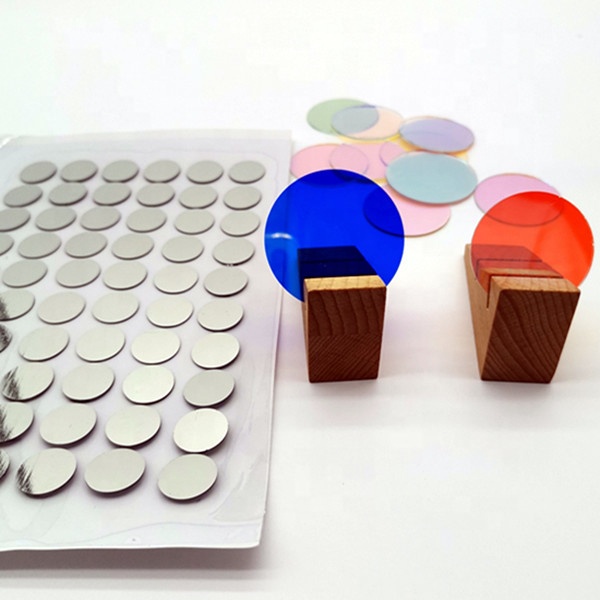
0.2mm 0.3mm 0.4mm 0.5mm 0.7mm 1.0mm 2mm Heat Resistant Gobo Glass Blanks
Thin, heat-resistant gobo blanks for high-output stage, studio and architectural lighting. Multiple thicknesses help lighting engineers match holders, optical paths and thermal load.
View product details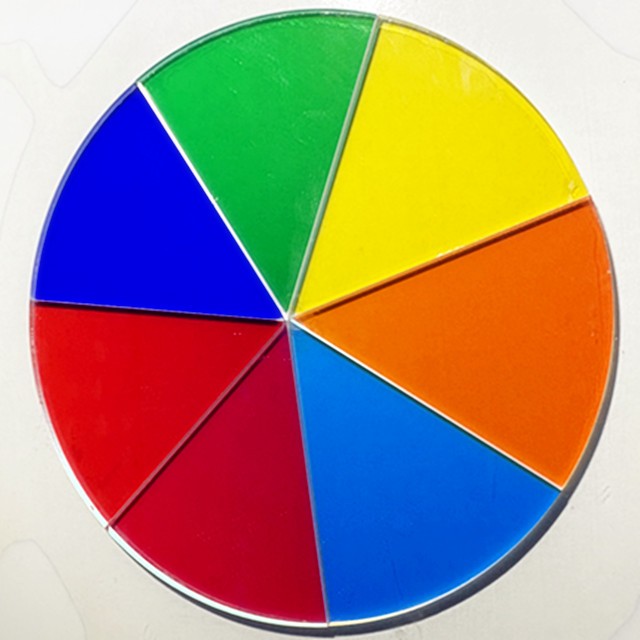
Factory Customization Dichroic Glass Gobo Glass
Custom dichroic gobo glass for entertainment lighting and optical color separation. Coating, shape, edge finish and substrate can be aligned with fixture performance.
View product details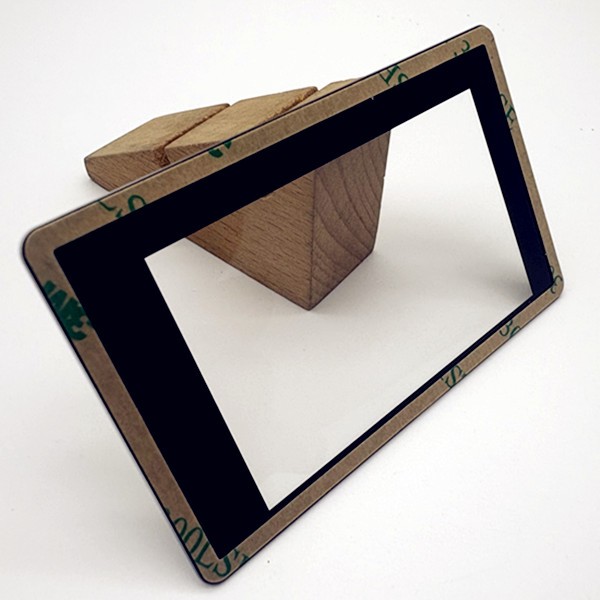
Custom Tempered Glass Dashboard Trim Panel Flat Electronic Glass Screen Protector
Flat tempered cover glass for dashboard trim, HMI displays and electronic screen protection. Drawing-based outlines, printed borders, holes and AR coating are available.
View product details
Custom Shaped Tempered Glass Processing, High Transparency Window Panels with Screen Printing
Custom-shaped high-transparency tempered panels with screen-printed borders and windows for industrial controls, appliance glass and electronic display assemblies.
View product details
Custom Chemically ultra Thin Clear Transparent Tempered Glass Sheet
Chemically strengthened ultra-thin glass for touch surfaces, sensor windows and protective covers where clarity, flatness and low weight matter.
View product details
0.3mm ~ 2mm Dichroic Glass Mirror for Gobos
Thin dichroic mirror glass for gobos and compact optical assemblies, with heat-resistant substrate options and custom cut sizes for lighting fixture integration.
View product details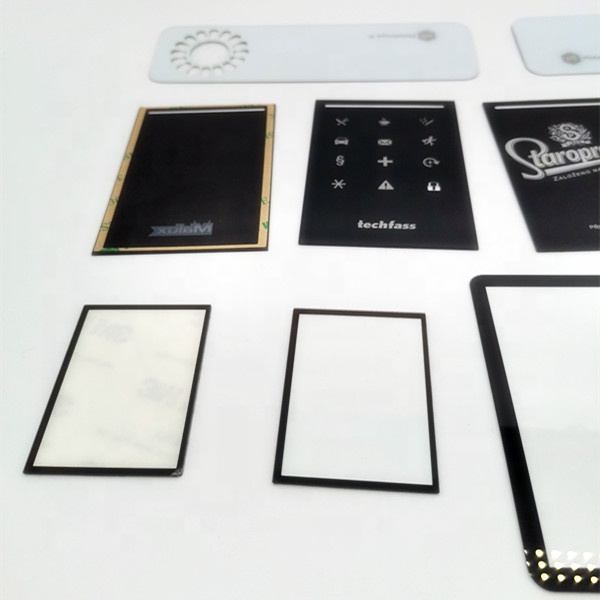
Custom Corning Gorilla Tempered Glass Silk Screen Printing for Touch Screen
Silk-screen printed Gorilla® tempered glass for durable touch screens and display windows. Ideal for scratch resistance, mask printing and OEM panel programs.
View product details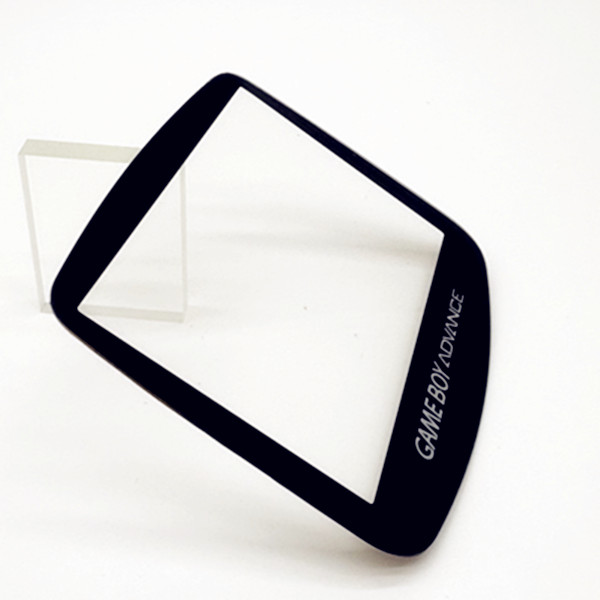
Custom Premium Gorilla Tempered Silk Screen Printed Glass Touch Screen Printed Glass Panels Cover Glass for OLED Screen
Premium Gorilla® tempered glass with precision silk-screen printing for OLED cover windows. Combines scratch resistance, optical clarity and clean graphic borders.
View product detailsFevry Glass Co., Ltd. also publishes supplier assessment, credit profile, transaction level, trade capacity and buyer reviews for independent verification.
Why San Antonio Buyers Source Fused Quartz and Engineered Glass
Fused quartz glass is often specified when a San Antonio project faces high heat, UV exposure, thermal shock or the need for very low thermal expansion. Its high-purity amorphous silica structure gives it excellent dimensional stability, broad optical transmission from UV through IR, and low outgassing in clean applications. For aerospace optics, analytical instruments and high-power lighting, those properties can matter more than unit price alone.
However, the most expensive material is not automatically the best specification. Many display, lighting and instrument programs achieve equal reliability with borosilicate 3.3, chemically strengthened thin glass, or AR-coated tempered low-iron glass. The right choice depends on thermal gradient, transmission target, strength requirement, print/coating process and total landed cost—not simply on the phrase “fused quartz.”
San Antonio procurement teams are also balancing local service expectations with global sourcing realities. Buyers in Bexar County and the broader South Texas corridor need clear drawings, fast technical feedback, repeatable inspection and export packing that survives a long international route. Fevry Glass operates as an export specialty-glass supplier rather than a local stockist: we source raw glass from Corning, AGC and established optical-glass makers such as Chengdu Guangming and Xinhuguang, then process it on laser, ultrasonic, CNC, grinding and inspection equipment imported from the USA, Germany and Japan.
This combination is especially useful for wholesale distributors, OEM engineers and fabrication teams that need one partner to align substrate selection, cutting, strengthening, coating, printing and final packing before the shipment leaves for Texas.
What “fused quartz” should mean in an RFQ
If your drawing calls for fused quartz or fused silica, confirm the actual material grade before quoting. A precise RFQ should state:
- Material name, grade and required certificate
- Thickness, outline dimensions and tolerances
- Thermal exposure, transmission range and coating side
- Edge finish, holes, notches and surface quality
- Print colors, ink windows and AR/dichroic requirements
- Application, annual volume and San Antonio delivery ZIP
Where Fused Quartz and Precision Glass Perform in San Antonio
From Port San Antonio and Joint Base San Antonio to the city’s health science corridor and advanced manufacturing suppliers, material performance is judged in real-world heat, light, impact and documentation requirements.
Aerospace, Defense and Mission-Ready Optics
Port San Antonio and Joint Base San Antonio programs often require stable optical windows, sensor covers and high-reliability display glass. Fused quartz and low-expansion substrates support tight flatness and thermal stability.
Biomedical and Life-Science Instruments
San Antonio’s health science corridor, including UT Health San Antonio and Texas Biomedical Research Institute, relies on clean, flat substrates for analysers, biochips, microscope stages and fluidic devices.
Semiconductor, Photonics and Advanced Electronics
Eagle XG, glass wafers and optical filter glass support micro-fabrication, PLC substrates and bonding carriers. Buyers can combine material, coating and precision cutting in one supply chain.
Energy, Petrochemical and Field Instrumentation
South Texas heat, outdoor exposure and process environments favour borosilicate 3.3 and fused quartz for sight windows, sensor covers and lamp enclosures that must resist thermal shock.
Automotive, EV and Smart-Mobility Displays
San Antonio’s manufacturing and logistics corridor connects OEMs to Mexico and the U.S. Interior trim panels, HMI cover glass and printed display windows need scratch resistance and clean optical bonding surfaces.
Lighting, Architectural and Entertainment
Gobo blanks, dichroic mirrors and heat-resistant covers serve studios, venues and architectural lighting. Thin glass blanks help lighting designers achieve sharp projections without thermal failure.
San Antonio Buying Patterns Shaping Technical Glass Supply
Procurement expectations in San Antonio are being shaped by defense readiness, biomedical growth, cross-border manufacturing and a stronger focus on total landed cost.
Nearshoring and Texas–Mexico Supply Chains
Buyers are reducing single-source risk and asking suppliers to support U.S.-bound documentation, revision control and consistent packaging for cross-border manufacturing programs.
Faster Engineering Cycles in Defense and Medtech
Prototype teams want low-volume samples, quick drawing feedback and repeatable first-article approval before committing to production. Clear material assumptions matter more than marketing claims.
Heat Resistance Is Moving from Niche to Routine
LED, lighting, energy and instrument enclosures are pushing thinner glass into higher thermal loads. Borosilicate 3.3 and fused quartz are being evaluated side by side for shock resistance and service life.
Display Glass Is Becoming an Optical Assembly
AR coating, silk-screen printing, die-cut gaskets and optical bonding now interact. Buyers want one supplier to control flatness, print alignment and coating appearance before display final assembly.
Documentation Is Part of the Product
Three quotes for the same cover glass can hide different inspection levels. San Antonio buyers are asking for material certificates, dimensional reports, print/coating approval and clear packing records.
Total Landed Cost Beats Unit Price
Fragile thin glass can erase savings through breakage, rework and missed schedules. Wholesalers and OEMs increasingly compare packaging, yield, inspection and freight reliability—not just per-piece price.
Fused Quartz vs Borosilicate 3.3 vs Tempered Glass
Use this table to narrow the material before requesting a quote. The values are typical selection ranges, not purchase specifications; final properties must be confirmed against the mill certificate and your drawing.
| Material | CTE Approx. | Thermal / Mechanical Character | Optical and Surface Notes | Best-Fit San Antonio Uses |
|---|---|---|---|---|
| Fused quartz / fused silica | ≈0.5–0.6 × 10⁻⁶/K | Excellent thermal shock resistance; high-purity silica; low outgassing | Transmission from UV through IR; good for high-heat optical windows | Laser optics, analytical instrument windows, high-power lighting, R&D |
| Borosilicate 3.3 | ≈3.3 × 10⁻⁶/K | Good heat resistance; lower expansion than soda-lime; chemically durable | High visible clarity; can be coated, printed and strengthened | Heat-resistant windows, gobo blanks, lighting covers, lab and instrument glass |
| Low-iron tempered / AR glass | ≈9 × 10⁻⁶/K | Strong and economical; avoid severe rapid thermal gradients | High visible transmission; AR coating reduces glare and reflection | Touch displays, HMI covers, architectural controls, appliance windows |
| Chemically strengthened thin glass | Base-glass dependent | Ion-exchange increases surface strength while maintaining flatness | Excellent clarity for thin covers; printable and coatable | Sensor covers, OLED/cover glass, portable electronics, ultra-thin protectors |
| Corning® Eagle XG | ≈3.2 × 10⁻⁶/K | Alkali-free boro-aluminosilicate; flat, dimensionally stable | Fusion-formed surface suitable for micro-patterning and bonding | Biochips, biological analysers, wafers, PLC substrates and micro-optics |
Tip for San Antonio buyers: if your application involves high-power lighting, laser optics or rapid thermal cycling, request fused quartz options first. If the need is primarily visible-light transmission, moderate heat and scratch resistance, compare borosilicate 3.3 and strengthened display glass before assuming quartz is required.
A Clear Four-Step Path for Custom Glass Buyers
Designed for procurement teams that need predictable communication, fewer hand-offs and documented approval before export.
Share the Drawing and Application
Send a 2D drawing, thickness, material, tolerances, edge finish, holes, print colors, AR side, annual volume and San Antonio delivery destination.
Engineering Review and Quotation
We review manufacturability, recommend a substrate and process route, confirm MOQ and prepare a quotation with realistic export assumptions.
Sample Approval
Samples validate fit, print alignment, coating appearance and edge quality before mass production. Approval criteria are agreed in advance.
Production, Inspection and Export Packing
In-process dimensional and visual checks are followed by final inspection, interleaved cushioning and export documents for the Texas-bound route.
Why Wholesalers and OEMs Trust Fevry Glass
Our role is to reduce material uncertainty before production, then execute the agreed cutting, strengthening, coating, printing, inspection and packing discipline consistently.
Traceable Raw-Material Sources
We source raw glass from Corning, AGC and established optical-glass makers such as Chengdu Guangming and Xinhuguang, supporting consistent material selection for repeat programs.
Single-Source Processing
Laser, CNC and ultrasonic machining, grinding, thermal and chemical strengthening, AR/dichroic coating, silk-screen printing and back painting can be coordinated in one supply chain.
Inspection Before Packing
Dimensional, thickness, flatness and visual defect checks help catch issues before export. Where required, inspection reports and approval samples support buyer quality control.
Export Packing for Thin Glass
Interleaved, cushioned export packing is designed for fragile thin glass shipments. Buyers can specify carton marks, pallet preferences and forwarder instructions.
Responsive Export Communication
As a 10+ year Alibaba.com member, Fevry Glass maintains ≤4h average response time, a 100% inquiry response rate and a 5.0/5 buyer rating.
Global Export Experience
We serve customers in the United States, Western Europe, Japan, South Korea, Taiwan, Hong Kong and Southeast Asia, guided by our principle: quality is superior, service is supreme, reputation is first.
Common Local Procurement Questions
These are the questions San Antonio buyers, distributors and OEM engineers ask most often when evaluating fused quartz and custom technical glass suppliers.
RFQ checklist for faster quotation
- 2D drawing in DWG, DXF or PDF
- Material, grade and thickness
- Tolerances, edge finish and surface quality
- Holes, notches, print colors and AR side
- Application, annual volume and sample quantity
- San Antonio delivery ZIP and preferred Incoterm
Can you ship fused quartz and custom glass panels to San Antonio, Texas?
Yes. Fevry Glass exports to the United States and supports Texas-bound orders through air, sea or the buyer’s freight forwarder. For San Antonio delivery, include your ZIP code and preferred Incoterm so the quote reflects realistic logistics. Thin glass is packed with cushioning and interleaving to reduce transit risk.
What is the minimum order quantity for San Antonio prototypes and wholesale orders?
Most custom cover glass and AR glass items start from 300–500 pieces; some Corning Eagle XG cut parts start from about 1,000 pieces; selected gobo glass blanks can start from 10 pieces. Samples can often be arranged to validate fit and optical performance before mass production. Final MOQ depends on size, printing, coating and yield.
Is fused quartz always better than borosilicate 3.3 or tempered glass?
No. Fused quartz is superior when high heat, UV/IR transmission, thermal shock or very low thermal expansion are critical. For visible-light display covers, moderate heat resistance and lower total cost, borosilicate 3.3 or AR-coated tempered glass may be the better engineering choice. Scratch resistance requirements may point toward chemically strengthened glass.
What information do you need to quote a custom glass part?
Please send a 2D drawing with dimensions and tolerances, thickness, material, edge finish, hole and notch positions, strengthening method, print colors with Pantone references, AR coating side or sides, application, annual quantity and San Antonio delivery requirements. Complete information helps our engineers respond with a firm recommendation in fewer iterations.
Do you support San Antonio wholesalers, OEMs and fabricators with repeat production?
Yes. We support both one-time project orders and repeat OEM programs. For recurring supply, we focus on drawing revision control, material consistency, inspection criteria, print/coating approval and packaging instructions so each shipment matches the approved specification.
What quality documentation and export support can Fevry Glass provide?
Depending on the product, we can provide material certificates where applicable, dimensional and visual inspection reports, coating or printing approval samples, packing lists and export documents. Public supplier assessment, credit profile, transaction history and buyer ratings are also available for independent review.
How quickly can San Antonio buyers receive a response or sample?
Our average response time is ≤4 hours, and our inquiry response rate is 100%. Sample timing depends on material, coating, printing and size, but many listed products can be supported with existing production or sample videos before a formal order. Our engineers will confirm the practical sample route after reviewing your drawing.
Source Fused Quartz and Precision Glass for San Antonio Projects
Send your drawing, material, thickness, tolerance, coating or printing requirement, application, annual quantity and San Antonio delivery ZIP. Our engineers will review the specification and respond with a practical processing recommendation.