AG-Coated Glass for Japan: A Technical Sourcing Guide, Not a Catalogue
Japan is one of the world’s most exacting markets for display glass and optical cover parts. A buyer searching for a China AG coated glass factory or exporters for Japan is usually not looking for a generic sheet supplier. They need a partner who can translate a Japanese drawing into a repeatable process: correct substrate, controlled haze and gloss, clean printing, strengthening before coating, edge quality, and packing that survives ocean freight.
Fevry Glass Co., Ltd. fits that brief as a specialty glass supplier based in Xinyu, Jiangxi. Its scope covers custom tempered glass, anti-reflective AR coated glass, silk-screen printed cover glass, borosilicate 3.3, Corning Eagle XG, glass wafers and optical filter glass. For AG-coated assemblies, the most important early decision is not the word “AG” on a quotation; it is the optical stack, substrate and mechanical process sequence that must be controlled together.
This guide is written for Japanese OEMs, Tier suppliers, design engineers and procurement teams. It explains where AG and AR glass perform, how to specify it, what to verify before mass production, and which eight custom products from Fevry’s range are the most practical starting points. The aim is information gain: fewer ambiguities in the RFQ, fewer sample loops, and a clearer path from drawing to export-ready glass.
Storefront metrics are published on the company’s Alibaba.com profile; confirm current figures and contract terms during the RFQ.
Eight Custom Glass Products for AG-Coated and Low-Reflection Assemblies
These eight products are not a random catalogue. Each solves a common substrate or finishing problem in an AG-coated, AR-coated or printed cover-glass assembly for Japanese electronics, lighting, optical and industrial customers.
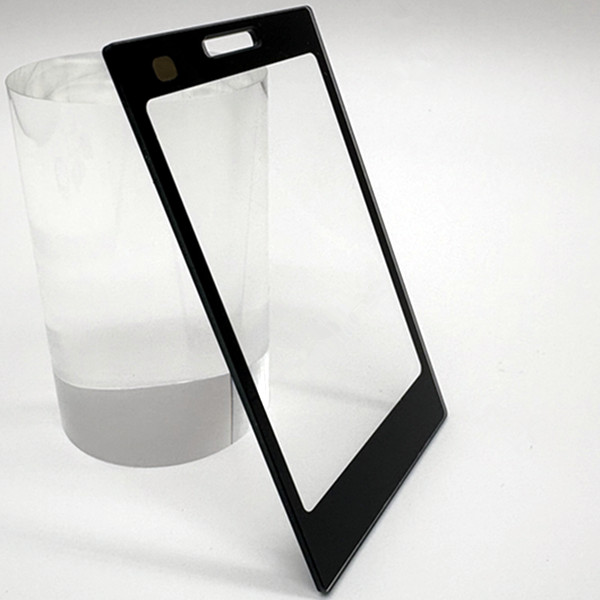
Factory Customized Black Glass Panel Silk Screen for Display Touch Electronic Glass
Black silk-screen cover glass for HMI, control panels and display windows. In Japan, this style is often used where a dark border hides circuitry while the clear window remains optically clean.
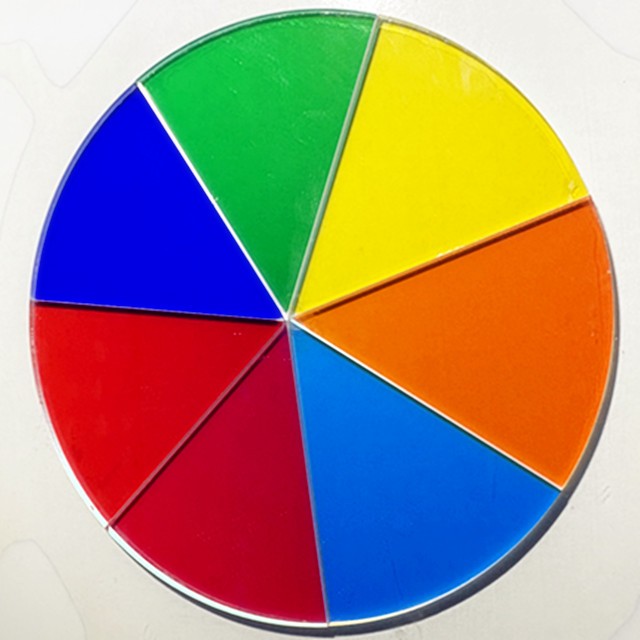
Factory Customization Dichroic Glass Gobo Glass
Dichroic gobo glass for projection lighting, stage effects and architectural fixtures. Suitable for projects that need colour separation, heat resistance and custom glass dimensions.
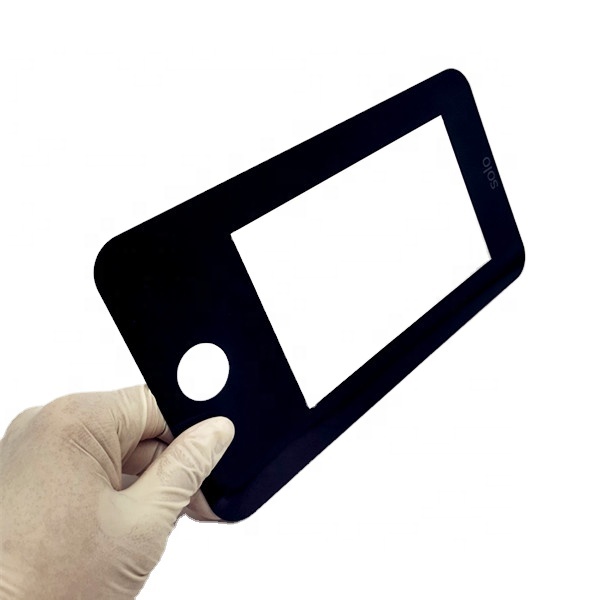
Manufacturer Oem Wholesale Custom Unbreakable Tempered Glass,high Quality Tempered Glass,low Iron Tempered Glass Manufacturer
Low-iron tempered glass with OEM/wholesale customization. Low iron content supports neutral colour, while tempering improves mechanical durability for cover glass and display windows.

0.3mm ~ 2mm Dichroic Glass Mirror for Gobos
Thin dichroic mirror glass for gobos and compact optical fixtures. Lightweight formats help designers control stack height, colour rendering and fixture serviceability.

Custom 0.2mm 0.3mm 0.4mm 0.5mm 0.7mm 1mm Alkali Free Borosilicate AF32 Glass
Alkali-free borosilicate AF32-type glass in thin formats. Low expansion and stable flatness make it relevant to semiconductor, analytical and precision optical substrates.
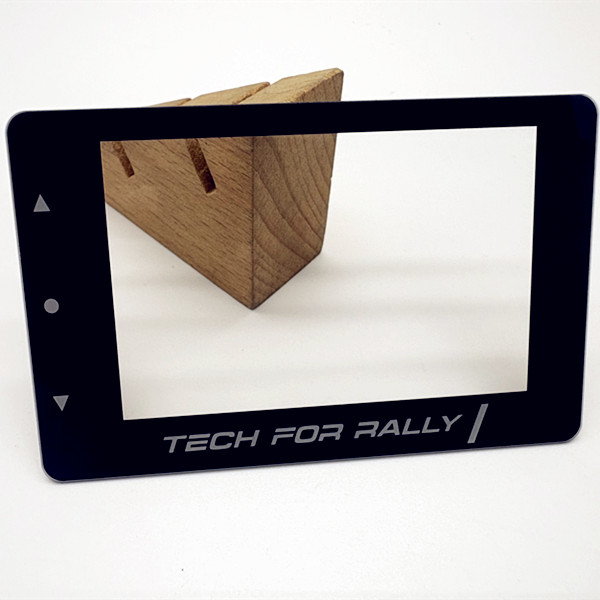
Customize Tempered Glass Silk Printed Ar Coating Gorila Glass LCD Screen protection Display
Silk-printed AR-coated Gorilla glass for LCD protection and display windows. The combination supports scratch resistance, printed masking and reduced surface reflection.
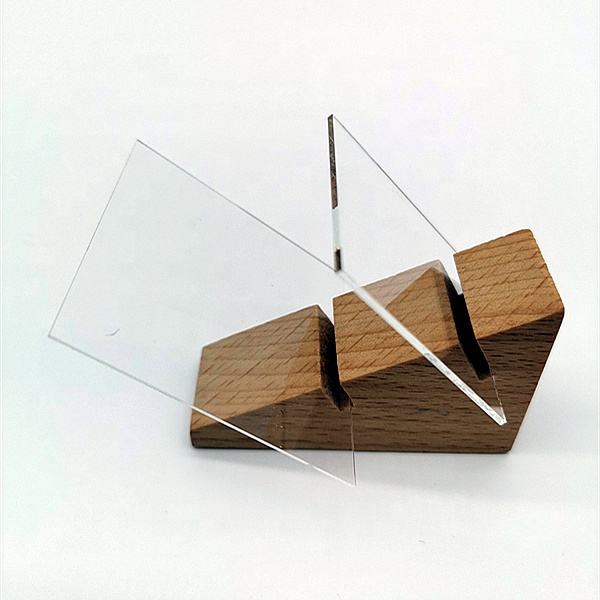
Custom Cut 0.5mm 0.7mm 1mm 1.5mm 2mm 2.5mm 3mm Corning Gorilla Temper Glass
Corning Gorilla tempered glass sheet cut to drawing. A strong base for touch cover glass, instrument windows and printed display panels where scratch resistance matters.

Customized Tempered Anti-Reflective Glass AR Coated Tempered Glass
Custom tempered AR-coated glass for display windows, touch panels and industrial instruments. A practical starting point when both mechanical durability and reflection control are required.
Where AG and AR Optical Glass Fits in Japanese Product Development
Japan’s advantage is often in the integration: the glass is only one layer, but it influences readability, touch feel, reliability, assembly yield and the perceived quality of the final product.
Automotive cockpits and centre displays
Anti-glare cover glass helps readability under strong daylight and at night. Japanese Tier suppliers often require printed black borders, tight outline tolerances, controlled gloss and robust edge finishing.
Smart home, HEMS and touch controls
Printed cover glass with clear windows and low-reflection surfaces is used in home-energy controls, kitchen appliances and building interfaces. Cosmetic consistency and fingerprint control are key.
Industrial HMI and measuring instruments
Instrument windows and HMI panels need stable flatness, clean apertures and reliable coating performance. Borosilicate and low-expansion substrates are common where temperature or chemical exposure matters.
Stage, event and architectural lighting
Gobo glass, dichroic mirrors and heat-resistant lighting covers support projection effects, colour separation and high-power fixtures. Thin formats help reduce fixture weight.
Medical, biotech and analytical instruments
Biochips, analyzer filters and optical windows depend on material purity, flatness and low expansion. Eagle XG and borosilicate substrates are selected according to assay and optical requirements.
Optical communications and semiconductors
Glass wafers, PLC substrate glass and V-groove glass support alignment, bonding and packaging. Dimensional stability and surface quality are more important than simple “glass thickness”.
What Japanese Buyers Are Changing in AG-Coated Glass Procurement
The direction is clear: more functionality per square millimetre, smaller production lots, tighter incoming inspection, and stronger traceability from raw material to packed box.
Hybrid AG + AR + AF stacks
Single-function coatings are giving way to combined surface stacks. Buyers ask for anti-glare behaviour, higher transmission and anti-fingerprint feel in one cover glass.
Thin, chemically strengthened glass
0.2–1.1 mm glass is increasingly common. Chemical strengthening supports thin formats, but cutting and edge grinding must be completed before ion exchange.
High-mix, low-volume prototyping
Japanese product teams often iterate quickly. Suppliers must support drawings, samples, print colour checks and coating-side confirmation before mass production.
Traceability and protective packing
Thin glass can survive machining yet fail through poor packaging. Interleaved protection, moisture control, shock cushioning and clear box labels are now part of the specification.
Illustrative RFQ scorecard for Japan-bound cover glass
Strong sample submissions usually prove more than appearance. The weighting below is an illustrative sourcing checklist based on common OEM evaluation points, not a statistical survey.
How to Specify AG-Coated Glass for Japan Without Ambiguity
AG is a surface condition, not a material. A useful RFQ defines the optical effect, measurement method, substrate, strengthening, printing, coating side, edge finish and packing together.
Key distinctionAG (anti-glare) usually scatters reflected light to soften specular glare; AR (anti-reflective) uses thin-film interference to raise transmission and suppress surface reflection. Some Japanese products combine AG with AR and anti-fingerprint AF. Do not accept a quotation that says “AG” without haze, gloss, transmission, coating side and test method.
| Requirement | Risk if left vague | RFQ wording to send | Practical support |
|---|---|---|---|
| Optical effect | Sample looks acceptable in one light but fails under showroom or sunlight conditions. | State target haze, gloss unit, transmission range, measurement angle and reference sample. | Material and coating route reviewed against the drawing; samples used to confirm visual and measured targets. |
| Substrate and thickness | Wrong glass chemistry can affect colour, strength, thermal stability or flatness. | Name the substrate family: soda-lime, low-iron, Gorilla, borosilicate 3.3, Eagle XG or AF32-type; give thickness tolerance. | Selection advice across tempered, low-iron, borosilicate and alkali-free technical glass. |
| Strengthening | Cutting after tempering or ion exchange is not possible; late changes can scrap the batch. | Specify thermal tempering or chemical strengthening, plus edge profile and hole positions before strengthening. | Thermal and chemical strengthening routes aligned with part size, thickness and application. |
| Printing and coating side | Mirrored artwork, wrong coating face or mismatched colour creates assembly rework. | Provide 2D drawing with print side, Pantone references, window dimensions, AR side and any AF requirement. | Silk-screen printing, back painting and AR coating process review before sample approval. |
| Edge and cosmetic criteria | Japanese incoming inspection may reject chips, scratches or haze that were never defined. | Agree edge finish, chip limits, scratch criteria, inspection zone, lighting condition and sample boundary. | Dimensional and visual inspection checkpoints before final packing. |
| Packing and traceability | Thin glass can be damaged after final inspection if interleaving or cushioning is inadequate. | Define interleaving material, tray/box layout, labels, humidity protection, drop/shock expectations and lot marking. | Export packing designed for fragile technical glass, with batch identification discussed at RFQ. |
| Compliance documents | Purchasing assumes RoHS, REACH or material declarations exist without confirming scope. | List the exact declaration, standard, language and document owner required for the part. | Required documents and test reports are confirmed project by project before order confirmation. |
AG/AR performance depends on the full stack and the measurement method. Final specifications should be fixed through samples and written approval, not by a generic coating name.
Why Fevry Glass Is a Practical China Partner for Japanese Buyers
For Japan-bound projects, capability is only half the story. The other half is communication discipline: a supplier that can read the drawing, confirm the process and pack the parts consistently.

Specialty glass, processed to drawing — not traded as a commodity
Fevry Glass Co., Ltd. is a specialty glass company based in Xinyu, Jiangxi, China. Its work spans optical, biological, semiconductor, communications, lighting and electronics applications. Raw glass is sourced from Corning, AGC and established Chinese optical-glass makers such as Chengdu Guangming and Xinhuguang, so projects can begin from traceable material rather than an unknown sheet.
Technicians process glass on laser, ultrasonic, CNC carving, grinding and inspection equipment imported from the USA, Germany and Japan. The goal is to reduce hand-offs: one supplier for cutting, strengthening, coating, printing and final visual inspection.
- Eagle XG, borosilicate and transparent technical glass
- Semiconductor wafers and biochip substrates
- PLC substrates and optical V-groove glass
- Stage, film and TV lighting colour glass
- LED filament and optical coating glass
- 0.15 mm and 0.2 mm ultra-thin protector glass
Traceable raw-material sourcing
Corning, AGC, Chengdu Guangming and Xinhuguang sources help support consistent optical and mechanical behaviour across production lots.
Multi-process finishing
Cutting, CNC shaping, drilling, edge grinding, strengthening, AR coating and silk printing can be planned as one process chain.
Japan export experience
Fevry serves customers in China and exports to Western Europe, the United States, Japan, South Korea, Taiwan, Hong Kong and Southeast Asia.
Fast technical response
Storefront data shows a typical response time within 4 hours and a 100% inquiry response rate; confirm current service metrics during inquiry.
Drawing-led engineering review
Engineers review tolerances, edge geometry, coating side, print colours, strengthening sequence and annual volume before quoting.
Quality-first working principle
“Quality is superior, service is supreme, reputation is first” and “Your success, our glory” guide the company’s approach to long-term OEM supply.
From Japanese Drawing to Export-Ready Glass
A predictable four-stage route keeps sample loops short and gives procurement a clear approval path.
Drawing and RFQ review
Send a 2D drawing, material, thickness, tolerances, edge finish, print colours, coating side, application and annual quantity.
Engineering and sample approval
Confirm manufacturability and process sequence, then produce samples to validate fit, colour, optical effect and print registration.
Mass production and inspection
Run production with dimensional and visual checks. Define the inspection zone, lighting condition and acceptance boundary in advance.
Export packing and shipment
Use interleaved, cushioned packing for fragile thin glass, with labels and lot identification agreed for the Japanese receiving process.
Common Questions About AG-Coated Glass, MOQ and Japan Delivery
These are the questions Japanese sourcing teams and engineers usually raise before requesting a sample or placing a trial order.
What is the difference between AG and AR coated glass for a Japanese display project?
AG, or anti-glare, is normally designed to scatter or diffuse reflected light so that strong reflections appear softer. AR, or anti-reflective, uses optical thin films to reduce surface reflection and increase transmission. AG is often judged by haze and gloss, while AR is judged by reflectance, transmission and colour neutrality. Some products combine AG, AR and AF, so the correct specification must include the full stack and the measurement method.
Which product should we start with for a custom AG/AR cover glass assembly?
Start with the substrate and mechanical function, not the coating name. For printed display windows, review the black silk-screen glass panel or the tempered AR-coated glass. For scratch resistance, review Gorilla glass options. For heat resistance or low expansion, review borosilicate 3.3 or Eagle XG. For lighting effects, review the dichroic gobo glass and thin dichroic mirror products.
What is the minimum order quantity, and can we obtain samples before mass production?
Most custom cover glass and AR glass items start from around 300 to 500 pieces, some Eagle XG cut parts from about 1,000 pieces, and selected gobo glass blanks from as few as 10 pieces. Samples can be arranged to validate fit, print colour and optical performance before mass production. Final MOQ depends on size, material, print complexity and process route.
What drawing information is needed for an accurate quotation?
Please send a 2D drawing in DWG, DXF or PDF with outline dimensions and tolerances, thickness, glass material, edge finish, hole and notch positions, strengthening method, print colours with Pantone references, AR coating side or sides, application and expected annual quantity. If you have a reference sample or a preferred inspection standard, include it with the RFQ.
How is thin glass protected for ocean freight to Japan?
Thin glass needs interleaved protection, edge cushioning and rigid outer packing. The exact method depends on thickness, part size, print and coating. Confirm the receiving environment, pallet or carton preference, humidity protection and any shock or vibration requirement with the supplier. Packaging should be treated as part of the specification, not as a last-minute detail.
Can you provide inspection records, change control and compliance declarations?
Inspection can cover dimensions, thickness, flatness and visual defects against an agreed sample and drawing. Required records, change-control expectations and declarations such as RoHS or REACH should be listed explicitly in the RFQ so the document scope, language and responsible party can be confirmed before order acceptance. Formal certification claims should always be verified for the exact part and process.
Send Your Drawing for a Japan-Ready AG/AR Glass Review
Share your substrate, thickness, haze or gloss target, print colours, coating side, tolerance, annual volume and packaging requirement. Our team can review the process route and recommend a practical starting product from the Fevry Glass range.