Top 10 Ultra Thin Glass Factory & Exporters in New York
A procurement-grade shortlist for New York OEMs sourcing 0.15–4 mm chemically strengthened, AR-coated, silk-printed, borosilicate and Eagle XG glass — with factory capability, local application fit and export-ready supply-chain criteria.
8 Ultra-Thin Glass Products for New York Buyers
These eight product families cover the most common New York procurement briefs: OLED cover glass, touch switch plates, shaped window panels, chemically strengthened ultra-thin glass, alkali-free borosilicate, OEM Gorilla-style screens, anti-reflective coated glass and dashboard trim panels.
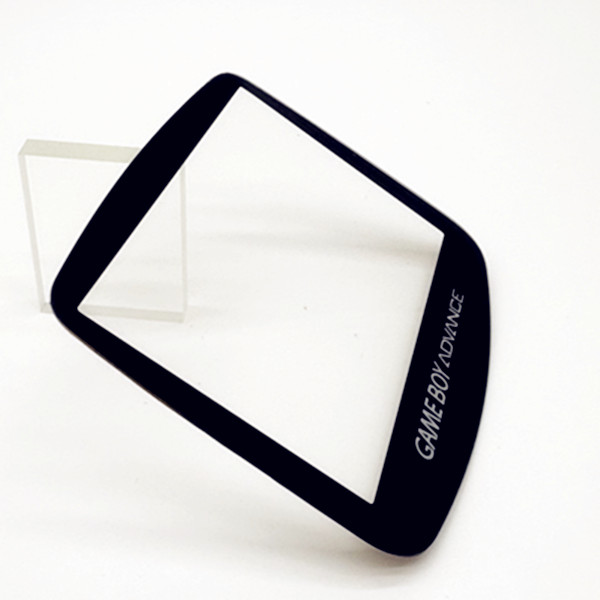
Custom Premium Gorilla Tempered Silk Screen Printed Glass Touch Screen Printed Glass Panels Cover Glass for OLED Screen
Printed cover glass for OLED modules, smart controls and premium electronic interfaces where scratch resistance and precise ink registration matter.
View Product
1.5mm 2mm Tempered Glass Thickness Touch Switch Glass Plate
Durable glass plates for wall switches, elevator controls, appliances and architectural touch points in New York commercial interiors.
View Product
Custom Shaped Tempered Glass Processing, High Transparency Window Panels with Screen Printing
CNC-shaped transparent panels for display windows, sensor openings and design-driven fixtures; printed borders and icon windows available.
View Product
Custom Chemically Ultra-Thin Clear Transparent Tempered Glass Sheet
Ion-exchange strengthened glass for wearables, sensor windows, displays and lightweight protective covers calling for high clarity.
View Product
Custom 0.2mm 0.3mm 0.4mm 0.5mm 0.7mm 1mm Alkali-Free Borosilicate AF32 Glass
Low-expansion technical glass for analyzers, micro-fabrication, optical windows and high-temperature environments.
View Product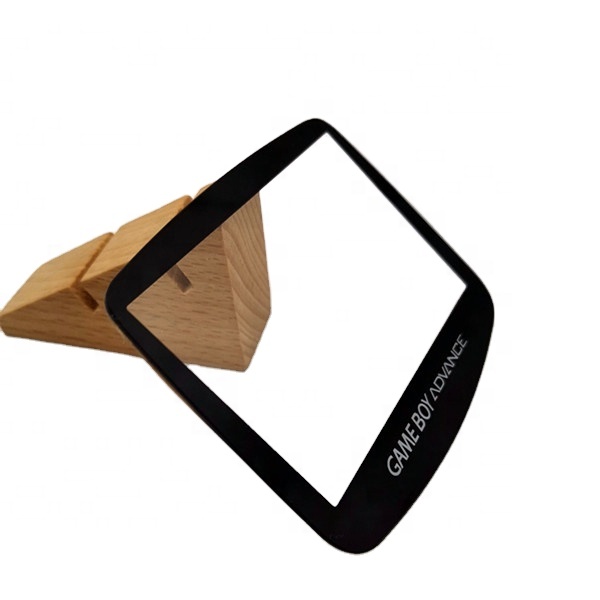
0.5mm 0.7mm 1mm 2mm 3mm Thickness China Suppliers Good Price OEM Wholesale Premium Tempered Printing Custom Gorilla Glass Screen
Wholesale display glass for brands that need scratch resistance, custom printing and repeatable dimensional quality.
View Product
Customized Tempered Anti-Reflective Glass AR Coated Tempered Glass
AR-coated panels for display readability, outdoor kiosks, optical instruments and architectural interfaces with glare sensitivity.
View Product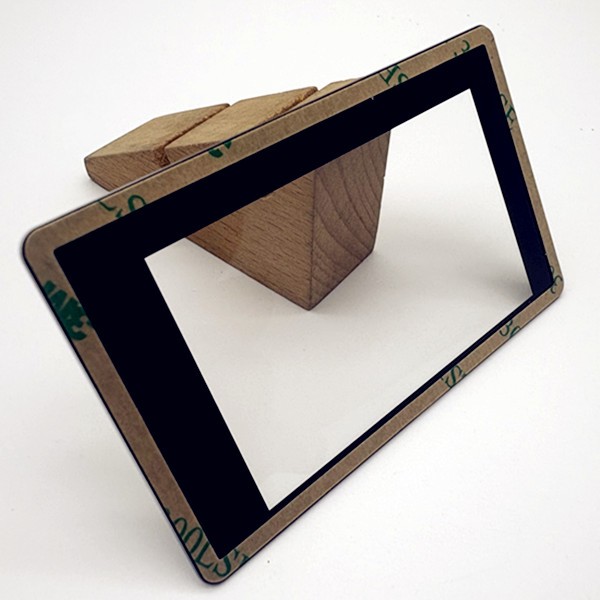
Custom Tempered Glass Dashboard Trim Panel Flat Electronic Glass Screen Protector
Flat tempered cover glass for automotive dashboards, electronic displays and control surfaces; printed borders and tight tolerances available.
View ProductWhy Ultra-Thin Glass Procurement in New York Is Different
New York is not a single glass market. It is a dense network of buying centers: Manhattan design studios specifying premium touch interfaces, Brooklyn hardware teams building connected products, Long Island optics and photonics firms, Westchester medical-device developers, Hudson Valley instrument makers, and upstate automotive and industrial suppliers. Each group evaluates ultra-thin glass differently, but they share one requirement: the material must arrive with predictable optical, mechanical and dimensional performance.
At the same time, New York is not a large-volume melting center for every ultra-thin glass grade. Buyers in New York City, Albany, Rochester, Buffalo and the Southern Tier typically combine three supply roles: a material innovator for substrate qualification, a regional precision fabricator for prototyping or supply-chain redundancy, and an export-qualified custom glass factory for cut, strengthened, coated and printed parts. That is why this guide evaluates top 10 ultra-thin glass factory and exporter channels relevant to New York procurement, rather than pretending that all thin-glass production originates inside the five boroughs.
For SEO teams and procurement managers alike, the useful question is not “Who sells the cheapest sheet?” It is “Which supplier can provide information gain?” That means traceable raw glass, practical DFM feedback, verified strengthening, documented coating sides, repeatable print colors, inspection evidence, export packing and a clear path from sample to mass production. The shortlist below is built around those criteria.
Material Breadth
Ability to supply soda-lime, Gorilla-style aluminosilicate, borosilicate 3.3, AF32, Corning Eagle XG and ultra-thin chemically strengthened glass.
Process Depth
Cutting, CNC shaping, drilling, edge grinding, thermal tempering, ion exchange, AR coating, silk printing and back painting under one quality system.
Quality Evidence
Dimensional reports, flatness checks, transmission data, coating adhesion, print registration and visual inspection before export packing.
Export Readiness
Responsive engineering, sample support, export documentation, fragile-glass packing and experience serving U.S. buyers and other regulated markets.
Top 10 Ultra Thin Glass Factory & Exporters in New York
The ranking is an editorial supply-channel shortlist for New York buyers, not a paid placement. It balances local New York access with global manufacturing capability, because most custom ultra-thin glass projects require both.
Fevry Glass Co., Ltd.
Best overall custom factory for New York OEM projects. Supplies 0.15–4 mm tempered, chemically strengthened, AR-coated, silk-printed, borosilicate 3.3 and Eagle XG glass, with one accountable route from drawing review to export packing.
Corning Incorporated
A material innovator behind Eagle XG and Gorilla Glass. New York buyers use Corning for substrate specification and qualification, then work with fabricators for cut and printed parts. Not a low-volume custom print shop, but a critical local reference point.
Swift Glass Co., Inc.
An established precision glass fabricator with regional proximity for New York engineering teams. Useful for local prototyping, grinding, polishing and supply-chain redundancy; confirm ultra-thin thickness and strengthening capability against your drawing.
AGC Inc.
A broad glass portfolio that includes ultra-thin and cover glass. Suitable for high-volume consumer electronics and display programs where material consistency, brand qualification and long-term supply stability are priorities.
SCHOTT AG
Specialty glass and ultra-thin borosilicate expertise. Strong where thermal shock, chemical resistance and optical quality matter, including lighting, analytical, medical and industrial applications.
Nippon Electric Glass Co., Ltd.
Ultra-thin glass substrates for display and semiconductor-adjacent applications. A good option for high-specification programs with long qualification cycles and tight dimensional requirements.
Abrisa Technologies
Custom glass fabrication, coating and printing for U.S. buyers. Relevant for AR, ITO and optical filter work when a domestic fabricator is required alongside an Asian material source.
Valley Design Corp.
Precision glass wafers, substrates and thin-glass machining for R&D and production. Good for small-batch engineering and micro-fabrication teams at New York universities, labs and instrument companies.
Precision Glass & Optics
Optical components, coatings and custom glass. Useful for photonics, imaging and instrument windows where optical tolerance, wavelength control and edge quality are the primary drivers.
Fralock
Engineered materials and thin-glass fabrication for medical, industrial and aerospace buyers. Best for teams that need a U.S.-based converter alongside an overseas glass factory for scalable production.
New York has two especially visible local nodes: Corning in the Southern Tier and Swift Glass in Elmira. For custom ultra-thin parts, most New York buyers still combine local engineering with an export manufacturing partner such as Fevry Glass to balance responsiveness, total landed cost and process depth.
Where Ultra-Thin Glass Performs in New York
From Broadway lighting to Long Island photonics and Manhattan design studios, New York demand is shaped by high-mix applications, premium surfaces and strict visual quality.
Smart Buildings & Touch Controls
Hudson Yards, Manhattan lobbies and Brooklyn commercial fit-outs use printed touch switch plates, 1.5–2 mm tempered glass and anti-glare AR cover glass for durable, premium interfaces.
Medical & Life-Science Instruments
New York and Westchester medtech teams specify Eagle XG, AF32 and borosilicate for analyzer windows, microfluidic substrates and instrument covers that require dimensional stability and traceable material.
Live Events & Stage Lighting
Broadway venues, touring productions and Brooklyn event spaces rely on borosilicate 3.3 gobo blanks and dichroic glass for high-power LED and stage lighting where thermal shock resistance is essential.
Optics & Photonics
Long Island and Rochester photonics teams source AR-coated windows, optical filter glass and precision-cut panels for imaging, laser systems and measurement instruments.
Consumer Electronics & Wearables
Manhattan design studios and Brooklyn hardware teams use 0.15–1.1 mm chemically strengthened cover glass for OLED screens, sensor windows and lightweight protective panels.
Automotive & EV Displays
Upstate suppliers and Long Island integrators specify dashboard trim panels, screen protectors and AR display covers where flatness, print accuracy and safe export packing drive supplier selection.
New York Trends Shaping Ultra-Thin Glass Demand
Procurement behavior in New York is moving toward higher customization, lower glare and more resilient supply chains — especially for premium interfaces and technical instruments.
High-Mix, Low-Volume Production
New York brands often launch multiple SKUs with different printed graphics, thicknesses and coating sides. Factory flexibility and fast sample iterations now matter as much as unit price.
AR Coatings Become Standard
Outdoor kiosks, architectural displays, medical monitors and premium appliances increasingly specify low-reflection AR glass to improve readability in bright interiors and street-level environments.
Chemical Strengthening for Thin Glass
For 0.15–2 mm cover glass, ion exchange is often preferred over thermal tempering because it raises surface strength while preserving flatness and optical clarity.
Supply-Chain Redundancy
New York buyers increasingly dual-qualify a local fabricator and an export factory, using local partners for prototypes or emergency work and overseas production for scale and process depth.
Why Fevry Glass Is the Recommended Custom Ultra-Thin Glass Partner
Fevry Glass Co., Ltd. is a specialty glass company based in Xinyu, Jiangxi, China. It is not a generic glass trader: the company works from substrate selection through cutting, strengthening, coating, printing, inspection and export packing. For New York buyers, that means fewer hand-offs, tighter accountability and a clearer path from a 2D drawing to a finished part.
Raw glass is sourced from Corning, AGC and other multinational producers, with close cooperation with established Chinese optical-glass makers such as Chengdu Guangming and Xinhuguang. Processing uses laser, ultrasonic, CNC carving, grinding and inspection equipment imported from the USA, Germany and Japan. The result is traceable material plus controlled processing — an important combination for procurement teams that need both information gain and reliable delivery.
Fevry exports to Western Europe, the United States, Japan, South Korea, Taiwan, Hong Kong and Southeast Asia. Its public Alibaba.com profile records 10+ years of membership, ≤4-hour average response time, 100% inquiry response rate and a 5.0/5 buyer rating. The company’s guiding principle is “Quality is superior, service is supreme, reputation is first”, and its motto is “Your success, our glory.”
- Eagle XG, borosilicate and transparent ceramic glass
- Semiconductor wafers and biochip glass
- PLC substrates and optical V-groove glass
- Film, TV and stage lighting color lenses
- LED filament and optical coating glass
- 0.15 mm and 0.2 mm ultra-thin protector glass



Drawing Review & DFM
Engineering review of outline, tolerance, edge finish, hole position, glass grade, strengthening and coating before quotation.
Laser, CNC & Ultrasonic Machining
Custom outlines, holes, notches, slots, flat edges, pencil edges and chamfers for precise fit in mechanical assemblies.
Thermal & Chemical Strengthening
Thermal tempering for thicker panels and ion-exchange strengthening for 0.15–2 mm ultra-thin glass.
AR, Dichroic & Optical Coatings
Anti-reflective coating on one or both sides, dichroic mirrors and filter coatings for lighting, displays and optics.
Silk Printing & Back Painting
Pantone-matched borders, logos, icon windows, IR-transparent ink areas and back-painted cover glass.
Dimensional & Optical Inspection
Size, thickness, flatness, visual defects and coating appearance checked before interleaved export packing.
Chemically Strengthened Ultra-Thin Glass
0.15–2 mm ion-exchange glass for wearables, sensor windows and thin display covers.
Thermally Tempered Cover Glass
Roughly 3–4 mm safety glass for appliances, control panels and larger touch surfaces.
Borosilicate 3.3 & AF32
Low-CTE technical glass for lighting, gobo, laboratory and heat-resistant windows.
AR-Coated & Printed Glass
Low-reflection cover glass with printed borders, logos and icon windows for premium interfaces.
Procurement FAQ from New York Buyers
Practical answers for engineering, sourcing and quality teams evaluating ultra-thin glass suppliers for New York projects.
Are there ultra-thin glass factories in New York?
New York has major material innovation and precision fabrication nodes, including Corning in the Southern Tier and Swift Glass in Elmira. However, most custom ultra-thin glass parts are globally sourced. New York is primarily a demand, design and integration market rather than a high-volume melting center for every glass grade.
What is the typical MOQ for custom ultra-thin glass?
Most custom cover glass and AR glass items start around 300–500 pieces. Custom-cut Eagle XG parts may start from 1,000 pieces, while selected gobo glass blanks can start from 10 pieces. Samples are normally arranged to validate fit, print color and optical performance before mass production.
Should New York buyers choose chemically strengthened or thermally tempered glass?
Thermal tempering is generally best for glass around 3 mm and thicker. For 0.15–2 mm ultra-thin cover glass, chemical strengthening by ion exchange is often preferred because it raises surface strength while keeping the sheet flat and optically clean. Cutting, drilling and edge grinding must be completed before strengthening.
How does shipping to New York work?
Samples are usually shipped by air to JFK, Newark or another U.S. gateway. Production orders normally move by sea to the Port of New York and New Jersey or are consolidated through a West Coast port and railed east. Fragile thin glass requires interleaved, cushioned export packing and clear carton labeling.
What information should be sent for a fast evaluation?
Send a 2D drawing in DWG, DXF or PDF with outline dimensions and tolerances, thickness, glass material, edge finish, hole and notch positions, strengthening method, print colors with Pantone references, AR coating side(s), application and annual quantity. Complete data lets engineers respond with a firm recommendation in one round.
Which glass is best for an outdoor or high-glare New York display?
For outdoor kiosks, street-level displays and bright commercial interiors, consider anti-reflective coated glass on one or both sides, combined with chemically strengthened or tempered cover glass depending on thickness. Low-iron glass can also improve clarity and color neutrality.
How can a New York buyer verify optical and dimensional quality?
Ask for dimensional inspection data, flatness and thickness checks, transmission or reflectance targets, coating adhesion results, print registration samples and a pre-production sample. For repeat orders, request a golden sample and a documented inspection plan before packing.
Can Fevry Glass support prototypes before mass production?
Yes. The usual route is drawing review, material recommendation, sample approval, then mass production. This is especially useful for New York design teams that need to test fit, color match, touch feel, coating appearance and assembly tolerance before committing to a production run.
Have a Drawing? Let’s Engineer Your Ultra-Thin Glass.
Send your 2D drawing, target thickness, glass material, print colors, AR coating side and annual volume. Our engineering team will review manufacturability and recommend the most practical route from sample to export-ready production.
Typical response within 4 hours. Please include DWG, DXF or PDF drawings, tolerance requirements and application details for a faster engineering review.