OEM/ODM UV Filter Supplier & Wholesaler Serving the Washington DC Market
Custom UV-cut, UV-pass, AR-coated and dichroic filter glass for museums, federal laboratories, medical device OEMs, display manufacturers, architecture and lighting teams across Washington DC, Maryland and Virginia.
8 Custom UV Filter & UV-Cut Glass Products for OEM/ODM Buyers
These production platforms can be configured with UV-cut, UV-pass, anti-reflective, dichroic and printed functions. For Washington DC buyers, the value is a single engineering partner for optical performance, mechanical fit, artwork, inspection and export documentation.
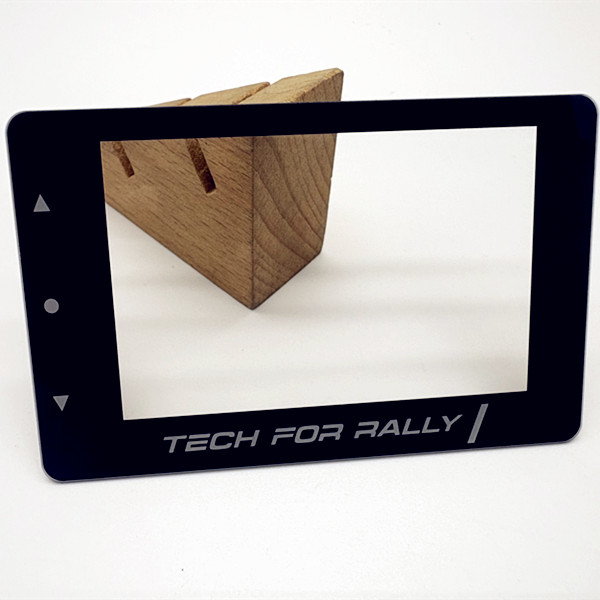
Custom Tempered Glass Silk Printed AR Coating Gorilla Glass LCD Screen Protection Display
For instrument windows and touch panels that require glare reduction, printed masking and UV protection. Specify AR coating sides, print colors and target UV cut-off.
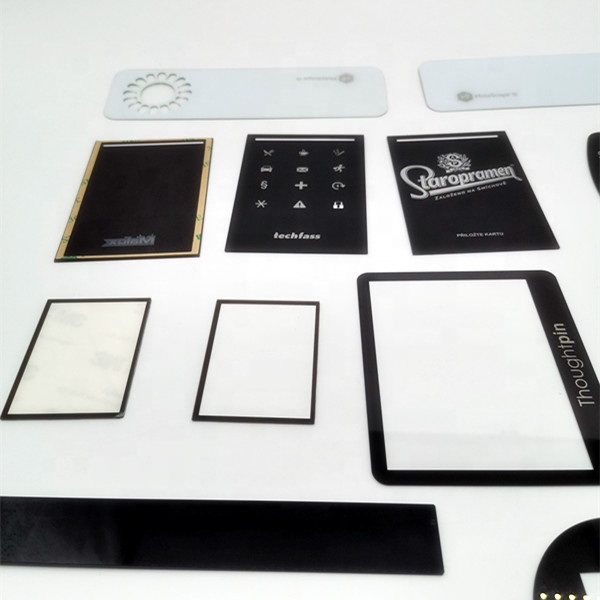
Custom Display Screen Silk Screen Printing Tempered Gorilla Glass
Ideal for UV-filtered control windows, medical displays and secure facility interfaces where logos, icons or privacy borders must be printed accurately.

Custom Shape High Transmittance Ultra Clear Tempered Glass Panel With Anti-reflective Coating on Two Sides
A strong fit for museum viewing panels, sensor covers and high-transmission display windows where both glare control and UV filtering must be engineered together.

Factory Customization Dichroic Glass Gobo Glass
Wavelength-selective glass for projection and stage lighting. Useful in theaters, museums and architecture where precise color separation and UV control matter.
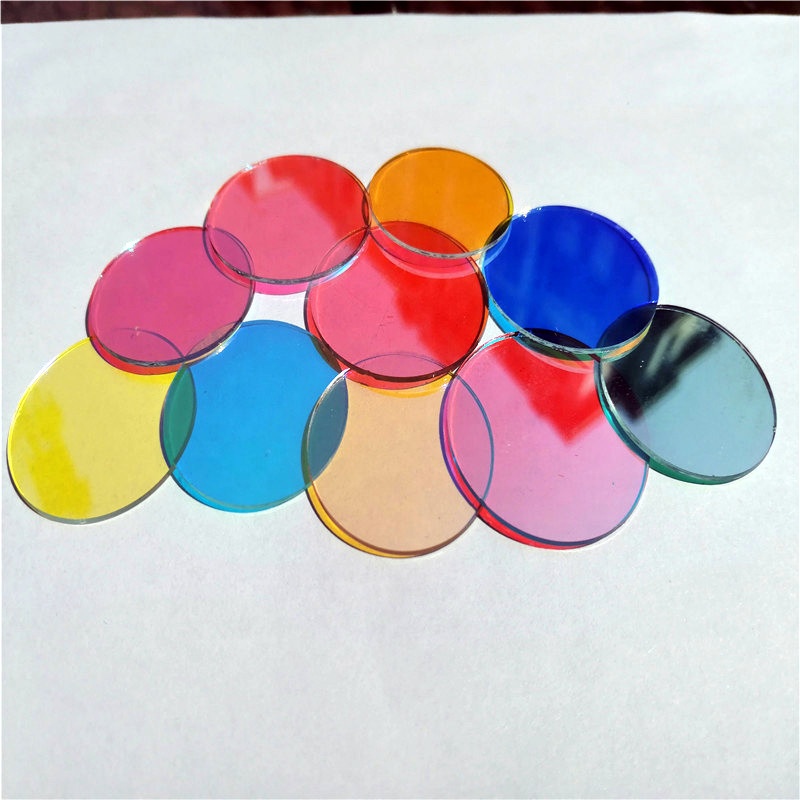
Customize Logo Color Glass Gobo Glass
For branded projection, event lighting and exhibit accents. Color layers, logo detail, thickness and edge finish are made to drawing.
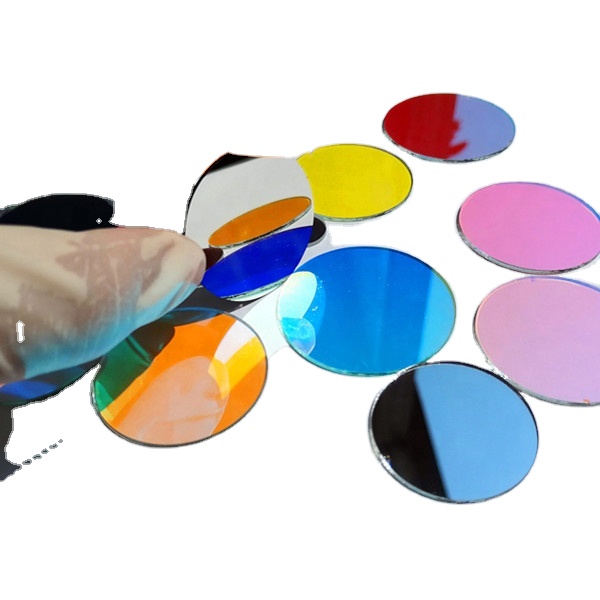
0.3mm ~ 2mm Dichroic Glass Mirror for Gobos
Thin mirror substrates for gobo and optical assemblies. Define coating band, substrate thickness, flatness, edge quality and working temperature.

Back Painted Tempered Glass Led Glass Panel Cover Glass
Back-painted tempered glass for LED covers, display panels and architectural fixtures. UV-stable inks and color control can be discussed for long-life indoor installations.
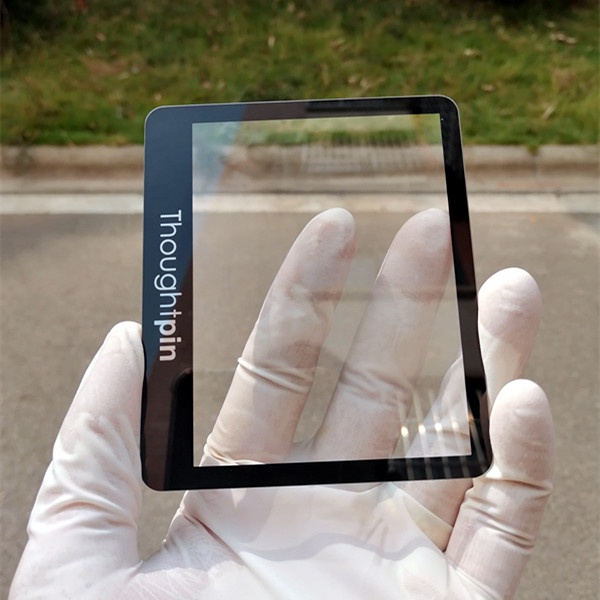
1.5mm 2mm Tempered Glass Thickness Touch Switch Glass Plate
Cover glass for elevator, appliance and building-control interfaces. Anti-glare, UV-stable printing and custom icon windows support public-building use.
Responsiveness and Traceability for D.C.-Area Procurement Teams
Public records, fast engineering response and export experience matter when a UV filter component sits inside a museum case, analyzer, display or lighting fixture.
Why UV Filtration Is a Performance Requirement, Not a Commodity Add-On
In Washington DC, UV filter glass often sits inside environments where failure is highly visible: museum display cases protecting works on paper, federal laboratory instruments measuring weak signals, medical devices in the I-270 corridor, secure building control interfaces and theater lighting systems serving the region’s cultural venues. A filter that is too thin, too hazy, poorly coated or dimensionally unstable can create color shift, fading, calibration drift or installation delays.
For OEM and ODM buyers, the useful specification is not simply “UV filter glass.” It is a defined optical target: UV cut-on wavelength, visible transmission, haze, color shift, coating side, thickness, tolerance, edge finish and annual volume. When those inputs are clear, a supplier can recommend whether low-iron soda-lime, Gorilla®-type glass, borosilicate 3.3, Corning® Eagle XG or a dichroic coating platform is the better base.
Fevry Glass supports this early engineering step. Drawings can be reviewed with coating, printing and strengthening requirements in one workflow, which reduces the usual hand-offs between a glass cutter, a coater, a printer and a packing vendor. For Washington DC buyers, that means fewer assumptions before samples are approved.
Fast evaluation checklist for a UV filter inquiry
- 2D drawing in DWG, DXF or PDF with outline tolerances
- Target UV cut-on / cut-off and visible transmission
- Base material, thickness and edge finish
- AR side, dichroic band or UV-blocking layer
- Print colors, icon windows and Pantone references
- Application, working temperature and annual quantity
- Delivery destination in DC, Maryland or Virginia
Where UV Filter Glass Is Used Across Washington DC, Maryland and Virginia
The same UV filter platform can serve several local industries—but the acceptance criteria differ. These six scenarios show how buyers usually frame the requirement.
Museum & Archive Display Cases
UV-cut glazing and viewing panels help reduce fading risk for works on paper, textiles and archival objects. Low haze and neutral color are often more important than maximum UV blocking alone.
Federal & University Laboratories
UV-pass windows, dichroic filters and analyzer glass support spectroscopy, imaging and optical alignment. Buyers usually require documented material, flatness and coating side.
Biotech & Medical OEMs
Diagnostic instruments, device windows and analyzer filters need repeatable optical performance. Pilot builds often begin at 300–500 pieces before scale-up.
Performing Arts & Event Lighting
Gobo and dichroic glass for theaters, museums, hotels and production venues. Heat resistance, coating adhesion and edge quality are critical in high-power fixtures.
Architecture & Historic Interiors
Display glass, LED covers and control plates must respect preservation goals. UV-stable printing and neutral optics help avoid visible color drift in public interiors.
Secure Control & Display Interfaces
Touch switch plates and LCD protection glass for facilities requiring privacy masking, anti-glare surfaces and custom printed icons on tempered cover glass.
What Washington DC Buyers Are Changing in UV Filter Specifications
Across recent procurement cycles, the region’s buyers are asking for more documentation, more wavelength-specific designs and fewer one-size-fits-all filter assumptions.
Documentation-First Sourcing
Drawings, material certificates, inspection reports and RoHS/REACH declarations are requested earlier. Custom glass buyers want fewer assumptions before samples are approved.
Pilot Volumes Before Scale
Programs increasingly start with samples and 300–500 piece pilot builds. This is especially common for medical, museum and custom display applications in the DMV area.
Conservation-Led Optics
Museums and archives compare UV blocking alongside visible transmission, haze and color neutrality. A slightly lower UV number with better color fidelity may be preferred.
Global Sourcing With Local Accountability
D.C.-area teams source custom components globally but need responsive engineering, export packing and delivery updates that fit U.S. project schedules.
Wavelength-Specific Filter Design
Broad “UV filter” requests are giving way to defined cut-on/cut-off targets for 365 nm, 395 nm, 420 nm or application-specific bands, with angle of incidence noted.
Durability and Low Rework
Coating adhesion, print stability and scratch resistance are evaluated for long-life public buildings, instruments and high-use touch interfaces.
How to Choose the Right UV Filter Glass Platform
Use this comparison as an early-stage guide. Final specifications should be confirmed against the material datasheet, coating design and your drawing.
| Approach | Typical Material / Coating | Function | Best DC Applications | Buyer Notes |
|---|---|---|---|---|
| UV-cut display cover | Low-iron soda-lime or Gorilla®-type glass with UV-blocking coating or laminated layer | Reduces UV exposure while preserving visible light and image clarity | Museum cases, control panels, medical displays | Define cut-on, visible transmission, haze and color shift |
| UV-pass / UV-transmitting window | Borosilicate 3.3, Corning® Eagle XG or selected optical glass | Allows a targeted UV band to reach a sensor or sample while blocking unwanted bands | Laboratory analyzers, spectroscopy, biochips | Confirm wavelength range, fluorescence behavior and flatness |
| Dichroic UV/IR filter | Borosilicate or thin glass with dichroic coating | Reflects or transmits selected wavelengths for color control | Stage lighting, projection, optical instruments | Angle of incidence changes performance; specify working geometry |
| AR-coated UV cover | Ultra-clear glass with single- or double-sided AR coating | Reduces surface reflections while supporting UV filtering | Display windows, sensor covers, viewing panels | Specify AR side, reflectance target, adhesion and cleaning method |
| Heat-resistant UV gobo | 0.2–2 mm borosilicate or dichroic glass | Tolerates lighting heat while enabling color or pattern control | Theaters, museums, event venues | Test at working temperature and confirm edge finish |
Six inputs that prevent a UV filter mismatch
- Required UV blocking or UV transmission curve
- Visible transmission and allowable color shift
- Glass thickness, outline tolerance and edge style
- AR side, dichroic angle or printed border details
- Working environment: heat, cleaning, handling, installation
- Annual volume and delivery deadline for the DC destination
A complete inquiry can be reviewed in one engineering round. Missing information usually leads to extra sample cycles.



A Technical Glass Partner Built for Custom OEM/ODM Programs
Fevry Glass Co., Ltd. is a specialty glass company based in Xinyu, Jiangxi, China. The company draws on hands-on experience with optical, biological, semiconductor, communications, lighting and electronics customers—markets that demand more than a generic glass sheet.
Raw glass is sourced from Corning, AGC and other multinational producers and through established Chinese optical-glass makers such as Chengdu Guangming and Xinhuguang. This gives buyers a traceable starting point for Eagle XG, borosilicate 3.3, transparent ceramic glass and other precision substrates. Processing is supported by laser, ultrasonic, CNC carving, grinding and inspection equipment imported from the United States, Germany and Japan.
The company’s guiding principle is “Quality is superior, service is supreme, reputation is first”, with the motto “Your success, our glory.” For Washington DC buyers, those values translate into clear drawing review, responsive sampling and export packing designed for fragile thin glass.
Material Traceability
Substrate selection can reference established glass producers, helping engineers verify thermal expansion, flatness and optical behavior.
In-House Processing
Cutting, CNC shaping, edge grinding, strengthening, coating, printing and inspection can be coordinated under one production plan.
Optical Engineering Support
UV cut-off, AR sides, print colors, thickness and edge details can be reviewed together before sampling, reducing rework risk.
Export-Ready Records
Public supplier records, buyer ratings, trade capacity and transaction history support due diligence for new OEM/ODM programs.
Independent Records Washington DC Buyers Can Review
Supplier assessment, transaction history, ratings and trade capacity are published through the company’s Alibaba.com profile and can be checked before a purchase order is issued.
From Drawing to Washington DC Delivery in Five Practical Steps
Clear inputs create faster samples. The process below is designed for procurement teams that need predictable communication and documented approvals.
Share the Optical Target
Send your drawing, UV cut-on or pass band, transmission goal, thickness, print colors, coating sides and expected annual volume.
Engineering Review
The team checks manufacturability and recommends substrate, strengthening, coating and printing routes. Conflicts are resolved before sampling.
Sample Approval
Validate fit, visible appearance, print alignment, UV performance and AR effect. Approval criteria should be written, not assumed.
Mass Production
Dimensional and visual checks are built into the run. Where required, optical or coating measurements can be documented.
Export Packing & Delivery
Thin glass is interleaved and cushioned for international shipping. Delivery to DC, Maryland, Virginia or a nominated freight forwarder can be quoted.
Common Questions About UV Filter Glass Procurement
These are the questions engineers, sourcing managers and project buyers ask most often when evaluating an overseas custom glass supplier for a D.C.-area project.
Need a faster review?
Send the drawing, UV target, glass thickness, coating side, print details and delivery zip code. Complete information usually shortens the sampling cycle.
Do you supply UV filter glass to Washington DC, Maryland and Virginia?+
Yes. Fevry Glass exports to the United States and regularly serves buyers in Western Europe, the U.S., Japan, South Korea, Taiwan, Hong Kong and Southeast Asia. For the Washington DC market, shipments can be arranged to commercial addresses, laboratories, museums, jobsites, integrators or freight forwarders in Maryland and Virginia. The exact Incoterms, packing and delivery point should be confirmed on the quotation.
Can you customize the UV cut-on wavelength and visible transmission?+
Custom projects can be reviewed against your target UV blocking or UV transmission curve, visible transmission, haze, color shift and coating side. The right route may be a UV-blocking coating, laminated layer, selected substrate, dichroic coating or a combination. Provide the requested wavelength range, angle of incidence, measurement method and acceptable tolerances so the recommendation is based on data rather than a generic filter label.
What MOQ applies to OEM/ODM UV filters?+
Most custom cover glass and AR glass items start from 300 to 500 pieces. Some Corning Eagle XG cut parts begin from 1,000 pieces, while selected gobo glass blanks can start from around 10 pieces. Samples can usually be arranged to validate fit and optical performance before mass production. MOQ is confirmed after reviewing dimensions, material, coating, printing and inspection requirements.
What lead time and shipping method should DC buyers plan for?+
Lead time depends on material availability, coating complexity, print colors, strengthening steps and inspection requirements. New samples generally require more engineering review than a repeat order. For Washington DC deliveries, air freight is common for samples and urgent production, while sea freight can be considered for larger programs. Buyers should share the required-on-site date, destination zip code and preferred Incoterm so packing and transit can be quoted accurately.
Can you provide RoHS, REACH, material certificates and inspection reports?+
Project documentation can be discussed based on the material, coating, printing and application. For regulated or government-related programs, request the required document list before quoting. Do not assume that a standard certificate covers a custom coating or printed ink. The final documentation package should be listed in the purchase order or quality agreement.
Are your products TAA or Buy American compliant?+
Compliance is project-specific and should not be assumed from the product name or supplier profile. Federal, federally funded and District procurement programs may apply TAA, Buy American or agency-specific rules. Before award, provide the applicable solicitation language and country-of-origin requirements to the supplier for review. Fevry Glass can support documentation where available, but the buyer and their compliance team must confirm final eligibility.
Can you combine UV filtering, AR coating and Pantone-matched printing on one part?+
Combined requirements are common in display, medical and control-panel projects. The review should include the glass substrate, UV target, AR side, print color references, ink opacity, icon window dimensions and edge treatment. Because coating and printing steps interact, sampling is strongly recommended before mass production—especially when the visible appearance is critical.
What information should I send with my first inquiry?+
Send a 2D drawing in DWG, DXF or PDF with outline dimensions and tolerances; thickness; glass material; edge finish; hole and notch positions; strengthening method; print colors with Pantone references; AR coating side or UV target; application; annual quantity; and delivery destination. For a Washington DC project, also include any documentation, packaging or delivery-date requirements in the first message.
Request a UV Filter Quote for Your Washington DC Project
Send your drawing, UV target, thickness, print details and annual volume. The team can recommend a glass platform, coating route and sampling plan for museum, laboratory, display, lighting or building-control applications.