OEM/ODM Custom Home Electronic Glass Window Cover Panel Display Glass Screen Printing Tempered Glass Factories & Supplier Serving Jakarta
Precision cover glass for smart-home controls, appliance windows, touch displays, mirrors and intercom panels — cut, printed, coated, strengthened and packed for OEM/ODM programmes in Jakarta and across Indonesia.
Eight OEM/ODM cover-glass platforms for Jakarta smart-home and appliance programmes
These eight production-ready platforms cover the most common requests from Jakarta buyers: anti-reflective display windows, black-border control panels, printed Gorilla® glass, heat-resistant gobo glass, dichroic mirror glass and back-painted LED covers. All support drawing-based customization, Pantone print matching, tempered or chemically strengthened substrates, AR coating and export packing to Indonesia.
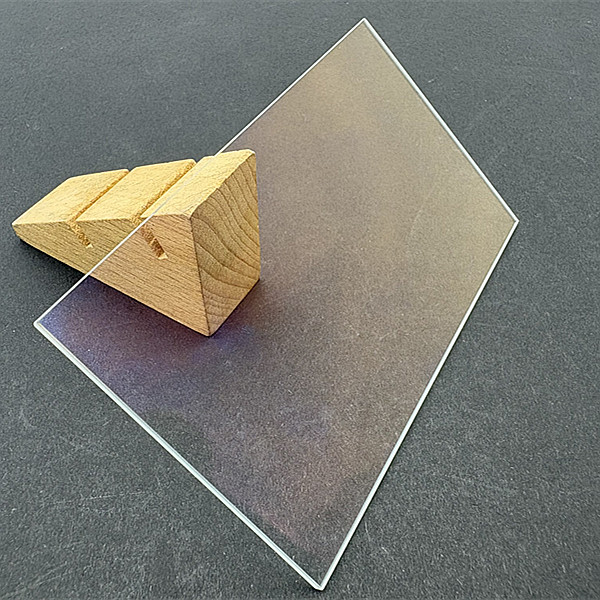
Customized Tempered Anti-Reflective Glass AR Coated Tempered Glass
AR-coated tempered glass for control windows and display panels where glare and reflection reduce legibility in bright Jakarta apartments, lobbies and showrooms.
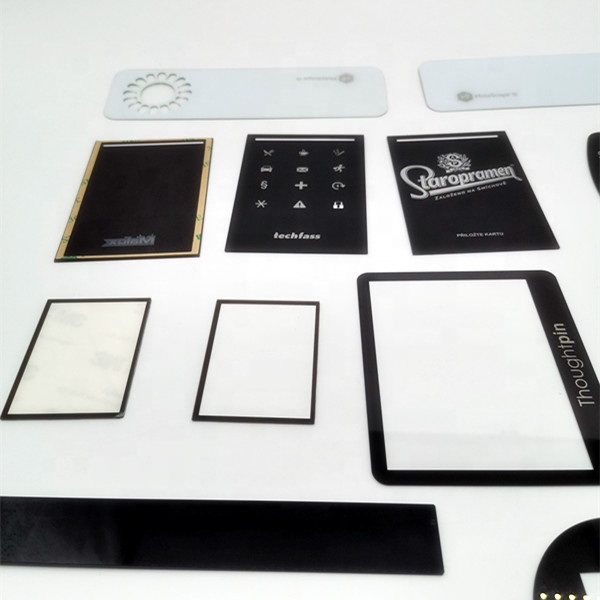
Custom Display Screen Silk Screen Printing Tempered Gorilla Glass
Printed tempered Gorilla® glass for touch interfaces, wall switches and appliance control windows that need scratch resistance and sharp black borders.
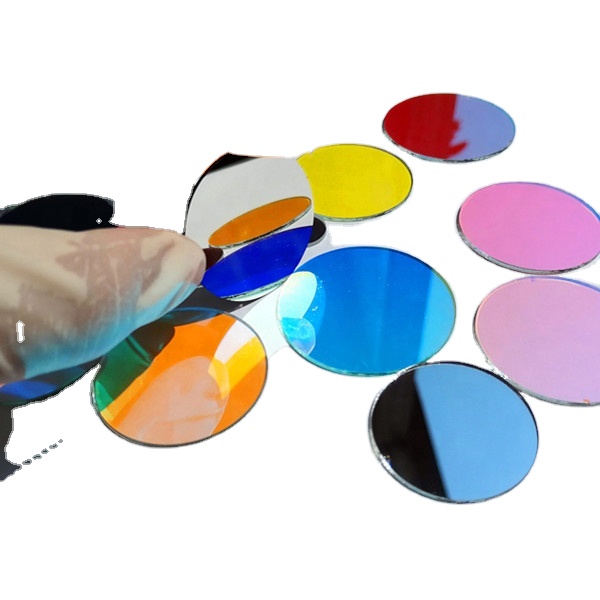
0.3mm ~ 2mm Dichroic Glass Mirror for Gobos
Ultra-thin dichroic mirror glass for gobo and decorative lighting programmes, with heat-resistant base options for projector and stage-light applications.

Custom 0.3mm 0.5mm 0.7mm Heat Resistant Gobo Glass Blanks for Projector
Heat-resistant gobo blanks for projector and lighting OEMs that require dimensional stability, clean edges and repeatable optical performance.
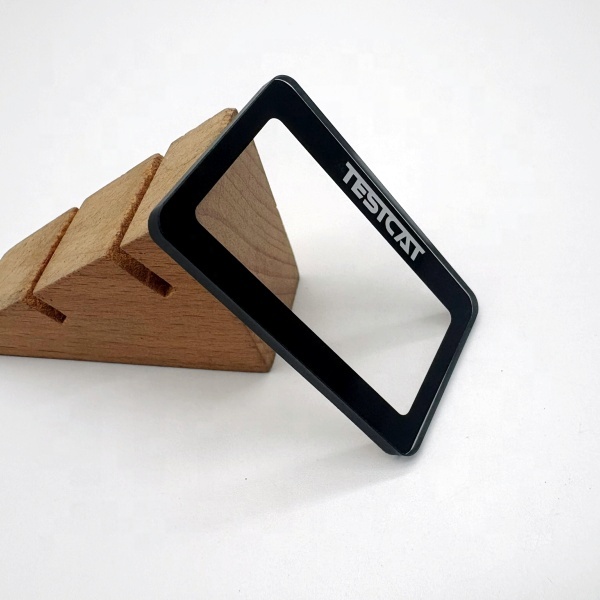
Custom Gorilla Glass Panel Tempered Glass Display Window Silk Screen Printing for LCD Display
Tempered display window with printed borders that hide adhesive and backlight edges, ideal for LCD modules, HMI panels and appliance readouts.
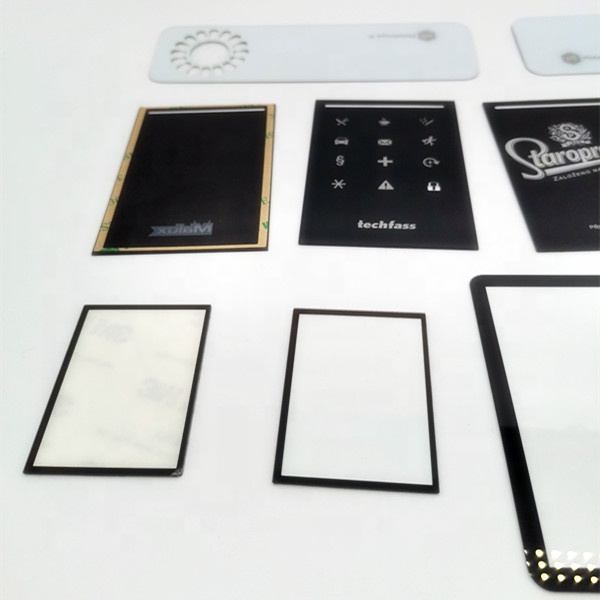
Custom Corning Gorilla Tempered Glass Silk Screen Printing for Touch Screen
Corning Gorilla® tempered glass with silk-screen printing for touch screens, access controls, intercom panels and high-use smart-home interfaces.

Custom Black Border Tempered Glass Panels Silk Screen Print Tempered Glass
Black-border tempered glass panels for appliance windows, wall switches and control covers where masking, print registration and a premium finish matter.

Back Painted Tempered Glass Led Glass Panel Cover Glass
Back-painted tempered LED glass cover for luminous appliance interfaces, diffusing light and hiding LEDs while maintaining a clean, decorative surface.
What Jakarta OEMs should verify before specifying printed tempered cover glass
Jakarta is not a generic “tropical” market. High-rise interiors, strong ambient light, humid air-conditioned rooms, frequent cleaning and sea-freight logistics all affect how a glass cover panel should be specified. The most reliable RFQs turn those local conditions into measurable requirements on the drawing.
Humidity and condensation
In Jakarta’s tropical climate, cover glass can face rapid temperature swings between air-conditioned rooms and outdoor corridors. Specify tempered or chemically strengthened glass, properly cured print inks and edge quality that resists chipping during cleaning.
High-rise glare control
Floor-to-ceiling windows and bright lobby lighting can wash out appliance displays. AR-coated glass reduces surface reflection so icon windows and small fonts remain legible at lower display brightness, which also helps thermal budgets.
Printed borders that hide hardware
Black or grey borders mask adhesives, gaskets and flex cables and create a premium finish. Tight print registration matters on compact wall switches and appliance panels where the visible window opening may be only a few millimetres from the edge.
Kitchen heat and cleaning agents
Jakarta households use frequent cleaning and kitchens can be hot and humid. Confirm ink adhesion, humidity exposure and thermal cycling requirements with your supplier before mass production, especially for printed borders near cooking appliances.
Adhesive and backlight alignment
Window openings must be aligned to adhesive layers and LED/backlight modules. Add flatness, print tolerance and light-leak requirements to the drawing, not only to an email, so inspection and sampling use the same acceptance criteria.
Sea freight to Tanjung Priok
Thin glass should be interleaved, cushioned and carton-tested for sea freight. Ask for packing drawings, label requirements and carton drop or compression validation as agreed. Good transit protection is part of the product specification, not an afterthought.
Where Jakarta demand is moving for home electronic glass panels
The strongest opportunities are not simply “more glass.” They are glass covers that solve a local design, installation or maintenance problem for Indonesian brands, contractors and OEM/ODM buyers.
Smart-home controls in apartments
Connected lighting, air-conditioning and security devices are moving into mid-rise and high-rise Jakarta units. OEMs need decorative glass covers with printed icons, touch windows and optional AR coating for readability.
Built-in kitchen and laundry appliances
Compact Jakarta kitchens are pushing appliance designers toward black-border glass, easy-clean surfaces and back-painted LED windows that hide displays when the appliance is off.
Access control and intercom panels
Elevator, door-entry and hotel-room controls increasingly combine glass covers with printed numbers, QR windows and scratch-resistant surfaces. These parts must survive frequent touching and cleaning.
Local assembly, imported glass
Brands may assemble in Indonesia while importing processed glass or glass parts. Clear drawings, consistent tolerances, HS documentation and packaging data reduce friction at Tanjung Priok and support predictable replenishment.
Match the glass specification to the Jakarta use case
Use this matrix as a starting point for product development. Final material, thickness and tolerance must be confirmed against the drawing, the manufacturer datasheet and your own reliability requirements.
| Jakarta use case | Typical substrate and thickness | Strengthening | Surface and print | Why it works |
|---|---|---|---|---|
| Smart-home wall panel / thermostat | 0.5–1.5 mm ultra-clear or alkali-aluminosilicate glass | Chemical strengthening for thin designs | Black border, icon windows, optional AR | Hides flex and adhesive, reduces reflection and resists touch wear |
| Kitchen appliance display window | 1.0–3.0 mm low-iron tempered glass | Thermal tempering where thickness allows | Black mask, AR one or both sides | High clarity, easy cleaning and improved legibility under bright lighting |
| Bathroom smart mirror / scale display | 1.0–2.0 mm chemically strengthened glass | Ion exchange | Printed border, sealed ink edge, AR optional | Flat thin profile and better resistance to frequent cleaning in humid rooms |
| Covered balcony or lobby control | 1.1–2.0 mm Gorilla® or tempered glass | Tempered or chemically strengthened | UV-stable print, scratch-resistant surface | Handles intermittent heat, light exposure and higher contact frequency |
| Access control / intercom panel | 0.7–2.0 mm tempered or Gorilla® glass | Thermal or chemical strengthening | Print, IR window, anti-glare AR | Combines printed identity with durable touch surfaces and clear scanning windows |
| Back-painted LED cover | 1.0–3.0 mm tempered glass | Thermal tempering | Back painting, light-diffusing print | Creates uniform illumination and hides LED hotspots behind the glass |
Note: the table is a design guide, not a final specification. Confirm CTE, transmission, coating side, colour tolerance, print adhesion and packaging requirements with your glass supplier before tooling or mass production.
Send this data package for a faster Jakarta-ready quotation
Most quotation delays come from incomplete drawings, not from factory capacity. A clear RFQ lets the supplier confirm manufacturability, material, print tolerance, coating side and packing in one engineering review.
- 2D drawing in DWG, DXF or PDF with outline dimensions, corner radii and tolerances.
- Glass material and thickness, or the final application if you need a recommendation.
- Strengthening method: thermal tempering or chemical strengthening, or “supplier recommendation.”
- AR coating requirement: one side or both sides, transmission target and visible colour expectations.
- Print details: Pantone colours, ink side, black border width, icon windows and IR-transparent areas.
- Edge finish, holes, notches, chamfers and any critical flatness or light-leak requirement.
- Prototype quantity, annual volume, destination in Jakarta and preferred Incoterm.
- Packaging and documentation needs, including labels, inspection records and customs information.
- Humidity, thermal cycling or cleaning-chemical exposure expectations for the end product.
Information gain tip: attach a photo of the housing, adhesive layer and display module. This often reveals clearance or light-leak risks that a 2D glass drawing alone cannot show.
Need a factory quote for a Jakarta project?
Share your drawing, target annual volume and application. Our engineering and export team can review the glass substrate, print layout, coating side, strengthening route and export packing before you commit to tooling.
Get a Quote Typical response target: within 4 hours. Email: info@fevryglass.com


A specialty glass supplier built for drawing-based OEM/ODM work
Fevry Glass Co., Ltd. is a specialty glass supplier based in Xinyu, Jiangxi, China. Our work focuses on precision technical glass for optical, biological, semiconductor, communications, lighting and electronics applications. For Jakarta OEM/ODM programmes, that means one supplier can support substrate selection, laser/CNC cutting, strengthening, printing, coating, inspection and export packing.
We source raw glass from Corning, AGC and established Chinese optical-glass makers such as Chengdu Guangming and Xinhuguang, so material traceability is part of the project from the start. Processing is supported by laser, ultrasonic, CNC carving, grinding and inspection equipment imported from the USA, Germany and Japan. This matters for printed smart-home panels because flatness, print registration and edge quality must be controlled before coating and strengthening.
Our published supplier record includes 10+ years as an Alibaba.com member, an average response time of ≤4 hours, a 100% inquiry response rate, a 5.0/5 buyer rating record and export service to 7+ regions, including Western Europe, the United States, Japan, South Korea, Taiwan, Hong Kong and Southeast Asia. Buyers can review our supplier assessment, credit profile, transaction level, trade capacity and trade history before placing an order.
“Quality is superior, service is supreme, reputation is first” and “Your success, our glory” are the principles behind every custom glass order we ship. Corning®, Gorilla® and Eagle XG® are trademarks of Corning Incorporated, used for material identification only.
From raw glass sheet to finished electronic cover panel
A single source for cutting, strengthening, printing, coating, inspection and packing reduces hand-offs, shortens qualification cycles and makes one team accountable for the final drawing.
Laser, CNC and ultrasonic machining
Custom outlines, holes, notches, slots and edge grinding, including chamfers and pencil edges where the design requires them.
Thermal and chemical strengthening
Thermal tempering for thicker panels and ion-exchange strengthening for thin cover glass where flatness and optical cleanliness are critical.
AR, dichroic and optical coatings
Anti-reflective coating on one or both sides, plus dichroic and filter coatings for lighting, display and optical applications.
Silk-screen printing and back painting
Pantone-matched borders, logos, icon windows, IR-transparent ink areas and back-painted LED covers for a premium appliance finish.
Thickness range from 0.15 to 4 mm
Substrate options include ultra-clear soda-lime, Gorilla®, borosilicate 3.3, chemically strengthened thin glass and selected Eagle XG® grades.
Inspection and export packing
Dimensional, flatness and visual defect checks; interleaved, cushioned packing designed for fragile glass shipments to Jakarta and other export markets.
Local applications for custom home electronic glass in Jakarta
These modules are designed to be presented visually, not as a wall of text. Each application uses the same core capabilities — printed glass, tempered or chemically strengthened substrate, optional AR coating and drawing-based dimensions.
Smart-home wall switches and thermostats
Printed icon windows, black borders and optional AR coating for readable, easy-clean control surfaces in Jakarta apartments and serviced residences.
Kitchen appliance display windows
Low-iron tempered glass with black masking and AR coating for ovens, induction hobs, coffee machines and built-in appliance interfaces.
Laundry and utility appliance controls
Scratch-resistant cover glass for washing machines, dryers and utility appliances, with printed symbols and sealed print edges for humid utility areas.
Bathroom smart mirrors and scales
Thin chemically strengthened glass for bathroom displays where flatness, moisture resistance and easy-clean printed surfaces matter.
Elevator, intercom and access control
Printed numbers, QR windows and scratch-resistant touch surfaces for lobby, elevator and door-entry systems in offices, hotels and residential towers.
Hotel rooms and retail kiosks
Decorative glass covers for room controls, kiosks and display fixtures where a premium appearance and repeatable print colour are part of the brand experience.
From drawing to Jakarta delivery in five controlled steps
Designed for procurement teams that need predictable communication, sample approval and zero surprises before mass production.
Share your drawing
Send DWG, DXF or PDF with dimensions, material, thickness, print colours, coating side, volume and destination in Jakarta.
Engineering review
We confirm manufacturability and recommend substrate, thickness, strengthening route, print tolerance and packing.
Sample approval
Samples validate fit, colour matching, edge quality, AR appearance and light-leak performance before mass production.
Production and quality
Cutting, strengthening, printing, coating and inspection run against the approved drawing and inspection plan.
Export packing
Interleaved, cushioned packing and labels support safe sea freight to Tanjung Priok and onward delivery in Indonesia.
Build a tropical-service quality plan, not a catalogue promise
For Jakarta OEM/ODM programmes, the strongest quality plan links appearance, dimensions, print adhesion and transit protection to measurable acceptance criteria.
What to agree before mass production
- Incoming glass traceability, thickness and flatness verification.
- Print and coating inspection under controlled lighting, including colour and window alignment.
- Dimensional checks against the approved drawing, with critical tolerances marked by the buyer.
- Pre-shipment packaging review for interleaving, cushioning, carton labels and transit protection.
- Humidity, thermal or cleaning-exposure validation as agreed for the final application.
Jakarta RFQ priority weighting
A practical priority model for home electronic cover glass. Adjust the weighting with your own product and brand requirements.
FAQ from Jakarta buyers sourcing OEM/ODM cover glass
These are the questions our engineering and export team receives most often from Indonesian brands, contractors and sourcing teams. Include the answers in your RFQ to shorten the first review cycle.
What glass should I use for a smart-home wall panel in Jakarta?
For interior wall switches and thermostats, 0.5–1.5 mm ultra-clear glass or chemically strengthened alkali-aluminosilicate glass is common. A black border hides adhesive and flex, while an AR coating reduces reflections. Choose thermal tempering only where thickness and design allow; for thin glass, chemical strengthening usually preserves flatness and optical quality.
Can you print black borders, logos and IR windows?
Yes. Silk-screen printing and back painting can produce opaque borders, logos, icon windows and IR-transparent areas. Provide Pantone references, ink side and which window must pass IR or light. We review print tolerances against the glass size before sampling.
When is AR coating worth it for a display cover panel?
AR coating is worthwhile when the display sits near a bright window, lobby or kitchen light, or when the product runs at lower brightness to save power. Double-sided AR can also reduce ghost reflections in layered glass. Specify one or both sides and the final application so the coating can be matched to the viewing condition.
What is the typical MOQ and sample policy?
Most custom cover glass and AR glass projects start from about 300–500 pieces. Selected items may differ. Samples can be arranged to validate fit, print colour, coating appearance and edge quality before mass production. Share annual volume and prototype quantity so we can propose the most practical sampling route.
How do you ship glass to Jakarta and which Incoterms can you quote?
We can quote FOB, CIF Jakarta via Tanjung Priok or other terms by agreement. Thin glass is interleaved, cushioned and packed in export cartons with labels. Share your preferred Incoterm, destination address and document requirements so the quotation reflects the full landed cost, not only the ex-works glass price.
What documents can you provide for an Indonesian import project?
We can prepare commercial invoice, packing list, material and processing declarations, inspection records and other project documents as agreed. Certification or test requirements should be specified in the RFQ so the correct documentation and sample validation can be planned before mass production.
Can you support local assembly or a Jakarta-based brand?
Yes. We work from drawings and can supply finished glass covers or cut parts for local assembly. For Jakarta-based brands, clear 2D drawings, agreed tolerances and packaging specifications are essential. We can discuss annual volume, replenishment and inspection plans during the RFQ.
What is the fastest way to get a quotation?
Send a complete RFQ to info@fevryglass.com or use the quote button on this page. Include the 2D drawing, material or application, thickness, print colours, AR coating side, strengthening method, annual quantity and Jakarta delivery requirement. Complete information allows our engineers to respond with a firm recommendation in one round.
Request a Jakarta-ready OEM/ODM glass quotation
Send your drawing and application details. We will review the substrate, thickness, printed window layout, AR coating, strengthening route and export packing for your Jakarta project.
Get a Quote Email: info@fevryglass.com · Typical response target: within 4 hours · Serving OEM/ODM buyers in Jakarta and across Indonesia