CE Certified Glass Printing Manufacturer & Factory serving Indonesia
Custom tempered, AR-coated, silk-screen printed, borosilicate, Gorilla and Corning Eagle XG glass — cut, strengthened, coated and printed to drawing for Indonesian electronics, appliance, automotive, lighting, laboratory and display projects.
Recommended Glass Printing Products for Indonesian OEMs
These eight product families cover the most common Indonesian requests: anti-reflective display glass, thin Gorilla-type covers, black-border control panels, clear tempered windows, printed LCD windows, alkali-free AF32 substrates, back-painted LED covers and heat-resistant gobo blanks. Each product URL is preserved so engineering and sourcing teams can open the exact specification page.

Customized Tempered Anti-Reflective Glass AR Coated Tempered Glass
For high-brightness HMI, kiosks, medical displays and control panels where reflection control and optical clarity matter. Double-sided AR options help improve transmission and reduce glare.
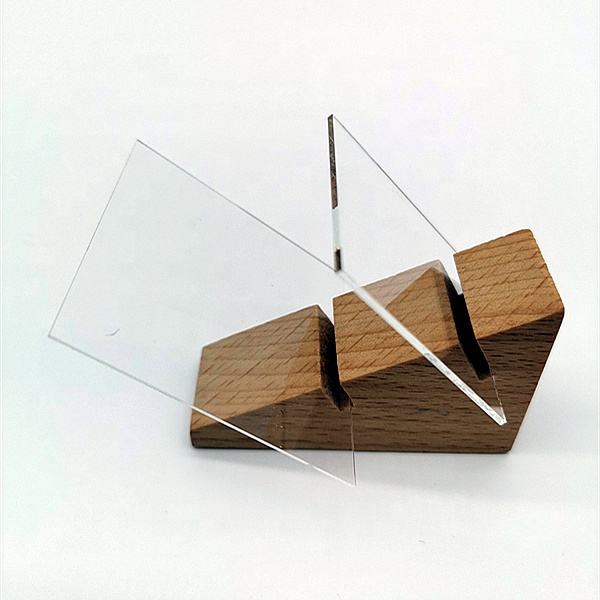
Custom Cut 0.5mm 0.7mm 1mm 1.5mm 2mm 2.5mm 3mm Corning Gorilla Temper Glass
Thin, scratch-resistant covers for compact electronics, wearables, touch interfaces and front display windows. Cutting, edge grinding, strengthening and printing are reviewed before production.
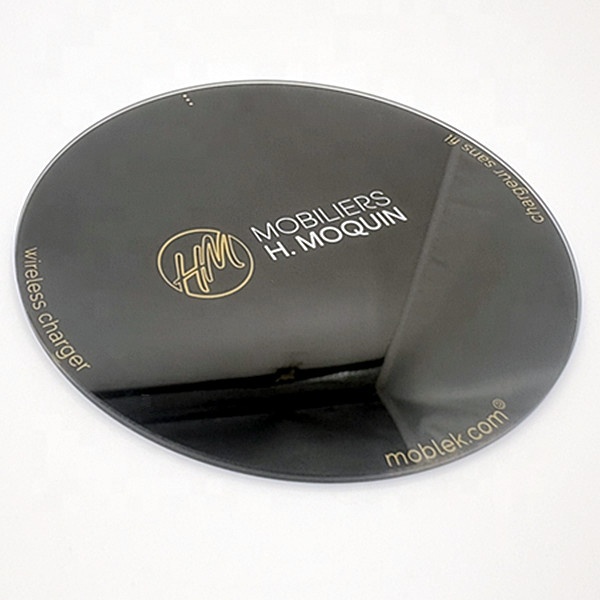
Custom Black Border Tempered Glass Panels Silk Screen Print Tempered Glass
Black-border printed glass for appliance touch controls, smart-home panels, automotive trims and equipment fascias. Pantone references help match brand colors and window apertures.

Custom Cut 0.5mm 0.7mm 1mm 1.5mm 2mm Clear Toughened Glass Tempered Corning Gorilla Glass
Clear tempered Gorilla-type glass for display windows, protective covers and compact electronic enclosures where optical clarity and impact resistance are both required.
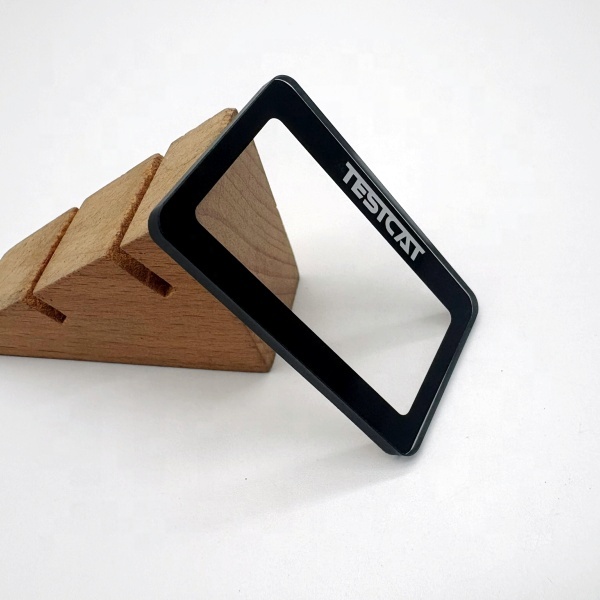
Custom Gorilla Glass Panel Tempered Glass Display Window Silk Screen Printing for LCD Display
Printed Gorilla glass designed as a display window for LCD units, industrial HMI and consumer devices. The clear viewing area, printed border and glass strength are specified together.

Custom 0.2mm 0.3mm 0.4mm 0.5mm 0.7mm 1mm Alkali Free Borosilicate AF32 Glass
Alkali-free borosilicate AF32-type glass for laboratory, analytical and heat-sensitive components that need low ion migration, dimensional stability and clean optical performance.
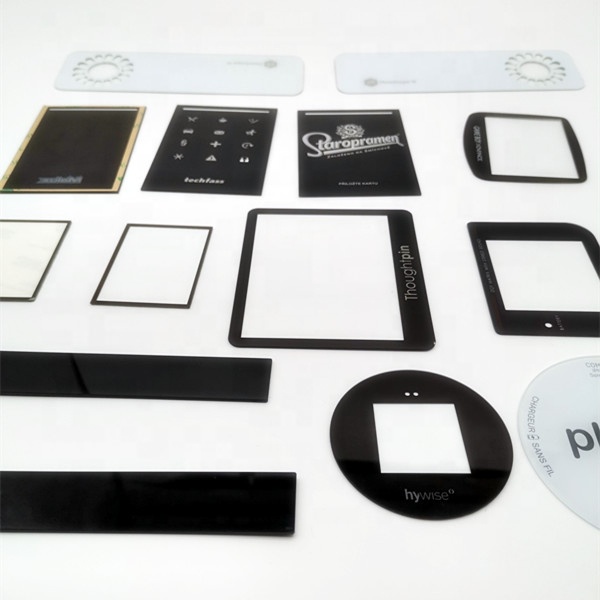
Back Painted Tempered Glass Led Glass Panel Cover Glass
Back-painted tempered glass for LED panels, appliance interfaces and smart-home lighting covers. The painted layer hides internal structure while presenting a clean, premium glass surface.

Custom 0.3mm 0.5mm 0.7mm Heat Resistant Gobo Glass Blanks for Projector
Heat-resistant gobo glass blanks for projector, stage and architectural lighting. Borosilicate options help tolerate lamp heat while maintaining pattern clarity.
What Indonesian Buyers Need to Verify Before Shortlisting a Glass Printing Factory
The query “CE Certified Glass Printing Manufacturer & Factory serving Indonesia” is not a simple catalogue search. It usually signals a sourcing team that needs a supplier able to interpret drawings, control print and coating quality, support CE-bound assemblies, and pack thin glass safely for Indonesia-bound freight.
Supplier qualification, not only price
Indonesian procurement teams compare material traceability, inspection records, drawing communication, sample approval and long-term consistency — not just a per-piece quotation.
Print and coating process control
Silk-screen ink adhesion, Pantone color matching, AR coating side, edge quality and strengthening sequence must be fixed before mass production. A drawing alone is not enough.
Tropical durability and packing
Humidity, thermal cycling, cleaning agents and long sea freight can reveal weak edges, unstable inks or poor interleaving. Export packing must be designed for fragile thin glass.
CE-focused documentation path
For equipment exported or assembled under CE requirements, the glass supplier should provide consistent material, dimensional, coating and inspection records that help the final brand maintain compliance.
A serious glass printing factory in China serving Indonesia will clarify responsibilities early: which side receives the AR coating, whether the print is on the second surface, how holes and notches affect strength, which edge profile is required, and whether thermal tempering or chemical strengthening is suitable for the thickness. These details shape fit, optical performance, breakage risk and field reliability. Fevry Glass uses drawing-based engineering review to resolve these points before quotation, so Indonesian buyers can compare proposals on the same technical basis.
Where Printed and Coated Glass Performs in Indonesian Manufacturing
Indonesian OEMs operate across consumer electronics, appliances, automotive interiors, lighting, medical devices and event production. Each application places different demands on glass strength, print durability, optical clarity and heat resistance.
Consumer electronics and HMI
Printed cover glass, AR-coated windows and tempered front panels for control boxes, instruments, smart devices and human-machine interfaces in Batam, Greater Jakarta, Surabaya and other electronics clusters.
Automotive and EV interiors
Dashboard trim glass, display covers and black-border panels require scratch resistance, precise print windows and stable flatness as Indonesian automotive and EV assembly programs expand.
Smart home and appliances
Appliance control panels, touch interfaces and decorative windows benefit from tempered glass, back painting and silk-screen printing that resist cleaning and daily handling in humid climates.
LED lighting and digital signage
Back-painted tempered LED covers, high-transmission windows and AR glass improve brightness control, visual comfort and premium appearance for retail, hospitality and outdoor display projects.
Medical, laboratory and analytical instruments
Borosilicate 3.3, alkali-free AF32 and Corning Eagle XG substrates support analytical devices, biochips, microscope covers and instrument windows where dimensional stability matters.
Stage, studio and architectural lighting
Heat-resistant gobo blanks and dichroic optical glass support concerts, hotels, studios and architectural lighting where lamp heat and pattern clarity must be controlled.
Indonesia Market Trends Shaping Demand for Printed Technical Glass
Indonesia’s manufacturing base is moving toward higher-value assembly, better user experience and stronger export compliance. That shift creates practical opportunities for custom glass printing suppliers who can support smaller development batches, consistent documentation and application-specific material selection.
Local electronics and appliance assembly
As Indonesian assembly lines add more touch interfaces and display windows, demand grows for custom-sized printed glass, AR-coated windows and tempered covers that fit local enclosure designs.
Automotive and EV interior upgrades
Display-centric interiors need flat, scratch-resistant glass with clean printed borders. Buyers also ask for sample approval and consistent appearance across production batches.
Smart-home and lighting interfaces
Back-painted glass and printed control panels are replacing plastic in premium appliances and LED luminaires, creating demand for durable decoration and precise light windows.
Export compliance and documentation
Indonesian manufacturers supplying regional and global markets increasingly need traceable material records, inspection data and RoHS/REACH-type declarations for CE-bound end products.
Choose the Substrate Before You Choose the Print
Thermal shock, scratch resistance, optical transmission and dimensional stability all begin with the glass material. Use this selection guide for preliminary engineering discussions, then confirm the final specification against the supplier datasheet and your drawing.
Typical Properties for Custom Glass Projects
| Material | Thickness Range | CTE (×10⁻⁶/K) | Best For |
|---|---|---|---|
| Ultra-clear soda-lime | 0.5 – 4 mm | ≈ 9.0 | Cover glass, AR panels, printed windows |
| Gorilla-type alkali-aluminosilicate | 0.4 – 2 mm | ≈ 7.5 – 8.5 | Scratch-resistant touch and display covers |
| Borosilicate 3.3 | 0.3 – 3.3 mm | 3.3 | Heat-resistant windows, gobo, lab glass |
| Corning Eagle XG | 0.5 – 1.1 mm | ≈ 3.2 | Biochips, wafers, PLC and micro-optics |
| Chemically strengthened thin glass | 0.15 – 2 mm | Base-glass dependent | Ultra-thin protectors and sensor covers |
Values are typical industry figures for preliminary selection. Final specifications are confirmed against the manufacturer datasheet and your drawing.
CTE Comparison: Lower Expansion Means Better Thermal-Shock Tolerance
For Indonesian lighting, projector, instrument and appliance projects, a lower CTE substrate can reduce thermal-stress risk. However, edge quality, coating adhesion, print ink and packaging also determine field performance.
Why Indonesian Buyers Shortlist Fevry Glass
Fevry Glass Co., Ltd. is a specialty glass supplier based in Xinyu, Jiangxi, China. The company combines traceable raw glass sourcing, in-house cutting and strengthening, optical coating, silk-screen printing, inspection and export packing for custom projects.
Traceable raw glass sources
Raw glass is sourced from Corning, AGC and other multinational producers, with close work alongside established Chinese optical-glass makers such as Chengdu Guangming and Xinhuguang.
In-house fabrication
Laser, ultrasonic, CNC carving, grinding, tempering, chemical strengthening, AR/dichroic coating, silk-screen printing and back painting are coordinated under one supplier workflow.
Inspection before packing
Dimensional checks, visual defect review, thickness and flatness considerations, print appearance and coating appearance are checked before export packing.
Export packing for fragile glass
Thin printed glass requires interleaving, cushioning and secure cartons. Packing is planned for international freight so Indonesian buyers receive parts ready for incoming inspection.
Responsive communication
Visible trading records show 10+ years as a member, ≤4 hours average response, 100% inquiry response rate and a 5.0/5 buyer rating — practical signals for sourcing teams.
Application engineering support
Engineers help select substrate, thickness, strengthening method, AR coating side, print color, edge finish and packaging based on the end application and annual volume.
Fevry Glass exports to Western Europe, the United States, Japan, South Korea, Taiwan, Hong Kong and Southeast Asia, including Indonesian projects that require coordination between local engineering teams and China-based production. The company principle — “Quality is superior, service is supreme, reputation is first” — and the motto “Your success, our glory” reflect a service model built around repeat orders rather than one-off transactions.
How a CE-Focused Glass Factory Supports Indonesian Assemblies
CE marking is normally applied to finished electrical or electronic equipment rather than to a bare glass component. The practical role of a CE-focused glass printing manufacturer is to supply consistent, documented parts that help the final equipment brand maintain compliance and traceability.
Drawing-based specifications
Outline dimensions, tolerances, thickness, material, edge profile, holes, print colors and coating sides are confirmed in the project record.
Material and process records
Material origin, strengthening method, coating details, ink references and inspection results can be organized for buyer quality files.
RoHS/REACH-type declarations
Where applicable, the supplier can support buyer-requested declarations for materials and coatings so Indonesian OEMs can complete their own compliance files.
Clear responsibility mapping
We clarify which tests and declarations belong to the glass factory and which remain with the final equipment brand, reducing misunderstandings during CE-bound projects.
For Indonesian buyers, compliance is not a single certificate file. It is the ability to connect a purchase order to a drawing, a material batch, a processing route, an inspection record and a packing list. That chain is what makes a printed glass component usable in demanding electronics, appliance, automotive and lighting supply chains. Fevry Glass supports this chain through drawing-based review and export-ready documentation. Contact the factory early with your drawing so material and compliance questions can be answered before tooling, printing or coating begins.
A Clear Five-Step Path from Drawing to Indonesia Delivery
Designed for procurement and engineering teams that need predictable communication, sample validation and fewer surprises between quotation and export packing.
Share your drawing
Send a 2D drawing with dimensions, tolerances, thickness, material, edge finish, holes, print colors, AR coating sides and annual quantity.
Engineering review
We confirm manufacturability, recommend substrate and strengthening method, and identify risks before the quotation is finalized.
Sample approval
Samples help validate fit, color matching, print windows, coating appearance and edge quality before mass production.
Mass production
Cutting, strengthening, printing, coating and inspection follow the approved drawing and process route, with in-line checks.
Export packing
Interleaved, cushioned packing and export documents are prepared for Indonesia-bound air or sea freight.
Common Procurement Questions from Indonesian Glass Buyers
These are the questions engineers, sourcing managers and brand owners ask most often when they evaluate a CE-focused glass printing manufacturer for Indonesian projects.
Are you a CE-certified glass printing manufacturer serving Indonesia?
Fevry Glass supports CE-focused assemblies by providing consistent material, dimensional, coating, printing and inspection records. The CE mark itself normally applies to the finished electrical or electronic equipment, so we clarify the documentation boundary during RFQ.
What is the minimum order quantity for Indonesian orders?
Most custom cover glass and AR glass items start from 300–500 pieces, some Eagle XG cut parts from 1,000 pieces, and selected gobo glass blanks from 10 pieces. Samples can be arranged to validate fit and optical performance.
Can you match Pantone print colors?
Yes. Please provide Pantone references, artwork and the required clear window or icon areas. Print color, ink system and glass surface must be reviewed together because light transmission and background color affect the final appearance.
Which glass is best for humidity, heat or high-brightness use?
There is no single answer for Indonesia. Borosilicate 3.3 is preferred for heat-resistant windows and gobo blanks; AR-coated glass improves high-brightness displays; Gorilla-type or chemically strengthened thin glass suits scratch-resistant covers; Eagle XG supports lab and micro-fabrication work.
What documents can support import and quality checks?
Typical project files can include drawing confirmation, material details, inspection records, packing list and buyer-requested material or coating declarations. For CE-bound equipment, these records help the final brand complete its own technical file.
How fast do you respond to new inquiries?
Visible trading records show ≤4 hours average response time, 100% inquiry response rate and a 5.0/5 buyer rating. Complete drawings and application details allow a faster, more accurate engineering reply.
What information is needed for a quotation?
Send a 2D drawing (DWG, DXF or PDF), outline dimensions and tolerances, thickness, glass material, edge finish, hole and notch positions, strengthening method, print colors, AR coating side, application and annual quantity.
How is thin printed glass packed for Indonesia shipping?
Packing is designed for fragile thin glass using interleaving, cushioning and secure export cartons. The packing method is confirmed with the sample and production order so buyers can plan incoming inspection and handling at their factory.
Send Your Drawing to a Glass Factory Serving Indonesia
Share your material, thickness, edge requirements, print colors, AR coating side, application and annual volume. Our engineers typically reply within 4 hours with a manufacturability review and recommended glass route.