Eight Glass Products Frequently Evaluated by Yokohama Buyers
For borosilicate glass disc projects, Yokohama procurement teams often compare related heat-resistant, coated, tempered and specialty glass components. The products below are part of the Fevry Glass export catalogue and can be reviewed alongside a disc RFQ.

0.3mm ~ 2mm Dichroic Glass Mirror for Gobos
Thin dichroic mirror glass for gobo, lighting and optical filter applications requiring controlled colour reflection and heat exposure.
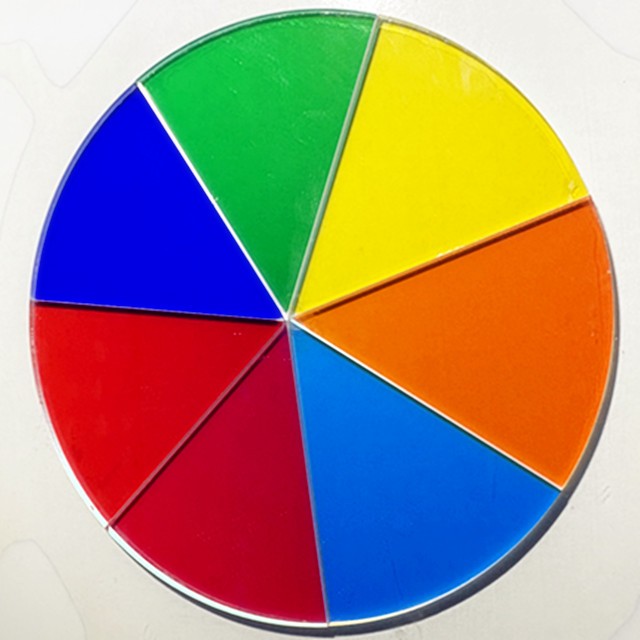
Factory Customization Dichroic Glass Gobo Glass
Factory-customized gobo glass suited to lighting designers and stage-equipment manufacturers needing repeatable colour and durability.
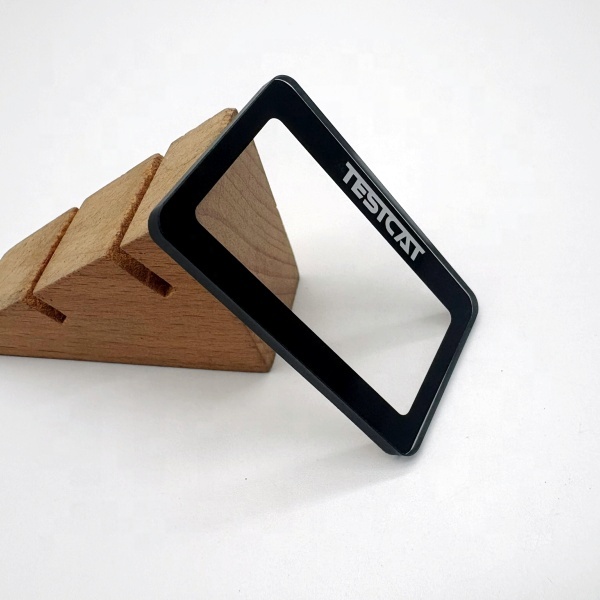
Custom Gorilla Glass Panel Tempered Glass Display Window Silk Screen Printing for LCD Display
Strengthened display window glass with silk-screen printing for industrial controls, instruments and electronic interfaces.
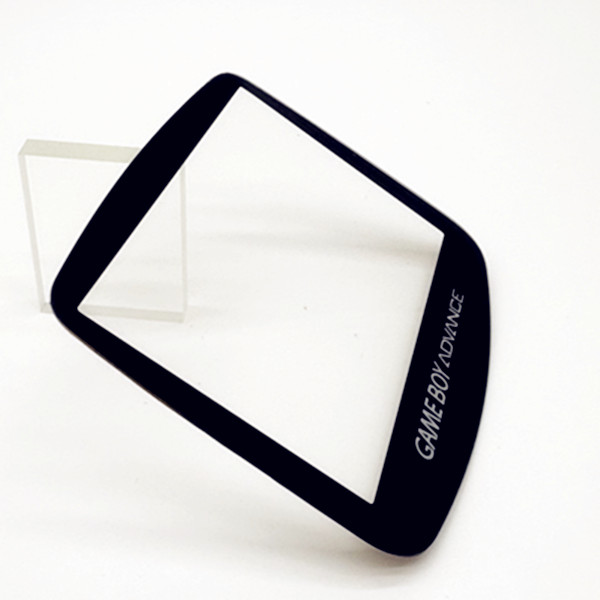
Custom Premium Gorilla Tempered Silk Screen Printed Glass Touch Screen Printed Glass Panels Cover Glass for OLED Screen
Premium cover-glass panels for OLED and touch interfaces, with printed borders and strengthened surfaces for daily handling.
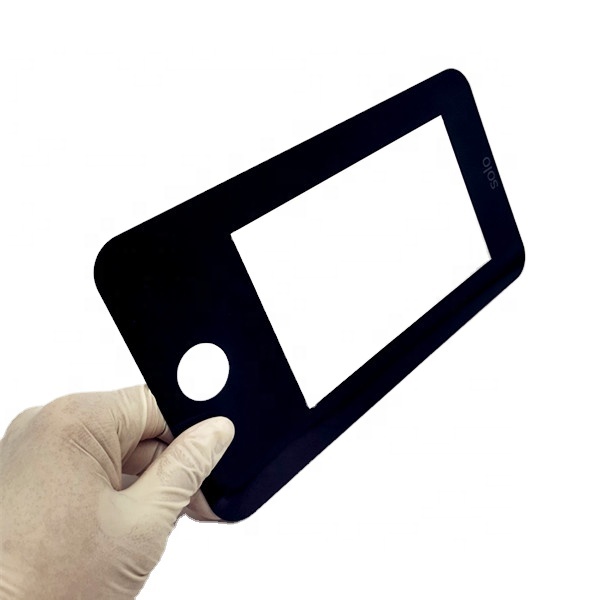
Manufacturer OEM Wholesale Custom Unbreakable Tempered Glass, High Quality Tempered Glass, Low Iron Tempered Glass Manufacturer
Low-iron tempered glass for OEM and wholesale programmes that need high clarity, strength and custom dimensions.

Custom Shaped Tempered Glass Processing, High Transparency Window Panels with Screen Printing
CNC-shaped transparent glass windows with print options for equipment enclosures, sensors and control panels.
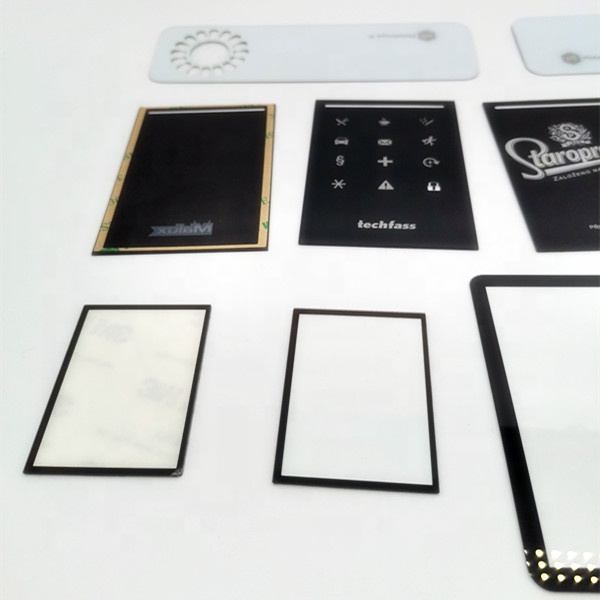
Custom Corning Gorilla Tempered Glass Silk Screen Printing for Touch Screen
Corning Gorilla glass panels with silk-screen graphics for touch-screen assemblies and high-use electronic interfaces.

Custom Cut 0.5mm 0.7mm 1mm 1.5mm 2mm Clear Toughened Glass Tempered Corning Gorilla Glass
Clear strengthened glass cut to drawing in common thin gauges, suitable for display windows, protectors and optical covers.


Borosilicate Glass Discs for Yokohama: Why Material Choice Changes the Result
A borosilicate glass disc is not simply a round piece of glass. In Yokohama’s engineering, instrumentation, lighting, laboratory and electronics supply chains, the disc often becomes a critical interface: an optical window, a heat shield, a sight glass, a sensor cover, a spacer, a carrier or a protective lens. That is why serious buyers evaluate thermal expansion, edge quality, thickness tolerance, surface finish and coating compatibility together rather than treating the disc as a commodity.
Borosilicate 3.3 glass is widely specified because its coefficient of thermal expansion is approximately 3.3 × 10⁻⁶/K, about one third that of soda-lime glass. This lower expansion helps the disc tolerate temperature gradients in lighting, analytical instruments and heated equipment. It also supports dimensional stability when the part must remain flat during coating, bonding, annealing or assembly. For Yokohama manufacturers working with high-mix, high-precision products, these properties reduce the risk of warping, edge chipping and optical distortion after installation.
From an optical standpoint, borosilicate discs are available in clear sheet and rod-derived formats, with options for polished faces, ground edges, chamfers, holes, notches, anti-reflective coating, dichroic coating and silk-screen printing. A disc may look simple on a drawing, but the manufacturing sequence matters: cutting, CNC shaping, edge grinding, drilling, annealing, strengthening, coating and printing must be planned in the correct order. If a buyer requests a coated or chemically strengthened disc after holes have already been introduced, the process window becomes much narrower. That is the kind of engineering detail a qualified supplier should review before quoting.
- Borosilicate 3.3 for thermal shock resistance
- Ground or polished edge to reduce chipping risk
- Diameter, thickness and flatness tolerances agreed in writing
- AR, dichroic and print options reviewed with the drawing
- Annealing and strengthening route confirmed before production
- Export packing designed for fragile thin discs
Where Borosilicate Glass Discs Are Used in the Yokohama Industrial Market
Yokohama and the wider Kanagawa industrial corridor bring together advanced manufacturing, port logistics, research activity and specialist engineering. The following applications are common starting points for a borosilicate disc enquiry.
Optical Instruments & Sensors
Discs used as protective windows, spacers and optical covers for measurement, imaging and sensing devices. Flatness and transmission consistency are often more important than a low unit price.
Semiconductor & Electronics Support
Precision glass parts for equipment windows, carriers, spacers and inspection fixtures. Yokohama-area electronics teams often request traceable material data and clean packaging.
Laboratory & Analytical Equipment
Chemically durable borosilicate discs for sight windows, sample interfaces, analyzer covers and instrument assemblies where heat and cleaning chemicals may be present.
LED, Stage & Architectural Lighting
Heat-resistant discs for lighting lenses, gobo assemblies and colour-filter systems. In high-power lighting, thermal shock resistance and coating stability are central selection criteria.
Industrial Displays & Control Panels
Round and shaped cover glass for instrumentation, human-machine interfaces and equipment windows, with options for AR coating, print and strengthened surfaces.
Research, Metrology & Prototyping
Small-batch discs for prototypes, test rigs, optical benches and metrology fixtures. Yokohama buyers often need a fast review of drawing feasibility before a production release.
What Yokohama Buyers Are Changing in Precision Glass Procurement
Procurement behaviour in Yokohama is shaped by engineering precision, import reliability and the need to support both prototype and volume production. These trends are visible across custom glass enquiries.
High-Mix, Lower-Volume Sourcing
Engineering teams increasingly request multiple diameters, thicknesses and edge finishes in one RFQ. Suppliers must quote clearly by specification rather than treating every disc as a stock item.
Traceability & Documentation
Material certificates, dimensional reports, coating-side confirmation and packaging records are requested more often. Clear English documentation helps Yokohama import teams reduce internal clarification.
Optical & Thermal Performance
AR coating, flatness, surface quality and thermal shock are being specified together. Buyers want one supplier to coordinate cutting, coating and inspection instead of managing several hand-offs.
Durable Equipment & Sustainability
Longer service life for instruments and lighting systems is driving demand for chemically durable glass, reliable edge quality and packaging that reduces breakage during international transport.
Borosilicate Glass Disc Recommendations by Application
Use this selection matrix as a starting point for a Yokohama RFQ. Final specification must be confirmed against the drawing, operating temperature, optical requirement and assembly method.
| Disc Type | Typical Thickness | Best Fit in Yokohama | Finishing Options | Buyer Note |
|---|---|---|---|---|
| Clear borosilicate 3.3 disc | 0.5–3.3 mm | Instrument windows, sight glass, sensor covers | Ground edge, chamfer, polished face, annealed | Confirm transmission, flatness and edge cosmetic criteria |
| Heat-resistant lighting disc | 0.3–2.0 mm | LED, stage and architectural lighting assemblies | Heat-resistant coating, gobo pattern, dichroic layer | Describe thermal load and coating exposure clearly |
| AR-coated borosilicate disc | 0.7–3.3 mm | Optical sensors, display windows, imaging equipment | Single-sided or double-sided AR, print, laser marking | State wavelength range and coating side on the drawing |
| Precision ground optical disc | 1.0–5.0 mm | Metrology, laboratory tools, optical benches | Fine ground, polished, tight diameter and parallelism | Clarify measurement method and inspection report needs |
| Custom printed borosilicate disc | 0.5–3.0 mm | Control panels, appliance windows, equipment branding | Silk-screen printing, back painting, IR-transparent ink | Provide Pantone references and ink durability requirements |
These are application-selection guidelines, not a fixed catalogue. Borosilicate discs can be cut, drilled, edged, coated and packed to drawing. The correct route depends on the final part geometry and the order of processing.
How to Specify and Qualify a Borosilicate Glass Disc
A complete drawing reduces quotation cycles and prevents costly assumptions. For Yokohama buyers importing from overseas, specification clarity is especially valuable because it reduces back-and-forth across language, time zone and measurement conventions.
1. Material Grade
Specify borosilicate 3.3 and whether equivalent material is acceptable. Include any requirement for low-iron clarity, alkali content, optical transmission or material certification.
2. Diameter & Thickness
State nominal diameter, thickness and tolerances. For thin discs, clarify whether diameter is measured before or after edge processing and how flatness should be checked.
3. Edge & Hole Finish
Define ground, polished, chamfered or pencil edge. For holes and notches, provide position tolerance, minimum edge distance and allowable chip size.
4. Optical Requirement
For windows and lenses, specify surface quality, bubble/scratch limits, transmission range and whether AR coating is needed on one side or both sides.
5. Thermal & Strength Route
Indicate operating temperature, thermal cycling and cleaning chemicals. Confirm whether annealing, thermal tempering or chemical strengthening is required and when it must occur.
6. Packaging & Documentation
Request interleaved packaging, tray or wafer-carrier packing if needed. Clarify inspection reports, material traceability, labels and any destination-specific documentation.
| RFQ Detail | What to Send | Why It Matters | Typical Review Question |
|---|---|---|---|
| Drawing format | DWG, DXF or PDF with dimensions | Reduces interpretation errors | Are dimensions in millimetres? |
| Application | Window, sensor cover, lighting lens or spacer | Drives material and finish recommendations | Will the disc be bonded, clamped or sealed? |
| Environment | Temperature, humidity, cleaning agents, vibration | Affects thermal shock, coating and packaging decisions | Is thermal cycling expected? |
| Annual volume | Prototype quantity and estimated yearly demand | Supports MOQ, sample and production planning | Will the design change after validation? |
| Inspection | Critical dimensions, optical limits and reports needed | Aligns quality expectations before production | Which defects are functional versus cosmetic? |
For an engineering review, send the drawing, thickness, material, edge finish, coating sides, application and expected annual quantity. Samples can be arranged to validate fit and optical appearance before mass production.
Why Fevry Glass Supports Yokohama Wholesalers and OEM Buyers
Fevry Glass Co., Ltd. is a specialty glass supplier based in Xinyu, Jiangxi, China, serving optical, biological, semiconductor, communications, lighting and electronics customers. Our work is built around material selection, drawing-based processing and export-ready quality control.
Traceable Raw-Glass Network
We source raw glass from Corning, AGC and other multinational producers and work closely with established Chinese optical-glass makers such as Chengdu Guangming and Xinhuguang. This helps every project start from consistent, traceable material.
Imported Processing Equipment
Our technicians process glass on laser, ultrasonic, CNC carving, grinding and inspection equipment imported from the USA, Germany and Japan. This supports custom outlines, holes, notches, edge finishes and dimensional checks.
Single-Source Processing
Cutting, CNC shaping, strengthening, AR coating, dichroic coating, silk-screen printing, back painting and inspection can be coordinated as one production route, reducing hand-off risk for Yokohama buyers.
Application Engineering Support
We help engineers compare Eagle XG, borosilicate 3.3, transparent ceramic glass, ultra-thin strengthened glass and other substrates for biochips, wafers, PLC components, lighting and electronic displays.
Export Experience
Fevry Glass serves customers in China and exports to Western Europe, the United States, Japan, South Korea, Taiwan, Hong Kong and Southeast Asia. Yokohama projects can be quoted with export packing and shipping arrangements confirmed.
Quality & Service Culture
Our guiding principle is “Quality is superior, service is supreme, reputation is first,” and our motto is “Your success, our glory.” Public trade records also show a 5.0/5 buyer rating and a 100% inquiry response rate.
From Drawing to Delivery: A Clear Four-Step Process
For import buyers, a predictable process is as important as the material itself. The workflow below is designed to reduce clarification cycles before samples and production.
Share the Disc Drawing
Send diameter, thickness, tolerances, material, edge finish, holes, coating and print details. Include the application and expected annual volume.
Engineering Review
Our team confirms manufacturability and recommends the substrate, process order, inspection method and packing approach for the Yokohama shipment.
Sample Validation
Samples can validate fit, edge quality, print appearance, coating side and optical performance before a production order is released.
Production & Export Packing
Mass production includes dimensional and visual checks. Fragile discs are interleaved and cushioned for international transport to Japan.
Common Questions About Borosilicate Glass Disc Supply
These are the questions most frequently raised by engineering and sourcing teams when comparing overseas glass suppliers for the Yokohama market.
Can you supply borosilicate glass discs to Yokohama?
Yes. Fevry Glass regularly serves export customers in Japan and other markets. For Yokohama buyers, we can review a drawing for a borosilicate 3.3 disc, recommend thickness and edge finish, arrange samples and quote production according to the required annual quantity. Shipping can be discussed for Yokohama Port or air freight, depending on the order size and urgency.
What is the minimum order quantity for a custom borosilicate disc?
MOQ depends on diameter, thickness, coating, printing and whether the part is a new custom item. Many custom cover-glass and AR-glass items begin from 300–500 pieces, while selected specialty or prototype items may be reviewed case by case. Samples can be arranged to validate fit and optical performance before mass production.
Which shipping terms and destination details should Yokohama buyers discuss?
Buyers commonly ask about delivery to Yokohama Port, air freight to a Japanese airport, or door delivery through a nominated forwarder. Incoterms, insurance, packing method and documentation should be confirmed in the quotation. For fragile discs, export packing and carton configuration are part of the technical discussion, not an afterthought.
What documentation can be provided for a borosilicate glass order?
Depending on the material and process, documentation can include material information, dimensional inspection records, coating-side confirmation and packing details. RoHS or REACH declarations and other compliance documents can be reviewed against the specific material and application. Please state your documentation requirements in the RFQ so they can be included in the quotation review.
Should the disc be annealed, thermally tempered or chemically strengthened?
Thermal tempering is generally considered for glass around 3 mm and thicker, while chemical strengthening via ion exchange is often used for ultra-thin glass from about 0.15 mm to 2 mm. Borosilicate discs may require careful annealing rather than conventional tempering, depending on thickness and geometry. The correct route must be confirmed with the drawing, thermal load and handling requirements. Cutting, drilling and edge grinding should be completed before strengthening.
Can the disc include AR coating, dichroic coating or silk-screen printing?
Yes, coating and printing options can be reviewed. AR coating may be applied to one or both sides; dichroic coating is often used for lighting and optical filters; silk-screen printing can create borders, windows, logos and icon areas. Please specify coating side, wavelength range, Pantone colours, ink durability requirements and whether the printed side will face the viewer or the interior of the assembly.
How do you control edge chips and surface scratches on thin discs?
Edge quality is controlled through the processing route: suitable cutting, CNC shaping, edge grinding or polishing, cleaning and inspection. For thin discs, handling and packaging are equally important. Buyers should define functional cosmetic limits: which chips, scratches or bubbles affect performance and which are acceptable outside the optical aperture. This avoids rejecting parts for cosmetic issues that do not influence the application.
What information is needed for a fast quotation?
Please send a 2D drawing in DWG, DXF or PDF format with outline dimensions and tolerances, thickness, glass material, edge finish, hole and notch positions, strengthening method, print colours, AR coating side or wavelength requirement, application and annual quantity. A complete RFQ allows our engineers to respond with a firm recommendation in one round and reduces the risk of quoting an unsuitable process.
Have a Drawing? Let’s Engineer Your Borosilicate Disc.
Send the diameter, thickness, tolerance, edge finish, coating, printing and annual volume. Our team will review the application and recommend a practical manufacturing route for your Yokohama project.
Borosilicate 3.3 discs, AR-coated windows and custom precision glass can be quoted to drawing. For the fastest review, include a 2D drawing, application, coating side and annual quantity.