
Corning Eagle XG glass for biological analyzer filter
Optical Substrate Guide · Biological Analyzer Filters

Corning Eagle XG Glass for Biological Analyzer Filter: A Buyer Guide to Precision Substrates

Alkali-free Eagle XG glass cut, edged and inspected to drawing for excitation and emission filter carriers, detector windows, dichroic assemblies and bio-instrument components.

10+Years’ Glass Material Experience
≤4hAverage Response Time
100%Inquiry Response Rate
5.0/5Buyer Rating
7+Export Regions Served
Quick Answer

What Is Corning Eagle XG Glass for Biological Analyzer Filters?

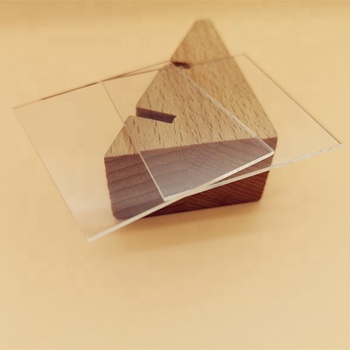
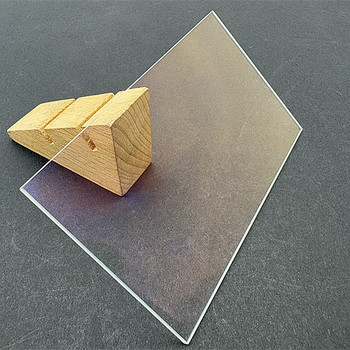
Short answer: Corning Eagle XG is an alkali-free boro-aluminosilicate glass substrate used in biological analyzers where dimensional stability, flatness, optical clarity and low alkali content matter. It is not a finished bandpass filter by itself. The spectral filtering function is created by the optical coating stack, the glass thickness, the clear aperture, the edge treatment and the surrounding assembly.

For procurement teams, the practical question is not “Can Eagle XG replace my current filter?” but “Can this substrate provide the stable optical platform that my excitation filter, emission filter, dichroic mirror or detector window requires?”

Global buyers often ask AI tools or search engines questions such as: What is Eagle XG used for in biological analyzers? Is Eagle XG a filter glass? Which thickness should I order? Can I get custom dimensions, holes and chamfers? How do I verify material and optical quality before placing a production order? This guide answers those questions using the specification logic applied by Fevry Glass Co., Ltd. during RFQ review.

Eagle XG is specified because the material provides a strong balance of low thermal expansion, a fusion-formed surface, good dimensional stability and compatibility with demanding cleaning and bonding processes. In fluorescence-based analyzers, multiplex assays, point-of-care instruments and laboratory diagnostic platforms, that stability can reduce alignment drift and help protect the repeatability of the optical path. However, the substrate alone does not guarantee the final optical result. Coating design, surface quality, assembly tolerance and validation at the actual excitation and emission wavelengths are still essential.
Material Logic

Why Eagle XG Is Chosen for Analyzer Filter Substrates

Biological analyzer filters are usually part of a complete optical module. The glass substrate may support a coated interference filter, protect the detector, define a precise clear aperture, or provide a stable mechanical reference inside the instrument. Eagle XG is useful when the design must combine optical clarity with low thermal expansion and excellent flatness.

  • Alkali-free composition: reduces the risk of alkali migration in sensitive optical and bio-instrument assemblies, where contamination control and long-term stability are important.
  • Low thermal expansion: Eagle XG is typically cited near 3.2 × 10⁻⁶/K, supporting dimensional stability when the instrument experiences temperature shifts or repeated thermal cycling.
  • Fusion-formed flatness: the surface quality is well suited to optical coating, micro-patterning, bonding and precision alignment when the supplier protects and inspects the substrate correctly.
  • Chemical durability: suitable for many cleaning, coating and lamination processes, subject to the specific chemistry and process validation.
  • Optical clarity: good transmission and low color distortion help where the filter stack must operate across visible and near-infrared measurement bands. Final performance must always be validated against the coating and detector requirements.

Important information gain: Eagle XG should not be purchased as if it were a ready-made optical bandpass filter. Specify the glass as the substrate and specify the coating separately. When a supplier confirms both the substrate dimensions and the coating spectral performance in one drawing package, the buyer gains clearer accountability and a faster qualification cycle.

Optical Stack

Where Eagle XG Fits in a Biological Analyzer

Different positions in the optical path place different demands on the glass. Use the following matrix as a starting point for the RFQ.

Typical Analyzer Filter Applications and RFQ Focus

Analyzer Component Function of the Glass What to Specify
Excitation filter substrate Mechanical carrier for the interference coating; defines clear aperture and mounting datum. Thickness, outline tolerance, clear aperture, flatness, surface quality, edge chip limits, coating side, cleaning method.
Emission filter substrate Supports blocking and bandpass performance while controlling stray light and alignment. Wavelength range, blocking target, low-background validation, black edge treatment, assembly adhesive compatibility.
Dichroic beamsplitter Provides a stable angled substrate for wavelength separation and combining. Angle of incidence, polarization behavior, wedge, warp, parallelism, coating design and mounting orientation.
Detector window or cover Protects the sensor or optical path while maintaining transmission. Sealing method, transmission range, thickness, impact resistance, edge finish, surface defects and marking.
Microfluidic or biochip lid Provides a flat, chemically durable cover for imaging or fluidic channels. Holes, notches, bonding area, flatness, cleaning, low fluorescence validation, dimensional repeatability.
Calibration or reference window Supplies a repeatable optical reference across production batches. Lot traceability, thickness variation, optical transmission, marking, serialization and packaging protection.

This table is for procurement planning. Final specifications should be confirmed against your optical design, coating supplier data sheet and application validation plan.

Recommended Eagle XG Configurations

Most biological analyzer projects begin with a drawing that defines the aperture, thickness, edge condition and coating. Fevry Glass can review Eagle XG sheets and cut parts for custom dimensions, edge grinding and visual inspection. The following configurations are common starting points, not off-the-shelf filter replacements.

Analyzer GradeCorning Eagle XG glass for biological analyzer filter substrate
Corning Eagle XG

Corning® Eagle XG for Biological Analyzer Filters

Alkali-freeBiotechCustom cut
MOQ 500 pcsDrawing review
View Eagle XG
Custom CutCustom cut Corning Eagle XG glass 0.7mm for analyzer filter
Precision Substrate

Custom-Cut Eagle XG Glass, 0.5–1.1 mm

0.5 / 0.7 / 1.1 mmGround edgesCustom outline
MOQ 1,000 pcsInspection report
View Details
Optical StackAR coated optical filter window for analyzer assembly
Coated Window Support

AR-Coated Optical Filter Windows and Covers

AR coatingCustom aperturePrinted options
MOQ 400 pcsCoating review
View AR Glass
Procurement Outlook

Global Procurement Trends for Eagle XG Analyzer Glass

Buyers are becoming more technical, more risk-aware and more demanding about documentation. The shift favors suppliers who can answer engineering questions clearly and support repeatable production.

1. Traceable Material Documentation

Procurement teams increasingly ask for material certificates, lot identification, thickness records and inspection reports. Eagle XG projects often require evidence that the substrate matches the approved specification before coating or assembly begins.

2. Prototype Quantities Before Scale-Up

Instrument developers want enough parts for optical validation, bonding trials and instrument builds without committing to full production. Flexible sample and low-volume review help reduce design risk before a long-term order is released.

3. Supplier Response Speed

RFQ cycles are shorter. Buyers expect drawing review, manufacturability feedback and missing-information questions quickly. Fevry Glass maintains a 100% inquiry response rate with a typical response time within four hours.

4. Total Landed Cost and Safe Packing

Unit price alone is not enough. Thin glass can be damaged by poor interleaving, edge contact or humidity exposure. Buyers compare packaging, carton strength, pallet protection and export experience together with the quoted price.

5. Dual Sourcing and Continuity Planning

Diagnostic instrument manufacturers prefer a qualified second source for critical substrates. Suppliers that can hold drawing revisions, retain measurement records and support repeat orders are better prepared for procurement audits.

6. Engineering-Led RFQs

AI-assisted research gives buyers more preliminary knowledge before they contact a supplier. The best RFQs now include application context, wavelength requirements, assembly method and annual volume rather than dimensions alone.

For global purchasers in Western Europe, the United States, Japan, South Korea and Southeast Asia, supplier selection is also about communication. A glass vendor must be able to clarify thickness options, edge quality, tolerance capability, coating coordination and packing requirements without forcing the buyer to rewrite the drawing repeatedly. That is especially important when the same Eagle XG substrate is used across multiple instrument models or assay platforms.

Development Trends

How Eagle XG Filter Glass Is Evolving

Biological analyzers are moving toward smaller optical modules, higher sensitivity, more multiplexed detection and better field serviceability. These changes influence how the glass substrate is specified and purchased.

  • Thinner and flatter substrates: compact analyzers need shorter optical paths and reduced weight. Thickness choices such as 0.5 mm and 0.7 mm are common starting points, but the final selection must balance coating handling, mechanical support and flatness.
  • Integrated optical assemblies: filter glass is increasingly quoted with edge treatment, printing, marking or mounting features so that incoming inspection and assembly are simpler for the instrument manufacturer.
  • Coating-aware purchasing: buyers are learning to separate substrate quality from coating performance. This is healthy for quality control because each supplier can be held accountable for the part of the process it controls.
  • More precise edge and surface requirements: stray light control, adhesive wetting and operator safety all depend on edge quality. Chips, scratches, micro-cracks and contamination must be defined rather than left to “standard” interpretation.
  • Alternative material review: not every biological analyzer requires Eagle XG. When low thermal expansion is not the dominant requirement, borosilicate 3.3, soda-lime or other optical substrates may be more economical. A good supplier should explain the trade-offs instead of recommending one material for every application.
  • Cleaner packaging and handling: anti-static bags, interleaving paper, vacuum packing and lot labeling are becoming more important as diagnostic customers tighten incoming inspection and contamination controls.

This is where technical content and experienced supplier review add value. A Web page can explain the material, but an order succeeds only when the drawing, coating requirement, cleaning process, packaging and acceptance criteria are aligned across engineering and procurement.

RFQ Checklist

How to Specify Eagle XG Glass for a Fast, Accurate Quote

Send a clear 2D drawing and a short application note. The following information helps Fevry Glass review manufacturability and quote without unnecessary back-and-forth.

  • Drawing format: DWG, DXF or PDF with dimensions, tolerances and revision number.
  • Material and thickness: Corning Eagle XG, thickness such as 0.5 mm, 0.7 mm or 1.1 mm, and any approved source restrictions.
  • Outline and features: length, width, diameter, corner radius, holes, notches, slots, chamfer and edge finish.
  • Optical requirements: clear aperture, surface quality, flatness or warp, parallelism, coating side and wavelength range.
  • Printing or marking: ink color, coverage, logo, icon window, serial number and whether printing must be on the coated or uncoated side.
  • Assembly conditions: adhesive type, cleaning solvent, sterilization method, operating temperature and mounting force.
  • Quality documents: inspection report, material certificate, first article inspection, dimensional report or packing standard.
  • Commercial details: annual volume, forecast, sample quantity, target delivery date and destination country.

Fast RFQ tip: describe what the glass does in the instrument, not only the size. A 20 mm × 20 mm Eagle XG window for a detector cover and the same size for a dichroic beamsplitter may need very different tolerances, surface criteria and coating notes.

Fevry Glass precision glass processing and inspection workshop

Quality Is Built Into the Process

Substrate preparation is not only a cutting step. Edge grinding, cleaning, dimension checking and visual inspection all affect yield in the customer’s coating and assembly line. Fevry Glass supports drawing review before production, then carries dimensions and acceptance criteria through final packing.

Our guiding principle — “Quality is superior, Service is supreme, Reputation is first” — reflects a practical commitment: the buyer should know what is being made, how it will be inspected and how it will be protected during shipment.

Equipment and Experience for Thin Glass

Fevry Glass Co., Ltd. works with optical, biological, semiconductor, communications, lighting and electronics customers. The company uses laser, ultrasonic, carving, grinding and inspection equipment sourced from the USA, Germany and Japan, and maintains close material relationships with Corning, AGC, Chengdu Guangming and Xinhuguang.

For Eagle XG projects, that material access is useful at the beginning of the project. For production, the more important advantage is disciplined processing: clear drawing interpretation, careful handling, consistent edge quality and protective export packing.

Imported cutting and grinding equipment for precision glass
Fevry Glass Co., Ltd. precision glass processing workshop Fevry Glass imported glass cutting and grinding equipment Fevry Glass optical glass inspection and packing
10+ yrsServing global glass buyers
About Fevry Glass Co., Ltd.

High-Tech Glass Materials for Optical, Biological and Diagnostic Applications

Fevry Glass Co., Ltd. is a professional high-tech glass material enterprise based in Xinyu, Jiangxi, China. Drawing on years of experience in optical systems, biological instruments, semiconductors, communications, lighting and electronics, we help buyers select technical glass and convert it into finished parts based on drawings and application requirements.

We cooperate with Corning, AGC and other multinational material suppliers and maintain close relationships with well-known domestic optical glass manufacturers such as Chengdu Guangming and Xinhuguang. This supports a practical supply model: traceable raw material selection, professional processing and export-ready packing for customers in Western Europe, the United States, Japan, South Korea, Taiwan, Hong Kong, Southeast Asia and other regions.

Our product scope includes Eagle XG, high borosilicate glass, transparent ceramic glass, semiconductor wafers, biological chip glass, film and television lighting glass, measuring instrument worktable glass, optical communication V-groove, PLC substrate glass, optical coating glass, LED filament glass, stage lighting color lenses and ultra-thin protector glass.

  • Corning Eagle XG glass substrate supply and custom cutting
  • Borosilicate 3.3, transparent ceramic and optical filter glass
  • Laser, ultrasonic, CNC, grinding and inspection equipment
  • 100% inquiry response rate and ≤4 h average response time
  • Export experience across seven major regions
  • Drawing-based quoting and pre-production review
Corning®AGCChengdu GuangmingXinhuguang
Buyer FAQ

Corning Eagle XG Glass for Biological Analyzer Filter FAQ

Direct answers to the technical and procurement questions global buyers ask most often.

RFQ Checklist for Eagle XG Parts

  • 2D drawing with revision
  • Material and thickness
  • Outline, holes and edge finish
  • Clear aperture and flatness
  • Coating and printing details
  • Assembly, cleaning and annual volume
Is Corning Eagle XG glass itself an optical filter?

No. Eagle XG is an alkali-free boro-aluminosilicate substrate. The spectral filtering function is created by the optical coating design, the glass thickness and the complete assembly. Eagle XG is used as a stable carrier or window under or over the coating. For a biological analyzer, specify the substrate and the coating requirement separately, then validate the complete optical stack at the working wavelengths.

Which Eagle XG thickness should I choose for a biological analyzer filter?

Common starting points are 0.5 mm, 0.7 mm and 1.1 mm. The final choice depends on the coating process, clear aperture, mechanical support, flatness target, weight allowance and assembly method. A thinner substrate may be desirable for compact modules, while a thicker substrate can be easier to handle and mount. Fevry Glass reviews the drawing and application before recommending a thickness.

Can you cut and machine Eagle XG glass to a custom drawing?

Yes. Fevry Glass can quote custom outlines, holes, notches, chamfers, edge grinding and marking based on a DWG, DXF or PDF drawing. Tolerances, surface quality, clear aperture and cleaning requirements should be stated at RFQ stage. The more clearly the drawing distinguishes optical areas from non-optical mounting areas, the more accurately the part can be evaluated.

What should I include in an RFQ for Eagle XG filter glass?

Please include the 2D drawing, thickness, material grade, dimensions and tolerances, edge finish, hole and notch positions, flatness or warp limits, clear aperture, coating requirement, printing requirement, application, annual quantity and target delivery date. Send the details to info@fevryglass.com so the engineering and sales teams can review the request together.

Can Eagle XG be supplied with AR coating or other optical coatings?

AR and other optical coatings can be reviewed as part of the complete filter or window assembly. The coating design, wavelength range, transmission target, blocking requirement, coated sides and environmental durability should be specified. Eagle XG remains the substrate; the coating creates the required optical effect. Buyers should request coating-side identification and appearance criteria in the drawing package.

How do I verify material and optical quality before production?

Start with a sample or first-article review. Confirm the material source, thickness, dimensions, edge quality, surface condition and coating orientation against the approved drawing. For analyzer programs, validate optical performance in the actual assembly because adhesive, mounting stress and cleaning can influence final results. Request measurable acceptance criteria and a packing standard before mass production.

What is the minimum order quantity for Eagle XG glass parts?

Many custom-cut Eagle XG parts start from around 500 to 1,000 pieces, depending on size, processing and inspection requirements. Samples can be discussed to validate fit, appearance and assembly behavior before mass production. Small validation quantities are most useful when they are made to the same drawing and process route as the planned production order.

Which markets does Fevry Glass export to?

Fevry Glass serves customers in China and exports regularly to Western Europe, the United States, Japan, South Korea, Taiwan, Hong Kong and Southeast Asia, with export packing designed for fragile precision glass. Documentation and labeling can be discussed during the RFQ to match the buyer’s incoming inspection process.

Have a Drawing or Optical Stack Requirement?

Share your Eagle XG dimensions, thickness, coating note and annual volume. Our team typically replies within four hours.

info@fevryglass.com Send an Inquiry


