Recommended Precision Glass Routes
8 Product Routes That Support Quartz Disc and Optical Glass Programs
The product families below represent drawing-based precision glass processing closely related to quartz glass disc sourcing: thin cover glass, heat-resistant blanks, AR-coated panels, ITO conductive glass, printed windows and strengthened display glass. For a strict fused quartz or fused silica disc specification, send the drawing and material grade through the inquiry button so the engineering team can review purity, OH content, flatness, parallelism, coating and packaging before quotation.
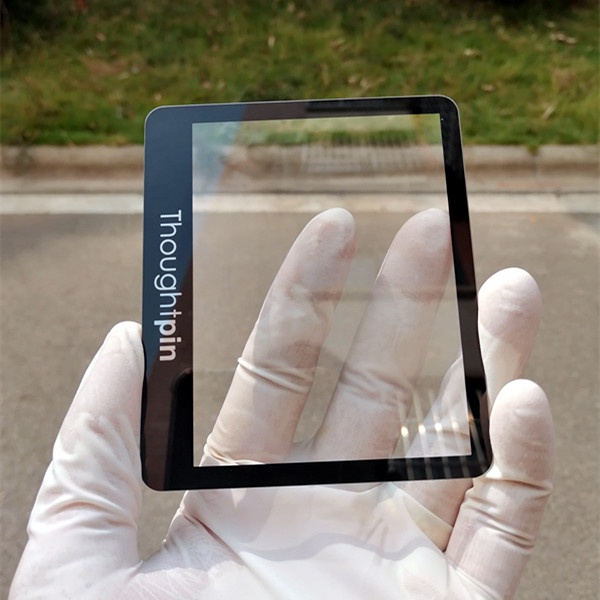
1.5mm 2mm Tempered Glass Thickness Touch Switch Glass Plate
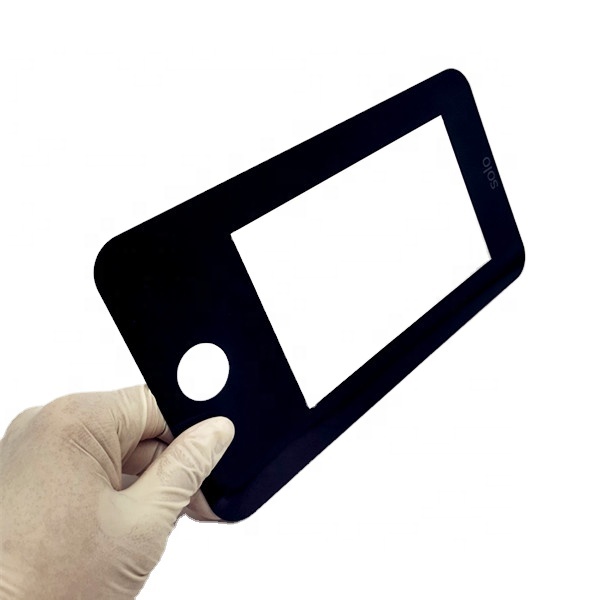
Manufacturer Oem Wholesale Custom Unbreakable Tempered Glass,high Quality Tempered Glass,low Iron Tempered Glass Manufacturer

Custom 0.3mm 0.5mm 0.7mm Heat Resistant Gobo Glass Blanks for Projector

Custom Shape High Transmittance Ultra Clear Tempered Glass Panel With Anti-reflective Coating on Two Sides
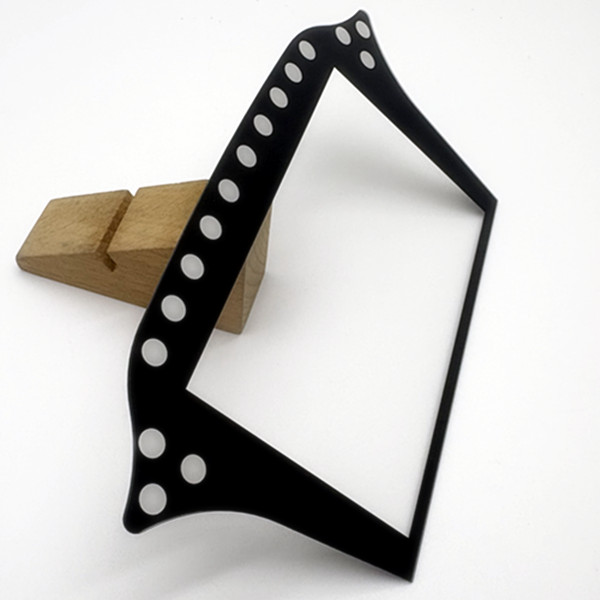
Custom Shaped Tempered Glass Processing, High Transparency Window Panels with Screen Printing
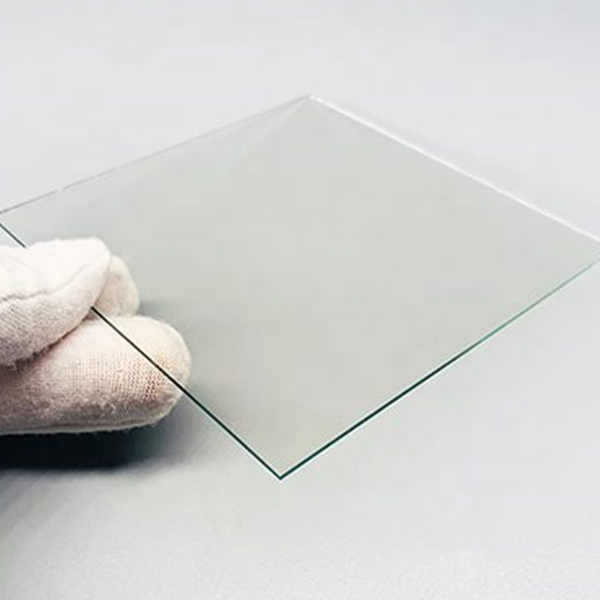
Ito Conducting Glass, Ito Coated Glass, Ito Glass
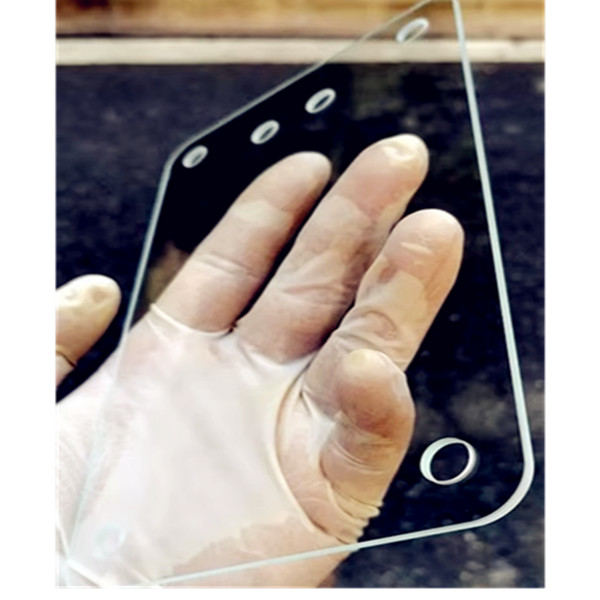
Custom Cut 0.5mm 0.7mm 1mm 1.5mm 2mm Clear Toughened Glass Tempered Corning Gorilla Glass

0.5mm 0.7mm 1mm 2mm 3mm Thickness China Suppliers Good Price Oem Wholesale Premium Tempered Printing Custom Gorilla Glass Screen
Technical Buying View
What Makes a Quartz Glass Disc Supplier Trustworthy?
A quartz glass disc is rarely a commodity purchase. Two discs may look equally clear on a desk, yet perform very differently in a laser cavity, semiconductor tool, analytical instrument, high-temperature window or photonics assembly. The difference usually comes down to material grade, OH content, bubble and inclusion class, flatness, parallelism, edge quality, coating adhesion, cleaning method and lot traceability. For procurement teams, the real question is not simply “Who sells quartz glass discs?” but “Which exporter can prove that every disc was made from traceable material and measured against a drawing?”
Quartz glass, often described as fused quartz or fused silica, is selected for its high purity silica content, low thermal expansion, excellent optical transmission and chemical inertness. Depending on grade, it can support deep-UV transmission, high-temperature processing, electrical insulation and dimensional stability. In disc form, those properties matter most when the part must remain flat under thermal load, transmit light without wavefront distortion, isolate electrical signals, or survive aggressive cleaning. Buyers should therefore request material certificates, measured flatness and parallelism data, surface quality descriptions, edge-chip limits and coating durability information — not only a price per piece.
Where quartz glass discs are used
Typical applications include semiconductor carrier and test fixtures, photonics windows, optical filter substrates, laser optics, sensor covers, laboratory inspection discs, metrology platforms, high-temperature viewports, lighting protection and precision spacers. Each application shifts the specification emphasis. A semiconductor-related disc may prioritize low particle contamination, flatness and traceability; an optical disc may prioritize transmission, surface roughness and coating performance; a high-temperature window may prioritize thermal shock resistance and annealing quality. A trustworthy exporter will ask for the application before recommending a material.
Why drawing-led review is the first credibility filter
A serious quartz glass disc factory does not quote from a single diameter and thickness. It reviews the complete drawing: outside diameter, thickness tolerance, chamfer or edge profile, hole and notch positions, flatness, parallelism, surface roughness, coating sides, print colors, cleaning level, packing orientation and annual volume. This is where experience becomes visible. If a supplier accepts a drawing without asking about edge chips, measurement method, coating witness samples or packaging separation, the buyer should expect surprises at incoming inspection.
- Material grade and SiO₂ purity stated clearly
- OH content and transmission target reviewed
- Flatness, parallelism and thickness tolerance defined
- Surface quality and edge-chip criteria agreed
- Coating, printing or strengthening specified by side
- Lot traceability, inspection report and packing method confirmed
Specification Snapshot for a Quartz Disc RFQ
- MaterialFused quartz, fused silica, borosilicate 3.3, Eagle XG, soda-lime or Gorilla-type glass, depending on the application
- GeometryDiameter, thickness, flatness, parallelism, chamfer, edge finish and hole/notch details
- OpticsTransmission range, OH content, bubble/inclusion class, surface roughness and coating requirement
- EnvironmentTemperature cycling, chemical exposure, cleaning process and electrical insulation needs
- QualityInspection method, sampling plan, data report, lot identification and packaging validation
- CommercialSample quantity, annual demand, target lead time and destination market
Material Selection Matrix
Quartz Glass Disc vs. Adjacent Precision Glass Substrates
Material selection should start with the environment, not the price. This comparison helps sourcing teams ask better questions before a sample is made.
| Material Route | Typical Strength | Watch Point | Best Fit |
|---|---|---|---|
| Fused quartz / fused silica | Low thermal expansion, high purity, broad optical transmission and excellent thermal shock resistance | Grade, OH content, bubble class, annealing and metrology must be defined | Optical windows, laser optics, semiconductor fixtures, high-temperature viewports |
| Borosilicate 3.3 | Low expansion, good chemical durability and heat resistance at a practical cost | Transmission and surface quality may differ from fused silica | Lighting covers, heat-resistant windows, gobo blanks, laboratory glass |
| Corning Eagle XG | Alkali-free substrate with excellent flatness and dimensional stability | Availability and cut-part MOQ require early planning | Biochips, wafers, PLC substrates and precision optical alignment |
| Soda-lime ultra-clear | Cost-effective clarity for display and cover glass | Thermal shock and chemical resistance are lower than quartz | Printed cover glass, AR panels, appliance windows |
| Gorilla-type strengthened glass | Scratch resistance and drop performance for touch surfaces | Cutting and edge finishing must happen before strengthening | Touch panels, display covers, smart-home control glass |
Material names are used for technical identification only. Final selection must be confirmed against the manufacturer datasheet, application requirements and drawing approval.
Future Procurement Trends
How Quartz Glass Disc Buying Will Change Through 2025–2030
Procurement is moving away from “lowest price per disc” toward measurable supply resilience. The winning supplier will be the one that can document material origin, process control and packaging performance.
Dual sourcing with documented origin
Buyers increasingly qualify two material routes to reduce disruption risk. Requests now include raw glass source, lot number, material certificate and change-notification expectations. Exporters that can explain which substrate is used — and why — will win more technical accounts than those offering an unnamed “clear quartz” grade.
Data before discount
Flatness maps, parallelism data, transmission scans, surface defect reports and packing photos are becoming part of the purchase order, not optional attachments. For quartz discs, a low unit price is meaningless if incoming inspection finds chips, coating haze or inconsistent thickness across the lot.
Smaller qualification lots
Engineering teams want faster sample loops before committing to volume. Suppliers with flexible sample routes, clear MOQ logic and practical tooling review will shorten qualification cycles. Small first lots are especially important for coated, printed or unusually shaped discs where fit and optical response must be validated.
Integrated finishing and export packaging
Buyers prefer one accountable partner for cutting, edge finishing, strengthening, coating, printing, inspection and export packing. Thin discs are sensitive to edge micro-chips and point loading, so packaging design becomes a quality characteristic. Interleaving, cushioning, orientation labels and outer-carton validation reduce claim risk.
Product Development Trends
Where Quartz Glass Disc Technology Is Moving
Product development is being shaped by higher-purity requirements, tighter metrology and more integrated optical functions.
Higher-purity synthetic fused silica routes
Advanced optics, laser systems and deep-UV applications continue to push demand for tighter control of impurities, OH content, bubbles and inclusions. Buyers will increasingly ask for material-grade evidence and optical data rather than relying on visual clarity alone. Synthetic fused silica may be preferred where transmission and uniformity requirements exceed standard fused quartz.
Large-format and ultra-thin disc requirements
Semiconductor, display and metrology applications are creating demand for larger discs, thinner discs and tighter flatness/parallelism combinations. Handling, edge finishing and measurement become as important as polishing. Suppliers must control stress, annealing and packaging to keep discs stable from factory to cleanroom.
Coated, printed and conductive glass discs
AR coatings, dichroic coatings, ITO conductive layers, screen-printed borders and strengthened surfaces are increasingly specified as one integrated part. This reduces assembly steps and improves accountability. The trade-off is that every added process creates a new inspection point, so suppliers must define coating sides, adhesion tests and print tolerances clearly.
Fevry Glass Advantages
Why Global Buyers Shortlist Fevry Glass Co., Ltd.
Fevry Glass combines specialty glass sourcing, drawing-led processing and export experience for optical, biotech, semiconductor, lighting and electronics customers.
Public trade record and buyer rating
More than 10 years as an Alibaba.com member, a 5.0/5 buyer rating, 100% inquiry response rate and an average response time of ≤4 hours provide verifiable starting points for supplier review.
Traceable raw material network
Raw glass is sourced from established producers such as Corning, AGC, Chengdu Guangming and Xinhuguang, supporting consistent material selection across optical, biological, semiconductor and lighting projects.
Imported processing and inspection equipment
Laser, ultrasonic, CNC carving, grinding and inspection equipment from the USA, Germany and Japan supports complex outlines, holes, edge profiles and dimensional checks for precision glass parts.
Thermal and chemical strengthening
For thicker panels, thermal tempering can improve impact resistance. For ultra-thin cover glass from 0.15 mm to about 2 mm, chemical strengthening by ion exchange can raise surface strength while maintaining optical clarity.
One-stop coating and printing
AR coating, dichroic coating, silk-screen printing, back painting and other finishing steps can be coordinated in one production flow, reducing hand-offs and making the final optical stack easier to control.
Export experience across demanding markets
Fevry Glass serves customers in China and exports to Western Europe, the United States, Japan, South Korea, Taiwan, Hong Kong and Southeast Asia, with export packing designed for fragile thin glass and optical parts.
Drawing to Delivery
A Clear Five-Step Qualification Path
The fastest quote is not always the safest quote. A structured review reduces rework, protects optical performance and keeps the project moving.
Share the drawing
Send diameter, thickness, tolerances, material, edge profile, coating sides, print colors and annual demand.
Engineering review
Review material route, process feasibility, measurement method, handling risks and specification gaps.
Sample approval
Validate fit, optical appearance, print registration, edge quality and packaging before mass production.
Production control
Coordinate cutting, edge finishing, strengthening, coating, printing and inspection with in-process checks.
Export packing
Use interleaving, cushioning and carton protection designed for thin glass, discs and coated surfaces.
Quartz Glass Disc FAQ
Common Procurement Questions Before Requesting a Quote
These are the questions engineers and sourcing managers most often ask when comparing quartz glass disc factories and exporters.
What is the difference between a quartz glass disc and a tempered glass disc?
Quartz glass discs are made from fused quartz or fused silica and are selected for high purity, low thermal expansion, broad optical transmission and thermal shock resistance. Tempered glass discs are usually made from soda-lime or aluminosilicate glass and then strengthened thermally or chemically to improve impact and scratch performance. They solve different problems: quartz is usually chosen for optical, thermal or chemical performance, while tempered cover glass is often chosen for touch surfaces, displays and protective windows.
Can Fevry Glass supply quartz glass discs to a drawing rather than only standard stock sizes?
Yes. The project should begin with a 2D drawing in DWG, DXF or PDF format that shows the outline, diameter, thickness, tolerances, holes, notches, edge profile and critical dimensions. Please also state the material grade, application, coating or print requirement, annual quantity and inspection expectations. If the drawing is incomplete, the engineering team can flag missing details before sampling. For strict fused silica or fused quartz specifications, send the requirements through the inquiry button for material review.
Which specifications should be included in a quartz disc RFQ?
Include material type and grade, SiO₂ purity target if applicable, OH content requirement, transmission range, bubble and inclusion limits, diameter, thickness, flatness, parallelism, surface roughness, edge finish, coating sides and coating durability requirement. Also state cleaning level, operating temperature, chemical exposure, packing preference, sample quantity and annual volume. The more complete the RFQ, the fewer clarification rounds are needed before quotation and sampling.
How should flatness, parallelism and surface quality be measured?
The measurement method should be agreed before production because different methods produce different results. Buyers should specify whether flatness is measured across the full face, over a defined central area, or at a stated wavelength; whether parallelism is expressed as thickness variation or angle; and which surface defects are acceptable. For optical parts, transmission and surface roughness may also be required. A good supplier will confirm the metrology equipment, sampling plan and report format so that incoming inspection matches the factory’s data.
Can you add AR coating, ITO coating, screen printing or strengthening to a disc?
Coating, printing and strengthening can be reviewed as part of the drawing. AR coating may be applied to one or both sides; dichroic and optical coatings can be specified for lighting or filter applications; ITO conductive glass may suit electronic uses; screen printing is used for borders, logos and windows; and thermal or chemical strengthening can improve durability. All added processes must be defined before cutting and strengthening because post-strengthening machining is usually not possible.
What are typical minimum order quantities?
MOQ depends on material, size, coating, printing and process risk. Most custom cover glass and AR glass items start from 300 to 500 pieces, custom-cut Eagle XG parts may start from 1,000 pieces, and selected gobo glass blanks can start from as few as 10 pieces. For quartz glass discs, the starting quantity must be reviewed against the material grade, diameter, measurement plan and packaging requirement. Samples can be arranged to validate fit and optical performance before mass production.
Which export markets do you serve, and how are thin discs packed?
Fevry Glass serves domestic customers and exports to Western Europe, the United States, Japan, South Korea, Taiwan, Hong Kong and Southeast Asia. Thin glass and quartz discs require separation, cushioning and controlled carton loading to reduce edge chips and surface abrasion. Packaging can be reviewed during sampling, and photos can be taken before shipment so the buyer sees the packing method used for fragile parts.
How can I verify supplier claims before placing an order?
Start with the public company profile, supplier assessment, transaction level, trade capacity and buyer feedback. Then verify technical claims through a sample order: check dimensions, flatness, surface quality, coating appearance, print registration and packing. Request inspection records for the agreed characteristics and confirm how non-conformance would be handled. This combination of public records, drawing review and sample validation gives a more reliable picture than a single price comparison.
Start Your Supplier Qualification
Have a Quartz Glass Disc Drawing?
Send the material grade, diameter, thickness, flatness, parallelism, coating, printing, annual volume and destination market. The team can review the drawing, recommend a practical process route and advise on sampling, inspection and export packing.
Email: info@fevryglass.com · Public trade records, buyer rating and company profile are available for review before you commit.