Top 10 Transparent Ceramic Glass Factory & Exporter
A buyer-side qualification framework for ultra-clear tempered, borosilicate, alkali-free, AR-coated, printed and heat-resistant technical glass—written for OEM engineers, sourcing managers and importers who need repeatable optical performance rather than keyword claims.
8 Precision Glass Products to Start Your Shortlist
High-intent buyers arrive with different jobs to be done: heat resistance for gobos, scratch resistance for touch displays, low expansion for biochips, high transmission for AR windows, or ultra-thin strength for sensor covers. The eight product paths below map directly to those purchase intents.

0.3mm ~ 2mm Dichroic Glass Mirror for Gobos
Thermal-stable mirror blanks for gobos, architectural effects and high-power lighting where coating uniformity and heat resistance matter.
View product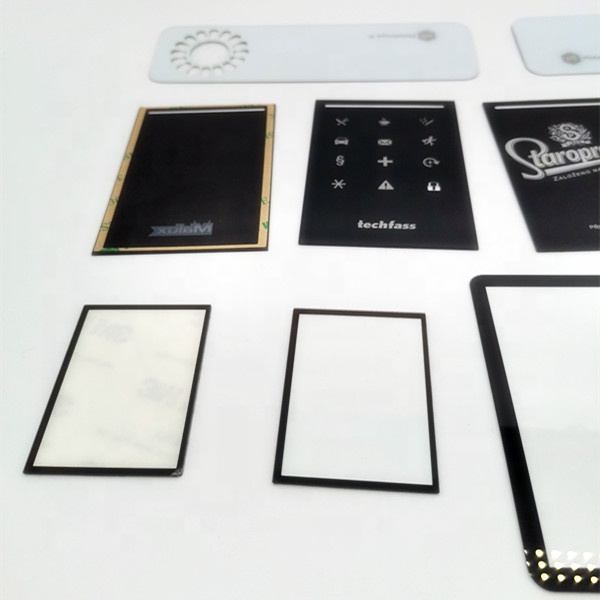
Custom Corning Gorilla Tempered Glass Silk Screen Printing for Touch Screen
Alkali-aluminosilicate touch cover with durable silk print for HMI, kiosks and appliance displays. Specify print color, gloss and IR window.
View product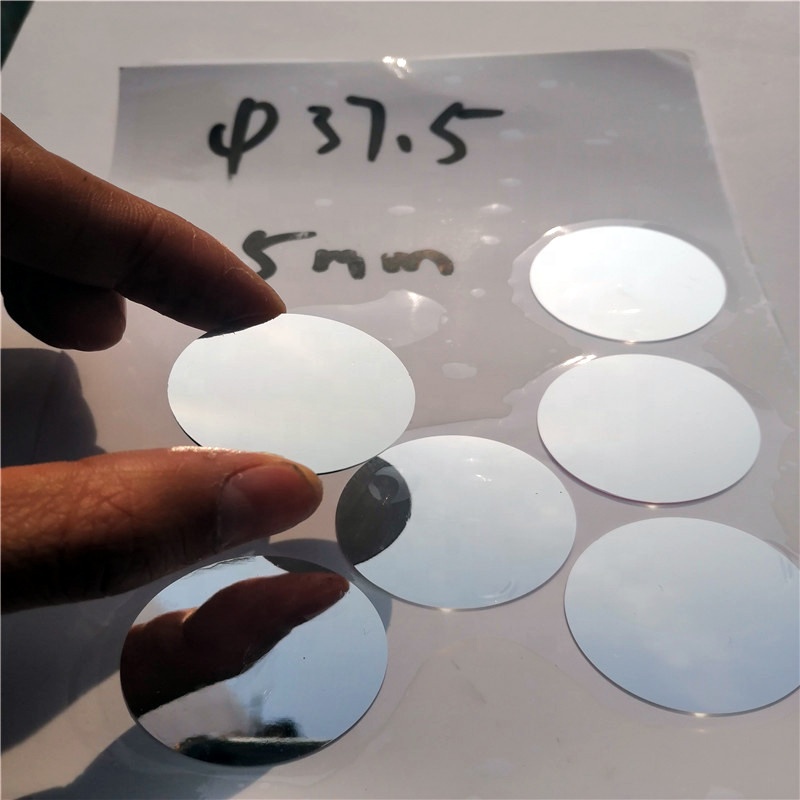
OEM Custom Heat Resistant Gobo Glass Lens
OEM heat-resistant gobo lens for projection and stage lighting; confirm CTE, coating side and operating temperature before sample approval.
View product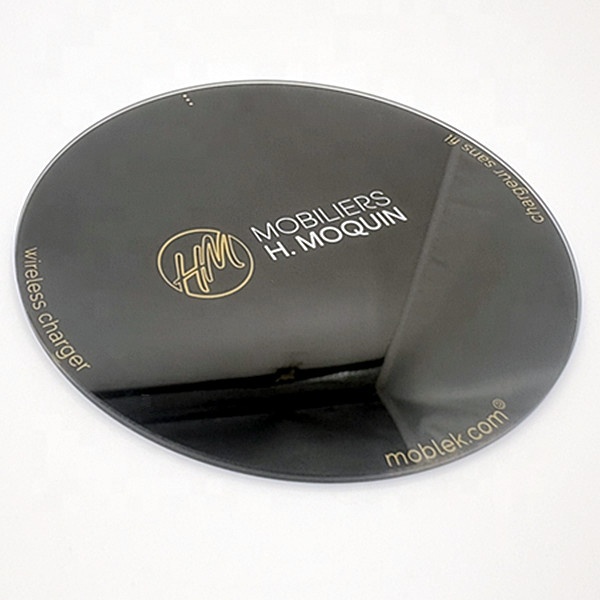
Custom Black Border Tempered Glass Panels Silk Screen Print Tempered Glass
Black-border tempered glass for display windows and control panels; print opacity, step height and edge quality should be fixed in the drawing.
View product
Custom 0.3mm 0.5mm 0.7mm Heat Resistant Gobo Glass Blanks for Projector
Thin projector gobo blanks in 0.3, 0.5 and 0.7 mm options; suitable where fast thermal cycling demands borosilicate-type stability.
View product
Custom 0.2mm 0.3mm 0.4mm 0.5mm 0.7mm 1mm Alkali Free Borosilicate AF32 Glass
Alkali-free AF32 borosilicate-type glass for biochips, optical filters and semiconductor-adjacent parts requiring low expansion and clean surfaces.
View product
Custom Chemically ultra Thin Clear Transparent Tempered Glass Sheet
Chemically strengthened ultra-thin transparent glass for sensor covers and precision protective windows; cutting and edge finishing occur before ion exchange.
View product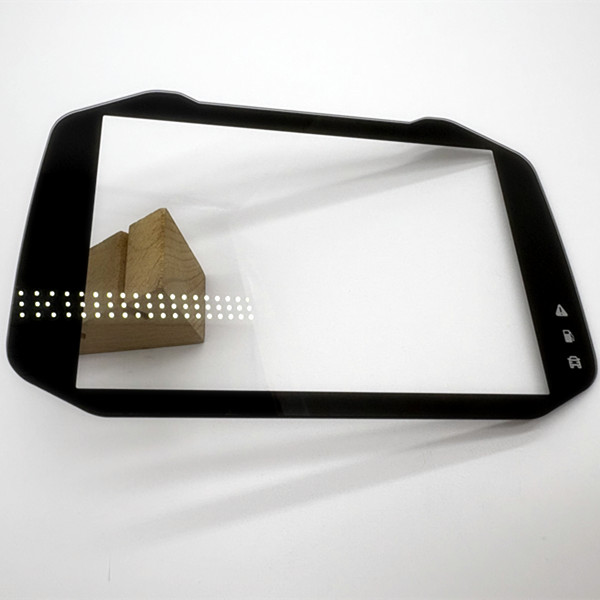
Custom Shape High Transmittance Ultra Clear Tempered Glass Panel With Anti-reflective Coating on Two Sides
Double-sided AR-coated ultra-clear tempered glass for displays and instruments; specify reflectance, transmission target and coating durability.
View productWhat “Transparent Ceramic Glass” Really Means in a Purchase RFQ
A strong factory shortlist begins with semantic clarity. The phrase often describes high-transparency technical glass, glass-ceramic parts or ultra-clear strengthened glass—but these materials are not interchangeable.
For buyers comparing a transparent ceramic glass factory and exporter, the first task is not collecting price lists. It is defining the material route: ultra-clear soda-lime glass, alkali-aluminosilicate cover glass, borosilicate 3.3, alkali-free AF32 or Corning® Eagle XG, chemically strengthened thin glass, or a true transparent glass-ceramic. Each route changes thermal expansion, optical transmission, strengthening method, coating adhesion and the acceptable processing sequence.
The most reliable RFQ states the application, operating temperature, target transmittance or reflectance, glass thickness and tolerance, edge finish, print color, coating side, annual volume and any standards that must be documented. When those variables are explicit, a qualified factory can recommend the right substrate instead of quoting a lowest common denominator material. This is also where information gain matters: a supplier that explains trade-offs early usually exposes avoidable cost and yield risks before tooling or samples begin.
| Material Route | Typical Thickness | CTE (×10⁻⁶/K) | Best Fit | Qualification Note |
|---|---|---|---|---|
| Ultra-clear soda-lime | 0.5–4 mm | ≈9.0 | AR panels, printed windows, cover glass | Cost-efficient for displays; verify iron content and print opacity. |
| Alkali-aluminosilicate / Gorilla®-type | 0.4–2 mm | ≈7.5–8.5 | Scratch-resistant touch and HMI covers | Ion-exchange depth and surface compression must match the drawing. |
| Borosilicate 3.3 | 0.3–3.3 mm | 3.3 | Gobo blanks, heat-resistant windows, lighting covers | Preferred when thermal shock or chemical exposure is expected. |
| Alkali-free AF32 / Eagle XG | 0.2–1.1 mm | ≈3.2 | Biochips, wafers, PLC substrates, optical filters | Ask for flatness, surface quality and lot traceability. |
| Chemically strengthened thin glass | 0.15–2 mm | Base-glass dependent | Sensor covers, ultra-thin protective windows | All cutting, drilling and edge grinding must be completed before strengthening. |
| Transparent glass-ceramic | Project-specific | Varies / near-zero options | High-heat windows, wear-resistant optical parts | Request ceramization data, transmittance and real application references. |
Values are typical selection figures for preliminary comparison. Final acceptance must be confirmed against the material datasheet, drawing and application validation.
Top 10 Criteria to Qualify a Transparent Ceramic Glass Factory & Exporter
A credible top-tier list is not a directory of names. It is a repeatable scorecard that lets procurement compare factories on engineering depth, process control and export reliability.
Material equivalence
Confirm base glass grade, supplier, lot traceability and whether a substitute changes CTE or optical performance.
CTE and thermal shock
For gobo, lighting and high-heat windows, ask for expansion data and realistic operating-temperature validation.
Transmission and haze
Define transmittance, reflectance, color shift and haze before comparing AR coating or ultra-clear substrate options.
Strengthening route
Thermal tempering suits thicker panels; ion exchange suits thin cover glass. Confirm finishing happens before strengthening.
Machining tolerance
Review outline, hole, notch, edge and chamfer capability against the drawing, not against a generic catalog.
Coating adhesion
AR, dichroic and printed layers must survive cleaning, handling and end-use exposure; request test criteria.
Flatness and inspection
A flat, optically clean part depends on measurement discipline: size, thickness, flatness, visual defects and print accuracy.
Sample-to-FAI control
Approved samples should be linked to drawings, color references and measurable acceptance criteria for mass production.
Export packing
Thin glass demands interleaving, cushioning, edge protection and carton validation for fragile international shipping.
Engineering response
Fast responses are useful only when they include manufacturability review, material advice and next-step clarity.
Score the Supplier, Not Only the Sample
Samples prove feasibility. Supplier records prove repeatability. For transparent ceramic glass and custom technical glass sourcing, both matter.
Application Playbook: Match Glass Specifications to End Use
The most efficient purchasing decision starts from the application environment. Heat, impact, optical loss and chemical exposure should determine the material before price negotiation begins.
Displays & Touch HMI
Use ultra-clear tempered or Gorilla®-type cover glass with silk print and optional AR coating. Specify scratch resistance, print color and optical window clarity.
Stage, Gobo & Lighting
Heat-resistant borosilicate blanks and dichroic mirrors reduce thermal risk. Confirm pattern side, coating orientation and operating temperature before production.
Biotech & Life Science
Alkali-free AF32 and Eagle XG substrates support biochip, analyzer filter and microfluidic applications where flatness and low expansion matter.
Semiconductor & Optical
Glass wafers, PLC substrates and V-groove glass require tight dimensional control, clean surfaces and material documentation for downstream bonding.
Instruments & Sensors
Double-sided AR glass and chemically strengthened thin glass improve optical clarity and durability for sensor windows, gauges and inspection equipment.
Automotive & Appliance
Printed black borders, AR coating and tempered cover panels deliver premium appearance for dashboards, control consoles and smart-home interfaces.
Future Procurement Trends for Transparent Ceramic Glass: 2026–2030
Buyers are moving from single-price sourcing to risk-controlled sourcing. The most competitive offers will combine material transparency, process data and logistics reliability.
Dual-sourcing by qualified route
OEMs will qualify two suppliers by material and process route—not just by name—so an approved drawing can move without revalidating optical performance.
TCO before piece price
Total cost of ownership will include yield, breakage, rework, coating rejects, inspection time and packaging. A low unit price that raises field failures is no longer competitive.
Traceability and digital records
Material lot, coating batch, print color, inspection result and packing record will be requested as standard for high-value glass optics and display covers.
Fragile-glass logistics
Export performance will be judged on packaging validation and damage rates. Interleaved, cushioned and edge-protected packing is part of product quality.
Product Development Trends Shaping the Next RFQ
Material innovation is moving toward thinner, stronger and more integrated glass parts. Suppliers must support drawing, coating, printing and inspection as one controlled process chain.
Thinner glass, stronger surfaces
Chemically strengthened glass from 0.15–2 mm enables lighter sensor covers and protective windows without sacrificing optical clarity.
Double-sided AR becomes baseline
Displays and instruments increasingly specify low reflectance on two sides, making coating uniformity and durability core factory capabilities.
Glass-ceramic for heat and wear
True transparent ceramic and glass-ceramic materials will grow in high-heat and wear applications, but must be validated with real transmittance and CTE data.
Printing as a functional interface
Black borders, icon windows, IR-transparent ink areas and back painting are becoming product features, not cosmetic details.
Alkali-free and borosilicate demand
Biotech, optical communication and semiconductor packaging require low-expansion substrates with stable flatness and clean surfaces.
Single-source process chains
Cutting, strengthening, coating, printing and inspection under one roof reduce handling risk and make corrective action faster.
Why Fevry Glass Fits the Top-Tier Factory & Exporter Shortlist
Fevry Glass Co., Ltd. is a specialty glass company based in Xinyu, Jiangxi, China. Its work is built around custom technical glass for optical, biological, semiconductor, communications, lighting and electronics customers—precisely the applications where a “transparent ceramic glass” search usually lands.
Raw glass is sourced from established producers such as Corning, AGC, Chengdu Guangming and Xinhuguang, giving buyers a traceable starting point for material selection. Processing relies on imported laser, ultrasonic, CNC carving, grinding and inspection equipment from the USA, Germany and Japan, supporting cutting, strengthening, AR/dichroic coating, silk-screen printing, back painting and final optical inspection.
The company’s quality principle is “Quality is superior, service is supreme, reputation is first,” and its motto is “Your success, our glory.” For international buyers, that translates into practical support: drawing review, material recommendation, sample validation, production inspection and export packing engineered for fragile thin glass.
Verified supplier records, a 5.0/5 buyer rating, a 100% inquiry response rate and an average response time of four hours or less help reduce sourcing risk. Fevry regularly serves customers in Western Europe, the United States, Japan, South Korea, Taiwan, Hong Kong and Southeast Asia, alongside domestic Chinese customers.
Request a Feasibility Review
- 2D drawing in DWG, DXF or PDF
- Material, thickness and tolerance
- Edge finish, holes and notches
- Thermal or chemical strengthening route
- AR coating sides and print colors
- Annual volume and target market



From Drawing to Export: A Controlled Five-Step Path
A transparent ceramic glass project moves faster when the process is documented and every approval stage has measurable acceptance criteria.
Share Drawing
Send dimensions, tolerances, material, coating, print and application data.
Engineering Review
Confirm manufacturability and recommend the right substrate, thickness and process route.
Sample Approval
Validate fit, print color, edge quality and optical performance before mass production.
Production & Inspection
Control size, thickness, flatness, coating appearance, print accuracy and visual defects.
Export Packing
Use interleaved, cushioned and edge-protected packing for fragile international shipments.
FAQ for Transparent Ceramic Glass Buyers
Direct answers to the questions engineers and sourcing managers typically ask before requesting a quotation.
Is transparent ceramic glass the same as tempered glass?
No. Tempered glass is a glass product strengthened by thermal or chemical treatment. Transparent ceramic glass may refer to a glass-ceramic material with a crystalline phase, or it may be used loosely for high-transparency technical glass. Always confirm the base material, CTE, transmittance and strengthening method before comparing quotations.
Which material gives the highest optical transmission?
Ultra-clear low-iron glass with double-sided AR coating is usually the best route for display windows and optical instruments. Borosilicate and alkali-free substrates may be preferred where thermal stability, chemical resistance or low expansion is more important than maximum visible transmission.
Can you support ultra-thin strengthened glass from 0.15 mm to 2 mm?
Fevry’s product range includes chemically strengthened ultra-thin clear glass and thin AF32/borosilicate options. Feasibility depends on the drawing, edge quality, hole pattern and target strength. All cutting and edge finishing should be completed before ion exchange because strengthened glass cannot be re-cut afterwards.
What is the minimum order quantity?
Most custom cover glass and AR glass items start from 300–500 pieces, custom-cut Eagle XG parts from 1,000 pieces, and selected gobo or dichroic glass blanks from lower trial quantities. Samples can be arranged to validate fit and optical performance before mass production.
What information is needed to evaluate a custom glass project?
Send a 2D drawing with outline dimensions and tolerances, thickness, glass material, edge finish, hole and notch positions, strengthening method, print colors with Pantone references, AR coating side or sides, application and annual quantity to info@fevryglass.com. Complete information allows the engineering team to respond with a firm recommendation in one round.
Which export markets are served?
Besides domestic customers in China, Fevry Glass regularly ships to Western Europe, the United States, Japan, South Korea, Taiwan, Hong Kong and Southeast Asia, with packing designed for fragile thin glass.
How are samples and mass production controlled?
The approved sample should be tied to the drawing, color reference, coating specification and measurable inspection criteria. Production then checks dimensions, thickness, flatness, print accuracy, coating appearance and visual defects before export packing.
How is fragile glass packed for export?
Thin and optical glass should be interleaved, cushioned, edge-protected and packed in reinforced cartons. The required packing level depends on thickness, size, coating and shipping route; this should be confirmed during quotation rather than after production.
Have a Drawing? Let’s Engineer the Right Glass Route.
Send your 2D drawing, material, thickness, coating or print requirements and annual demand. The Fevry Glass engineering team typically replies within four hours and will confirm material feasibility, sample validation and export packing.