Top 10 Optical Glass Factories & Wholesalers
A 2025 sourcing whitepaper for OEM procurement teams — material selection, supplier due diligence, cost drivers, coating strategy and risk controls for precision optical glass processed to drawing.
Eight Optical Glass Product Families Buyers Request Most
Every item below is produced against a customer drawing — substrate, thickness, coating, printing and edge finish are specified by the buyer, not chosen from a shelf.
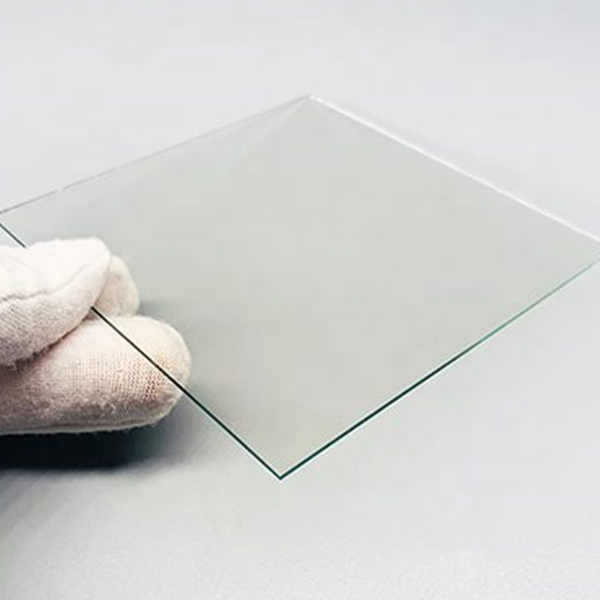
ITO Conducting Glass, ITO Coated Glass, ITO Glass
Request a quotation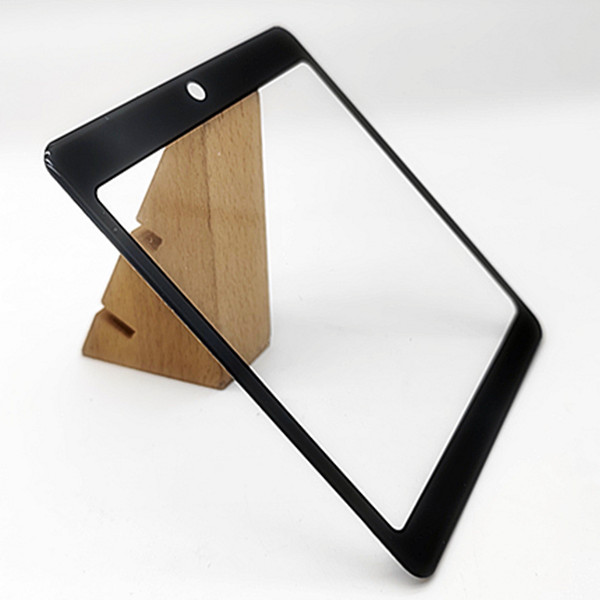
Ultra Clear Gorilla Glass Panel with Silk Screen Printing for Electronic Device
Request a quotation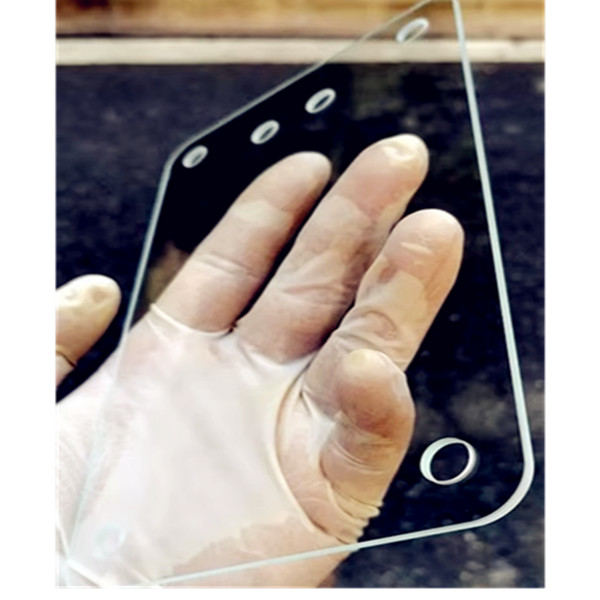
Custom Cut 0.5mm 0.7mm 1mm 1.5mm 2mm Clear Toughened Tempered Corning Gorilla Glass
Request a quotation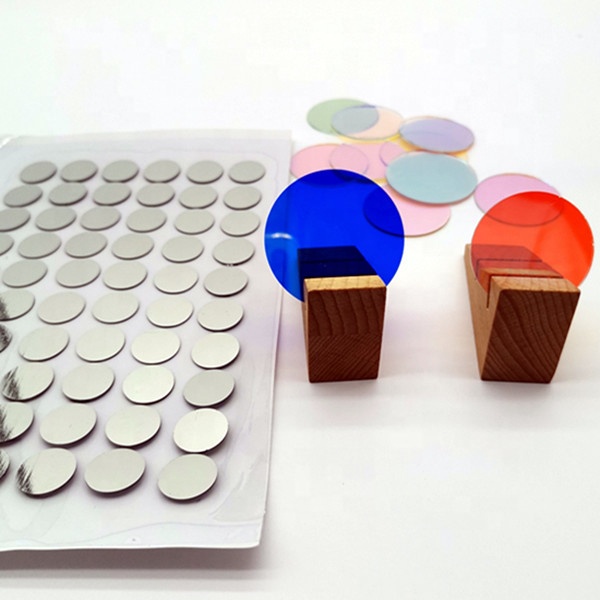
0.2mm 0.3mm 0.4mm 0.5mm 0.7mm 1.0mm 2mm Heat Resistant Gobo Glass Blanks
Request a quotation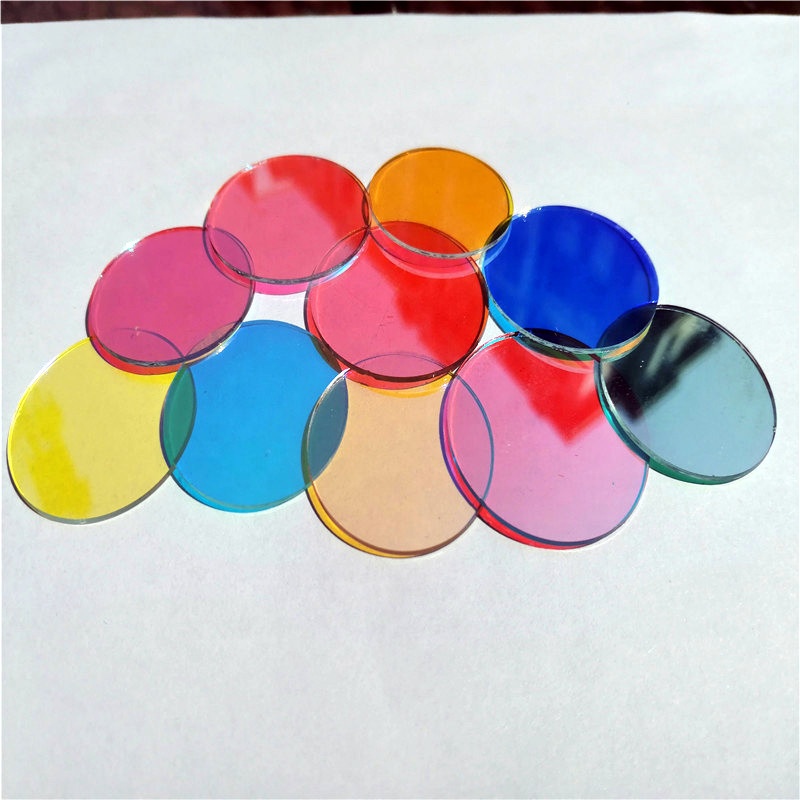
Customize Logo Color Glass Gobo Glass
Request a quotation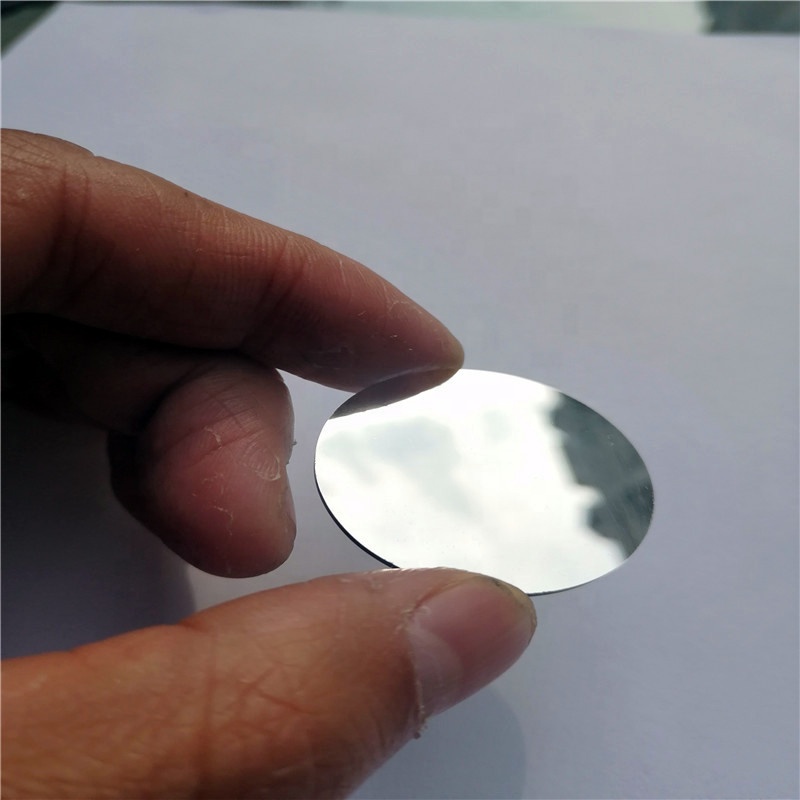
Gobo Glass / Dichroic Mirror Lighting Filters Glass Lens
Request a quotation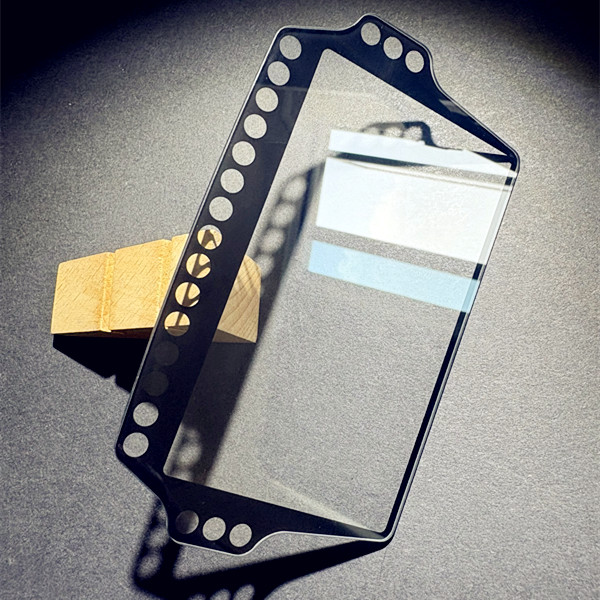
Factory Custom Tempered Silk Printed Gorilla Glass Screen Protector Printing Glass
Request a quotation
Custom Black Border Tempered Glass Panels Silk Screen Print Tempered Glass
Request a quotationSeven Shifts Reshaping Optical Glass Sourcing in 2025
Optical glass is no longer a commodity purchase. Buyers are now evaluated on substrate traceability, coating repeatability and documentation quality as much as on unit price.
Across display, automotive, lighting, biotech and semiconductor programmes, the same pattern appears: specifications are tightening while order quantities are fragmenting. A buyer who ordered 10,000 identical panels in 2019 may now order four variants of 2,500. That change rewards suppliers who can hold tolerances across small batches — and punishes wholesalers who only resell mill sheets without secondary processing capability.
Drawing-Based Customisation
Standard sheet sizes are losing relevance. CAD-driven cutting, hole placement and edge chamfering are now baseline expectations, not premium add-ons.
Ultra-Thin & Chemically Strengthened
Cover glass between 0.15 mm and 2 mm is increasingly ion-exchanged rather than thermally tempered, because thin sheets must stay flat and optically clean.
AR Coating as Default
Double-sided anti-reflective coating is moving from optional to specified by default on automotive displays, instrument windows and smart-home control panels.
Low-CTE Substrates
Borosilicate 3.3 and Corning Eagle XG demand keeps rising in lighting, biochip and photonic programmes where thermal expansion must stay near 3 ppm/K.
Supplier Consolidation
Procurement teams are collapsing four to five vendors — cutter, coater, printer, strengthener, packer — into one accountable partner with in-house capability.
Traceability & Compliance
RoHS/REACH declarations, batch-level material records and coating run reports are now requested at RFQ stage, not after purchase order.
High-Mix, Low-Volume
Sample-to-mass-production cycles are compressing. Suppliers who can validate a new drawing within two weeks increasingly win the annual contract.
Top 10 Optical Glass Factories & Wholesalers — Evaluated by Capability, Not by Price
The ten profiles below describe the supplier types that actually appear in serious RFQ shortlists. Use them as a due-diligence checklist: the right partner is the one whose capability set matches your drawing.
Full-Process Custom Glass Factories
Cut, grind, strengthen, coat and print under one roof. Best fit for programmes with multi-step specifications — fewer hand-offs means fewer tolerance stack-ups and one party accountable for defects.
Display & Touch Cover Glass Plants
Specialised in 0.4–2 mm alkali-aluminosilicate or Gorilla®-class substrates with printed borders and IR windows. Ask for surface hardness and drop-test data rather than claims.
Optical Coating Specialists (AR / Dichroic)
Deposition houses that control reflectance curves across the visible band. Request measured transmission spectra from the actual production run, not a catalogue curve.
Stage & Entertainment Lighting Glass Makers
Produce gobo blanks, colour glass and dichroic filters for high-power fixtures. Critical specs are thermal shock resistance and coating stability above 300 °C.
Borosilicate 3.3 Processors
Low-CTE sheet converted into windows, sight glasses and laboratory parts. Verify that annealing is documented per batch; unannealed sheet fails unpredictably in the field.
Glass Wafer & Semiconductor Substrate Suppliers
Deliver polished round or square wafers with controlled TTV and roughness. Eagle XG and borosilicate carriers dominate; flatness data and cleaning class are the deciding metrics.
Silk-Screen Printing Integrated Plants
Pantone-matched borders, logos and light-blocking masks applied before or after strengthening. Confirm ink adhesion testing and colour tolerance under production lighting.
Specialty Glass Wholesalers & Stockists
Useful for rapid prototyping and low-volume trials from mill sheets. Be aware that wholesalers rarely control secondary tolerances — cutting, chamfering and coating are outsourced.
Ultra-Thin Chemically Strengthened Glass Experts
Handle 0.15–1.1 mm sheets where thermal tempering is impossible. The giveaway of real capability is pre-strengthening edge quality: any chip becomes a fracture origin.
Engineering-Led Solution Partners
Suppliers who challenge your drawing before quoting — proposing thickness, edge profile or coating changes that cut cost or improve yield. This is the highest-value profile for complex programmes.
Optical Glass Material Selection Guide
Choose the substrate before discussing price. Thermal, optical and mechanical performance all follow from this single decision.
| Material | Thickness Range | CTE (×10⁻⁶/K) | Typical Transmission | Recommended Application |
|---|---|---|---|---|
| Ultra-clear soda-lime | 0.5 – 4 mm | ≈ 9.0 | ≥ 91% | Cover glass, AR panels, printed display windows |
| Alkali-aluminosilicate (Gorilla®-class) | 0.4 – 2 mm | ≈ 7.5 – 8.5 | ≥ 91% | Scratch-resistant touch and display covers |
| Borosilicate 3.3 | 0.3 – 3.3 mm | 3.3 | ≥ 91.5% | Gobo blanks, heat-resistant windows, laboratory glass |
| Corning® Eagle XG | 0.5 – 1.1 mm | ≈ 3.2 | ≥ 91% | Biochips, glass wafers, PLC and micro-optics |
| Chemically strengthened thin glass | 0.15 – 2 mm | Base-glass dependent | ≥ 92% | Ultra-thin protectors, sensor and camera covers |
| ITO-coated glass | 0.4 – 3 mm | Base-glass dependent | 80 – 90% with coating | Touch sensors, EMI shielding, heated windows |
| Dichroic / filter coated glass | 0.3 – 3 mm | Base-glass dependent | Design-dependent | Colour mixing, beam splitting, stage lighting filters |
Values are typical industry figures for preliminary selection only. Final specifications are confirmed against the manufacturer datasheet and your approved drawing.
Fevry Glass Co., Ltd. — Engineered Optical Glass from Jiangxi, China
One accountable partner from raw sheet selection through cutting, strengthening, coating, printing, inspection and export packing.
Fevry Glass Co., Ltd. is a specialty glass company based in Xinyu, Jiangxi. We work with optical, biological, semiconductor, communications, lighting and electronics customers on applications spanning 0.15 mm to 4 mm. Raw material is sourced from Corning, AGC and established Chinese optical-glass producers such as Chengdu Guangming and Xinhuguang, so every project begins from a traceable substrate rather than an anonymous sheet. Conversion is carried out on laser, ultrasonic, CNC carving, grinding and inspection equipment imported from the USA, Germany and Japan.
Laser, CNC & Ultrasonic Machining
Custom outlines, holes, notches and slots with flat, pencil or chamfered edge profiles — all cut before strengthening.
Thermal & Chemical Strengthening
Thermal tempering for thicker panels, ion-exchange strengthening for 0.15–2 mm thin glass with maintained flatness.
AR, Dichroic & Optical Coatings
Single- or double-sided anti-reflective coating up to roughly 98% transmission, plus dichroic and filter layers for lighting and optics.
Silk-Screen Printing & Back Painting
Pantone-matched borders, logos, icon windows and IR-transparent ink areas applied with controlled registration.
Dimensional & Optical Inspection
Size, thickness, flatness and visual defect checks run before packing, with production video available on most listed items.
Export-Ready Logistics
Interleaved, cushioned packing proven on shipments to Western Europe, the United States, Japan, South Korea, Taiwan, Hong Kong and Southeast Asia.
Fast, Accountable Communication
Average engineering reply within four hours, a 100% inquiry response rate and a 5.0/5 verified buyer rating across ten-plus years of export trading.
One Stop, Fewer Hand-Offs
Cutting, strengthening, coating, printing, inspection and packing handled under one quality system instead of five disconnected vendors.
Optical Glass Procurement — Frequently Asked Questions
Direct answers to the questions sourcing managers and design engineers raise most often during supplier evaluation.
Should I specify chemically strengthened or thermally tempered glass?
Thermal tempering is the right choice for glass around 3 mm and thicker, where a rapid quench creates a compressive surface layer without affecting optical flatness. For ultra-thin cover glass between 0.15 mm and roughly 2 mm, chemical strengthening by ion exchange is the correct route: it raises surface strength while keeping the sheet flat and optically clean. In both cases, all cutting, drilling and edge grinding must be completed before strengthening — tempered and chemically strengthened glass cannot be re-cut afterwards without destroying the stress layer.
When is borosilicate 3.3 a better choice than soda-lime glass?
Borosilicate 3.3 has a coefficient of thermal expansion of about 3.3 × 10⁻⁶/K, roughly one third that of soda-lime glass. That makes it far more tolerant of rapid temperature change. Specify it for stage-lighting gobo blanks, high-power LED covers, heat-resistant windows, sight glasses and laboratory or instrument glass where thermal shock or chemical exposure is expected. If your part never exceeds 60–70 °C and chemical exposure is minimal, soda-lime or aluminosilicate glass usually delivers better value.
Why is Corning® Eagle XG used for biochips, wafers and PLC substrates?
Eagle XG is an alkali-free boro-aluminosilicate glass produced by the fusion-draw process. Alkali-free composition prevents mobile-ion contamination in biological and semiconductor processes, while the fusion-formed surface delivers excellent flatness and dimensional stability. That combination supports micro-patterning, anodic bonding and precise optical alignment in biochips, glass wafers and planar lightwave circuit substrates.
What is a realistic minimum order quantity for custom optical glass?
Typical thresholds are 300–500 pieces for custom cover glass and AR-coated panels, 1,000 pieces for precision-cut Eagle XG parts and as low as 10 pieces for selected dichroic gobo blanks. Samples are normally arranged before mass production so that fit, colour and optical performance can be validated. Where a programme is expected to scale, suppliers frequently accept a lower first-order quantity against a committed annual forecast.
What information should I send to get an accurate quotation?
Send a 2D drawing (DWG, DXF or PDF) with outline dimensions and tolerances, thickness, glass material, edge finish, hole and notch positions, strengthening method, print colours with Pantone references, AR coating side or sides, the end application and expected annual volume. Complete information lets an engineering team return a firm recommendation in a single round instead of a series of clarifying emails — which typically shortens the sourcing cycle by two to three weeks.
Can AR-coated and printed glass be cleaned repeatedly in the field?
Yes, provided the coating is a hard, dense dielectric multilayer rather than a soft dip coat, and provided the cleaning agent is compatible. Specify the cleaning regime at RFQ stage — alcohol wipe, neutral detergent, ultrasonic bath — and ask for adhesion and abrasion test data on the production run. For printed glass, confirm that the ink is applied on the second surface so it is protected from handling and cleaning abrasion.
How is breakage controlled during international shipping of thin glass?
Thin glass fails at edges and corners, so packing quality matters as much as crate strength. Effective export packing uses interleaved protective film, edge protection on every piece, foam-cushioned inner cartons and a rigid outer crate with moisture barrier. Ask the supplier whether packing has been validated on the specific route you are shipping, and request a packing video or photo record before dispatch.
Which export markets do Chinese optical glass factories typically serve?
Established specialty glass exporters serve Western Europe, the United States, Japan, South Korea, Taiwan, Hong Kong and Southeast Asia in addition to their domestic customer base. When evaluating a supplier, ask for the destination mix of their last twelve months of shipments — a supplier with repeat business in regulated markets such as Western Europe or Japan is more likely to already operate documentation and inspection systems compatible with your own quality requirements.
Have a Drawing? Let's Engineer Your Optical Glass.
Send your specifications — material, thickness, tolerances, coating side and print colours — and our engineering team will confirm manufacturability, recommend the right substrate and return a firm quotation, typically within four hours.
Typical RFQ response ≤ 4 hours · Free DFM review · Samples before mass production