Top 10 Fused Silica Glass Factories & Wholesaler
How engineers and procurement teams should compare material purity, optical performance, process control, wholesale flexibility and export reliability before placing a custom glass order.
8 Custom Glass Products for Fused Silica-Adjacent and High-Purity Programs
These eight products reflect the practical buying routes for display covers, optical windows, thin substrates, printed front panels and touch interfaces. Product links are preserved so buyers can move directly from sourcing research to specification review.
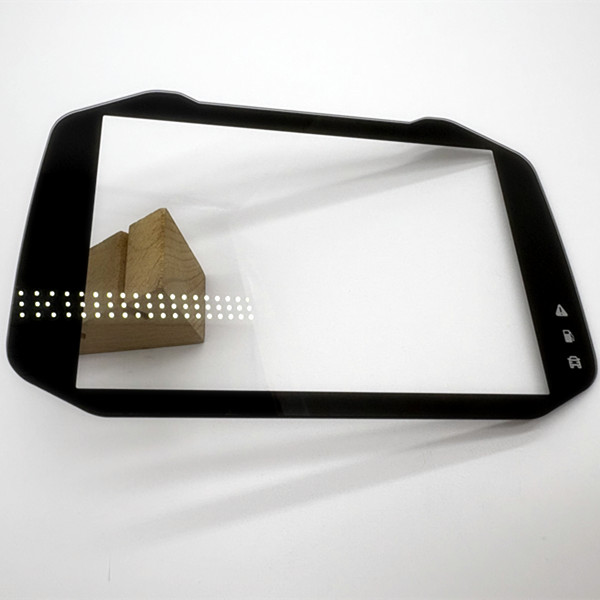
Custom Shape High Transmittance Ultra Clear Tempered Glass Panel With Anti-reflective Coating on Two Sides
High-transmittance cover glass with anti-reflective coating on both sides for display windows and glare-sensitive optical interfaces.
View product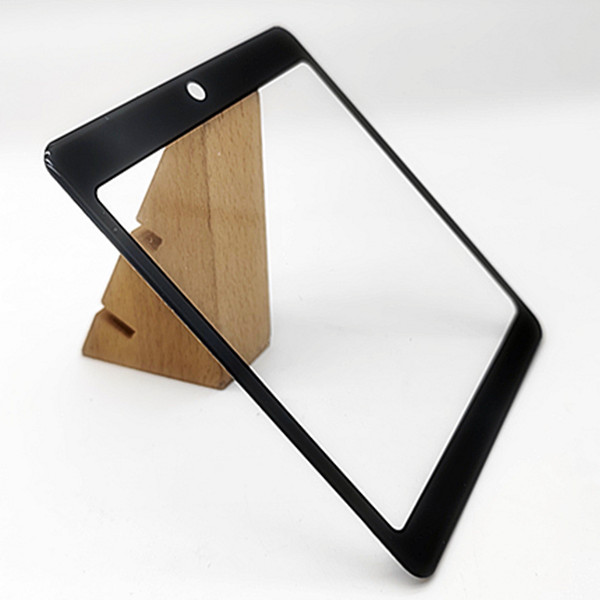
Ultra Clear Gorilla Glass Panel with Silk Screen Printing for Electronic Device
Strengthened cover glass with printed borders and windows for electronic devices, control panels and premium enclosures.
View product
Custom 0.2mm 0.3mm 0.4mm 0.5mm 0.7mm 1mm Alkali Free Borosilicate AF32 Glass
Thin alkali-free borosilicate substrate for electronics, sensor windows and applications needing dimensional stability.
View product
Customized Tempered Anti-Reflective Glass AR Coated Tempered Glass
AR-coated tempered glass for instrument windows, display covers and industrial interfaces where reflection reduces readability.
View product
Custom Chemically ultra Thin Clear Transparent Tempered Glass Sheet
Chemically strengthened 0.15–2 mm glass for thin covers, sensors, lightweight display stacks and precision protective parts.
View product
Custom Shaped Tempered Glass Processing, High Transparency Window Panels with Screen Printing
CNC-shaped tempered panels with printed graphics, windows and borders for appliances, instruments and HMI assemblies.
View product
1.5mm 2mm Tempered Glass Thickness Touch Switch Glass Plate
1.5–2 mm tempered touch-switch plate for smart controls, appliances and industrial interfaces requiring durable front glass.
View product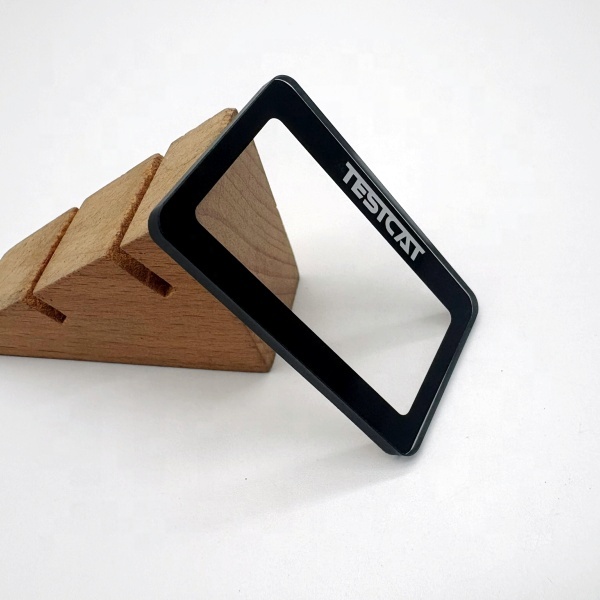
Custom Gorilla Glass Panel Tempered Glass Display Window Silk Screen Printing for LCD Display
Printed Gorilla glass display windows for LCD modules, wearables and electronic device front panels with defined viewing areas.
View productWhat “Fused Silica Glass” Really Means for B2B Buyers
Fused silica glass is not a single commodity grade. In technical procurement, the term usually refers to high-purity amorphous silica with very low thermal expansion, strong deep-UV transmission, excellent thermal shock resistance and low dielectric loss. Those properties matter in high-power optics, UV windows, semiconductor tooling, precision instruments and laser systems. However, the buyer’s real question is not “who sells fused silica?” but “which factory or wholesaler can prove the grade, hold the tolerance, control the coating and print process, and deliver fragile thin glass without hidden rework?”
A responsible top 10 fused silica glass factory evaluation should separate a raw material producer from a custom processor and from a stockist or wholesaler. The strongest supplier is often the one that can document the full chain: raw-glass lot, cutting method, edge finish, strengthening sequence, coating side, print color, inspection report and export packing. For applications where pure fused silica is not mandatory, buyers should also compare borosilicate 3.3, alkali-free AF32 and Corning Eagle XG, because the lowest total landed cost may come from a material that is easier to process and more available at the required thickness.
Buyer Intent Snapshot
Commercial-intent buyers searching for fused silica glass factories usually need four things before they request a quote:
- Material proof: grade, OH content, bubble and inclusion class, CTE, transmission range and flatness.
- Process proof: cutting, CNC, ultrasonic, edge grinding, thermal or chemical strengthening, AR coating and printing.
- Quality proof: inspection report, sample approval, repeat-order history and defect-control method.
- Commercial proof: MOQ, mixed-SKU flexibility, export packing, lead time and engineering response speed.
Fused Silica vs. Borosilicate vs. Alkali-Free Glass
Material substitution is one of the largest cost and risk decisions in a custom glass program. Use this comparison for preliminary selection, then confirm final data against the manufacturer datasheet and your drawing.
| Material | Typical CTE | Thermal Shock | Optical / UV Note | Best-Fit Applications |
|---|---|---|---|---|
| Fused silica | ≈ 0.5–0.6 × 10⁻⁶/K | Excellent | Very good deep-UV transparency when grade is specified | High-power optics, UV windows, laser components, semiconductor and precision instruments |
| Borosilicate 3.3 | 3.3 × 10⁻⁶/K | Very good | Good visible transmission and useful near-UV performance | Lighting covers, gobo blanks, laboratory glass, heat-resistant windows and instrument glass |
| Alkali-free AF32 | ≈ 3.2 × 10⁻⁶/K | Good | Low alkali content; stable electronic and sensor performance | Thin electronic substrates, sensor windows, display components and high-stability covers |
| Corning Eagle XG | ≈ 3.2 × 10⁻⁶/K | Good | Fusion-formed flatness and dimensional stability | Biochips, wafers, PLC substrates, micro-optics and precision bonding |
| Ultra-clear soda-lime | ≈ 9.0 × 10⁻⁶/K | Moderate | High visible clarity with low-iron composition | Cover glass, AR panels, printed windows and decorative electronic front panels |
The Top 10 Fused Silica Glass Factory & Wholesaler Evaluation Criteria
The most useful “top 10” is not a paid ranking of company names. It is a scorecard that lets you compare a factory, a stockist and a custom glass wholesaler on the same evidence base. Weight the criteria against your application; a biochip or laser-optics buyer should weight flatness and contamination control more heavily than an appliance HMI buyer.
Traceable raw-material lot and COA
Ask for the glass grade, lot traceability, COA and key optical or thermal data. Fused silica claims without grade-specific documentation are a procurement risk.
Weight: highIn-house cutting, CNC and edge finishing
Outlines, holes, notches and edge quality determine breakage rate. A supplier that subcontracts too many steps loses tolerance control and accountability.
Weight: highFlatness, TTV and dimensional metrology
For wafers, biochips and optical windows, flatness and thickness variation matter as much as material purity. Request measurement method and sampling plan.
Weight: highAR, dichroic and optical coating control
Specify wavelength range, incidence angle, one-sided or two-sided coating, reflectance target and durability test. Coating consistency is a factory discipline.
Weight: highStrengthening sequence compatibility
Thermal tempering suits thicker panels; chemical strengthening suits 0.15–2 mm thin glass. Cutting, drilling and edge grinding must be completed before strengthening.
Weight: highSilk-screen printing and ink durability
Printed borders, icons and windows must survive cleaning, handling and end-use exposure. Ask for Pantone matching, window alignment limits and adhesion testing.
Weight: mediumCleanroom, cleaning and contamination control
Optical, biotech and semiconductor buyers should verify cleaning, handling, packing and particle-control methods before approving mass production.
Weight: highWholesale MOQ and mixed-SKU flexibility
A good wholesaler helps you combine multiple sizes, thicknesses, print versions or coating options without forcing unnecessary inventory exposure.
Weight: mediumFragile-glass export packing and logistics
Breakage in transit erases unit-price savings. Review interleaving, cushioning, carton strength, moisture protection and export packing photos.
Weight: highEngineering response and documentation
Fast, drawing-based feedback reveals supplier competence. Ask for inspection reports, change-control records, corrective-action process and export documentation support.
Weight: highRecommended Custom Glass Routes by Application
When a fused silica grade is not mandatory, the fastest path is often to match the application to a proven technical glass product and then validate coating, print and tolerance requirements with samples.
Display and instrument AR covers
Use ultra-clear tempered glass with double-sided AR coating when readability, reflection control and surface durability matter.
View recommended productElectronic device front panels
Printed Gorilla glass panels are suitable for device windows, control panels and enclosures requiring scratch resistance and clean graphics.
View recommended productThin alkali-free sensor windows
AF32 glass is a practical option for thin electronic covers and sensor windows where alkali-free composition and stability are valued.
View recommended productGlare-sensitive optical windows
AR-coated tempered glass improves instrument visibility and protects the display stack in industrial and analytical equipment.
View recommended productUltra-thin lightweight cover stacks
Chemically strengthened thin glass helps reduce weight while maintaining surface strength for sensors and compact display modules.
View recommended productLCD, HMI and printed front windows
Printed Gorilla glass display windows combine mechanical protection with defined viewing areas for LCD modules and user interfaces.
View recommended productFuture Procurement Trends for Fused Silica and High-Purity Glass
Buying behavior is shifting from single-unit-price negotiation toward total-cost, risk and documentation management. Suppliers that support drawing-based engineering and mixed-material programs will be better positioned.
Dual sourcing and supplier resilience
OEMs are qualifying second sources for thin glass, coatings and printing to protect programs from capacity bottlenecks, material shortages and logistics disruption.
Drawing-first digital RFQ
2D drawings, tolerance stacks and annual volume forecasts are replacing vague material-name inquiries. Suppliers that can review drawings quickly win more qualified projects.
Total landed cost over unit price
Breakage, rework, coating rejects, print misalignment and delayed samples often cost more than the quoted glass price. Procurement teams are scoring yield and packaging performance.
High-mix, low-volume supply models
Industrial and medical programs increasingly need multiple sizes, thicknesses and print versions. Wholesalers that support mixed SKUs and scheduled releases reduce inventory risk.
Product Development Trends in Technical Glass
Glass is becoming a functional part of the user interface and the optical system, not only a protective cover. Development is moving toward thinner stacks, stronger surfaces and multi-layer coating performance.
Thinner, stronger, flatter
Chemical strengthening is enabling 0.15–2 mm glass covers with improved drop performance, while tighter flatness supports bonding and optical alignment.
Multifunctional optical coatings
AR, anti-glare, IR-control and dichroic coatings are increasingly combined or specified as double-sided stacks to solve reflection and transmission problems in one part.
Printed glass as a user interface
Black borders, icon windows, hidden-until-lit graphics and durable back painting are turning glass into a front-panel design element for appliances and instruments.
Material convergence and design fit
Designers are comparing fused silica with borosilicate, AF32 and Eagle XG by application. The best solution is the lowest-risk material that meets optical, thermal and cost targets.
Why Fevry Glass Fits a Wholesale Technical-Glass Program
Fevry Glass Co., Ltd. is a specialty glass company based in Xinyu, Jiangxi, China. Its advantage is not a single material line; it is the ability to move from raw-glass selection to finished, export-ready parts for optical, biological, semiconductor, communications, lighting and electronics customers.



For buyers comparing fused silica glass factories and wholesalers, this processing depth matters because a low-expansion glass inquiry rarely stops at “cut to size.” It usually becomes a multi-step manufacturing problem: CNC shaping, ultrasonic drilling, edge grinding, thermal or chemical strengthening, AR or dichroic coating, silk-screen printing, visual inspection and protective export packing. Fevry Glass works with raw glass sourced from Corning, AGC and established Chinese optical-glass makers such as Chengdu Guangming and Xinhuguang, and processes it on laser, ultrasonic, CNC carving, grinding and inspection equipment imported from the USA, Germany and Japan.
The company’s application experience includes Corning Eagle XG, borosilicate 3.3, transparent ceramic glass, semiconductor wafers and biochip glass, PLC substrates and optical V-groove glass, film/TV/stage lighting color lenses, LED filament and optical coating glass, and ultra-thin 0.15 / 0.2 mm protector glass. For wholesale buyers, the practical benefit is fewer hand-offs: one supplier can quote the material, confirm the drawing, arrange samples, control the process sequence and pack the finished parts for export to Western Europe, the United States, Japan, South Korea, Taiwan, Hong Kong and Southeast Asia.
Traceable material sourcing
Raw glass sourced from recognized producers supports consistent optical, thermal and mechanical performance across production lots.
Single-source process chain
Cutting, CNC, ultrasonic, grinding, strengthening, coating, printing and inspection can be coordinated under one quality plan.
Application depth
Experience across displays, optics, biotech, semiconductor, lighting and electronics helps shorten material and process selection.
Quality-first culture
The principle “Quality is superior, service is supreme, reputation is first” is supported by dimensional and visual inspection before packing.
Export-ready communication
Fast drawing review, English-language technical discussion and export packing experience help reduce cross-border project friction.
Wholesale flexibility
Support for custom sizes, multiple print versions, AR coating options and mixed technical-glass requirements suits OEM and distributor programs.
Fused Silica Glass Factory and Wholesaler FAQ
These are the questions engineers and sourcing teams ask most often when comparing technical glass suppliers, validating samples and preparing a custom RFQ.
Is fused silica glass the same as borosilicate glass?
No. Fused silica is typically ≥99.9% SiO₂ with very low thermal expansion and excellent deep-UV transmission, but it is more expensive and requires grade-specific specification. Borosilicate 3.3 has a CTE of about 3.3 × 10⁻⁶/K and much better thermal shock resistance than soda-lime glass, yet it is generally more economical and more widely available in sheet form. Use fused silica only when its optical, thermal or purity advantages are required.
What should I include in a fused silica or custom glass RFQ?
Send a 2D drawing (DWG, DXF or PDF) with outline dimensions and tolerances, thickness, material grade, edge finish, hole and notch positions, strengthening method, print colors with Pantone references, AR coating side or sides, end application and expected annual quantity. For fused silica, also specify UV cutoff, OH content, bubble/inclusion class and flatness if relevant. Complete information allows a firm engineering recommendation in one round.
What MOQ and sample process are typical?
Most custom cover glass and AR glass items start from 300–500 pieces, some Eagle XG cut parts from 1,000 pieces, and selected gobo or lighting glass blanks from small quantities. Samples can be arranged to validate fit, optical performance, print color and edge quality before mass production. Sample approval is especially important for AR coating, printed windows and thin strengthened glass.
Can one supplier combine cutting, strengthening, AR coating and printing?
Yes, provided the process sequence is controlled. Cutting, drilling and edge grinding are normally completed before strengthening, and the supplier must define when printing and coating occur so that ink adhesion, coating durability and dimensional accuracy are not compromised. Ask for a process flow diagram and sample validation plan when multiple operations are combined.
How do I check optical and dimensional quality?
Request an inspection report covering dimensions, thickness, flatness, surface defects, transmission, reflectance, haze and print color where applicable. For AR-coated glass, specify wavelength range and incidence angle. For printed glass, define window position tolerance and color target. A supplier with a documented inspection routine is easier to qualify than one that only provides product photos.
Which export markets does Fevry Glass serve?
Besides domestic customers in China, Fevry Glass serves buyers in Western Europe, the United States, Japan, South Korea, Taiwan, Hong Kong and Southeast Asia. Export packing is designed for fragile thin glass, and English-language drawing review helps align specifications before production.
Have a fused silica or custom glass drawing?
Send your material grade, thickness, tolerance, coating side, print colors and annual volume. Fevry Glass can review manufacturability, recommend the right technical glass route and arrange samples before mass production.