8 Electronic Glass Products Recommended for Display, Lighting & Instrument OEMs
The eight formats below cover the most common custom glass requirements in electronic displays, automotive HMI, smart-home controls, LED lighting, optical instruments and specialty glass components. Each product can be quoted by drawing, with material, thickness, edge finish, printing, strengthening and coating specified according to the application.
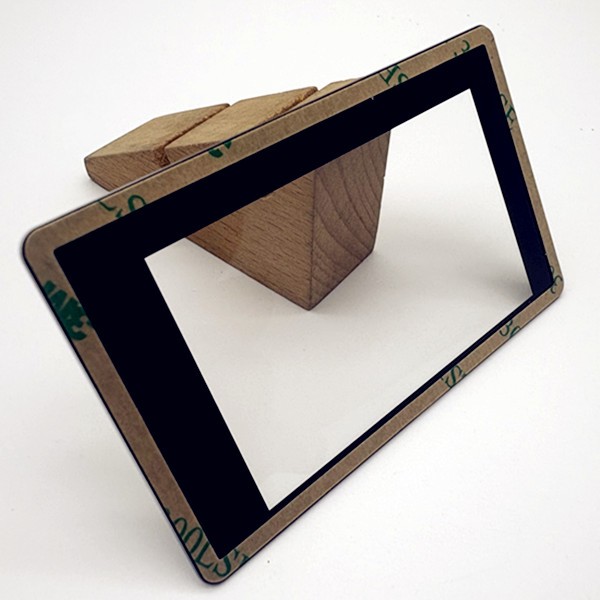
Custom Tempered Glass Dashboard Trim Panel Flat Electronic Glass Screen Protector
Flat tempered electronic glass with optional printed border, AR coating and precise cutouts for automotive dashboards, instrument clusters and touch modules.
View product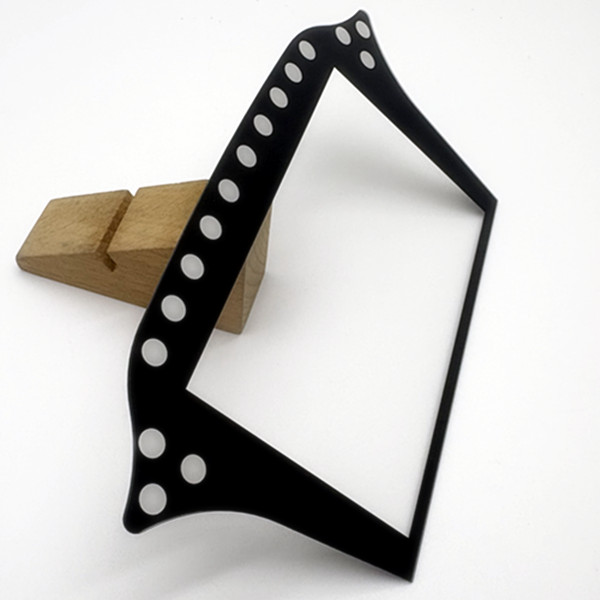
Custom Shaped Tempered Glass Processing, High Transparency Window Panels with Screen Printing
CNC-shaped high-transparency tempered glass with silk-screen graphics for appliance control panels, industrial HMI and decorative display covers.
View product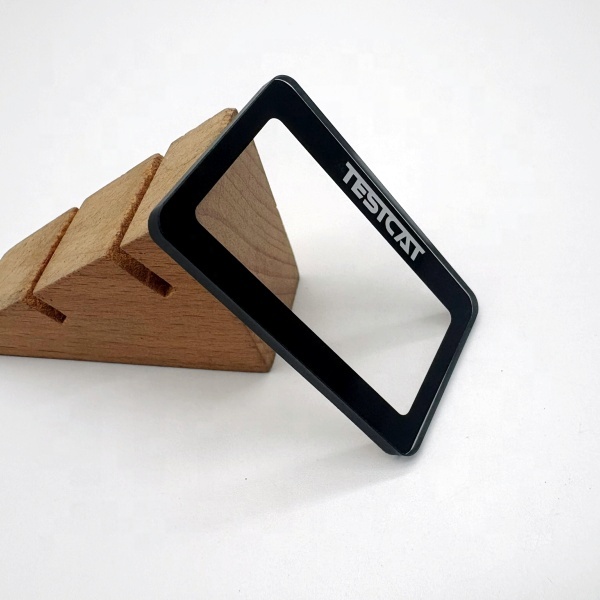
Custom Gorilla Glass Panel Tempered Glass Display Window Silk Screen Printing for LCD Display
Chemically strengthened Gorilla® glass display window with silk-screen printing for LCD protection, scratch resistance and clean optical clarity.
View product
Custom Shape High Transmittance Ultra Clear Tempered Glass Panel With Anti-reflective Coating on Two Sides
Ultra-clear tempered panel with anti-reflective coating on both sides for high-transmission display windows, optical filters and glare-sensitive instruments.
View product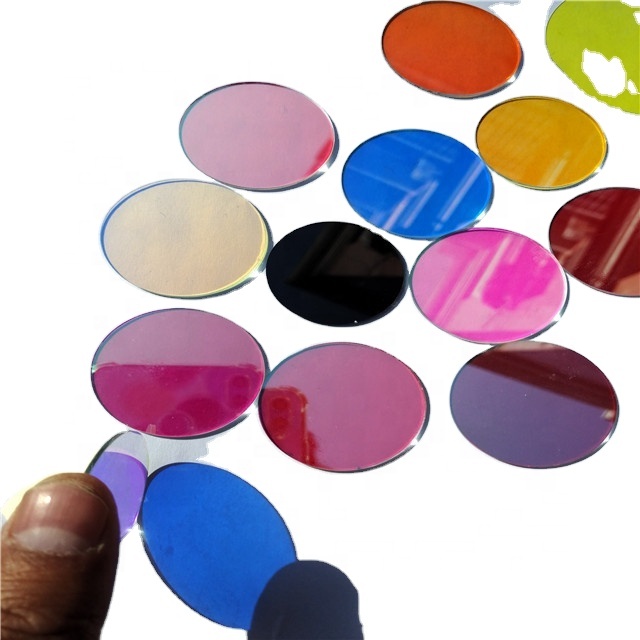
Heat Resistant Borosilicate 3.3 Dichroic Glass Filter
Low-CTE borosilicate substrate with dichroic coating for heat and color management in stage lighting, LED optics and instrument windows.
View product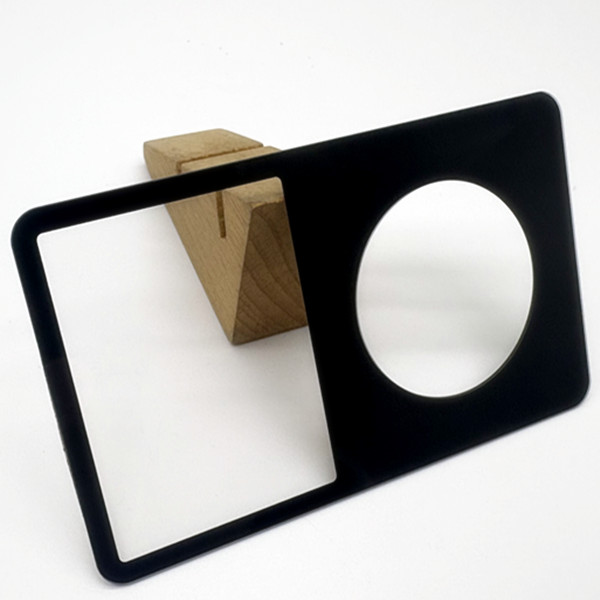
Factory Custom Smart Silkscreen Gorilla Glass Panel Tempered Glass Printing Glass
Factory-printed strengthened cover glass with custom icons, windows and borders for smart-home controls, automotive electronics and consumer devices.
View product
Back Painted Tempered Glass Led Glass Panel Cover Glass
Tempered LED cover glass with back painting for uniform appearance and light control in lighting panels, displays and decorative modules.
View product
Custom Black Border Tempered Glass Panels Silk Screen Print Tempered Glass
Custom black-border printed tempered glass with precise apertures, integrated appearance and scratch resistance for display and control panels.
View productWhy Electronic Glass Procurement Has Become a Strategic Category
Buyers searching for a “top 10 electronic glass manufacturer & wholesaler” are rarely looking for a simple price list. They are trying to shortlist suppliers that can interpret a drawing, control optical and dimensional performance, support samples and deliver export-ready parts without surprises.
Electronic glass is no longer a commodity sheet product. In a modern display, touch panel, lighting fixture, bio-analyzer or automotive HMI, the glass is part of the optical stack, the user interface and the product’s durability story. A 0.1 mm tolerance error, a 1% transmission loss, a mismatched coefficient of thermal expansion, or a print misregistration can create scrap, field returns and delayed launches. That is why application fit and process control matter more than a low unit price.
This white-paper-style guide summarizes the product formats most often requested from Fevry Glass, explains the technical and commercial trends likely to affect 2025–2027 sourcing, and provides a practical scorecard for screening wholesalers. The recommendations are based on Fevry’s experience with tempered glass, AR-coated glass, silk-screen printed Gorilla® glass, borosilicate 3.3, Corning® Eagle XG, glass wafers and optical filter glass for customers in Western Europe, the United States, Japan, South Korea, Taiwan, Hong Kong and Southeast Asia.
A Top 10 Shortlist Starts With Ten Evidence Points
The exact ranking of suppliers will vary by drawing, volume and destination. However, the strongest candidates share measurable controls. Use the following ten points as a weighted scorecard when comparing an electronic glass manufacturer and wholesaler.
Material Traceability
Confirm the base glass and source. Eagle XG, borosilicate 3.3, Gorilla® and ultra-clear soda-lime behave differently in thermal, optical and mechanical stress.
Thickness & Tolerance
A strong supplier should process a practical range, such as 0.15–4 mm, and state achievable outline, hole and edge tolerances before quoting.
Strengthening Fit
Thermal tempering suits thicker panels; chemical strengthening is preferable for thin cover glass. Cutting and drilling must be completed before strengthening.
Optical Coatings
Check AR coating on one or both sides, dichroic coating capability, transmission targets, scratch resistance and inspection method for coating defects.
Print Accuracy
Silk-screen borders, icons, windows and back painting should be quoted with Pantone references, ink thickness expectations and registration requirements.
Edge & Hole Quality
Laser, CNC and ultrasonic machining influence chip risk, edge strength and fit. Ask how holes, notches, slots and chamfers are inspected.
Inspection Data
Dimensional checks, thickness, flatness and visual defect criteria should be agreed before mass production, not discovered during incoming inspection.
Sampling & MOQ
Typical custom cover glass orders may start around 300–500 pieces; some Eagle XG cut parts start at 1,000 pieces, while selected gobo blanks can start from 10 pieces.
Export Packaging
Thin glass demands interleaved, cushioned packing. Confirm carton design, pallet protection, labeling and documentation for the destination market.
Verified Transparency
Review supplier assessment, credit profile, transaction level, trade capacity, ratings and response time where public records are available.
Match the Substrate to the Failure Mode
Do not accept a single generic glass recommendation for every application. Thermal shock, scratch, transmission, chemical resistance and semiconductor cleanliness require different substrates. The table below gives preliminary guidance for engineering and sourcing discussions.
| Material | Thickness Range | CTE (×10⁻⁶/K) | Best For |
|---|---|---|---|
| Ultra-clear soda-lime | 0.5 – 4 mm | ≈ 9.0 | Cover glass, AR panels, printed windows |
| Gorilla® alkali-aluminosilicate | 0.4 – 2 mm | ≈ 7.5 – 8.5 | Scratch-resistant touch and display covers |
| Borosilicate 3.3 | 0.3 – 3.3 mm | 3.3 | Heat-resistant windows, gobo, laboratory glass |
| Corning® Eagle XG | 0.5 – 1.1 mm | ≈ 3.2 | Biochips, wafers, PLC and micro-optics |
| Chemically strengthened thin glass | 0.15 – 2 mm | Base-glass dependent | Ultra-thin protectors, sensor covers |
Values are typical industry figures for preliminary selection. Final specifications should be confirmed against the manufacturer datasheet, your drawing, coating requirement and validation plan.
For display applications, double-sided AR coating can raise transmission toward approximately 98%, reduce glare and improve readability under strong ambient light. For high-temperature lighting, borosilicate 3.3 is often preferred because its expansion coefficient is roughly one third that of soda-lime glass. For biochips, wafers and PLC substrates, alkali-free Eagle XG offers flatness and dimensional stability for micro-patterning, bonding and optical alignment.
Product Development Trends Reshaping Electronic Glass
The next generation of electronic glass products is being shaped by thinner device stacks, higher optical performance, integrated printing and more demanding environmental reliability. These trends should influence both the specification and the supplier selection process.
Thinner, Chemically Strengthened Covers
Ultra-thin glass from 0.15 mm to 2 mm is increasingly used for touch covers, sensor protection and compact displays. Ion-exchange strengthening improves surface strength while preserving flatness and optical clarity.
AR, AG and Low-Reflection Stacks
Anti-reflective coatings, anti-glare treatments and combined optical stacks are becoming standard in outdoor displays, automotive HMI and premium instruments. Suppliers must control coating uniformity, durability and visible defects.
Printed Glass as an Integrated Component
Silk-screen borders, icon windows, black matrix areas and back-painted LED covers reduce assembly parts and improve visual consistency. Pantone matching and print registration become part of the quality specification.
Heat-Resistant Borosilicate Optics
High-power lighting, stage effects and LED systems require glass that tolerates thermal shock. Borosilicate 3.3 and dichroic filters are increasingly specified together for color control and heat management.
Specialty Substrates for Biotech & Semiconductor
Eagle XG glass, glass wafers and optical filter substrates support biochips, analyzers, MEMS packaging and optical communication. Here, traceability and dimensional stability matter as much as visual quality.
Traceable Smart Manufacturing
Inspection data, batch traceability, supplier records and export documentation are becoming part of the buying decision. A modern electronic glass wholesaler should function as a technical partner, not only a trading intermediary.
Future Procurement Trends for Electronic Glass Wholesalers
Procurement teams are moving away from pure piece-price comparison and toward total cost, supply resilience and technical accountability. The following shifts are especially relevant for buyers sourcing custom electronic glass from international suppliers.
Drawing-Based RFQs Replace Catalog Buying
Electronic glass is increasingly specified by 2D drawing, stack-up requirement and application. Buyers want a supplier who can review manufacturability, recommend material and confirm tolerances in one round.
Dual Sourcing and Supply Resilience
Single-source risk is being reduced through qualified second suppliers, buffer stock and clear ramp-up plans. Procurement teams now evaluate response speed and production flexibility alongside price.
Total Landed Cost and Yield
A lower unit price can disappear after coating defects, breakage, remakes and line stoppages are counted. Total landed cost models should include yield, packaging, inspection and delivery reliability.
Earlier Supplier Involvement
Suppliers are being invited into design reviews earlier so that print windows, edge clearance, coating sides and strengthening methods are validated before tooling and launch.
Digital Verification and Auditability
Public supplier assessment, credit records, transaction history, reviews and video introductions help buyers screen overseas manufacturers before committing to samples or tooling.
Sustainability and Material Efficiency
Lower scrap, optimized sheet layout, rework control and safer packaging are becoming part of supplier evaluation. These factors also support cost stability and more predictable delivery.
Why Fevry Glass Belongs on Your Electronic Glass Shortlist
Fevry Glass Co., Ltd. is a specialty glass supplier based in Xinyu, Jiangxi, China. Its product program covers custom tempered glass, anti-reflective coated glass, silk-screen printed glass, borosilicate 3.3, Corning® Eagle XG, glass wafers, optical filters and heat-resistant lighting glass. The company supports display, automotive electronics, smart home, biotech, semiconductor, optical communication, instrument and stage lighting applications.
Material sourcing is part of the advantage. Fevry draws on raw glass from Corning®, AGC and other multinational producers, and works with established Chinese optical-glass makers such as Chengdu Guangming and Xinhuguang. Processing uses laser, ultrasonic, CNC carving, grinding and inspection equipment imported from the USA, Germany and Japan. This combination helps buyers reduce supplier hand-offs: cutting, strengthening, coating, printing and final inspection can be controlled against one drawing and one specification.
- Eagle XG, borosilicate and transparent ceramic glass
- Semiconductor wafers and biochip glass
- PLC substrates and optical V-groove glass
- Film, TV and stage lighting color lenses
- LED filament and optical coating glass
- 0.15 / 0.2 mm ultra-thin protector glass
Quality is superior, service is supreme, reputation is first is the operating principle behind Fevry’s export service. Public supplier records list 10+ years as an Alibaba.com member, ≤4 hours average response time, 100% inquiry response rate, a 5.0/5 buyer rating and service to 7+ export regions.



Processing Capabilities That Reduce Project Risk
A technical glass project rarely succeeds through material alone. The supplier must connect cutting, strengthening, coating, printing and inspection into one controlled flow. Fevry’s capability set is designed around that single-source model.
Laser, CNC and Ultrasonic Machining
Custom outlines, holes, notches and slots can be processed with flat, pencil or chamfered edge options. The cutting route is selected according to thickness, shape complexity and edge strength requirement.
Thermal and Chemical Strengthening
Thermal tempering is used for thicker panels, while ion-exchange chemical strengthening is applied to thin cover glass from 0.15 mm to about 2 mm. All machining is completed before strengthening.
AR, Dichroic and Optical Coatings
Anti-reflective coatings can be applied to one or both sides. Dichroic and filter coatings support lighting, imaging and analytical applications where spectral performance matters.
Silk-Screen Printing and Back Painting
Pantone-matched borders, logos, icon windows and IR-transparent ink areas can be printed on strengthened glass. Back painting supports LED cover panels and decorative display glass.
Dimensional and Optical Inspection
Size, thickness, flatness and visual defects are checked before packing. Inspection criteria should be agreed with the buyer and aligned with the drawing and application.
Export Packing and Documentation
Interleaved, cushioned packing is used for fragile thin glass. Export packing aims to reduce edge chipping, surface scratches and breakage during international transit.
Where Custom Electronic Glass Performs
Fevry’s glass materials and processing capabilities support OEMs and research teams across multiple industries. The application dictates the substrate, thickness, strengthening method, coating and print specification.
Displays and Electronics
LCD protection glass, smart-home panels, automotive dashboard trims, touch-module covers and printed electronic windows with AR or anti-glare treatment.
Stage and LED Lighting
Gobo blanks, dichroic color lenses, LED filament glass and heat-resistant lighting covers where thermal shock and color stability are critical.
Biotech and Life Science
Biochip substrates, analyzer filters and microscopy-grade glass using Eagle XG and other low-expansion substrates with controlled flatness.
Semiconductor
Glass wafers, carrier substrates and packaging glass where dimensional stability, cleanliness and repeatable cutting are important.
Optical Communication
PLC substrate glass and fiber-alignment V-groove glass supporting optical modules, alignment structures and communication components.
Measuring Instruments
Flat, stable worktable glass and optical windows for metrology, inspection devices, analytical instruments and precision equipment.
A Four-Step Path From Drawing to Delivery
For procurement teams, a predictable process is as valuable as a good sample. This four-step workflow keeps engineering and purchasing aligned from the first RFQ.
Share Your Drawing
Send a 2D drawing in DWG, DXF or PDF with dimensions, tolerances, thickness, material, edge finish, hole and notch positions, print colors, AR coating sides, application and annual quantity.
Engineering Review
The supplier confirms manufacturability, recommends substrate and strengthening route, identifies risk points, and provides a quotation with MOQ and sampling plan.
Sample Approval
Samples validate fit, optical performance, color matching and print accuracy before mass production. This stage reduces launch risk and clarifies inspection criteria.
Production and Export Packing
Processing proceeds with in-line dimensional and visual checks. Finished parts are interleaved and cushioned for safe international shipment.
Common Questions From Electronic Glass Buyers
These are the technical and commercial questions engineers and sourcing managers ask most often when comparing electronic glass manufacturers and wholesalers.
Should I choose chemically strengthened or thermally tempered glass?
Thermal tempering is usually best for glass around 3 mm and thicker. For ultra-thin cover glass from 0.15 mm to about 2 mm, chemical strengthening by ion exchange increases surface strength while keeping the sheet flat and optically clean. In both cases, cutting, drilling and edge grinding must be completed before strengthening.
When is borosilicate 3.3 better than soda-lime glass?
Borosilicate 3.3 has a thermal expansion coefficient of about 3.3 × 10⁻⁶/K, roughly one third that of soda-lime glass, so it resists thermal shock far better. It is preferred for lighting covers, heat-resistant windows, gobo blanks, laboratory glass and instrument glass.
Why is Corning® Eagle XG used for biochips, wafers and PLC substrates?
Eagle XG is an alkali-free boro-aluminosilicate glass with low thermal expansion and a fusion-formed surface. The combination delivers flatness and dimensional stability for micro-patterning, bonding and precise optical alignment.
What is the minimum order quantity?
Most custom cover glass and AR glass items start from 300–500 pieces. Some Eagle XG cut parts start from 1,000 pieces, and selected gobo glass blanks can start from 10 pieces. Samples can be arranged to validate fit and optical performance before mass production.
What information do you need to evaluate a custom glass project?
Send a 2D drawing (DWG, DXF or PDF) with outline dimensions and tolerances, thickness, glass material, edge finish, hole and notch positions, strengthening method, print colors with Pantone references, AR coating side or sides, application and annual quantity.
Which markets does Fevry Glass export to?
Fevry Glass serves customers in China and exports to Western Europe, the United States, Japan, South Korea, Taiwan, Hong Kong and Southeast Asia, with export packing designed for fragile thin glass and custom electronic glass components.
Have a Drawing? Get the Current Electronic Glass Catalog
Share your 2D drawing, annual quantity and application. Fevry’s engineers can recommend material, thickness, strengthening, printing and AR coating, then confirm MOQ and sample requirements before production.
Custom tempered glass · AR-coated glass · Silk-screen printed Gorilla® glass · Borosilicate 3.3 · Corning® Eagle XG · Optical filter glass