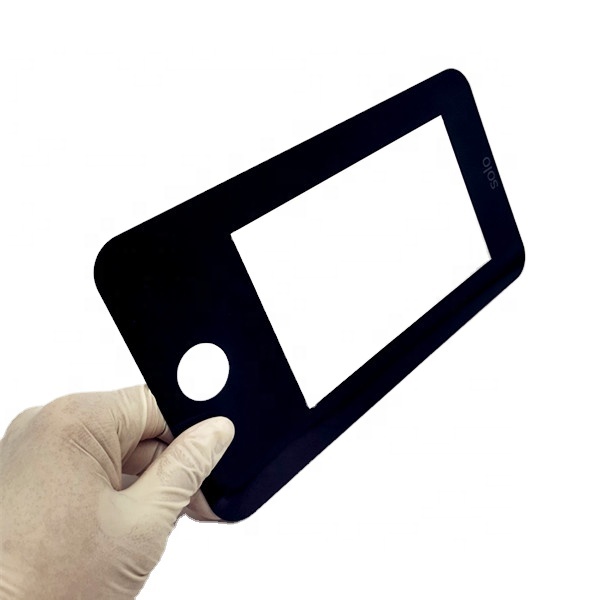
Low-Iron · Tempered
Manufacturer OEM Wholesale Custom Unbreakable Low-Iron Tempered Glass
High-impact cover glass with minimal green tint for appliance, display and instrument front panels.
View specificationsA 2025–2030 sourcing guide for engineering and procurement teams: how to rank suppliers by verifiable capability — raw-material traceability, CTE and thermal-shock data, in-house strengthening, optical coatings, precision printing and inspection — instead of by directory position.
Tempered, anti-reflective, silk-printed, ultra-thin and dichroic glass — held under one quality system, so the substrate, the coating and the print never sit in three different supply chains.
High-impact cover glass with minimal green tint for appliance, display and instrument front panels.
View specifications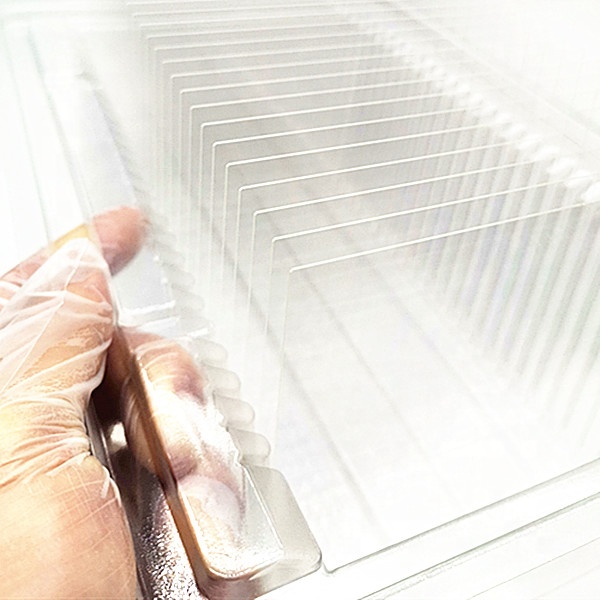
0.15–2 mm ion-exchanged glass that stays flat and optically clean while raising surface strength.
View specifications
Glare-suppressed cover glass for touch panels, optical instruments and outdoor displays.
View specifications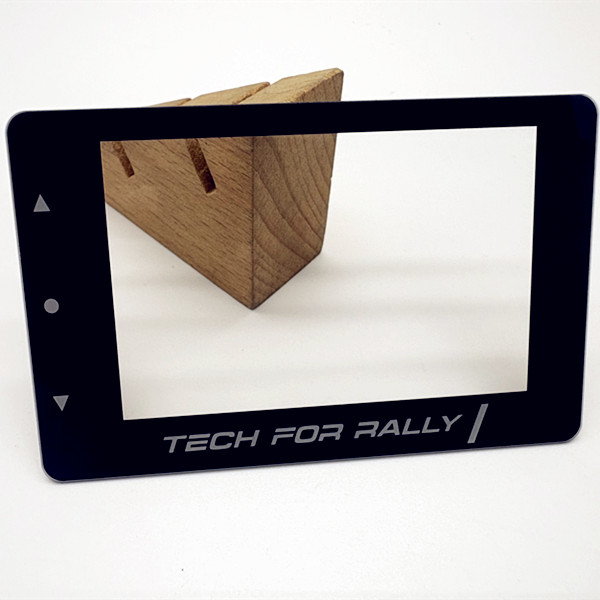
Three processes on one part: strengthening, Pantone-matched printing and anti-reflective coating.
View specifications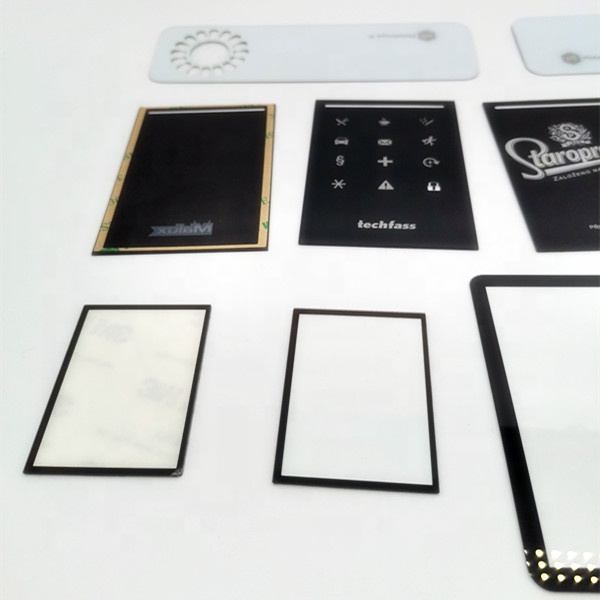
Scratch-resistant touch cover glass with printed borders, icon windows and IR-transparent ink zones.
View specifications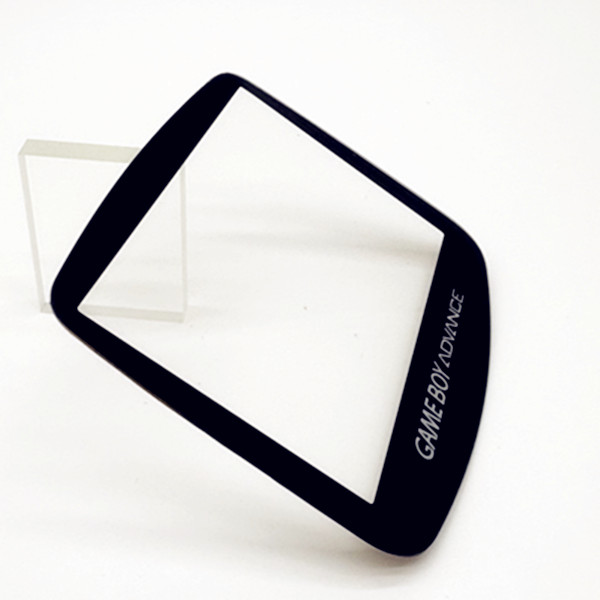
Optically graded cover glass engineered for high-brightness OLED and premium display assemblies.
View specifications
Heat-resistant borosilicate blanks and dichroic coatings for stage, studio and architectural lighting.
View specifications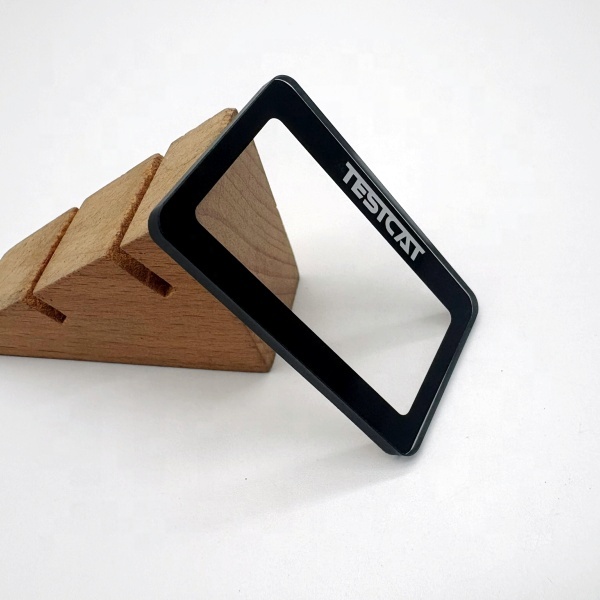
Printed display windows built to drawing tolerances for industrial, medical and consumer LCD modules.
View specificationsBorosilicate 3.3 stopped being a laboratory consumable the moment LED lighting, bio-diagnostics and semiconductor packaging started specifying it in million-piece programs.
Twenty years ago, borosilicate sheet was bought by the sheet. Today it is bought against a drawing — with a target CTE, a thermal-shock cycle count, a coating adhesion test and an annual forecast attached. That shift changed what a credible supplier looks like.
The physics behind the demand is simple. Borosilicate 3.3 expands by about 3.3 × 10⁻⁶/K, roughly a third of what soda-lime glass does. In any assembly that sees repeated heating and cooling — a lamp cover, a projection gobo, an analyzer window, a bonded wafer carrier — that single coefficient decides whether the part survives ten years or cracks in six months. Everything else in the specification is downstream of that number.
The commercial consequence is that buyers no longer ask “do you have 1 mm borosilicate in stock?” They ask which furnace the raw sheet came from, whether thermal-shock data can be placed in the tender file, whether the edge is laser-cut or CNC-ground and what the chip specification is, and whether the AR or dichroic coating carries an adhesion and humidity record. Search engines will return hundreds of pages claiming to be a “borosilicate glass sheet supplier”. What they cannot do is verify any of it.
This guide converts that gap into a usable screening tool. The ten criteria below are the ones that separate a genuine manufacturer from a relisting wholesaler, and they are the criteria referenced throughout the material benchmarks, the 2025–2030 trend analysis, the company capability review and the buyer FAQ that follow. Technical baselines are drawn from the processing capability of Fevry Glass Co., Ltd., a specialty glass manufacturer based in Xinyu, Jiangxi, China.
Any ranking that is not backed by these ten checkpoints is a directory position, not a capability assessment. Use the list directly in an RFQ scorecard.
A top-tier manufacturer can name the furnace: Corning®, AGC, Schott, Chengdu Guangming or Xinhuguang — and can trace a batch to a delivery note.
CTE, thermal-shock cycling, strain point and annealing data supplied at drawing-review stage, not after the purchase order.
Laser cutting, CNC carving, ultrasonic drilling and chamfering all performed internally, with a written chip and micro-crack standard.
Thermal tempering for thicker panels, ion exchange for 0.15–2 mm. A real manufacturer knows where the boundary sits and says so.
AR, dichroic and optical filter coatings produced in-house with adhesion, abrasion and humidity test reports attached to each lot.
Pantone colour matching, registration accuracy and ink adhesion verified by cross-hatch testing rather than by eye.
CMM measurement, flatness and TTV control, transmission checks and a written cosmetic acceptance standard per application.
The same supplier can run a ten-piece sample and then scale to six-figure monthly volume without changing plant or process.
Interleaving paper, pearl-wool dividers, honeycomb crates — plus a documented breakage rate by destination, not a promise.
Supplier assessment, credit profile, trade history and buyer rating that can be checked independently and match the sales pitch.
Most tenders fail at the comparison stage, because the substrate decision was made on unit cost rather than on the figure that drives field failure rates.
Typical industry values, provided for preliminary material selection only. Final specifications must be confirmed against the glass manufacturer’s datasheet and the approved drawing before tooling is released.
Three shifts are changing how borosilicate and precision glass sheet is bought, and three are changing what the sheet itself has to do.
Lighting, automotive and outdoor display programs are moving from soda-lime to borosilicate 3.3 as power density rises. What was an upgrade line item in 2020 is a default in 2025 for any part exposed to repeated thermal cycling.
Anti-reflective coating is shifting from a premium option to a specification default on instrument windows and display covers. Coatings are now evaluated on adhesion, abrasion resistance and humidity ageing, not only on reflectance.
Buyers are qualifying a second manufacturing base as risk cover, but demanding identical inspection records from both. Suppliers that can only document one site lose the second order, not the first.
0.15–1.1 mm chemically strengthened glass is replacing thicker thermally tempered parts as devices shrink. The processing constraint is that every cut, hole and edge must be finished before strengthening — a sequencing discipline many suppliers do not have.
Consolidating strengthening, AR coating and silk printing into one qualified flow removes two hand-offs and two chances to damage an already-finished surface. Procurement now scores “how many vendors touch this part” as a risk metric.
Regulated industries now request lot-level traceability, coating declarations and substance documentation alongside the certificate of conformity. Suppliers with paper-only record keeping will be filtered out at audit stage.
Fevry Glass Co., Ltd. is a specialty glass manufacturer in Xinyu, Jiangxi, China, supplying custom tempered, AR-coated, silk-printed, borosilicate 3.3 and Corning® Eagle XG glass processed to customer drawings for optical, biotech, semiconductor, lighting and electronics OEMs.
Raw sheet is sourced from Corning®, AGC and other multinational producers, with close cooperation with established Chinese optical-glass makers such as Chengdu Guangming and Xinhuguang. Every project starts from material that can be traced back to a furnace batch.
Laser cutting, ultrasonic machining, CNC carving, grinding and inspection equipment imported from the USA, Germany and Japan handles the full 0.15–4 mm thickness envelope, from ultra-thin protector glass to structural panels.
Cutting, edge finishing, thermal or chemical strengthening, AR and dichroic coating, silk-screen printing and final inspection all run under a single quality system — fewer hand-offs, tighter tolerance control and one supplier accountable for the finished part.
Average quotation response within four hours and a 100% inquiry response rate. Quotes come back with manufacturability comments — which tolerances are achievable, which edge profile suits the application — not just a price line.
Beyond customers in China, regular shipments go to Western Europe, the United States, Japan, South Korea, Taiwan, Hong Kong and Southeast Asia, with packaging engineered for long-haul transport of fragile thin glass.
More than ten years as an Alibaba.com member, a 5.0 / 5 buyer rating, an onsite-checked supplier assessment, a public credit profile and visible trade history — records a buyer can audit before committing to a purchase order.
Six application families account for most custom borosilicate, AR-coated and printed glass demand — each with its own failure mode and its own acceptance criteria.
LCD protection glass, smart-home control panels, automotive dashboard trim and OLED cover windows.
Gobo blanks, dichroic colour lenses, LED filament glass and heat-resistant lamp covers.
Biochip substrates, biological analyzer filters and microscopy-grade borosilicate glass.
Glass wafers, carrier substrates and packaging glass requiring low TTV and dimensional stability.
PLC substrate glass and fibre-alignment V-groove glass for optical modules.
Flat, thermally stable worktable glass for metrology, inspection and analytical equipment.
Procurement teams value predictability more than promises. This is the sequence every custom borosilicate or coated glass part follows.
2D DWG, DXF or PDF with outline dimensions, tolerances, thickness, edge finish, hole and notch positions, print colours and annual volume.
Manufacturability is confirmed and the substrate, thickness, strengthening route and coating stack are recommended — with alternatives where the drawing is over-specified.
Small-batch samples validate fit, print registration, colour matching and optical performance before any tooling or volume commitment.
Thermal tempering or ion exchange according to thickness, followed by single or double-sided AR, dichroic or filter coating.
Silk-screen printing and curing, then dimensional, flatness and cosmetic inspection against the agreed acceptance standard.
Interleaved, cushioned and honeycomb-crated packing engineered for the destination, with export documentation prepared in parallel.
The questions engineers and sourcing managers raise most often during supplier qualification.
Share your borosilicate, tempered or AR-coated glass requirements — thickness, tolerance, coating, print colours and annual volume — and our engineers will confirm manufacturability, recommend the substrate and return a quotation. Typical response time is under four hours.