OEM/ODM Borosilicate Glass Disc Factories & Supplier
Engineering-grade glass discs cut, ground, polished, coated, printed and inspected to your drawing — with one accountable partner for prototypes and repeat production.
8 Precision Glass Formats Backed by Our Borosilicate Disc Processing Platform
These eight product routes are not interchangeable catalogue parts. They show the shaping, strengthening, printing, coating and inspection disciplines used when OEM/ODM buyers source borosilicate glass discs for optical, lighting, medical, display and laboratory programmes.
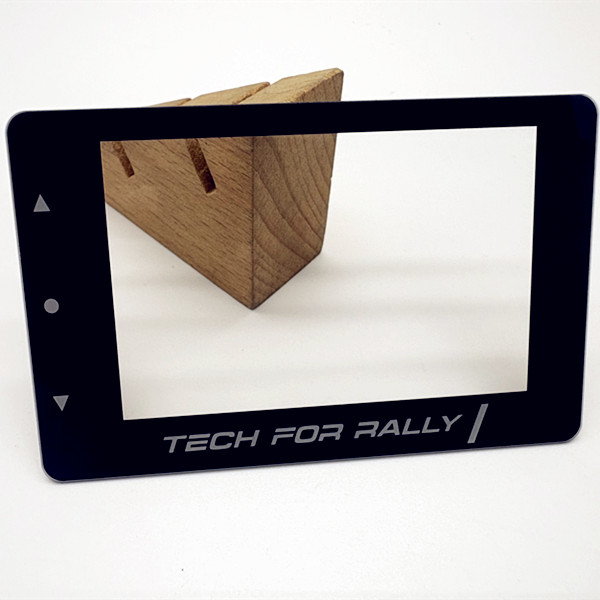
Custom Silk-Printed AR-Coated Gorilla® Glass LCD Cover
Printed display glass with anti-reflective coating; suited to high-clarity control panels and protected touch interfaces.
View product →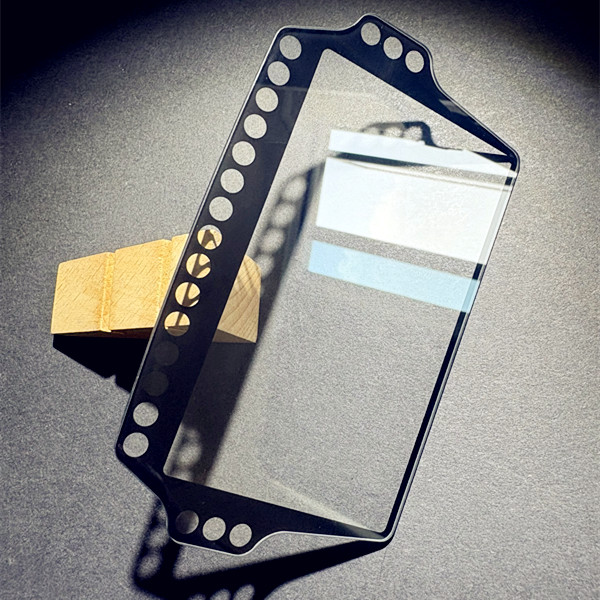
Factory Custom Silk-Printed Gorilla® Glass Screen Protector
Strengthened cover glass with custom borders and logos; shares edge-grinding and print controls with disc production.
View product →
0.3–2 mm Dichroic Glass Mirror for Gobos
Heat-aware dichroic mirror for gobo and stage-lighting systems; compatible with borosilicate 3.3 gobo blanks.
View product →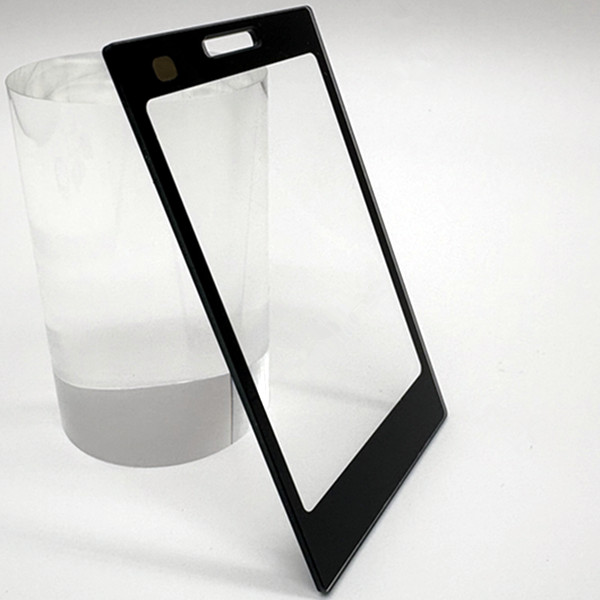
Black Silk-Screen Touch Display Glass Panel
Black-printed electronic glass panel for touch displays and UI windows, with controlled print registration.
View product →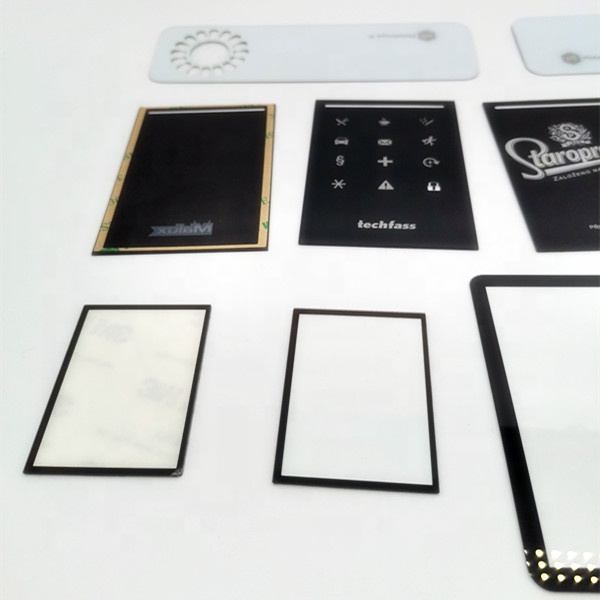
Corning® Gorilla® Tempered Glass with Silk-Screen Printing
Tempered touch-screen glass with precise print registration for consumer and industrial display programmes.
View product →
0.3 / 0.5 / 0.7 mm Heat-Resistant Gobo Glass Blanks
Thin, heat-resistant blanks for projection and stage lighting; an adjacent route to borosilicate disc supply.
View product →
Ultra-Thin Chemically Strengthened Clear Glass Sheet
Ion-exchanged thin glass for lightweight sensor covers, protected windows and compact optical assemblies.
View product →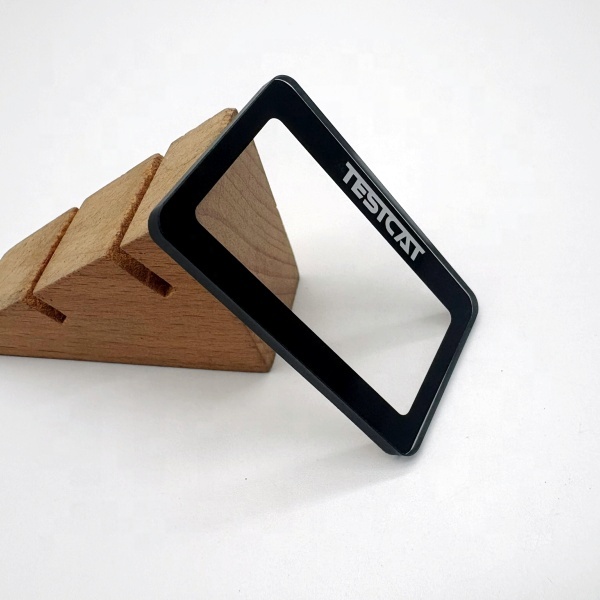
Gorilla® Glass LCD Display Window with Silk-Screen Print
Display window glass with custom graphics, ink windows and strengthened surfaces for long-life equipment.
View product →What Separates a Specification-Grade Borosilicate Disc from a Cut Circle?
A disc is a geometry; a specification-grade disc is a controlled combination of substrate, thermal history, edge integrity, flatness, surface quality and packaging.
A borosilicate glass disc sounds simple until it enters a real assembly. A Ø25 mm window for an optical sensor, a Ø120 mm cover for a high-power lamp and a thin disc for a microfluidic device can all be round, yet they demand very different tolerances, edge finishes and inspection records. The material may be the same; the process window is not.
Borosilicate 3.3 is chosen for its low coefficient of thermal expansion, typically around 3.3 × 10⁻⁶/K. That low expansion helps resist thermal shock and dimensional movement, making it a practical substrate for heat-resistant windows, lighting covers, analytical equipment, sensor protection and laboratory components. It is also chemically durable in many aqueous and acidic environments, although it is not a substitute for fused silica in deep-UV or extremely high-temperature optical paths.
For OEM buyers, the hidden cost sits in the details: a small edge chip can become a crack initiator; an unannealed disc can distort after coating; a surface scratch can survive cleaning and fail final assembly; and a vague drawing can force the supplier to assume a commercial default that is not fit for the application. A credible factory should ask about the end use before quoting the lowest unit price.
| Property | Typical Borosilicate 3.3 Disc | Procurement Implication |
|---|---|---|
| CTE | ≈3.3 × 10⁻⁶/K | Lower thermal movement than soda-lime glass; confirm the actual glass grade and test direction. |
| Thermal shock | Good resistance; thickness and edge quality matter | Specify annealing, edge profile and maximum service differential for safety-critical parts. |
| Chemical durability | Typically hydrolytic class 1 | Good for many lab and industrial uses; deep-UV or aggressive chemistry may require fused silica. |
| Visible transmission | High; AR coating can further reduce reflection | Define the transmission band, coating side and acceptance method before sampling. |
| Density | ≈2.23 g/cm³ | Useful for lightweight window design; packaging and shipping weight still require review. |
| Thickness range | Commonly 0.2–6 mm, project-dependent | Thin discs need flatness and handling controls; thick discs can increase weight and thermal mass. |
| Fabrication | Cutting, CNC grinding, lapping, polishing, annealing | Ask which operations are in-house and how final dimensions are measured. |
Values are typical reference figures for preliminary discussion, not a final material datasheet. Final specifications must be confirmed against the selected glass grade and your drawing.
Six Qualities That Separate a Catalogue Supplier from an Engineering Partner
For a borosilicate glass disc project, the quotation is only one data point. The factory’s ability to read your drawing, control the process and prove the result is the real risk control.
Drawing control and GD&T
Look for clear review of diameter, thickness, flatness, parallelism, hole positions and datum logic. A supplier who studies the drawing before quoting is less likely to discover a manufacturing conflict after tooling.
Edge integrity and micro-crack control
For round discs, the edge is a major stress boundary. Grinding, polishing and inspection should be defined, with an agreed chip allowance and a method for detecting edge defects.
Thermal history and strengthening
Annealing, thermal tempering and chemical strengthening are not interchangeable. Confirm whether borosilicate 3.3 is supplied annealed, and specify strengthening only after the material and thickness are agreed.
Optical coating and print integration
AR coatings, dichroic layers, black matrix printing and IR windows can add value — or create adhesion and registration failures. Define coating side, transmission target, ink reference and cosmetic limits.
Metrology and traceability
A credible supplier can connect a shipment to material lot, process route, inspection results and packing records. Ask for first-article data, sample photos and the measurement tool used for key features.
Clean packaging and export continuity
Thin glass discs are vulnerable at corners and edges. Interleaving, vacuum barriers, edge protection and double-wall cartons are not administrative details; they protect your yield after the factory gate.
Example weighted scorecard for a borosilicate disc RFQ
Use this as a starting point; adjust the weights to reflect your regulatory, optical and volume risks.
Which Borosilicate Glass Disc Format Fits Your Application?
Start with the environment — temperature, light path, chemistry, cleaning method and mechanical load — then select thickness, diameter, finish and coating.
Optical windows and sensor covers
Thin borosilicate discs with controlled flatness, clean surfaces and optional AR coating for cameras, LiDAR windows, inspection systems and analytical optics.
Laboratory and analytical equipment
Discs for sight windows, sample interfaces and instrument covers where chemical durability, thermal stability and clean packaging matter.
Lighting, projection and gobo systems
Heat-resistant gobo blanks and lighting windows in borosilicate 3.3; specify transmission, heat load and edge finish for high-power fixtures.
Medical and microfluidic devices
Precision discs for covers, inspection windows and fluidic interfaces; discuss surface cleanliness, bonding method and autofluorescence requirements early.
Industrial displays and UI glass
Printed, coated or shaped discs for control panels where the glass is both a protective window and part of the product identity.
Semiconductor, photonics and laser systems
Low-flatness-error discs and adjacent glass wafer formats for optical alignment, packaging and precision mechanical spacing.
Borosilicate Glass Disc Procurement Trends for 2025–2030
Buyers are moving away from anonymous commodity sourcing. The stronger programmes are built around qualified suppliers, documented material and production data that survives an audit.
Qualified dual sourcing
Procurement teams increasingly qualify two routes for the same disc family: one low-cost volume source and one technical partner for prototypes, special coatings and supply-risk recovery. The key is a material passport, not merely a second price list.
Small batches with production discipline
High-mix programmes need small initial batches without losing process control. Suppliers that can move from sample to serial production with the same drawing, measurement method and traceability will win more OEM work.
Co-engineered surfaces
AR coating, dichroic layers, silk-screen printing and edge treatment are being specified as one integrated component. Buyers want fewer hand-offs and one accountable route for optical and cosmetic performance.
Total landed cost and resilience
Unit price alone is no longer enough. Packaging yield, breakage rate, response time, documentation quality and shipping reliability are being folded into total landed cost — especially for fragile thin discs.
Where Borosilicate Glass Disc Products Are Moving Next
Development is not only about new glass grades. It is about thinner and larger formats, tighter flatness, functional surfaces and faster integration into the customer’s assembly.
Thinner, larger, flatter
Demand is rising for larger apertures with tighter flatness and parallelism. As diameter increases and thickness decreases, edge quality, annealing and handling become decisive.
Functional optical coatings
AR, anti-glare, IR-cut and dichroic coatings are moving from optional upgrades to design requirements. Coating durability, side control and transmission verification must be agreed before mass production.
Chemically strengthened thin glass
Where thin soda-lime or aluminosilicate glass is used for display and sensor protection, ion-exchange strengthening is becoming a baseline expectation. For borosilicate discs, the correct strengthening route must be verified by material and thickness.
Laser features and microstructures
Laser cutting, marking and micro-patterning support alignment features, fluidic interfaces and serialised traceability. These features reward suppliers who can combine glass processing with metrology.
Why Fevry Glass Is a Practical OEM/ODM Partner for Borosilicate Disc Programmes
Fevry Glass Co., Ltd. is a specialty glass supplier based in Xinyu, Jiangxi, China, with hands-on experience across optical, biological, semiconductor, communications, lighting and electronics projects.



We source raw glass from Corning, AGC and established Chinese optical-glass manufacturers such as Chengdu Guangming and Xinhuguang, so projects begin with traceable and consistent material. Our technicians process it on laser, ultrasonic, CNC carving, grinding and inspection equipment imported from the USA, Germany and Japan.
Our work covers Eagle XG, borosilicate 3.3, transparent ceramic glass, semiconductor wafers, biochip glass, PLC substrates, optical V-groove glass, film and stage lighting lenses, LED filament glass and 0.15/0.2 mm ultra-thin protector glass. That breadth helps when a disc programme needs a different substrate, coating or edge finish than the first concept suggested.
Our guiding principle is “Quality is superior, service is supreme, reputation is first”; our motto is “Your success, our glory”. For buyers, that means we treat a sample request as engineering work, not a price-list transaction.
- 10+ years as an Alibaba.com member; ≤4 hours average response; 100% inquiry response rate
- 5.0/5 buyer rating; export experience across Western Europe, the USA, Japan, South Korea, Taiwan, Hong Kong and Southeast Asia
- One-stop cutting, strengthening, coating, silk-screen printing and inspection
- Traceable material sources and export-ready packing for fragile thin glass
- Engineering review against DWG, DXF or PDF drawings
- Sample validation before mass production
Material-first engineering
We help match borosilicate 3.3, Eagle XG, Gorilla® glass or another substrate to the thermal, optical and chemical demands of the application.
In-house shaping and finishing
Laser, ultrasonic, CNC carving, grinding and polishing allow complex outlines, holes, notches and edge profiles to be produced to drawing.
Strengthening, coating and printing
Thermal and chemical strengthening, AR and dichroic coatings, silk-screen printing and back painting can be combined in one production route.
Inspection before shipment
Dimensional and visual checks cover size, thickness, flatness, coating appearance and print quality, with evidence available for review.
Low-friction sample process
Samples can validate fit, colour matching and optical performance before a larger order is released, reducing the risk of an expensive mismatch.
Export discipline
Interleaved, cushioned packing and export documentation are planned around the fragility of thin discs, not treated as an afterthought.
From Drawing to Delivered Discs: a Four-Stage Route
A clear sequence protects both schedule and performance, especially when the part combines a round substrate with printing, coating or strengthening.
Share the drawing and use case
Send a 2D drawing, material, thickness, diameter, tolerances, edge finish, coating side, print colours, application and annual volume.
Engineering review and quotation
We check manufacturability, propose the substrate and process route, flag risk areas and quote against a defined specification.
Sample and first-article validation
Samples and inspection data validate fit, optical appearance, print registration and edge quality before mass production.
Production, inspection and export packing
Production follows the approved drawing and sample; final inspection and protective packing prepare the discs for international shipping.
Borosilicate Glass Disc Procurement FAQ
Practical answers for engineers and sourcing managers evaluating borosilicate glass disc factories and suppliers.
Should I specify borosilicate 3.3, soda-lime or fused silica?
Borosilicate 3.3 is usually the practical choice for thermal-shock resistance, chemical durability and visible-light transmission at a moderate cost. Fused silica is preferred for deep-UV transmission, very high service temperature or extremely low thermal expansion. Soda-lime glass may be adequate for cost-sensitive protective windows where heat and chemical exposure are limited. The final choice should be confirmed against the actual environment, cleaning process and optical requirement.
What drawing details are needed for an accurate quotation?
Send a 2D drawing in DWG, DXF or PDF with diameter, thickness, tolerance, flatness, parallelism, edge profile, hole and notch positions, surface quality, coating side, print colours, application, annual quantity and packaging expectations. If the drawing is incomplete, we can recommend defaults — but the approved drawing should still state the acceptance criteria.
What diameters and tolerances can be quoted?
Typical disc work covers diameters from small sensor windows to larger lighting and instrument covers, with thickness ranging from thin formats to several millimetres. Exact capability depends on material, thickness, edge finish and flatness. Tight tolerances are possible after engineering review, but they should be driven by function, not added automatically, because unnecessary precision raises cost and yield risk.
What is the minimum order quantity?
MOQ is project-dependent. Most custom cover glass and AR glass items start from 300–500 pieces, some Eagle XG cut parts from 1,000 pieces, and selected gobo glass blanks from 10 pieces. For a borosilicate disc programme, the quantity should be evaluated together with diameter, thickness, coating, printing and acceptable yield.
How do you control edge chips and micro-cracks?
Edge integrity is controlled through the agreed edge profile, grinding and polishing route, handling procedure and final inspection. The drawing should define the allowable chip size and inspection method. For thin discs or safety-critical parts, a polished edge and protective interleaving are often more valuable than a lower unit price.
What lead times should a buyer expect?
Samples are commonly arranged in around 7–15 working days after drawing approval, with mass production typically around 20–35 working days depending on material, coating, printing, quantity and factory schedule. Your actual lead time should be confirmed in the quotation and updated if the specification changes.
Do you export, and how are fragile discs packed?
Fevry Glass serves customers in China and exports to Western Europe, the United States, Japan, South Korea, Taiwan, Hong Kong and Southeast Asia. Discs can be supplied with interleaving, edge protection, moisture barriers and double-wall cartons. Packaging is agreed according to size, thickness, surface finish and shipping method.
Send Your Borosilicate Disc Drawing for a Technical Review
Share your diameter, thickness, tolerance, edge finish, coating or print requirement and annual volume. Our engineering team will review manufacturability and recommend a practical production route.