8 Custom OEM Ultra Clear Glass Products for Displays, Lighting and Instruments
These eight product families are practical starting points for buyers who need repeatable optics, clean edges, and a qualified path from sample to production. Each item can be adapted by thickness, outline, edge profile, print color, coating side, and export packaging specification.
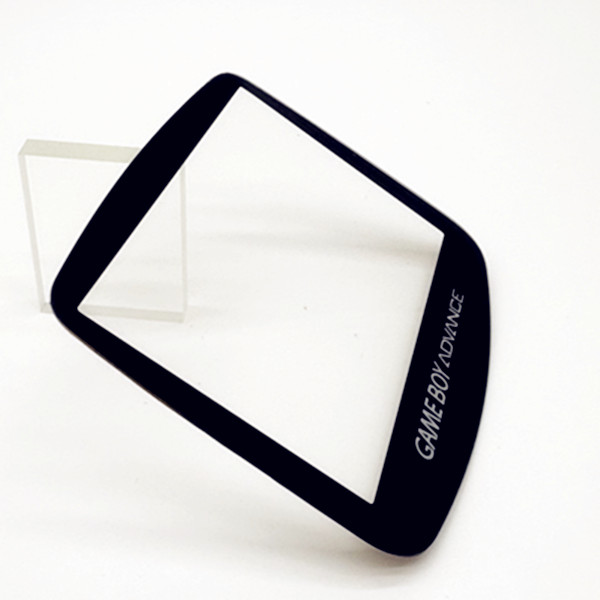
Custom Premium Gorilla Tempered Silk Screen Printed Glass Touch Screen Printed Glass Panels Cover Glass for OLED Screen
A premium Gorilla-type tempered cover with precise silk-screen printing for OLED windows. Ink density, window alignment, and edge quality are checked against the drawing before packing.

0.5mm 0.7mm 1mm 2mm 3mm Thickness China Suppliers Good Price Oem Wholesale Premium Tempered Printing Custom Gorilla Glass Screen
A wholesale-friendly thickness range for buyers comparing 0.5, 0.7, 1, 2 and 3 mm options. The right choice depends on impact risk, weight targets, and whether the part will be chemically strengthened or thermally tempered.
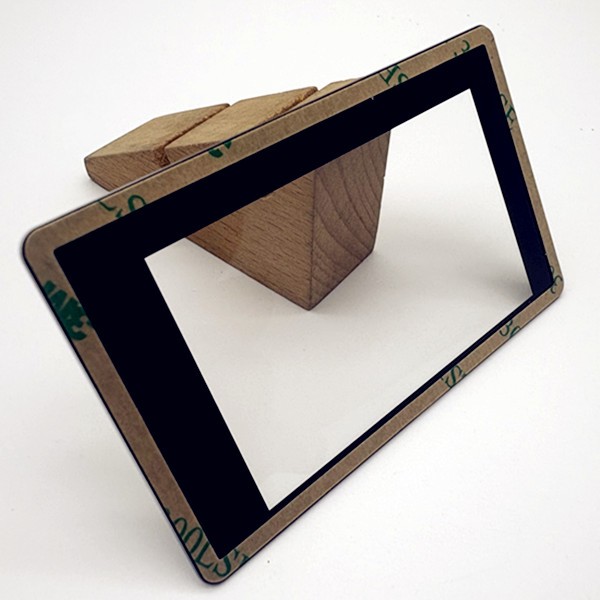
Custom Tempered Glass Dashboard Trim Panel Flat Electronic Glass Screen Protector
Flat dashboard trim glass with a clean electronic display window. Designed for automotive HMI and appliance panels where reflection control, print opacity, and dimensional fit matter.
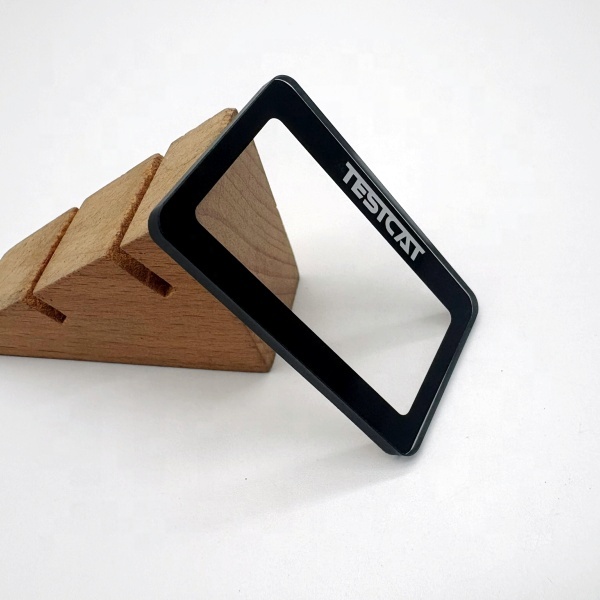
Custom Gorilla Glass Panel Tempered Glass Display Window Silk Screen Printing for LCD Display
A display window panel combining tempered glass, silk-screen printing, and optional AR treatment. Suitable for LCD protection where the visible print boundary and transmitted color must stay consistent.
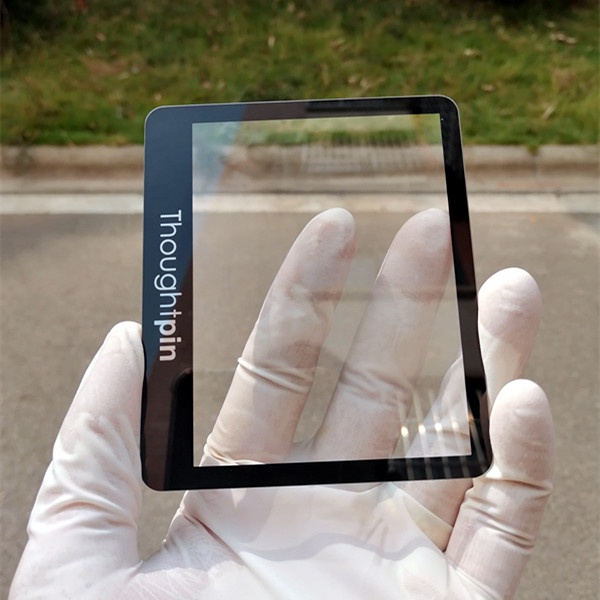
1.5mm 2mm Tempered Glass Thickness Touch Switch Glass Plate
1.5 mm and 2 mm tempered touch switch plates for appliances, controls, and interface panels. Edge grinding and print windows can be specified to fit the target housing.
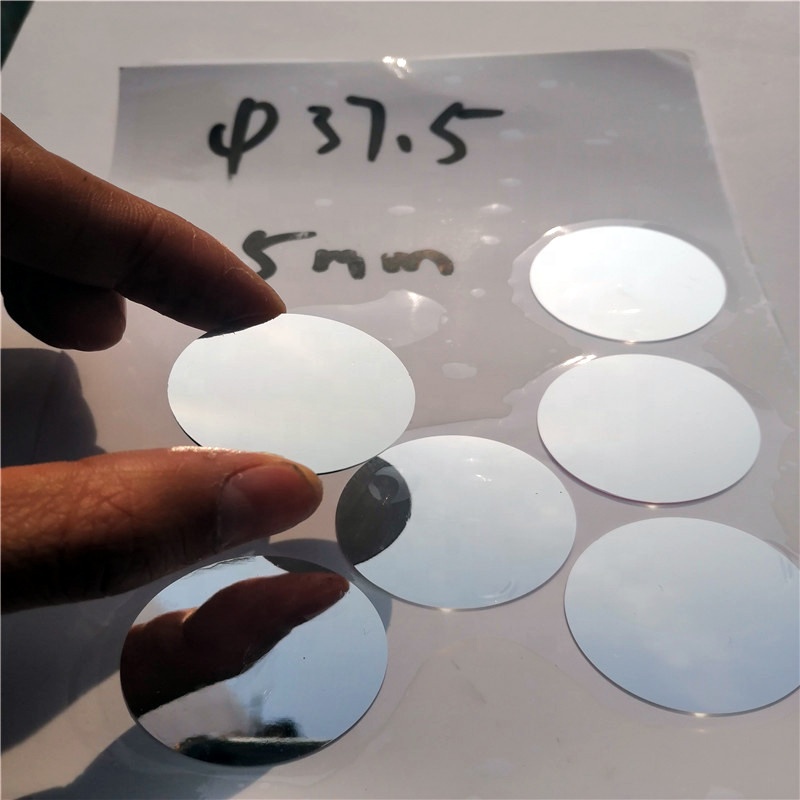
OEM Custom Heat Resistant Gobo Glass Lens
Heat-resistant gobo glass lens for stage and studio lighting. Borosilicate options improve thermal shock tolerance in high-power fixtures where color stability and alignment are critical.
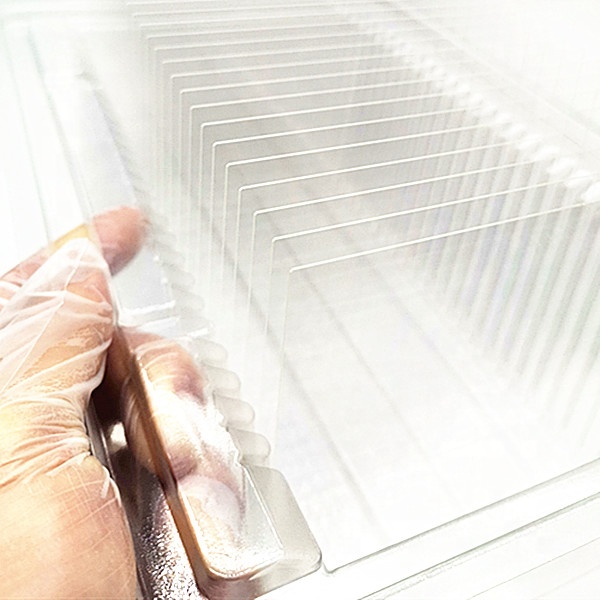
Custom Chemically ultra Thin Clear Transparent Tempered Glass Sheet
Chemically strengthened ultra-thin clear glass sheet for protectors, sensor covers, and compact optical assemblies. Thickness, flatness, and edge condition are reviewed before strengthening.

Factory Customization Dichroic Glass Gobo Glass
Factory customization for dichroic glass gobos and color effects. Coating design, size, and orientation should be confirmed with a sample under the intended light source.
Commercial Signals from a Working Export Supplier
Public supplier data is useful, but it should never replace sample validation and a documented quality agreement. These signals show how we operate; the next step is always to test the part in your product.
Why Ultra Clear Glass Is a Performance Material, Not a Commodity
Ultra clear glass is often described by color: low iron, neutral edge, high transmission. In custom OEM work, however, the real question is whether the finished part keeps the same optical, mechanical, and cosmetic performance after cutting, strengthening, printing, coating, cleaning, and shipping.
For that reason, a qualified supplier should be evaluated on process control as much as on raw material. Two quotes may both say “1 mm ultra clear glass,” yet they may describe very different outcomes. One may use a low-iron soda-lime substrate with thermal tempering; another may use chemically strengthened alkali-aluminosilicate glass. Optical clarity may look similar in a photograph, but impact behavior, edge risk, weight, flatness, and coating compatibility can diverge sharply.
At Fevry Glass, the engineering conversation starts with the application. A touch panel in a smart-home controller may need anti-reflective coating on one side, a black print border with a toleranced icon window, and chemically strengthened edges. An automotive dashboard trim may require a flat surface, controlled warpage, high print opacity, and robust packing. A stage-lighting gobo may prioritize heat resistance and dichroic coating behavior. The substrate and process sequence follow from these requirements, not the other way around.
High-value clarification: ask for the process route, not only the material name. A useful RFQ response explains substrate, thickness, cutting method, edge profile, strengthening stage, print sequence, coating side, inspection criteria, and packaging. That information is the difference between a catalog price and a manufacturable part.
What buyers are really purchasing
They are purchasing an engineered stack: optical transmission, haze control, color neutrality, dimensional tolerance, edge strength, coating adhesion, print registration, and protection during transport. A supplier that understands the stack can recommend the right balance between cost and risk. A supplier that only quotes a sheet size will leave the hardest decisions to the buyer.
This is especially important for thin glass. A 0.15 mm to 2 mm chemically strengthened sheet can be exceptionally strong in the intended direction, but it is still vulnerable to poor handling, sharp edge contact, and unsuitable packaging. The process route and packing method are part of the product, not an afterthought.
E-E-A-T in practice
Experience means we have seen where projects fail. Expertise means we can explain the trade-offs. Authority comes from traceable materials and repeatable records. Trust comes from repeat orders, buyer ratings, and clear communication when a drawing needs refinement. That is the standard we apply to every custom OEM ultra clear glass inquiry.
Specifications That Drive Yield, Durability, and User Experience
Buyers should define five dimensions early: substrate, thickness, strengthening, coating, and print. Add edge profile, flatness, visual acceptance criteria, and packaging. Changes late in the program usually cost more than a careful sample round.
| Material route | Typical thickness | CTE reference | Optical / mechanical notes | Best-fit applications |
|---|---|---|---|---|
| Ultra-clear soda-lime | 0.5–4 mm | ≈ 9.0 × 10⁻⁶/K | High transmission, economical, good for printed cover glass and AR panels | Display windows, appliance panels, printed control glass |
| Alkali-aluminosilicate / Gorilla-type | 0.4–2 mm | ≈ 7.5–8.5 × 10⁻⁶/K | High scratch resistance; suited to chemical strengthening | Touch covers, portable devices, durable display glass |
| Borosilicate 3.3 | 0.3–3.3 mm | 3.3 × 10⁻⁶/K | Strong thermal-shock resistance and chemical durability | Lighting covers, lab glass, gobo blanks, heat-resistant windows |
| Corning® Eagle XG | 0.5–1.1 mm | ≈ 3.2 × 10⁻⁶/K | Alkali-free boro-aluminosilicate with excellent flatness | Biochips, analyzer filters, wafers, PLC substrates |
| Chemically strengthened thin glass | 0.15–2 mm | Base-glass dependent | Thin, strong, and lightweight; machining must precede ion exchange | Ultra-thin protectors, sensor covers, compact optics |
Values are typical industry figures for preliminary selection. Final specifications are confirmed against the manufacturer datasheet and your drawing.
2025–2030 Procurement Trends: What OEM Buyers Should Prepare For
Procurement is shifting from catalog buying to engineering-led supply. The winning RFQ is no longer the one with the lowest sheet price; it is the one that reduces total risk from drawing to assembly line.
Engineering-led sourcing
RFQs now include stack-up drawings, optical targets, and assembly constraints. Suppliers are expected to return design-for-manufacturing feedback, not only a price.
Tighter cosmetic limits
Consumers notice reflections, color shift, print edges, and tiny scratches. Buyers should approve limit samples and define inspection lighting before mass production.
Traceability and documentation
Material certificates, batch records, coating runs, ink declarations, and packing records are becoming part of supplier qualification for regulated and brand-sensitive products.
Resilience and smaller buffers
Dual-source planning, flexible MOQs, faster sampling, and better forecasting help buyers protect launches without carrying excessive fragile inventory.
Another trend is the total landed cost model. Thin glass is lightweight, but it is also fragile. A supplier that reduces breakage through interleaving, edge protection, moisture control, and carton design may be cheaper than a lower-priced quote with high damage rates. Buyers should request packaging validation for the actual shipping lane, especially for thin chemically strengthened glass and large printed panels.
Digital drawings and sample approval are also becoming faster. Complete 2D drawings, clear tolerances, Pantone references, and coating-side notes reduce misunderstanding. The best procurement teams send a single, complete data package and ask for a process route, sample plan, inspection method, and packaging proposal in the same response.
Product Development Trends: Where Custom Ultra Clear Glass Is Heading
Glass is becoming a visible part of product identity. It must look clean, feel durable, support touch interaction, and fit into thinner mechanical envelopes. At the same time, lighting and optical applications are asking for more heat tolerance and spectral control.
Thinner, stronger cover glass
0.15–1.1 mm chemically strengthened glass enables lighter devices and tighter stacks. Machining and edge quality become even more important as thickness drops.
Integrated optical functions
AR, anti-glare, anti-fingerprint, and IR-transparent windows are being specified together. The coating stack must survive cleaning, handling, and the customer’s assembly process.
Printed glass as user interface
Hidden-display windows, capacitive touch zones, appliance controls, and automotive trims rely on crisp print registration and controlled ink opacity.
Heat-resistant and dichroic optics
Lighting, projection, and architectural effects need borosilicate and dichroic solutions that hold color and shape under thermal load.
These trends favor suppliers who can combine material selection with real processing capability. A buyer should not have to coordinate one company for cutting, another for strengthening, a third for printing, and a fourth for coating. A single accountable process route reduces handling damage, shortens sample cycles, and makes corrective action clearer when a specification is tight.
Fevry Glass Advantages: Material Access, Process Control, and Export Discipline
Fevry Glass Co., Ltd. is a specialty glass supplier based in Xinyu, Jiangxi, China. We work with customers in optical, biological, semiconductor, communications, lighting, and electronics applications. Raw glass is sourced from Corning, AGC, and established Chinese optical-glass producers such as Chengdu Guangming and Xinhuguang. Processing uses laser, ultrasonic, CNC carving, grinding, and inspection equipment imported from the USA, Germany, and Japan.
Traceable raw material sourcing
Corning, AGC, Chengdu Guangming, and Xinhuguang material routes help buyers start from consistent, documented substrates.
In-house processing capability
Cutting, CNC shaping, edge grinding, thermal or chemical strengthening, AR coating, silk-screen printing, and inspection can be planned as one route.
Drawing-based engineering review
We review dimensions, tolerances, material, edge finish, print colors, coating side, application, and annual volume before quoting.
Export packing and fast response
Interleaved, cushioned packing for fragile thin glass, plus a typical response time within four hours and regular export experience.
Specialty glass capabilities
- Eagle XG, borosilicate and transparent ceramic glass
- Semiconductor wafers and biochip glass
- PLC substrates and optical V-groove glass
- Film, TV and stage lighting color lenses
- LED filament and optical coating glass
- 0.15 mm and 0.2 mm ultra-thin protector glass
Our working principle
“Quality is superior, service is supreme, reputation is first.” Our motto, “Your success, our glory,” shapes how we quote, sample, inspect, and ship. For buyers, that means clear communication when a drawing is feasible, and an honest explanation when a change is needed to protect yield.
Inquire Now


Applications: Match the Glass to the Operating Environment
The same ultra clear substrate can behave very differently across applications. Define heat load, cleaning chemicals, touch frequency, UV exposure, and drop risk before choosing a material route.
Displays and electronics
LCD protection glass, smart-home panels, automotive dashboard trims, touch switch plates, and printed window covers.
Stage and LED lighting
Heat-resistant gobo blanks, dichroic color lenses, LED filament glass, and lighting cover glass for high-power fixtures.
Biotech and life science
Biochip substrates, analyzer filters, and microscopy-grade glass where flatness, cleanliness, and dimensional stability are essential.
Semiconductor and optical communication
Glass wafers, PLC substrate glass, carrier substrates, and V-groove glass for fiber alignment and precision optical assemblies.
How to Evaluate a Custom OEM Ultra Clear Glass Supplier
A strong supplier should reduce uncertainty. Use the evaluation below to compare responses, not just prices. It is a practical filter for sourcing teams who need a reliable long-term partner.
Drawing review and DFM feedback
Does the supplier identify risk in edge profile, hole placement, print windows, coating side, or stacking before quoting?
Sample validation plan
Can the supplier provide pre-production samples that test fit, print color, AR performance, edge quality, and packing?
Quality data and records
Ask for inspection criteria, measurement methods, batch traceability, coating records, and packaging checks.
Logistics and continuity
Confirm MOQ, sampling lead time, mass-production capacity, export packing, and how the supplier handles repeat orders.
A complete RFQ package should include a 2D drawing in DWG, DXF, or PDF; outline dimensions and tolerances; thickness; glass material; edge finish; hole and notch positions; strengthening method; print colors with Pantone references; AR coating side or sides; application; annual quantity; and target delivery window. When these details are clear, engineers can respond with a firm recommendation in one round instead of a chain of assumptions.
FAQ for Custom OEM Ultra Clear Glass Buyers
These are the questions engineers and sourcing managers ask most often when moving from a drawing to a repeatable production order.
What does “ultra clear” mean in an OEM glass specification?
In practice, it usually means low-iron glass with high visible transmission and a neutral edge color. A useful specification goes further: it defines transmission at agreed wavelengths, acceptable color shift, haze limit, thickness tolerance, and cosmetic acceptance under a stated inspection light.
Which substrate should I choose for a display cover?
Ultra-clear soda-lime is often cost-effective for printed cover glass and appliance panels. Alkali-aluminosilicate or Gorilla-type glass is preferred where scratch resistance and chemical strengthening matter. Borosilicate 3.3 suits heat resistance, while Corning Eagle XG is chosen for alkali-free, flat substrates in biochips, wafers, and PLC devices.
Should I use chemical strengthening or thermal tempering?
Thermal tempering works best for glass around 3 mm and thicker. For ultra-thin cover glass from 0.15 mm to about 2 mm, chemical strengthening through ion exchange raises surface strength while keeping the sheet flat and optically clean. In both cases, cutting, drilling, and edge grinding must be completed before strengthening.
Can silk-screen printing, AR coating, and strengthening be combined?
Yes, but the sequence must be engineered. Machining is completed before strengthening; print and coating steps are then planned around ink adhesion, coating durability, and handling risk. The drawing should show which side receives AR, where the print windows sit, and whether the ink must be IR-transparent or opaque.
What is the minimum order quantity?
Most custom cover glass and AR glass items start from 300 to 500 pieces. Some custom-cut Eagle XG parts start from 1,000 pieces, and selected gobo glass blanks can start from 10 pieces. Samples can be arranged to validate fit and optical performance before mass production.
What information do you need to quote accurately?
Send a 2D drawing with dimensions and tolerances, thickness, material, edge finish, hole and notch positions, strengthening method, print colors with Pantone references, AR coating side, application, annual quantity, and target delivery date. Complete information lets our engineers recommend the correct material and process route without unnecessary back-and-forth.
Have a Drawing or a Transmission Target? Let Our Engineers Review It.
Send your specification to info@fevryglass.com. Our team typically responds within four business hours and will confirm material, process route, MOQ, sampling, and export packing.