8 Engineered Glass Substrate Product Lines
The fastest way to shortlist a China wholesale glass substrate wholesaler is to match your application to a verified material-process combination. These eight product families cover heat-resistant gobo glass, alkali-free borosilicate, Gorilla® tempered cover glass, silk-printed panels, back-painted LED glass, smart silkscreen glass, dichroic mirrors and ultra-thin chemically strengthened glass.
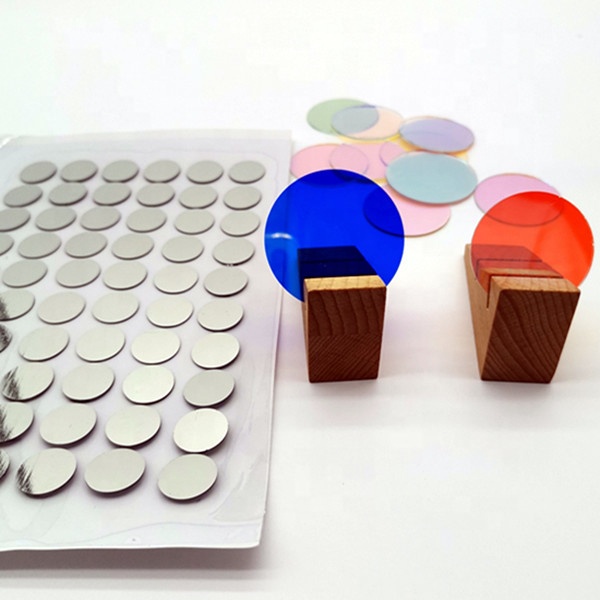
0.2mm 0.3mm 0.4mm 0.5mm 0.7mm 1.0mm 2mm Heat Resistant Gobo Glass Blanks
Heat-resistant blanks for high-power stage, film and architectural lighting. The multi-thickness range helps lighting OEMs balance thermal mass, projection clarity and pattern durability.

Custom 0.2mm 0.3mm 0.4mm 0.5mm 0.7mm 1mm Alkali Free Borosilicate AF32 Glass
Alkali-free glass for biochips, analytical windows and optical assemblies where sodium migration, surface stability and dimensional drift must be controlled.
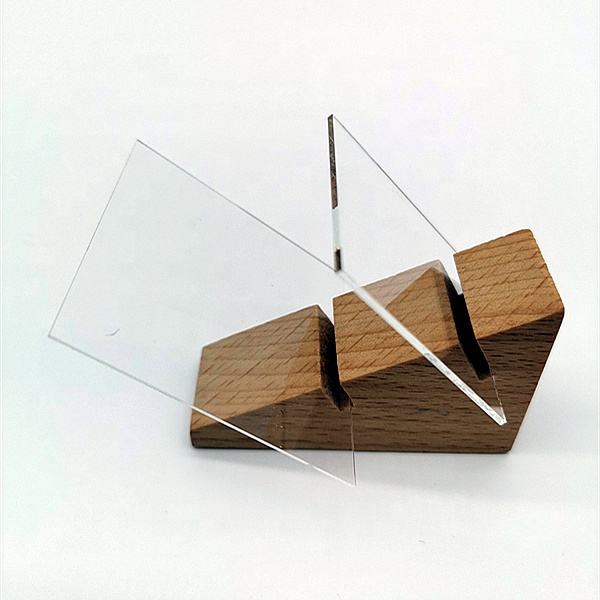
Custom Cut 0.5mm 0.7mm 1mm 1.5mm 2mm 2.5mm 3mm Corning Gorilla Temper Glass
Scratch-resistant cover glass for touch interfaces, displays and appliance panels. Cutting, edge finishing and strengthening are planned around the drawing and end-use stress profile.

Factory Custom Tempered Silk Printed Gorilla Glass Screen Protector Printing Glass
Graphics, icon windows, borders and brand marks printed on strengthened glass. A strong fit for handheld devices, instrument fascias and appliance control panels.
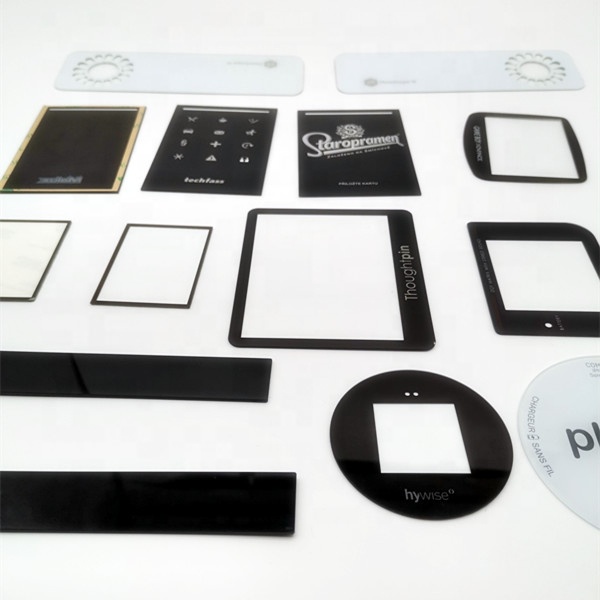
Back Painted Tempered Glass Led Glass Panel Cover Glass
Decorative and functional back-painted glass for LED luminaires, appliance fascia and architectural lighting covers where color depth and clean edges matter.
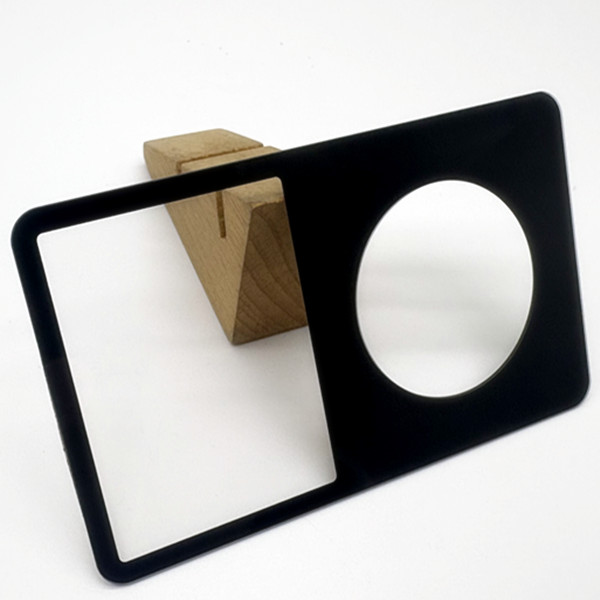
Factory Custom Smart Silkscreen Gorilla Glass Panel Tempered Glass Printing Glass
Multi-layer silkscreen on Gorilla® glass for smart-home controls, instrument displays and HMI covers that require optical clarity and abrasion resistance.

0.3mm ~ 2mm Dichroic Glass Mirror for Gobos
Dichroic mirror blanks for color mixing in entertainment lighting. Coating design is selected around the target wavelength, transmission ratio and thermal load.

Custom Chemically ultra Thin Clear Transparent Tempered Glass Sheet
Ion-exchanged ultra-thin glass for sensor covers, protective windows and lightweight display stacks where thickness, flatness and optical clarity are critical.
Why the Search for a China Wholesale Glass Substrate Wholesaler Requires a Technical Filter
“Glass substrate” is not a single commodity. It can mean a soda-lime cover glass, a low-expansion borosilicate 3.3 sheet, a Corning® Eagle XG® wafer, an ultra-thin chemically strengthened protector or a dichroic mirror for gobos. Each material behaves differently under temperature change, mechanical stress, coating, printing and cleaning. For a procurement team, the real search intent behind “China wholesale glass substrate wholesaler & wholesalers” is not simply to find the lowest price per square meter. It is to find a supplier that can interpret a drawing, preserve material identity, control edge quality and repeat the same optical result batch after batch.
China’s specialty glass supply chain is deep, but it is not uniform. A trader may quote quickly without owning the process sequence. A processor may have strong cutting capability but limited coating or strengthening control. The most reliable wholesale partner usually combines material traceability, in-house finishing, inspection evidence and export-ready packing. Fevry Glass Co., Ltd., based in Xinyu, Jiangxi, works from that model: raw glass is sourced from Corning, AGC and established Chinese optical-glass producers such as Chengdu Guangming and Xinhuguang, then processed on laser, ultrasonic, CNC carving, grinding and inspection equipment imported from the USA, Germany and Japan.
This matters because final yield is often decided before cutting begins. Material identity, process control and dimensional evidence determine whether a thin glass panel survives strengthening, whether an AR coating reaches the promised transmission, and whether a printed border stays sharp after tempering. A wholesaler that can document these steps reduces hidden tooling risk, rework and landed-cost surprises. That is the information gain serious buyers should demand from any China wholesale glass substrate supplier shortlist.
Buyer’s short evaluation card
Use this mini scorecard before requesting a quote. Strong suppliers answer material, process and inspection questions in one round rather than deflecting them to sales-only conversation.
Match the Material to the Application Before Comparing Wholesale Quotes
Semantic sourcing means comparing suppliers on the correct substrate. A low price on the wrong glass grade is not a saving; it is a downstream failure risk in coating, strengthening, assembly or field reliability.
Typical industry values are shown for preliminary material selection. Final specifications should be confirmed against the manufacturer datasheet and the approved drawing before mass production.
What Wholesale Glass Substrate Buyers Will Prioritize Next
The bars below are a practical buyer-priority model for evaluating a China glass substrate wholesaler, not a market-size forecast. They reflect the criteria that increasingly decide whether a specialty glass project is sourced, sampled and scaled successfully.
Traceable raw glass and dual sourcing
Buyers want a material origin record and a secondary supply plan before they approve a drawing. Traceability reduces risk when a coating, strengthening or printing process depends on a specific glass chemistry.
Drawing-based digital RFQs
Quotes built from DWG, DXF or PDF files are replacing generic catalogue inquiries. A supplier that can read tolerances, edge notes, print colors and coating sides early will quote a more realistic piece price.
Thin glass plus chemical strengthening
Portable devices, sensors and compact instruments continue to push toward thinner cover glass. Ion-exchange strengthening lets 0.15–2 mm glass deliver surface strength without the flatness penalty of thermal tempering.
Integrated AR, print and back paint
Procurement teams prefer fewer hand-offs. Combining anti-reflective coating, silk-screen printing and back painting in one process chain lowers handling damage and improves accountability for final optical appearance.
Regional diversification with China process depth
OEMs are spreading final assembly across regions while still relying on China for precision glass processing. Suppliers must support export packing, documentation and stable communication across Western Europe, the USA and Asia.
Audit-ready inspection data
Photos alone are no longer enough. Buyers increasingly ask for dimensional checks, visual defect criteria, coating-side confirmation and packing validation before a repeat order is released.
Where Specialty Glass Substrates Are Moving
Product development is converging around thinner stacks, functional coatings and application-specific substrates. The winning wholesale relationship is the one that can move from a sample to a repeatable export part without losing the material logic.
Ultra-thin chemically strengthened glass
More sensor windows and slim display stacks are specifying 0.15–1.1 mm ion-exchanged glass because it preserves flatness while improving surface strength. Cutting and edge grinding must be completed before strengthening.
AR-coated cover glass as a system
Anti-reflective glass is no longer a standalone component. Buyers expect the coating side, transmission target, print window and touch-surface requirements to be engineered together so the final display looks clean under real light.
Low-CTE substrates for biotech and photonics
Corning® Eagle XG® and alkali-free borosilicate AF32 remain important where dimensional stability, low alkali content and flatness support micro-patterning, bonding and optical alignment.
Heat-resistant lighting and dichroic optics
High-power LED and stage lighting continue to demand borosilicate gobo blanks, dichroic mirrors and heat-resistant cover glass that tolerate thermal shock without distorting the projected image.



Company Advantages: A Specialty Glass Partner Built Around Drawing-to-Delivery Control
Fevry Glass Co., Ltd. is a specialty glass company based in Xinyu, Jiangxi, China, serving optical, biological, semiconductor, communications, lighting and electronics customers. The company’s advantage is not a single machine or a single low-cost material; it is the ability to connect raw glass selection, precision machining, strengthening, coating, printing, inspection and export packing into one accountable workflow.
Raw glass sources include Corning, AGC and established Chinese optical-glass makers such as Chengdu Guangming and Xinhuguang. Processing relies on laser, ultrasonic, CNC carving, grinding and inspection equipment imported from the USA, Germany and Japan. For buyers sourcing from a China wholesale glass substrate wholesaler, that combination supports repeatability across different glass grades — from borosilicate 3.3 and Gorilla® cover glass to Eagle XG® wafers and ultra-thin chemically strengthened sheets.
Material traceability
Source glass is selected by grade and application, not treated as an interchangeable sheet.
Integrated processing
Cutting, edge finishing, strengthening, coating and printing are planned as one sequence.
Drawing-first review
Engineers check tolerances, print colors, AR sides and handling limits before quoting.
Export-ready service
Fast inquiry response and protective packing support buyers in Europe, the Americas and Asia.
This is the operational principle behind Fevry Glass’s buyer relationships, paired with the motto “Your success, our glory.” In practical terms, it means a quotation should clarify material, process, inspection and packing — not simply list a price per piece.
How to Evaluate China Wholesale Glass Substrate Wholesalers
Before you approve a sample or place a repeat order, ask these six questions. They expose whether the supplier is merely forwarding a catalogue or actually controlling the process that determines your yield.
Is the drawing complete?
Outline dimensions, tolerances, holes, notches, edge finish, thickness and critical datum features should be explicit. A supplier should flag ambiguous notes before quoting.
Is the material grade verified?
Confirm the exact glass family, thickness and source. Soda-lime, borosilicate 3.3, Gorilla® and Eagle XG® are not interchangeable under thermal or optical load.
Is the process sequence correct?
Cutting, drilling and edge grinding must be finished before strengthening. Coating and printing sides must be defined to avoid handling damage or optical mismatch.
Is print and coating control documented?
Pantone references, ink windows, IR-transparent zones, AR coating side and transmission expectations should be agreed in the sample approval record.
Is inspection evidence available?
Ask for dimensional checks, visual criteria and flatness or coating confirmation where relevant. Evidence should be repeatable for the mass-production lot.
Is packaging matched to thin glass?
Interleaved, cushioned export packing protects edges, printed surfaces and coatings. The lowest piece price can disappear quickly if breakage and rework are ignored.
Frequently Asked Questions for Wholesale Glass Substrate Sourcing
Practical answers for sourcing managers, engineers and product teams comparing China-based specialty glass suppliers.
What does “glass substrate” mean when I search for a China wholesaler?
In this market, “glass substrate” can refer to a base sheet for displays, a cover glass, a borosilicate window, a dichroic lighting blank, a wafer or an alkali-free analytical substrate. Always define the material, thickness, coating, print and application before comparing quotes, because two suppliers may be pricing different glass grades under the same phrase.
Should I choose chemically strengthened or thermally tempered glass?
Thermal tempering is usually preferred for thicker glass around 3 mm and above. For ultra-thin cover glass from about 0.15 mm to 2 mm, chemical strengthening by ion exchange increases surface strength while keeping the sheet flat and optically clean. All cutting, drilling and edge grinding need to be completed before strengthening.
When is borosilicate 3.3 better than soda-lime glass?
Borosilicate 3.3 has a low expansion coefficient, so it handles thermal shock much better than soda-lime glass. It is a strong choice for high-power lighting covers, gobo blanks, heat-resistant windows, laboratory glass and instrument applications where temperature change or chemical exposure is expected.
Why is Corning® Eagle XG® used for biochips, wafers and PLC substrates?
Eagle XG® is an alkali-free boro-aluminosilicate glass with low thermal expansion and a fusion-formed surface. That combination supports flatness, dimensional stability and clean bonding, which is valuable for micro-patterning, analytical devices, wafers and precise optical alignment.
What is the minimum order quantity for custom glass substrates?
Typical custom cover glass and AR glass items start around 300–500 pieces. Some custom-cut Eagle XG® parts start from 1,000 pieces, while selected gobo glass blanks can begin from small sample or trial quantities. Samples can be arranged to validate fit, print color and optical performance before mass production.
What information should I send for a fast quotation?
Send a 2D drawing in DWG, DXF or PDF with dimensions and tolerances, material grade, thickness, edge finish, hole and notch positions, strengthening method, print colors or Pantone references, AR coating side, end application and expected annual volume. Complete information reduces quotation loops and sampling errors.
How should thin glass be packed for export?
Thin glass needs edge protection, interleaving, cushioning and rigid outer packaging matched to the panel size and surface finish. Printed or coated surfaces require additional separation to prevent abrasion. Packaging should be reviewed together with the inspection plan before shipment.
Which markets does Fevry Glass serve?
Fevry Glass serves customers in China and exports to Western Europe, the United States, Japan, South Korea, Taiwan, Hong Kong and Southeast Asia. Export packing, documentation and English technical communication are part of the wholesale supply workflow.
Have a drawing? Let’s engineer your glass substrate.
Send your thickness, material, tolerance, coating, printing and annual volume requirements. Our team typically responds within four hours and can recommend a practical substrate and process route before sample approval.