Eight Glass Chip Products Buyers Request Most
Every item below is processed to a customer drawing — cut, edged, strengthened, coated or printed before it leaves the factory. Send a 2D drawing and we will confirm material, tolerance and lead time in one round.
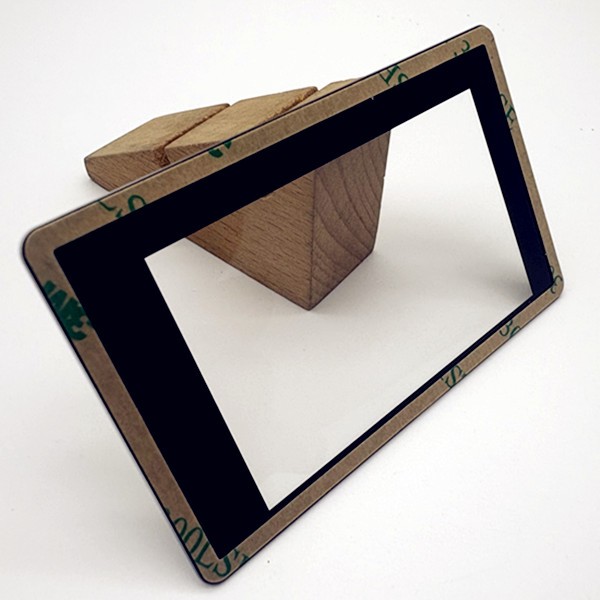
Custom Tempered Glass Dashboard Trim Panel Flat Electronic Glass Screen Protector
Flat tempered panels with printed borders and icon windows for instrument clusters and centre-stack displays; 0.5–4 mm, produced to 2D outline drawings.

0.3mm ~ 2mm Dichroic Glass Mirror for Gobos
Hard-coated dichroic mirrors on thin glass for gobo patterns and colour separation in stage and architectural lighting fixtures.
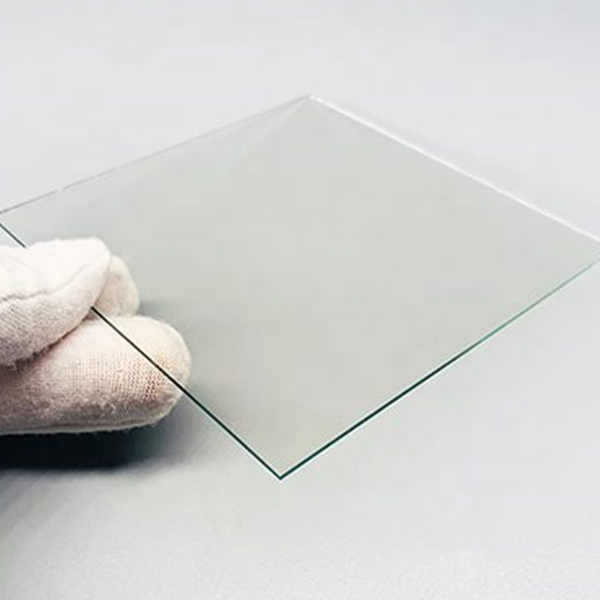
Ito Conducting Glass, Ito Coated Glass, Ito Glass
Transparent conductive substrates for touch sensors, transparent heaters and EMI shielding, with sheet resistance and etched patterns matched to your design.

Custom Chemically ultra Thin Clear Transparent Tempered Glass Sheet
0.15–1.1 mm ion-exchanged glass for sensor windows, thin display covers and precision laminates where warp has to stay minimal.
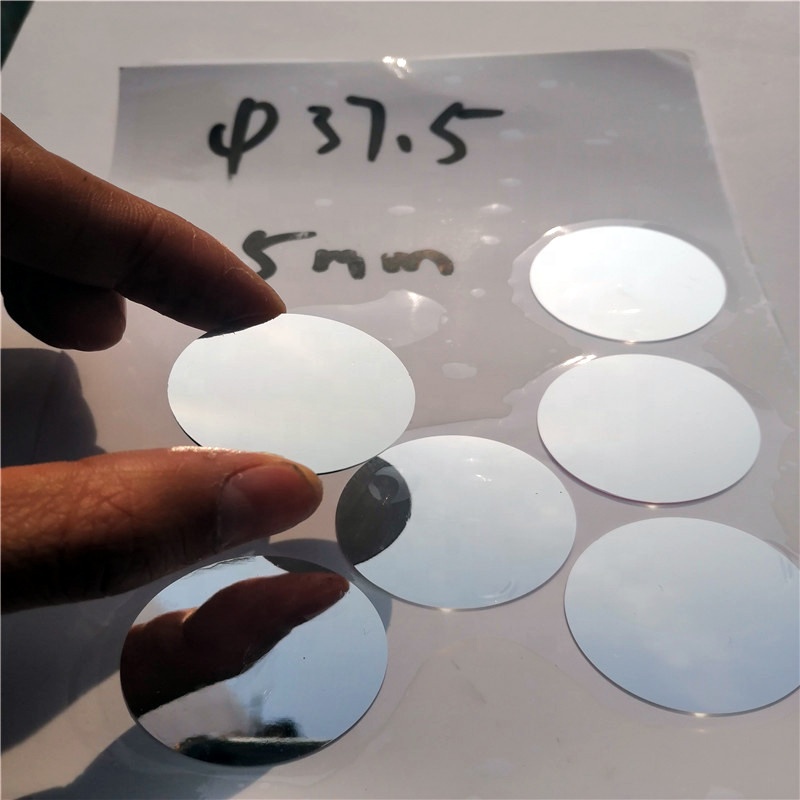
OEM Custom Heat Resistant Gobo Glass Lens
Borosilicate gobo blanks and lenses that survive the heat load behind high-power LED and discharge projector lamps without deformation.

Custom Cut 0.5mm 0.7mm 1mm 1.5mm 2mm Clear Toughened Glass Tempered Corning Gorilla Glass
Cut-to-size Gorilla® glass with polished edges, optional AR coating and Pantone-matched printing for scratch-resistant display covers.
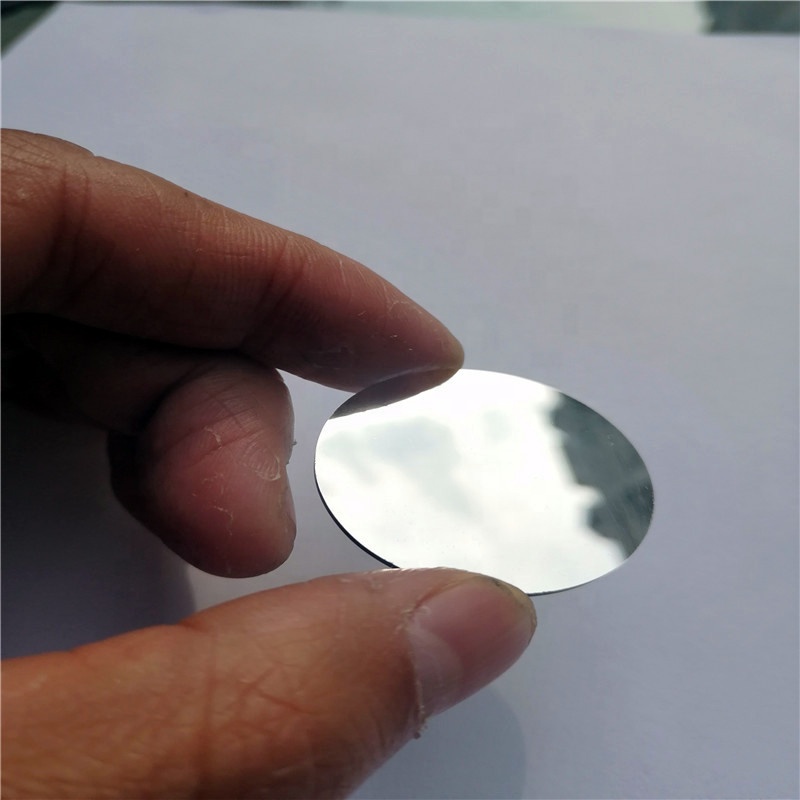
Gobo Glass/dichroic Mirror Lighting Filters Glass Lens
Colour filters and dichroic mirrors for projection and entertainment lighting, coated for repeatable colour points and long service life.
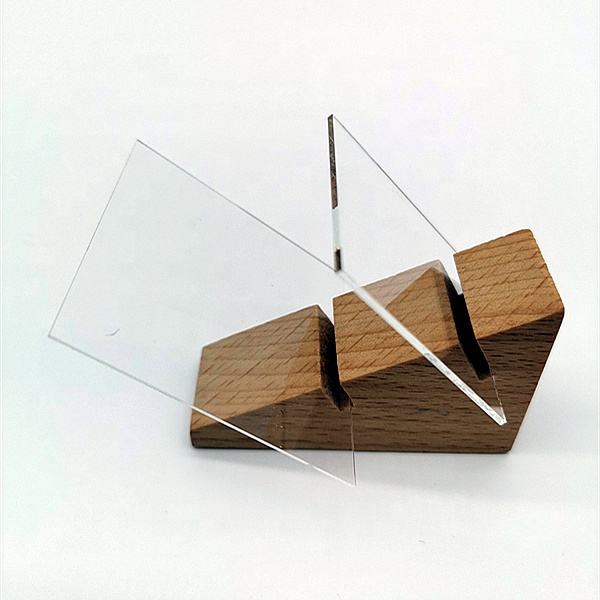
Custom Cut 0.5mm 0.7mm 1mm 1.5mm 2mm 2.5mm 3mm Corning Gorilla Temper Glass
Thicker Gorilla® formats up to 3 mm for large-format covers, kiosk fronts and industrial HMI windows, supplied cut, edged and inspected.
What “Glass Chip” Really Means in a Wholesale Sourcing Context
A glass chip is not a semiconductor. In the technical glass trade the term describes a small, dimensionally finished glass component — typically between 8 × 8 mm and 300 × 400 mm — that is already cut, edged, strengthened and often coated or printed, so it can go straight into an assembly line.
That shift from sheet to component changes the entire purchasing conversation. A raw float-glass order can be described in one line — “3 mm clear, 1 × 1 m”. A glass chip order cannot. It carries a 2D outline, an outline tolerance such as ±0.05 mm, hole and notch positions, an edge profile (flat, pencil or chamfered), a surface roughness value, a transmission or haze figure, a sheet resistance, a Pantone reference for the printed border, and an AR coating reflectance curve at a specific wavelength band.
Buyers searching for China wholesale glass chip manufacturers and exporters are therefore not comparing square-metre prices. They are comparing process depth, tolerance discipline, documentation and response speed — and the difference between a good and a poor supplier only becomes visible at incoming inspection.
Material Selection
Soda-lime, Gorilla® aluminosilicate, borosilicate 3.3, Corning® Eagle XG, ITO-coated and dichroic substrates — each specified from 0.15 mm to 4 mm depending on thermal load and optical duty.
Process Chain
Laser cutting, CNC carving, ultrasonic drilling, edge grinding, thermal tempering or ion exchange, AR and dichroic coating, silk-screen printing and back painting — ideally under one roof.
Verification
Outline and thickness measurement, flatness checks, coating adhesion and transmission tests, print registration and a visual defect standard agreed before the first production run.
How Glass Chip Buying Behaviour Is Changing
Four shifts that sourcing managers and design engineers are already acting on — and what each one means when you shortlist a Chinese supplier.
Drawings Replace Catalogues
RFQs increasingly arrive as DWG, DXF or PDF files rather than “one square metre of clear glass”. Suppliers are now evaluated on how they read a drawing and flag manufacturability risk, not on what stock they hold.
Prototype Speed Decides the Order
Projects usually carry two or three candidate designs. The supplier that delivers validated samples first tends to win production. Keeping cutting, strengthening and coating in one facility removes days of inter-factory freight.
Supplier Consolidation
Rather than splitting base glass, coating and printing across three vendors, buyers are consolidating into one accountable partner. Fewer incoming inspection points, one quality record, one channel when something goes wrong.
Compliance Becomes an RFQ Line Item
RoHS and REACH declarations, substrate certificates, batch codes and export-grade packing lists are now requested up front. Buyers also ask which base glass was used — the substrate fixes thermal and optical limits long before processing starts.
Where Glass Chip Technology Is Heading
These four technical directions are shaping the drawings that land in our engineering inbox — and the tolerances that will be normal by the next product cycle.
Thinner Strengthened Cover Glass
0.15 mm to 0.5 mm chemically strengthened glass is moving from flagship handsets into automotive, appliance and industrial HMI panels. Ion exchange raises surface compressive stress without the warp that thermal tempering introduces on thin sheets.
AR Coating as Standard
Double-sided anti-reflective coating pushes transmission towards 98% and removes ghost images on displays and optical sensors. What used to be a premium option is now routinely written into cover glass and lighting specifications.
Functional Coatings and ITO
ITO-coated glass, dichroic mirrors and gobo filter glass convert a passive window into an active component. Touch electrodes, transparent heaters, colour-splitting filters and high-temperature gobo patterns all combine coating with precision cutting.
Tighter Tolerances Through Integration
Laser cutting, CNC carving, ultrasonic drilling and edge grinding on imported equipment now hold the ±0.05 mm bands that automated assembly lines expect — fewer rejects at incoming inspection and less rework after lamination.
Glass Chip Material Selection Matrix
Thermal expansion, thickness and coating capability determine which substrate belongs in your design. Use this table for preliminary selection, then confirm against the manufacturer datasheet and your drawing.
| Substrate | Thickness Range | CTE (×10⁻⁶/K) | Typical Glass Chip Applications |
|---|---|---|---|
| Ultra-clear soda-lime | 0.5 – 4 mm | ≈ 9.0 | Cover glass, AR panels, silk-printed windows, back-painted LED covers |
| Gorilla® aluminosilicate | 0.4 – 3 mm | ≈ 7.5 – 8.5 | Scratch-resistant touch covers, display protection, kiosk and HMI fronts |
| Borosilicate 3.3 | 0.3 – 3.3 mm | 3.3 | Heat-resistant windows, gobo blanks, laboratory and instrument glass |
| Corning® Eagle XG | 0.5 – 1.1 mm | ≈ 3.2 | Biochips, glass wafers, PLC substrates, micro-optics and bonding carriers |
| ITO-coated glass | 0.4 – 1.1 mm | Base-glass dependent | Touch sensors, transparent heaters, EMI shielding, patterned electrodes |
| Dichroic / gobo glass | 0.3 – 2 mm | Base-glass dependent | Stage lighting colour filters, colour separation mirrors, projection patterns |
Values are typical industry figures for preliminary engineering selection only. Final acceptance criteria are agreed against the base glass datasheet, coating specification and your 2D drawing.
Why Global Buyers Shortlist Fevry Glass
Fevry Glass Co., Ltd. is a specialty glass company based in Xinyu, Jiangxi, China, working with optical, biological, semiconductor, communications, lighting and electronics customers across Western Europe, the United States, Japan, South Korea, Taiwan, Hong Kong and Southeast Asia.
Our experience comes from the shop floor rather than a catalogue. Raw glass is sourced from Corning, AGC and other multinational producers, and we work closely with established Chinese optical glass makers including Chengdu Guangming and Xinhuguang — so each project starts from traceable, batch-consistent material. That substrate is then processed on laser, ultrasonic, CNC carving, grinding and inspection equipment imported from the USA, Germany and Japan.
On top of that sits an engineering habit: we read your drawing before we quote it. If a 0.15 mm sheet needs a hole closer to the edge than the grind can safely support, or a print colour will not survive the strengthening step, you hear it during the RFQ stage — not after the parts arrive.
Traceable Material Sources
Corning®, AGC, Chengdu Guangming and Xinhuguang substrates, documented so optical and thermal behaviour can be reproduced order after order.
In-House Process Chain
Laser cutting, CNC carving, ultrasonic drilling, edge grinding, thermal tempering, ion-exchange strengthening, AR and dichroic coating, silk printing and back painting.
Engineering, Not Just Machining
Send a 2D drawing and receive design-for-manufacture feedback: recommended substrate, thickness, achievable tolerance and edge treatment before strengthening.
Export-Grade Packing & Logistics
Parts are interleaved, cushion-separated and boxed for fragile freight, with documentation suited to customs clearance in Europe, North America and Asia.
Verifiable Supplier Record
10+ years as an Alibaba.com member, a 5.0 / 5 buyer rating, a 100% inquiry response rate and an average reply time under four hours — records any buyer can check before committing.
A Quality-First Culture
“Quality is superior, service is supreme, reputation is first” and “Your success, our glory” — the operating principle behind every processed order we ship.
From Drawing to Delivered Glass Chips in Five Steps
A predictable path designed for procurement teams that need firm dates and no surprises.
Share Your Drawing
Send a DWG, DXF or PDF with outline dimensions, tolerances, thickness, material and quantity.
Engineering Review
We confirm manufacturability and recommend substrate, edge finish, strengthening and coating.
Sample Approval
Physical samples validate fit, print colour and optical performance before tooling is committed.
Mass Production
Processing runs with in-line dimensional measurement and a visual defect standard agreed in advance.
Export Packing
Interleaved, cushioned packing with batch labels and documentation for international freight.
Glass Chip Procurement: Frequently Asked Questions
Straight answers to the questions engineers and sourcing managers ask us most often.
What exactly is a glass chip, and how is it different from a glass panel?
A glass chip is a finished, dimensionally processed glass component — cut to outline, edged, strengthened and, where required, coated or printed. A glass panel is usually a stock sheet that still needs secondary processing. The distinction matters because a chip carries a full drawing specification with tolerances, while a panel is described only by thickness and overall size.
Should I choose chemically strengthened or thermally tempered glass?
Thermal tempering works best for glass around 3 mm and thicker. For ultra-thin cover glass from 0.15 mm to about 2 mm, chemical strengthening (ion exchange) raises surface strength while keeping the sheet flat and optically clean. In both cases all cutting, drilling and edge grinding must be finished before strengthening — the glass cannot be re-cut afterwards without losing the strengthened layer.
When is borosilicate 3.3 better than soda-lime glass?
Borosilicate 3.3 expands only about 3.3 × 10⁻⁶/K — roughly one third of soda-lime glass — so it tolerates rapid temperature changes far better. Choose it for lighting covers, heat-resistant windows, gobo blanks and laboratory or instrument glass where thermal shock or chemical exposure is expected.
Why is Corning® Eagle XG used for biochips, wafers and PLC substrates?
Eagle XG is an alkali-free boro-aluminosilicate glass with low thermal expansion and a fusion-formed surface. That combination delivers excellent flatness and dimensional stability, which suits micro-patterning, bonding and precise optical alignment in biological analysers, semiconductor carriers and planar lightwave circuits.
What is the minimum order quantity for custom glass chips?
Most custom cover glass and AR glass items start from 300 to 500 pieces, custom-cut Eagle XG parts from about 1,000 pieces, and selected dichroic gobo glass from as few as 10 pieces. Samples can be arranged to validate fit and optical performance before mass production, and sample cost is discussed case by case.
What information do you need to evaluate a custom glass project?
Please send a 2D drawing (DWG, DXF or PDF) with outline dimensions and tolerances, thickness, glass material, edge finish, hole and notch positions, strengthening method, print colours (Pantone references), AR coating side or sides, the end application and your expected annual quantity. Complete information lets our engineers respond with a firm recommendation in a single round.
Which markets do you export to, and how is fragile thin glass packed?
Besides domestic customers in China, we regularly ship to Western Europe, the United States, Japan, South Korea, Taiwan, Hong Kong and Southeast Asia. Thin glass is interleaved with protective film, cushioned inside the carton and packed with batch labels so the shipment arrives intact and can be traced back to its production run.
Have a Drawing? Let’s Engineer Your Glass Chips.
Send your specifications, target quantity and delivery port. Our engineering team typically replies within four hours with a substrate recommendation, achievable tolerances and an indicative price.
Send an Inquiry