8 Wholesale Glass Products for Alkali-Free and Technical Glass Projects
Start with the product family closest to your application, then confirm material, thickness, print, coating and edge finish with our engineering team. Every link below preserves the original product URL and image so procurement and engineering can review the same specification path.
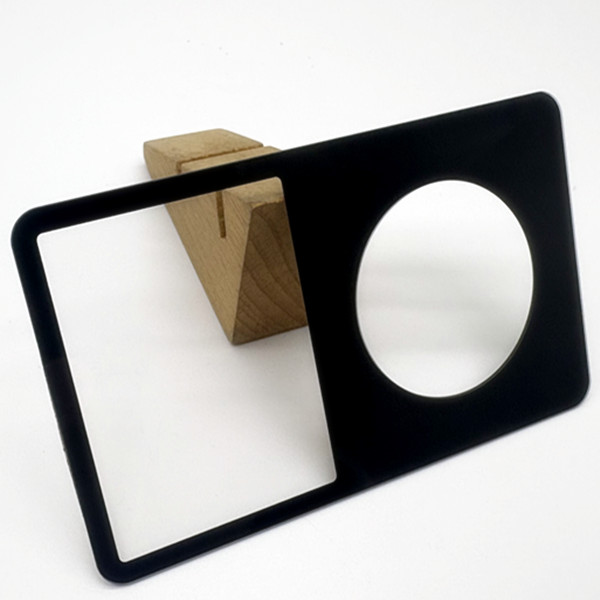
Factory Custom Smart Silkscreen Gorilla Glass Panel Tempered Glass Printing Glass
A smart silkscreen-printed Gorilla-type cover panel for appliance, smart-home and industrial HMI windows. The process suits crisp logos, black borders, icon windows and scratch-resistant front glass.
View product specification
Customized Tempered Anti-Reflective Glass AR Coated Tempered Glass
A tempered, anti-reflective cover glass for displays, instruments and lighting where reflection loss and glare reduce readability. Double-sided AR options can be discussed for higher transmission.
View product specification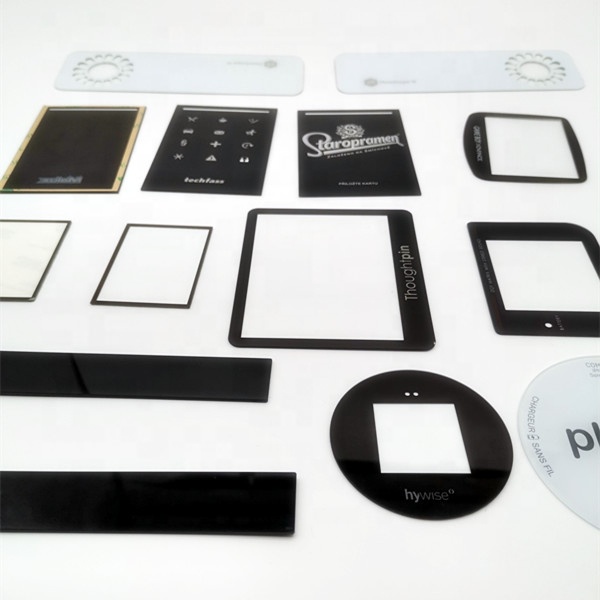
Back Painted Tempered Glass Led Glass Panel Cover Glass
Tempered glass with a back-painted finish for LED panels, appliances and decorative covers. The painted layer hides internal components while preserving a clean glass surface.
View product specification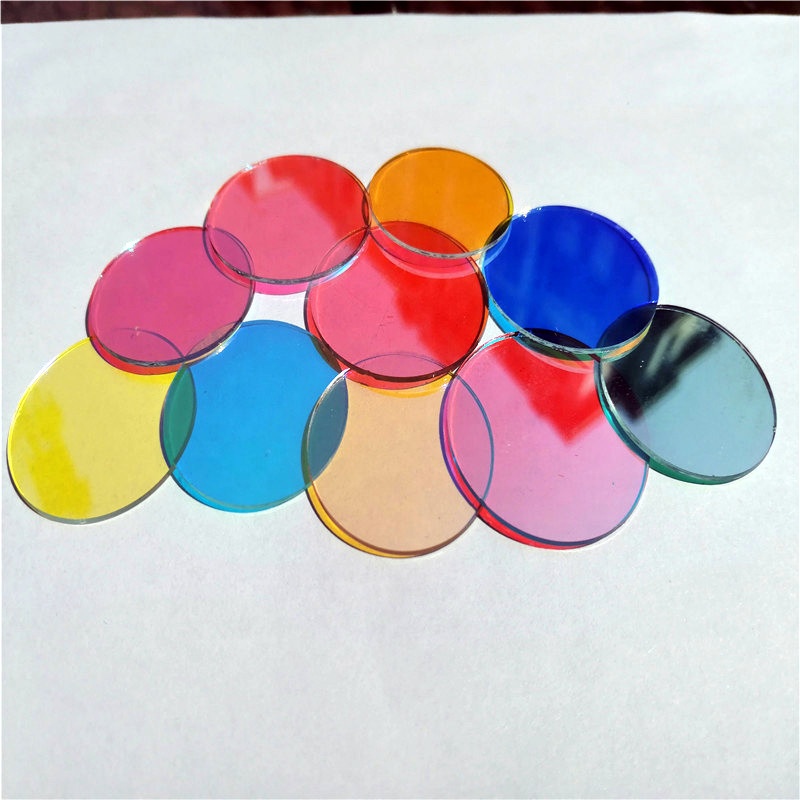
Customize logo Color Glass Gobo Glass
Custom logo gobo glass for stage, architectural and entertainment lighting. Heat-resistant substrates and custom artwork allow lighting designers to project branded or scenic patterns.
View product specification
1.5mm 2mm Tempered Glass Thickness Touch Switch Glass Plate
Thin tempered glass switch plates for touch controls, wall switches and appliance interfaces. Relevant where a smooth front, high clarity and reliable mechanical fit matter.
View product specification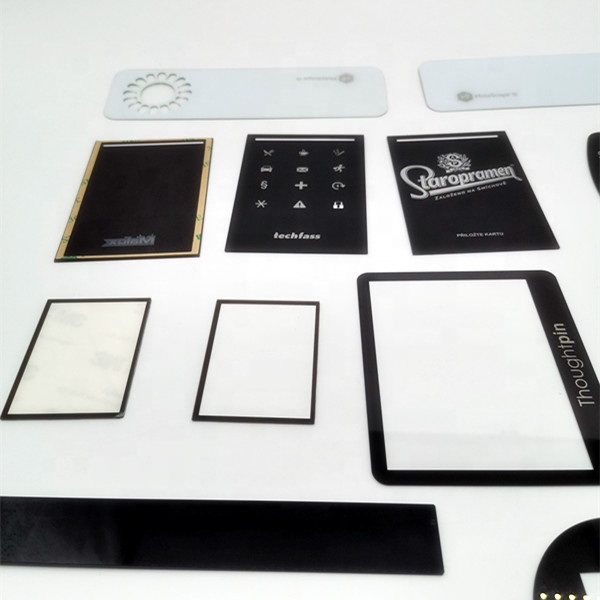
Custom Display Screen Silk Screen Printing Tempered Gorilla Glass
A display-screen cover glass family with custom silk-screen printing and Gorilla-type strengthening. Suitable for LCD protection, industrial displays and electronic device windows.
View product specification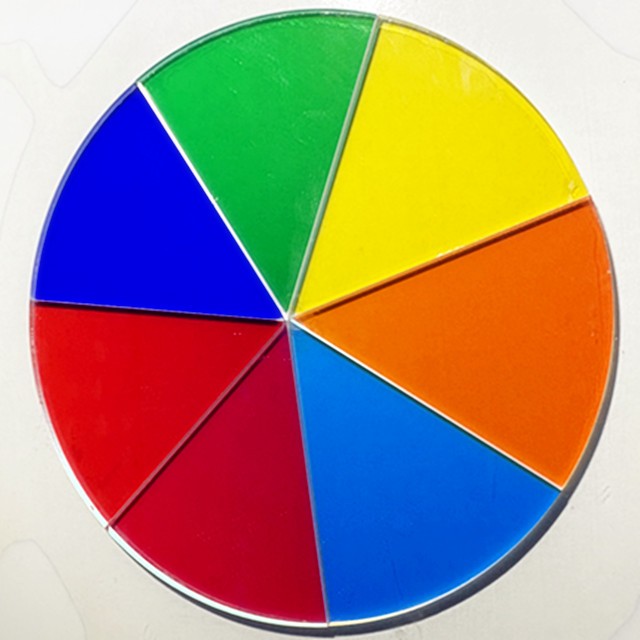
Factory Customization Dichroic Glass Gobo Glass
Dichroic gobo glass creates colour-shifting effects for entertainment and architectural lighting. Buyers should confirm substrate, wavelength target, artwork and heat exposure before quotation.
View product specification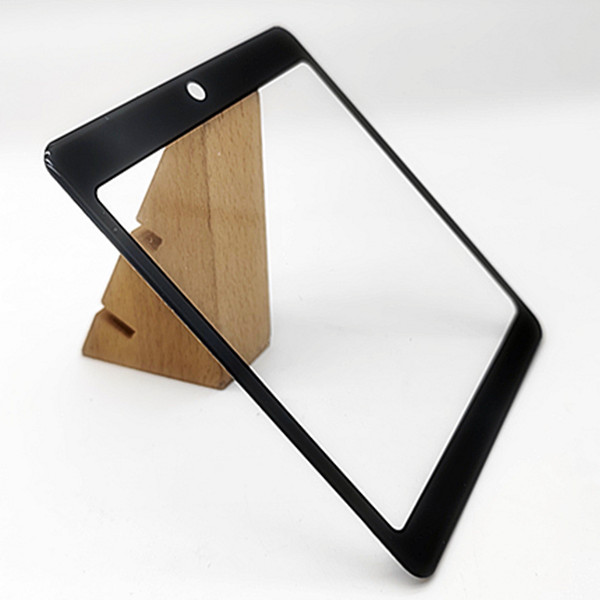
Ultra Clear Gorilla Glass Panel with Silk Screen Printing for Electronic Device
Ultra-clear Gorilla-type panels with printed graphics for electronic device windows. Choose this route when optical clarity, print contrast and a premium front surface are the main design goals.
View product specificationWholesale Supply Metrics That Reduce Sourcing Risk
Technical glass sourcing depends on communication discipline as much as processing equipment. These public-facing performance indicators help buyers judge how quickly an RFQ is likely to move from drawing review to sample discussion.
Years as an Alibaba.com member
Average response time
Inquiry response rate
Export regions served
Public performance records also include a 5.0/5 buyer rating. These indicators do not replace drawing review, but they show whether a supplier has the response process needed for international OEM procurement.
What Is Alkali-Free Glass, and Why Does It Matter in Wholesale Sourcing?
For buyers searching beyond a simple product name, the real question is not only “alkali free or not” — it is whether the substrate, process route and inspection plan match the optical, thermal and mechanical demands of the final device.
Alkali-free is a process decision, not only a material claim
Alkali-free glass is a boro-aluminosilicate substrate formulated without the alkali metal oxides that can migrate, leach or interfere with sensitive downstream processes. For buyers, the practical value is not the label itself; it is the combination of low thermal expansion, high dimensional stability, good optical clarity and predictable behaviour during cutting, coating, printing, bonding and high-temperature processing. Corning Eagle XG-type material is a well-known benchmark because its fusion-formed surface supports tight flatness and micro-patterning in biochips, wafers, PLC substrates and precision optical alignment.
In wholesale sourcing, “alkali-free” should be tied to an application brief. A display cover panel may require scratch resistance, printed borders and AR coating; a biochip substrate may prioritise low fluorescence, flatness and lot-to-lot consistency; a lighting component may need thermal shock resistance and dichroic colour. The same supplier can process different substrates, but the material route, thickness, strengthening method and inspection plan must be agreed before price negotiation. This is where drawing-led RFQs outperform generic enquiries.
China remains a deep processing base for technical glass because cutting, CNC shaping, edge grinding, strengthening, coating and printing can be coordinated in one manufacturing chain. The trade-off is that not every exporter operates the same process depth. Ask whether the supplier performs critical steps in-house, how raw glass is traced, what inspection data is available and how thin fragile panels are packed. Those questions reveal more than a unit-price comparison.
Buyer’s Technical Brief
Why Fevry Glass Is a Practical China Wholesale Partner for Alkali-Free and Technical Glass
Fevry Glass Co., Ltd. is based in Xinyu, Jiangxi, China, and works with customers in optical, biological, semiconductor, communications, lighting and electronics applications. Our role is to translate an engineering drawing into a repeatable glass part: select the substrate, confirm manufacturability, control the process chain and pack the finished panel for export.
Material sources and selection
Projects start with a substrate decision: alkali-free Eagle XG-type glass, borosilicate 3.3, Gorilla-type alkali-aluminosilicate, ultra-clear soda-lime or a coated optical filter. Raw glass is sourced from Corning, AGC and established Chinese optical-glass makers such as Chengdu Guangming and Xinhuguang.
Drawing-led engineering
Send a 2D drawing with outline dimensions, tolerances, thickness, edge finish, holes, notches, print colours, AR sides and annual volume. Our engineers review manufacturability and flag risks early, so the quotation is built on a process route rather than a generic material price.
In-house process integration
Laser cutting, CNC shaping, ultrasonic machining, grinding, thermal tempering, chemical strengthening, AR/dichroic coating, silk-screen printing and back painting can be coordinated through one accountable process chain. Fewer hand-offs mean less handling damage and clearer responsibility.
Optical and dimensional inspection
Before export packing, parts can be checked for size, thickness, flatness, edge condition, print registration and visual defects. The inspection plan is agreed to the application, because a decorative cover panel and a biochip substrate do not need the same acceptance criteria.
Export packing for fragile glass
Thin glass is vulnerable at edges and corners. We plan interleaved, cushioned packing for international shipping and support buyers in Western Europe, the United States, Japan, South Korea, Taiwan, Hong Kong and Southeast Asia with export-ready documentation.
Responsive commercial support
Fevry Glass has 10+ years of Alibaba.com membership, a 100% inquiry response rate, an average response time of 4 hours or less and a 5.0/5 buyer rating. Those records support a communication process designed for buyers who need technical clarification before a sample order.

Precision glass processing workshop

Imported cutting and grinding equipment

Optical glass inspection and packing
Wholesale Glass Procurement Trends Buyers Should Plan For
Procurement is shifting from lowest unit price toward total technical risk. For alkali-free and custom technical glass, the supplier who can document materials, control process hand-offs and support engineering changes is often more valuable than the lowest quote.
Engineering-first RFQs
Buyers increasingly send drawings, application notes and annual volume instead of asking only for a glass sheet price. This shifts competition from generic square-metre quotes to process capability: can the supplier hold tolerance, control print registration, apply the correct coating and pack thin glass without hidden yield loss?
Traceability and dual sourcing
Programs serving medical, automotive, semiconductor or optical customers need material traceability and a credible second-source plan. Ask for raw-glass origin, batch records and a clear change-control process. A supplier that can document material sources such as Corning, AGC, Chengdu Guangming or Xinhuguang is easier to audit and qualify.
Total landed quality cost
Low unit price can be erased by breakage, rework, delayed samples or inconsistent coating colour. Procurement teams are moving toward total landed quality cost, which includes inspection, packaging, freight, replacement risk and engineering time. For fragile thin glass, packaging and handling discipline are part of the product.
High-mix, lower-volume customization
Displays, instruments and smart devices increasingly use many variants in modest volumes. Suppliers must handle drawing changes, print colour changes and mixed thicknesses without losing efficiency. MOQ should be discussed against material, tooling and process set-up, not treated as a fixed number for every product.
Compliance and documentation
RoHS, REACH, material declarations and customer-specific substance requirements are becoming routine in supplier qualification. Technical glass is not automatically exempt from documentation; coatings, inks and painted layers may need declarations. Buyers should raise compliance requirements before sampling and mass production.
Supplier-side process integration
When cutting, strengthening, coating and printing are split across multiple vendors, responsibility for scratches, chips and colour mismatch becomes difficult to trace. Integrated suppliers reduce handling steps, shorten corrective-action loops and make it easier to scale from sample to repeat production.
Product Development Trends in Alkali-Free and Technical Glass
Design trends in displays, biotech, lighting and optical communication are pushing glass parts toward thinner profiles, tighter tolerances, stronger surfaces and more integrated functions. These changes affect both material selection and the supplier’s process depth.
Thinner chemically strengthened parts
Cover glass is moving toward 0.15–2.0 mm chemically strengthened substrates for sensors, protective windows and compact electronics. Ion exchange allows thin glass to retain flatness while improving surface strength; all cutting and edge finishing must happen before strengthening.
AR-coated optical surfaces
Anti-reflective coatings continue to expand from camera windows into instrument covers, touch panels and high-brightness displays. Double-sided AR can raise transmission toward 98% depending on design, while reducing glare and ghost reflections that hurt readability.
Printed and integrated HMI glass
Silk-screen printing, back painting, IR-transparent ink windows and touch-switch plates let one glass part carry branding, masking and optical functions. The trend favours suppliers who can hold print registration on strengthened glass and inspect colour consistently.
Low-CTE substrates for biotech and photonics
Biochips, MEMS carriers, PLC substrates and optical alignment parts need low thermal expansion, flatness and stable surfaces. Alkali-free and borosilicate substrates are increasingly specified to reduce dimensional drift and contamination risk in precision processes.
Heat-resistant lighting glass
Stage, architectural and LED lighting designs continue to use gobo, dichroic and heat-resistant borosilicate components. Higher power densities favour substrates selected for thermal shock resistance, coating durability and colour stability rather than ordinary soda-lime glass.
Larger formats and tighter assembly
Designers are asking for larger display windows, narrow borders and complex cut-outs with clean edges. This increases the importance of CNC capability, stress control after strengthening and packaging that protects large thin panels during transit.
Matching Wholesale Glass Materials to the Application
Use this preliminary matrix to frame an RFQ, then confirm final values against the material datasheet and your drawing. The best glass is not always the most expensive substrate; it is the one that meets the optical, thermal, mechanical and assembly requirements at a controllable yield.
| Material | Typical Thickness | CTE Guide | Strength Route | Best-Fit Applications |
|---|---|---|---|---|
| Alkali-free boro-aluminosilicate, Eagle XG-type | 0.5–1.1 mm | ≈3.2 ×10⁻⁶/K | Fusion-formed flatness; process-specific handling | Biochips, wafers, PLC substrates, micro-optics and precision alignment |
| Borosilicate 3.3 | 0.3–3.3 mm | 3.3 ×10⁻⁶/K | Thermal shock resistance; can be tempered where suitable | Gobo blanks, lighting windows, laboratory and instrument glass |
| Gorilla-type alkali-aluminosilicate | 0.4–2 mm | ≈7.5–8.5 ×10⁻⁶/K | Chemical strengthening by ion exchange | Scratch-resistant touch covers, display windows and printed HMI glass |
| Ultra-clear soda-lime | 0.5–4 mm | ≈9.0 ×10⁻⁶/K | Thermal tempering for suitable thickness | AR panels, appliance windows, LED covers and decorative printed glass |
| Chemically strengthened thin glass | 0.15–2 mm | Base-glass dependent | Ion exchange before final cleaning and packing | Ultra-thin protectors, sensor covers and compact electronic windows |
Values are typical industry figures for preliminary selection. Final specifications must be confirmed against the manufacturer datasheet, application requirements and the approved drawing.
FAQ for Wholesale Alkali-Free and Custom Technical Glass Projects
These are the questions engineers and sourcing managers ask most often when evaluating a China-based glass manufacturer and exporter. Clear answers at the RFQ stage reduce sampling cycles and avoid mismatched expectations.
What does “alkali free” mean in a glass specification?
Alkali-free glass is formulated without the alkali metal oxides — mainly sodium and potassium — that are common in soda-lime glass. In practice, the phrase should be tied to the exact substrate, such as alkali-free boro-aluminosilicate like Corning Eagle XG-type glass. Buyers specify it when low ion contamination, low thermal expansion, flatness and dimensional stability matter, especially in biochips, wafers, PLC substrates and precision optical parts.
Can you supply custom cuts, holes, notches and printed graphics?
Yes. Custom glass projects are typically built from a 2D drawing (DWG, DXF or PDF) and can include CNC or laser cutting, holes, notches, edge grinding, silk-screen printing, back painting, AR coating and strengthening. Send the final outer dimensions, tolerances, print colours with Pantone references, coating sides and application so the process route can be confirmed before quotation.
What is the minimum order quantity for custom glass?
MOQ depends on material, size, process and yield. Most custom cover glass and AR glass items start from 300–500 pieces; some custom-cut Eagle XG parts start from around 1,000 pieces; selected gobo glass blanks can start from as few as 10 pieces. Samples are recommended to validate fit, colour and optical performance before mass production.
Should I choose chemically strengthened or thermally tempered glass?
Thermal tempering is generally best for glass around 3 mm and thicker. For ultra-thin cover glass from 0.15 mm to about 2 mm, chemical strengthening by ion exchange gives surface strength while keeping the sheet flat. In both cases, cutting, drilling and edge grinding must be completed before strengthening, because strengthened glass cannot be re-cut safely.
What should a complete RFQ include?
Include a 2D drawing with tolerances, thickness, glass material or performance requirement, edge finish, hole and notch positions, strengthening method, print colours, AR coating sides, application, annual volume and target delivery schedule. If a material is not fixed, describe the optical, thermal or chemical requirement so our engineers can recommend a substrate.
Are samples available before mass production?
Samples can usually be arranged to validate dimensions, print colour, edge quality and coating appearance. Sampling is especially important for printed glass, AR-coated display windows, dichroic gobo glass and thin strengthened parts, where appearance and handling can affect final yield. Provide the drawing and quantity plan so the sample route can be confirmed.
Which markets does Fevry Glass export to?
Besides domestic customers in China, Fevry Glass regularly serves buyers in Western Europe, the United States, Japan, South Korea, Taiwan, Hong Kong and Southeast Asia. Export packing is planned for fragile thin glass, and documentation can be prepared for the destination market.
How do you control quality and packing for thin glass?
Inspection can cover dimensions, thickness, flatness, edge condition, print registration and visual defects according to the agreed specification. For packing, we use interleaved, cushioned protection designed for fragile glass and international transport. Buyers should confirm the inspection plan, sampling level and packing method before repeat production.
Have a Drawing or Annual Demand Plan?
Send your 2D drawing, material preference, thickness, tolerance, print colours, AR coating sides and expected annual volume. Our engineering team will review manufacturability and recommend a practical substrate and process route for your alkali-free or custom technical glass project.
- 2D drawing in DWG, DXF or PDF
- Glass material and thickness
- Edge finish and tolerances
- Strengthening method
- Print colours and AR sides
- Application and annual volume
Wholesale Catalogue & Technical Review
Get Catalog info@fevryglass.comTypical response within 4 hours during working periods.