8 Optical Glass Substrates Shortlisted for Display, Optics and Lighting OEMs
Use this list as a sourcing shortlist, not a static catalogue. Each product reflects a real procurement pattern: printed and strengthened cover glass, anti-reflective display windows, ultra-thin chemically strengthened glass, multi-thickness tempered glass and heat-resistant gobo glass. For a precise quotation, send a 2D drawing with outline tolerances, thickness, material grade, edge finish, print colour, coating side, application and annual volume.
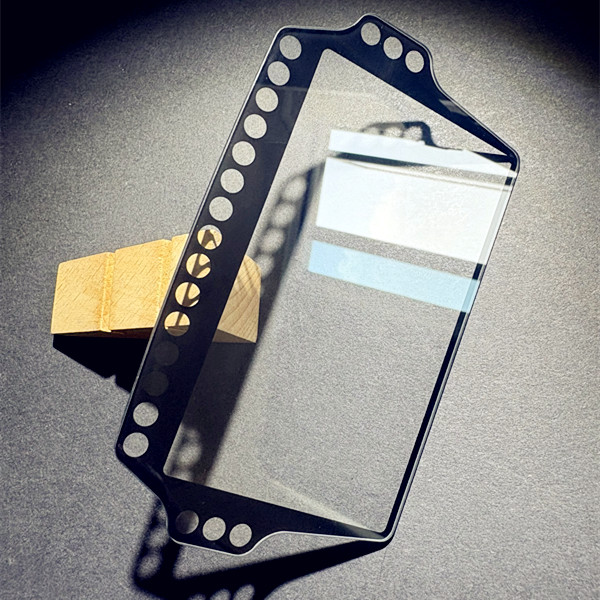
Factory Custom Tempered Silk Printed Gorilla Glass Screen Protector
For smart-home interfaces, medical displays and industrial touch panels that need a crisp printed border, high scratch resistance and clean optical transmission.
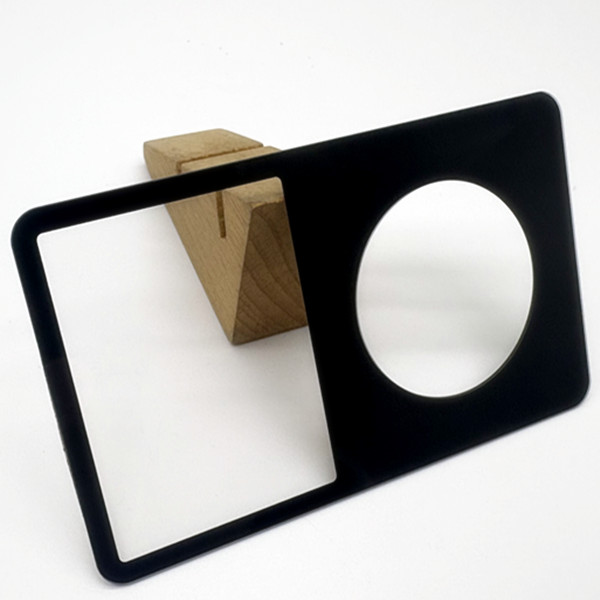
Factory Custom Smart Silkscreen Gorilla Glass Panel
A strong fit for appliance control panels and smart switches where registration accuracy, IR windows and multi-colour silk printing affect final product yield.
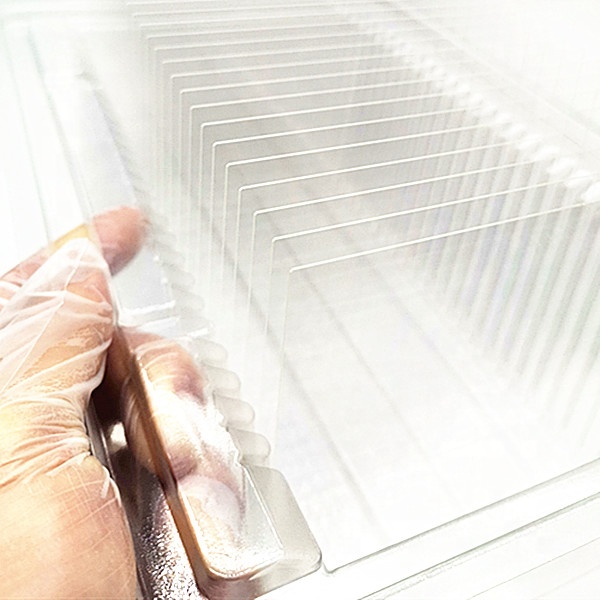
Custom Chemically Ultra-Thin Clear Transparent Tempered Glass Sheet
Ion-exchange strengthening for 0.15–2 mm designs where weight, impact resistance and optical clarity matter for sensors, wearables and medical devices.

0.5–3 mm Tempered Printed Gorilla Glass — OEM Wholesale
A practical option for buyers consolidating several display models into one supplier relationship while keeping thickness, print and packing specifications separate.
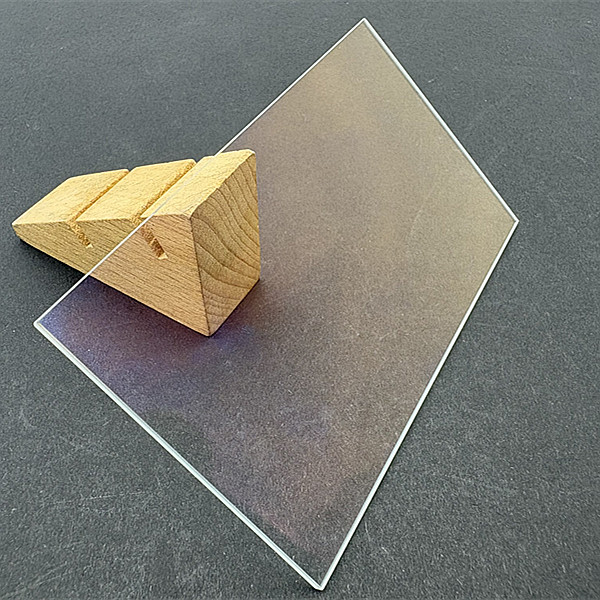
Customized Tempered Anti-Reflective Glass AR Coated Tempered Glass
Single- or double-sided AR coating reduces glare and raises transmission for instruments, touch windows and outdoor displays exposed to strong ambient light.

Custom Shape High Transmittance Ultra Clear Tempered Glass Panel
Low-iron ultra-clear substrate with AR coating on two sides, shaped by CNC to suit optical windows, high-brightness displays and premium front panels.
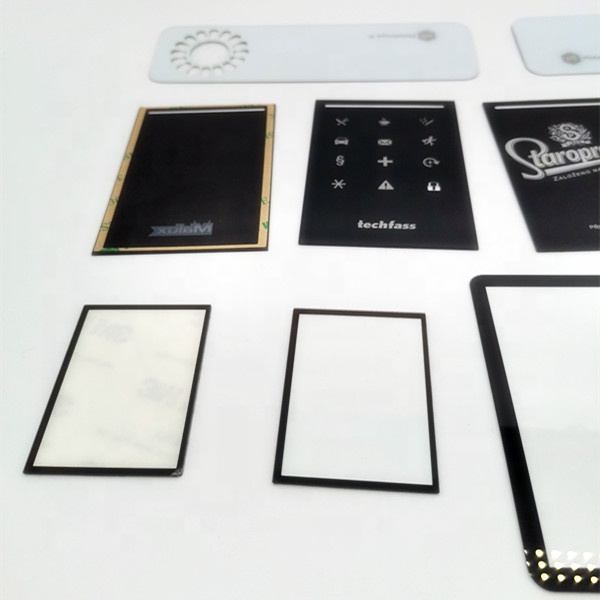
Custom Corning Gorilla Tempered Glass Silk Screen Printing for Touch Screen
For touch interfaces that combine scratch resistance, dimensional consistency and printed light-blocking or decorative areas on the same glass part.
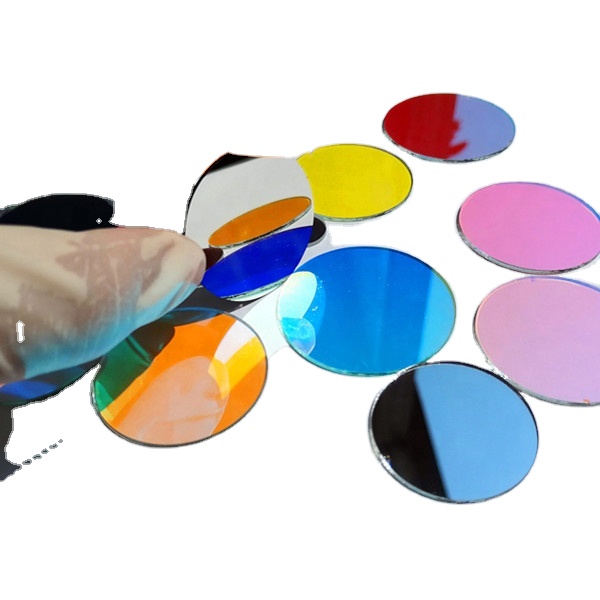
0.3 mm ~ 2 mm Dichroic Glass Mirror for Gobos
Heat-resistant borosilicate-based dichroic glass for stage lighting, gobo patterns and colour effects where coating durability and thermal shock resistance are critical.
What “China Top Optical Glass Substrate Manufacturer & Exporters” Really Means for OEM Buyers
The supplier landscape has moved beyond raw sheet cutting. Serious buyers now compare material traceability, coating stability, print registration, strengthening control and export packing as one integrated capability. China’s leading optical glass substrate exporters compete on process depth — not only on unit price.
The procurement question is no longer “Who can cut glass to size?” It is “Who can guarantee the same optical, mechanical and cosmetic result across sampling, pilot production and repeat mass-production orders?” That shift favours suppliers who can connect material selection with downstream processes: CNC shaping, edge grinding, thermal tempering or chemical strengthening, anti-reflective coating, silk-screen printing, dimensional inspection and fragile-goods packing. A low quotation that ignores first-article inspection, coating yield or breakage in transit is rarely the lowest total cost.
For display, lighting, biotech and semiconductor applications, the most valuable information gain comes from comparing critical-to-quality attributes before the RFQ is issued. Instead of sending only a size, experienced buyers define the substrate grade, tolerance class, edge profile, print colour reference, coating side, transmission target, surface-defect acceptance level and annual volume. This gives the manufacturer enough context to recommend the right glass rather than simply quoting the drawing.
Information gain: the six-document RFQ pack
- 2D drawing in DWG, DXF or PDF with outline, hole, notch and tolerance data.
- Material grade, thickness range and whether thermal or chemical strengthening is preferred.
- Optical requirement: transmission, haze, flatness, colour neutrality and AR side(s).
- Print specification: Pantone reference, window area, ink opacity and cosmetic limits.
- Application, annual quantity, sample quantity and target mass-production date.
- Inspection method and packing validation requirement for international shipping.
Supplier RFQ Scorecard
Use a weighted scorecard rather than a single price comparison. The percentages below show how experienced buyers often allocate importance during qualification.
Optical Glass Substrate Selection Guide: Material, Thickness and Application Fit
Material choice drives thermal shock resistance, optical transmission, strengthening method and total cost. Use this table for preliminary selection, then confirm final specifications against the manufacturer datasheet and your drawing.
| Substrate | Typical thickness | Thermal / optical profile | Best-fit applications |
|---|---|---|---|
| Ultra-clear soda-lime | 0.5–4 mm | High clarity, economical, suitable for thermal tempering at thicker gauges | Display cover glass, AR panels, printed control windows, appliance fronts |
| Gorilla® alkali-aluminosilicate | 0.4–2 mm | High scratch resistance, good optical quality, chemically strengthenable | Touch screens, smart-home panels, industrial HMI, printed cover glass |
| Borosilicate 3.3 | 0.3–3.3 mm | Low CTE around 3.3 × 10⁻⁶/K, strong thermal-shock resistance | Lighting covers, gobo blanks, heat-resistant windows, laboratory and instrument glass |
| Corning® Eagle XG | 0.5–1.1 mm | Alkali-free boro-aluminosilicate with flat fusion-formed surface and low expansion | Biochips, analyzer filters, PLC substrates, micro-optics and wafer carriers |
| Dichroic coated glass | 0.3–2 mm | Interference coating for colour separation, reflection and stage-lighting effects | Gobos, LED lighting, architectural lighting, colour filters and optical mirrors |
For matched performance, request a first-article inspection report covering dimensions, thickness, edge quality, print colour, coating side, transmittance or visual appearance before mass production.
Optical Glass Substrate Procurement Trends Buyers Should Plan For
Purchasing teams are redesigning supplier qualification around risk, traceability and total landed cost. The trends below are especially relevant for OEMs buying printed cover glass, AR-coated windows, borosilicate parts and Eagle XG substrates.
Dual-source qualification, single drawing control
Buyers qualify a second supplier for resilience but keep one controlled drawing and inspection standard. This reduces the hidden variation that appears when two factories interpret tolerances or print colours differently.
CTQ-based RFQs replace loose specifications
Instead of accepting “good transparency” or “strong glass”, procurement teams define measurable critical-to-quality attributes: transmission, haze, flatness, edge chips, print registration and coating adhesion.
Lot traceability and material certificates
Material grade, coating run and strengthening batch are becoming routine RFQ requirements. Traceability supports faster root-cause analysis when an optical or cosmetic defect appears during assembly.
Total landed cost replaces unit price
Breakage, rework, delayed samples and inconsistent print colour can erase a low quotation quickly. Buyers increasingly compare landed cost including packaging validation, inspection reports and replacement risk.
Buffer stock for thin and coated glass
Longer coating and strengthening cycles make buffer planning important for launch deadlines. A supplier that can hold approved stock, pack safely and repeat the same process is often more valuable than the lowest quote.
Documentation-driven supplier risk review
Supplier assessment, trade history, credit profile, transaction level and video verification are now used together. The goal is to confirm operational reality before committing tooling, samples or forecast volume.
How Optical Glass Substrates Are Evolving for the Next Design Cycle
Product roadmaps are pushing glass thinner, flatter, more functional and more integrated. The strongest suppliers will be those that can combine material science with coating, printing and precision processing under one quality system.
Thinner chemically strengthened cover glass
Devices are moving toward 0.15–1.1 mm glass to reduce weight and stack height. Ion-exchange strengthening allows thin glass to survive handling while preserving optical clarity.
AR coating integrated with printing
Displays increasingly need anti-reflection, printed borders and IR windows on the same part. Integrated processing reduces handling, but requires tight control of coating compatibility and print alignment.
Larger, flatter Eagle XG and borosilicate parts
Biochips, PLC devices and analytical instruments require flatter substrates and stable dimensions. Fusion-formed Eagle XG and low-expansion borosilicate 3.3 remain strong development platforms.
Low-iron ultra-clear optical windows
High-transmission, low-green-tint glass is increasingly specified for high-brightness displays, camera windows, lighting covers and optical instruments where colour neutrality matters.
Dichroic and gobo glass for advanced lighting
Stage, architectural and projection lighting require heat resistance plus precise colour effects. Dichroic coatings on borosilicate substrates continue to replace older filter approaches.
Metrology-led quality and repeatability
Visual inspection alone is no longer sufficient. Dimensional measurement, flatness checks and documented optical inspection help buyers compare suppliers on repeatability rather than sample appearance.
Why Fevry Glass Is Shortlisted by Global OEM Buyers
Fevry Glass Co., Ltd. is a specialty glass supplier based in Xinyu, Jiangxi, China. The company serves optical, biological, semiconductor, communications, lighting and electronics customers with custom tempered, AR-coated, printed, borosilicate 3.3 and Corning Eagle XG glass processed to drawing.
Material depth, process control and export discipline
Raw glass is sourced from Corning, AGC and other multinational producers, and the company also works with established Chinese optical-glass makers such as Chengdu Guangming and Xinhuguang. That combination supports traceable material selection across Eagle XG, borosilicate, Gorilla® and ultra-clear glass projects.
Processing relies on laser, ultrasonic, CNC carving, grinding and inspection equipment imported from the USA, Germany and Japan. The team supports thermal tempering for thicker panels, chemical strengthening for 0.15–2 mm thin glass, AR and dichroic coatings, silk-screen printing, back painting and final dimensional and visual inspection.
For international buyers, the advantage is not a single machine or a single product. It is the ability to coordinate material, drawing review, sampling, strengthening, coating, printing, packing and export documentation with one accountable contact. The company’s guiding principle — “Quality is superior, service is supreme, reputation is first” — and its motto “Your success, our glory” reflect that operating approach.
Verification signals buyers can review
- 10+ years as an Alibaba.com member with a visible supplier profile.
- Average response time ≤4 hours and a 100% inquiry response rate.
- 5.0/5 buyer rating signal and public transaction-level information.
- Supplier Assessment, Credit Profile, Trade Capacity and Trade History pages.
- Video introduction and real production or sample videos for many listed products.
- Export experience across Western Europe, the United States, Japan, South Korea, Taiwan, Hong Kong and Southeast Asia.



Custom outlines, holes, notches, slots and edge profiles for flat display windows, shaped optical parts and printed cover glass.
Thermal tempering for thicker panels; ion-exchange strengthening for ultra-thin glass where flatness and optical clarity must be retained.
Anti-reflective coating on one or both sides, plus dichroic and filter coatings for lighting, imaging and instrument applications.
Pantone-matched borders, logos, icon windows and light-blocking areas with registration controls suited to repeat production.
Checks for size, thickness, flatness, edge quality, print appearance and visible defects before final packing.
Interleaved and cushioned packing for fragile thin glass, with export support for buyers placing repeat OEM orders.
Optical Glass Substrate Procurement FAQ
These are the questions engineers and sourcing managers ask most often before sampling, qualification and mass production.
What is the minimum order quantity for custom optical glass substrates?
Most custom cover glass and AR glass items start from 300–500 pieces. Custom-cut Eagle XG parts commonly start from 1,000 pieces, and selected gobo or dichroic glass blanks may start from lower trial quantities. Samples can be discussed to validate fit and optical performance before mass production.
Should I choose chemically strengthened or thermally tempered glass?
Thermal tempering is usually preferred for glass around 3 mm and thicker. For ultra-thin cover glass from 0.15 mm to about 2 mm, chemical strengthening by ion exchange improves surface strength while keeping the sheet flat and optically clean. Cutting, drilling and edge grinding must be completed before strengthening.
What drawing information is required for an accurate quotation?
Send a 2D drawing in DWG, DXF or PDF with outline dimensions, tolerances, hole and notch positions, thickness, material grade, edge finish, strengthening method, print colours, AR coating side, application and annual quantity. Complete information lets the factory recommend the correct substrate and inspection method in one review cycle.
Can you supply AR-coated glass with silk-screen printing?
Yes. AR-coated and printed cover glass can be combined, but coating side, print sequence and ink compatibility must be defined during engineering review. This is common for display windows, smart-home panels and instrument covers that need reduced glare plus a decorative or light-blocking border.
How do you control optical quality and cosmetic appearance?
Quality control should combine dimensional measurement, edge inspection, print registration checks and optical appearance checks against an approved sample or drawing. For AR glass, transmission or reflection targets and coating appearance should be agreed before production. Buyers should request first-article inspection documentation for new parts.
When is borosilicate 3.3 better than soda-lime glass?
Borosilicate 3.3 has a thermal expansion coefficient of about 3.3 × 10⁻⁶/K, roughly one third that of soda-lime glass, so it resists thermal shock far better. Choose it for lighting covers, heat-resistant windows, gobo blanks, laboratory glass and instrument windows where temperature changes or chemical exposure are expected.
Why is Corning Eagle XG used for biochips, wafers and PLC substrates?
Eagle XG is an alkali-free boro-aluminosilicate glass with low thermal expansion and a fusion-formed surface that offers excellent flatness and dimensional stability. That makes it suitable for micro-patterning, bonding, biological analyzer filters and precision optical alignment.
How is fragile thin glass packed for export?
Thin and coated glass requires interleaved separation, cushioned edges and rigid outer protection. The packing method should match the part size, thickness, coating side and transport mode. For repeat orders, a packing validation sample can be reviewed before shipment.
Which export markets are served?
Fevry Glass serves customers in China and exports to Western Europe, the United States, Japan, South Korea, Taiwan, Hong Kong and Southeast Asia. Export packing and documentation are arranged for fragile technical glass orders.
Send Your Drawing. Get a Manufacturable Optical Glass Substrate Recommendation.
Share your substrate grade, thickness, tolerances, print colours, AR coating side, application and annual volume. Our engineers typically respond within four hours with a practical material and process route for your project.