Eight Buyer-Ready Glass Sheet Products for Displays, Electronics, Lighting and Optics
The eight products below are not catalog sheets alone; they are process platforms. Each can be quoted to a 2D drawing with material, thickness, edge finish, strengthening, coating side, print colour and packing requirements. Product URLs are retained so buyers can review specifications directly.
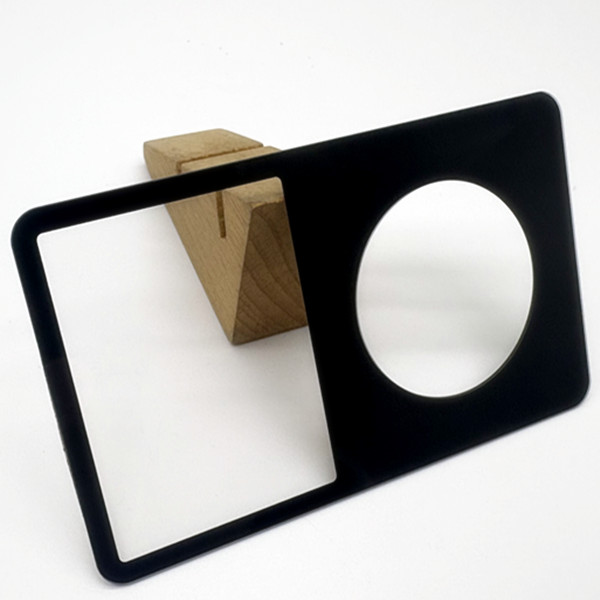
Factory Custom Smart Silkscreen Gorilla Glass Panel Tempered Glass Printing Glass
A smart silkscreen-printed Gorilla-type glass panel for HMI, appliance and industrial control windows. The specification should control print opacity, window edge sharpness, surface flatness and the order of strengthening versus printing.
View product details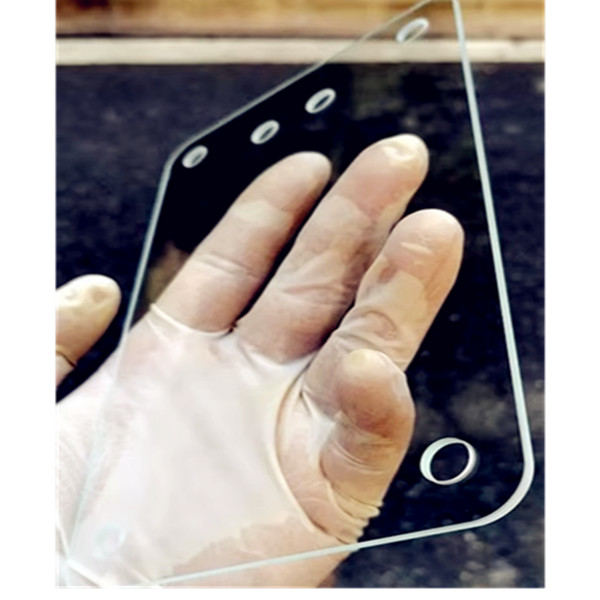
Custom Cut 0.5mm 0.7mm 1mm 1.5mm 2mm Clear Toughened Glass Tempered Corning Gorilla Glass
Clear toughened Corning Gorilla glass cut to drawing in 0.5, 0.7, 1, 1.5 and 2 mm. Suitable for thin display covers where impact resistance, optical clarity and edge chip control matter.
View product details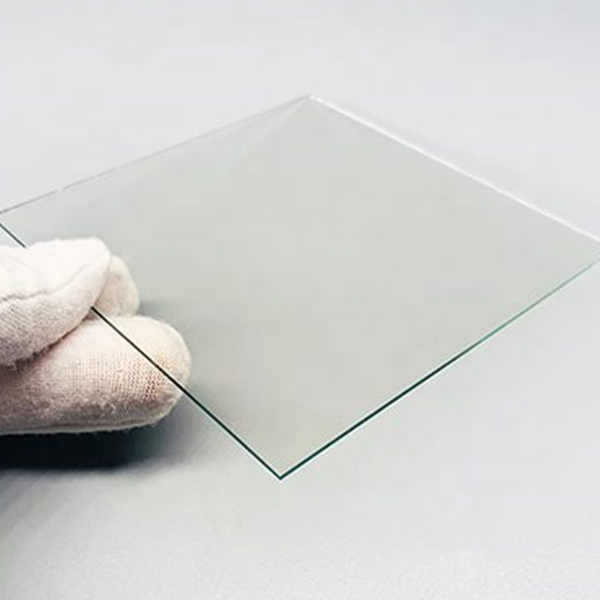
Ito Conducting Glass, Ito Coated Glass, Ito Glass
ITO-coated glass for transparent conductive paths, touch sensing, shielding and instrument windows. Buyers should specify sheet resistance, coating pattern, busbar design and whether single- or double-sided coating is required.
View product details
Factory Customization Dichroic Glass Gobo Glass
Factory-custom dichroic and gobo glass for entertainment, stage and architectural lighting. Colour shift, pattern position, heat load and blank thickness must be agreed before production.
View product details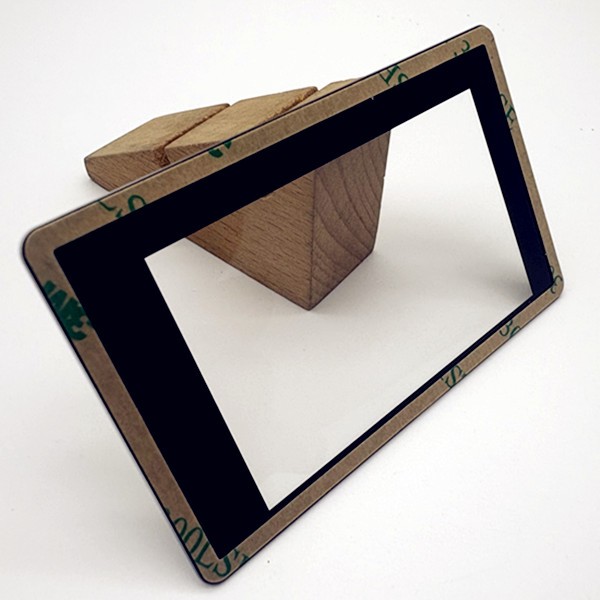
Custom Tempered Glass Dashboard Trim Panel Flat Electronic Glass Screen Protector
A flat tempered glass dashboard trim panel and electronic screen protector for automotive or industrial displays. Print borders, touch windows and surface treatment can be engineered when the drawing is complete.
View product details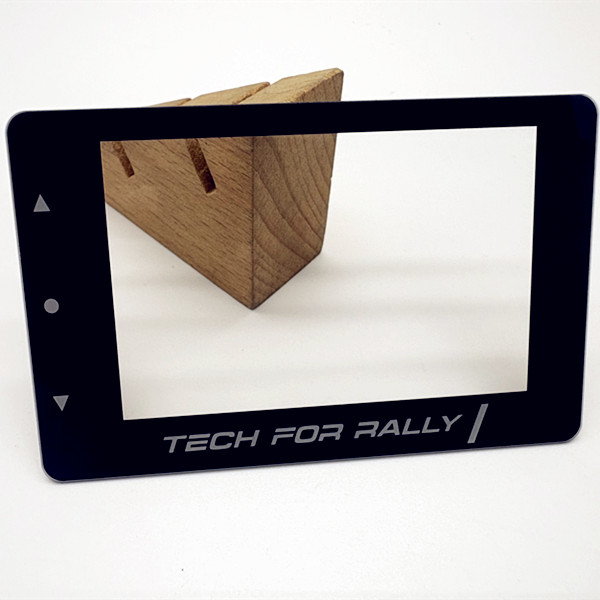
Customize Tempered Glass Silk Printed Ar Coating Gorila Glass LCD Screen protection Display
Silk-printed AR-coated Gorilla-type glass for LCD protection and display windows. The anti-reflective coating improves readability under strong light while printed borders hide circuitry.
View product details
Back Painted Tempered Glass Led Glass Panel Cover Glass
Back-painted tempered glass for LED panel covers and lighting fixtures. The coating colour, hiding power, edge appearance and light transmission targets should be defined together.
View product details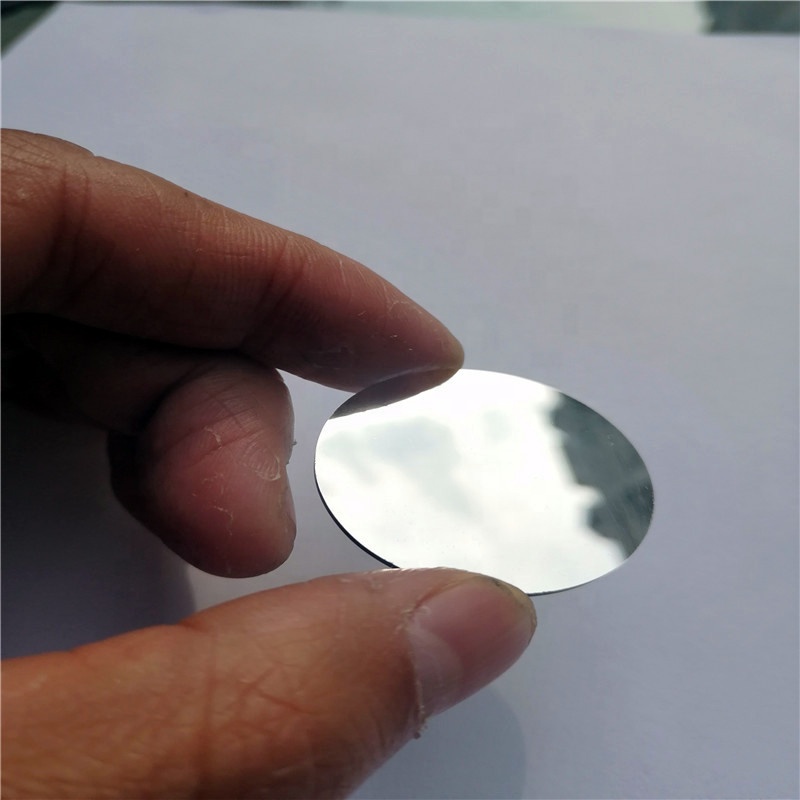
Gobo Glass/dichroic Mirror Lighting Filters Glass Lens
Gobo glass, dichroic mirror and lighting filter formats for projection and optical lighting assemblies. The coating angle and substrate heat resistance are often more important than raw sheet price.
View product detailsNeed a different sheet size, coating stack or glass source? The fastest route is to send a drawing with thickness, tolerance, print colour and annual quantity.
Get CatalogThe Definition of “Best” for China Glass Sheet Manufacturer & Exporters
Glass sheet sourcing looks simple until a drawing calls for a 0.7 mm Corning Eagle XG panel with a laser-cut notch, a Pantone-matched printed border, anti-reflective coating on one side and packing that survives a multi-leg export route.
At that point, the supplier’s real capability is not the size of its warehouse; it is the discipline behind material traceability, process control and final inspection. Fevry Glass Co., Ltd. is a specialty glass manufacturer and exporter based in Xinyu, Jiangxi, China. Our work spans optical, biological, semiconductor, communication, lighting and electronics applications.
Raw glass is sourced from Corning, AGC and established Chinese optical glass makers such as Chengdu Guangming and Xinhuguang. Processing relies on laser, ultrasonic, CNC carving, grinding and inspection equipment imported from the USA, Germany and Japan. That combination lets us start from a known substrate and finish it as an export-ready component rather than simply trading a generic sheet.
For buyers, the word “best” should be treated as a risk statement. The lowest quotation may exclude edge grinding, coating adhesion checks, print alignment fixtures, interleaved packing or a first-article report. A more useful comparison is total landed cost of a qualified part: material, machining, strengthening, coating, printing, inspection, packaging and the probability of a claim. The best China glass sheet manufacturer and exporters are the ones that make those variables visible before the purchase order is issued.

Which Glass Sheet Product Fits Your Application?
Use this selection matrix to narrow the RFQ before price comparison. The right substrate, strengthening method and coating stack usually matter more than a few cents per piece.
Displays, HMI and smart-home windows
Start with silk-printed Gorilla-type glass or AR-coated LCD cover glass when the visible window needs a crisp border and low reflection. For ultra-thin covers, review custom-cut 0.5–2 mm Gorilla glass.
Automotive and appliance control panels
Flat tempered dashboard trim panels and electronic screen protectors suit interiors, appliances and industrial control surfaces. Confirm print hiding power, touch-window clarity and edge finish early.
Stage, studio and architectural lighting
Gobo glass, dichroic filters and lighting lenses should be specified by heat load, colour target and coating angle. A low-cost blank can become an expensive failure if the coating shifts under high-power lighting.
Biotech, semiconductor and optical communication
For biochips, analyzer filters, wafers and PLC substrates, material stability matters. Borosilicate 3.3 and Corning Eagle XG are selected for low thermal expansion, flatness and dimensional stability.
Touch sensing, shielding and conductive windows
ITO conducting glass is a material system, not a generic add-on. Sheet resistance, etched pattern resolution, busbar layout and coating durability must be reviewed together with the enclosure design.
LED fixtures and finished lighting covers
Back-painted tempered LED glass panels give lighting fixtures a finished, premium surface. Define the colour layer, edge appearance and light transmission target before sampling.
Glass Sheet Procurement Trends: What Overseas Buyers Are Changing Now
Price discovery is no longer the main bottleneck. The harder work is qualifying a supplier whose process can reproduce the same coated, printed and strengthened sheet across repeat orders.
Drawing-led RFQs replace catalog buying
Buyers increasingly send DWG, DXF or PDF drawings with tolerance, print colour and annual volume. They expect manufacturability feedback before a quotation, especially when glass must be cut, strengthened, coated and printed in one flow.
Risk-balanced sourcing, not blind China+1
Dual sourcing is growing, but it is not simply moving every SKU. Complex printed, AR-coated or heat-resistant glass often stays with a technical converter while simpler clear sheets are qualified with a second regional supplier.
Traceability evidence becomes part of the quote
Procurement teams now ask for material batch identity, coating side, print colour references, dimensional inspection results and packing photos. Claims are easier to resolve when the process record travels with the shipment.
Total landed cost and lead-time reliability
A cheap sheet that arrives chipped, misprinted or with coating defects is not cheap. Buyers are weighting sample validation, first-article approval, packing quality and response speed alongside the piece price.
What buyers ask us to prove before release
Illustrative priority index from custom glass project reviews and RFQ discussions, not a third-party market survey.
The practical implication is simple: compare quotations only after material, thickness, strengthening, coating side, print colour and packing are identical. Otherwise the buyer is comparing different levels of risk.
Where Technical Glass Sheet Performance Is Heading
Demand is moving toward thinner, stronger and more functional glass surfaces. The winning specification is usually the one that balances optical performance, mechanical durability, decoration and a stable supply chain.
Thinner but stronger glass
Chemical strengthening continues to expand in 0.15–2 mm cover glass. Buyers want flatness and edge quality that survive downstream bonding, printing and automatic assembly, not just a headline impact number.
Optical functionality becomes standard
Anti-reflective coating, low reflection, anti-glare texture and easy-clean surfaces are moving into mainstream display windows. The key question is not whether AR can be applied, but whether it is applied to the correct side for the optical stack.
Material-specific engineering
Borosilicate 3.3, Corning Eagle XG, ITO-coated glass and dichroic filters are specified by application, not by generic “tempered glass” labels. Thermal expansion, coating compatibility and flatness drive the material decision.
Decoration integrated with function
Silk printing and back painting are no longer cosmetic afterthoughts. Black borders, icon windows, IR-transparent areas and seamless LED covers all require ink selection, alignment and process sequence control.
Why Fevry Glass Is Shortlisted by International OEMs
Fevry is not organized as a general trading company. The work is built around technical glass: displays, optics, lighting, biotech and semiconductor components.

Our engineers review the drawing, the application, the annual quantity and the failure risk before proposing a material. If a customer requests soda-lime glass for a heat-shock application, we say so. If a 0.2 mm sheet is to be strengthened after printing, we review the sequence because the glass cannot be re-cut after ion exchange.
Material choice is not neutral. Borosilicate 3.3 has a coefficient of thermal expansion around 3.3 × 10⁻⁶/K, roughly one-third that of soda-lime, so it tolerates thermal shock better. Corning Eagle XG is alkali-free with a fusion-formed surface and low expansion, making it suitable for biochips, wafers and PLC substrates. AR coating can raise transmission and reduce glare, but it must be specified by side and application. Silk print can hide circuits and create a premium border, yet the ink must survive strengthening and downstream cleaning.
Export experience matters as much as processing skill. We serve buyers in China and ship regularly to Western Europe, the United States, Japan, South Korea, Taiwan, Hong Kong and Southeast Asia. Thin glass requires interleaved protection, edge protection, moisture control and cartons that are engineered for the route, not just the warehouse.
Specialty focus
Our product and process knowledge is concentrated on technical glass for displays, optics, lighting, biotech and semiconductor applications.
Traceable material sources
Raw glass is sourced from Corning, AGC and established Chinese optical glass makers, with material identity reviewed before quotation.
One accountable process
Cutting, edge grinding, strengthening, coating, printing, inspection and packing are coordinated as one controlled flow.
Inspection discipline
Dimensional, optical and visual checks are defined against the drawing before mass production and export packing.
Export-market experience
Regular shipments to Western Europe, the USA, Japan, South Korea, Taiwan, Hong Kong and Southeast Asia.
Fast inquiry response
Average response time of four hours or less, with a 100% inquiry response rate and 5.0/5 buyer rating on record.
From Raw Sheet to Finished Glass Part: A Controlled Conversion Flow
A single source for cutting, strengthening, coating and printing reduces hand-offs, keeps tolerance decisions in one place and makes quality responsibility easier to trace.
Laser, CNC and ultrasonic machining
Custom outlines, holes, notches and slots; flat, pencil and chamfered edges engineered to the drawing.
Thermal and chemical strengthening
Thermal tempering for thicker panels; ion-exchange strengthening for 0.15–2 mm thin glass and display covers.
AR, dichroic and optical coatings
Anti-reflective coating on one or both sides, dichroic mirror coatings and optical filter layers for lighting and optics.
Silk-screen printing and back painting
Pantone-matched borders, logos, icon windows, IR-transparent ink areas and back-painted LED cover panels.
Dimensional and optical inspection
Size, thickness, flatness and visual defect checks before packing, with records aligned to the approved drawing.
Export packaging for thin glass
Interleaved protection, edge cushioning, moisture control and cartons designed for fragile technical glass.
| Material | Typical thickness | CTE (×10−6/K) | Best suited to |
|---|---|---|---|
| Ultra-clear soda-lime | 0.5–4 mm | ≈9.0 | Cover glass, AR panels, printed windows |
| Gorilla-type alkali-aluminosilicate | 0.4–2 mm | ≈7.5–8.5 | Scratch-resistant touch and display covers |
| Borosilicate 3.3 | 0.3–3.3 mm | 3.3 | Heat-resistant windows, gobo, laboratory glass |
| Corning Eagle XG | 0.5–1.1 mm | ≈3.2 | Biochips, wafers, PLC and micro-optics |
| Chemically strengthened thin glass | 0.15–2 mm | Base-glass dependent | Ultra-thin protectors, sensor covers |
Values are typical industry figures for preliminary selection. Final specifications must be confirmed against the manufacturer datasheet, coating stack and your approved drawing.
A Clear Five-Step Path from Drawing to Delivery
Designed for procurement teams that need predictable communication, sample control and export-ready packing.
Share your drawing
Send DWG, DXF or PDF with dimensions, tolerances, material, thickness, coating and print details.
Engineering review
We confirm manufacturability and recommend substrate, edge finish, strengthening and process sequence.
Sample approval
Samples validate fit, print colour, window clarity and optical performance before tooling or mass production.
Mass production
Processing with in-line dimensional, visual and optical checks against the approved sample.
Export packing
Interleaved, cushioned packing for safe international shipping and easier incoming inspection.
Glass Sheet Purchasing Questions Engineers Ask Most
Straight answers help shorten the RFQ cycle. If your application is not covered here, send the drawing and end-use condition for a project-specific review.
Should I choose chemically strengthened or thermally tempered glass?
Thermal tempering is best for glass around 3 mm and thicker. For ultra-thin cover glass from 0.15 mm to about 2 mm, chemical strengthening by ion exchange raises surface strength while keeping the sheet flat and optically clean. In both cases, cutting, drilling and edge grinding must be completed before strengthening because the glass cannot be re-cut afterwards.
When is borosilicate 3.3 better than soda-lime glass?
Borosilicate 3.3 expands only about 3.3 × 10⁻⁶/K, roughly one third of soda-lime glass, so it tolerates rapid temperature changes far better. It is the preferred choice for lighting covers, heat-resistant windows, gobo blanks, laboratory glass and instrument glass where thermal shock or chemical exposure is expected.
Why is Corning Eagle XG used for biochips, wafers and PLC substrates?
Eagle XG is an alkali-free boro-aluminosilicate glass with low thermal expansion and a fusion-formed surface. That combination delivers excellent flatness and dimensional stability, which suits micro-patterning, bonding and precise optical alignment in biochips, analyzers and PLC devices.
What is the minimum order quantity?
Most custom cover glass and AR glass items start from 300–500 pieces, custom-cut Eagle XG parts from 1,000 pieces, and selected gobo glass blanks from 10 pieces. Samples can be arranged to validate fit, print and optical performance before mass production.
What information do you need to evaluate a custom glass project?
Please send a 2D drawing in DWG, DXF or PDF with outline dimensions and tolerances, thickness, glass material, edge finish, hole and notch positions, strengthening method, print colours with Pantone references, AR coating side or sides, application and annual quantity. Complete information lets our engineers respond with a firm recommendation in one round.
Which markets does Fevry Glass export to?
Besides domestic customers in China, we regularly ship to Western Europe, the United States, Japan, South Korea, Taiwan, Hong Kong and Southeast Asia. Export packing is designed for fragile thin glass and coated surfaces.
Can one part combine tempered or strengthened glass, AR coating and silk printing?
Yes, but the process sequence must be designed correctly. Cutting and edge finishing happen before strengthening; coating and printing may occur before or after strengthening depending on the ink, coating and glass type. Because the glass cannot be re-cut after strengthening, the sample and first-article approval stage is critical.
How do you reduce breakage and defects during export packing?
Thin glass is packed with interleaving material, edge protection, moisture control and reinforced cartons or pallets. Coated and printed surfaces receive additional protection. Packing photos and carton identification help the buyer inspect the shipment quickly on arrival.
Have a Drawing? Let’s Engineer Your Glass Sheet.
Email a DWG, DXF or PDF with dimensions, material, thickness, coating, print colour and annual quantity. Our engineers typically reply within four hours with the next technical question or a quotation path.