High-Demand Precision Glass Plates for Export Buyers
Our quartz glass plate programs are supported by the same drawing-first engineering and export documentation used for the eight recommended products below. Each item can be customised by size, thickness, edge finish, coating and printing.
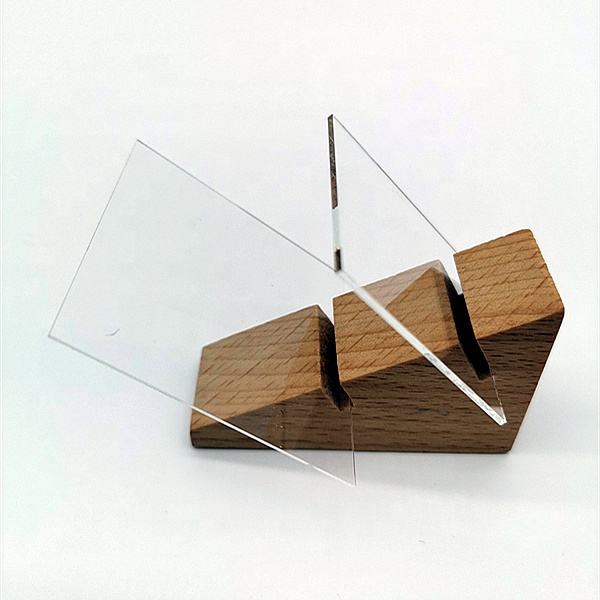
Custom Cut 0.5mm 0.7mm 1mm 1.5mm 2mm 2.5mm 3mm Corning Gorilla Temper Glass
Multi-thickness Gorilla-type glass for touch panels, instruments and protective windows; cut, edged and strengthened to drawing.
View details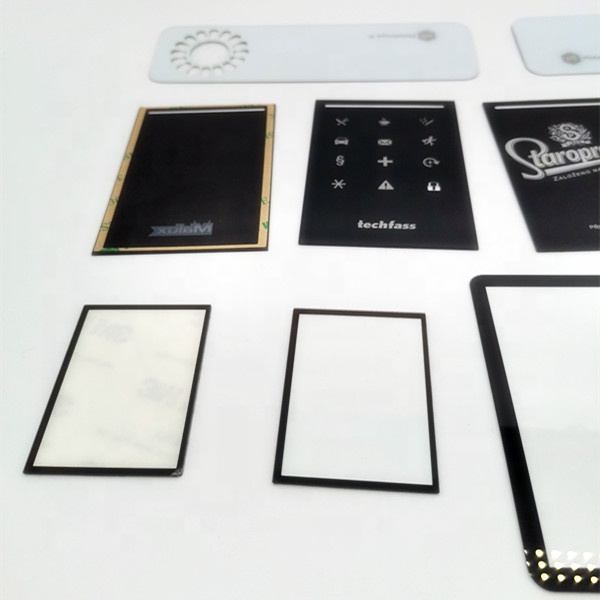
Custom Corning Gorilla Tempered Glass Silk Screen Printing for Touch Screen
Pantone-matched printed borders, icons and IR windows on strengthened glass for HMI and touch-screen assemblies.
View details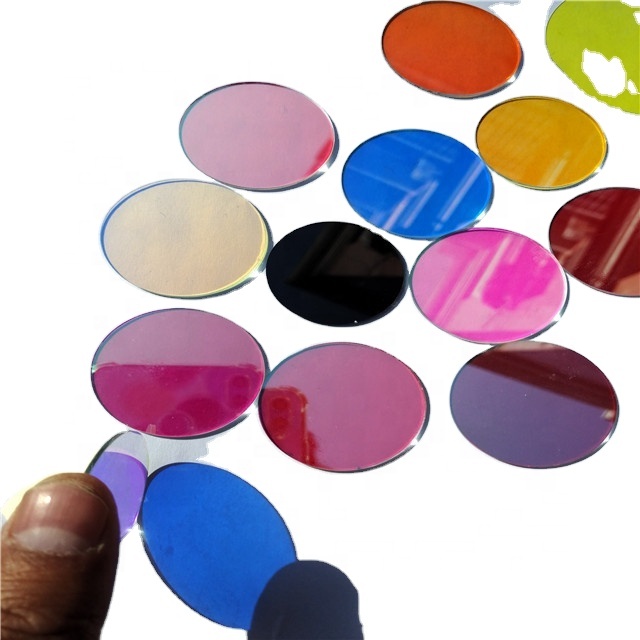
Heat Resistant Borosilicate 3.3 Dichroic Glass Filter
Dichroic filter plates for stage lighting, colour separation and optical instruments; stable under repeated thermal cycling.
View details
1.5mm 2mm Tempered Glass Thickness Touch Switch Glass Plate
High-strength tempered glass plates for elevator, appliance and industrial control panels with custom print and edge finish.
View details
0.3mm ~ 2mm Dichroic Glass Mirror for Gobos
Custom-coated dichroic mirrors for gobos, architectural lighting and projection effects; cut and edged to drawing.
View details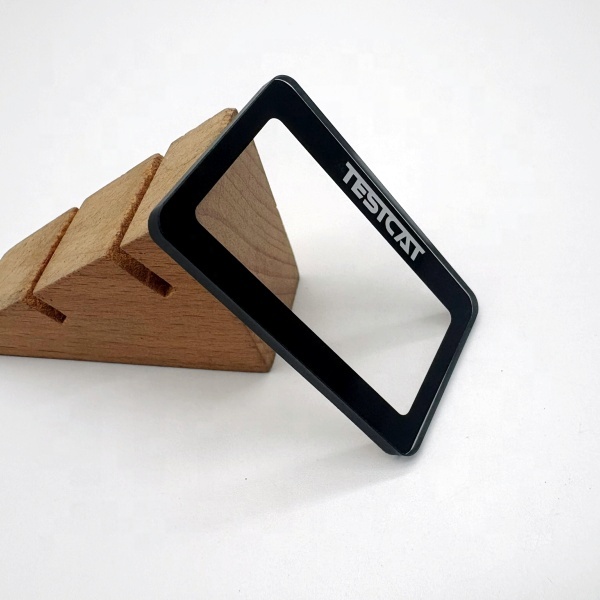
Custom Gorilla Glass Panel Tempered Glass Display Window Silk Screen Printing for LCD Display
Printed display windows for LCD protection, smart-home controls and instrument clusters with optical-grade clarity.
View details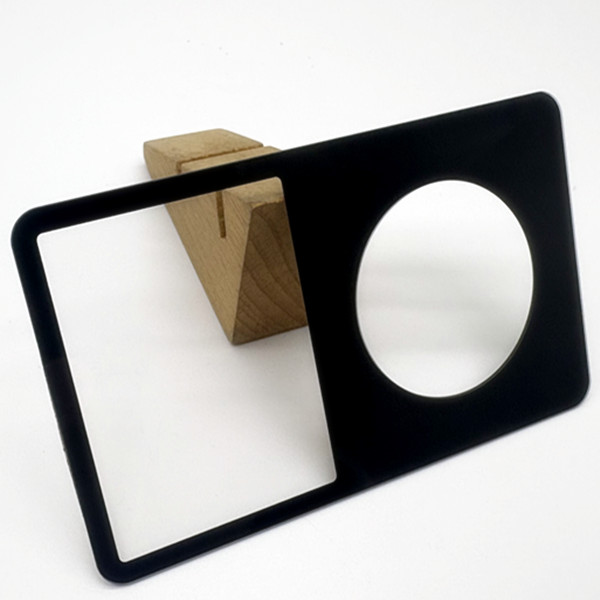
Factory Custom Smart Silkscreen Gorilla Glass Panel Tempered Glass Printing Glass
Integrated printed glass panels for smart controls, appliance interfaces and touch modules with custom colour matching.
View details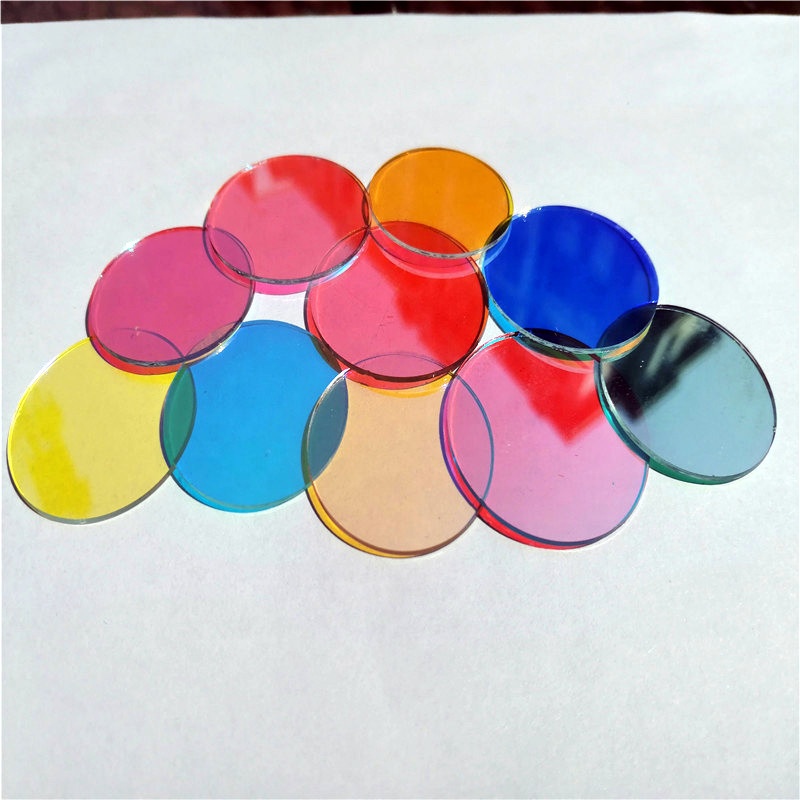
Customize logo Color Glass Gobo Glass
Heat-resistant gobo glass with custom logo, colour and coating options for stage, studio and entertainment lighting.
View detailsWhy CE-Certified Quartz Glass Plate Supply Matters
For technical buyers, the real sourcing question is not simply “Who can cut quartz glass?” but “Who can deliver a traceable, documented plate that supports our CE-marked equipment and quality system?”
CE is a system, not a sticker
Quartz glass plate is rarely a commodity purchase. In semiconductor metrology, high-temperature viewing windows, laser optics, analytical instruments and stage-lighting systems, the plate is a functional component: OH content, transmission curve, thermal expansion, flatness and edge quality can determine whether the end equipment passes qualification.
CE marking is application-dependent. A raw quartz plate may not carry a CE mark on its own, but the equipment in which it is installed often must comply with the Machinery Directive, Low Voltage Directive, EMC, RoHS or other applicable regulations. The supplier’s role is to provide evidence: material certificates, lot traceability, dimensional reports, transmission curves, flatness data, surface-quality inspection, edge-chip criteria, packaging validation and, where applicable, declaration-of-conformity support.
The strongest information gain is not a certificate scan; it is repeatable material data and a supplier who can answer engineering questions within hours.
What technical buyers should verify
Insist on a drawing-first review before price negotiation. This checklist helps your quality and procurement teams compare suppliers on facts rather than claims:
- 2D drawing in DWG, DXF or PDF with outline, holes, notches and tolerance stack
- Material grade and thickness, including fused quartz, fused silica, borosilicate 3.3 or strengthened glass
- Edge finish, chamfer and chip criteria for strength and handling safety
- Coating sides, print colours and IR windows with Pantone or optical targets
- Application environment such as temperature, cleaning agents and chemical exposure
- Annual volume and target compliance documents including RoHS, REACH and CE support
Compare Quartz, Borosilicate and Strengthened Glass Plates
Use this table for preliminary selection. Final specifications must be confirmed against the manufacturer datasheet and your drawing.
| Material | Typical Thickness | CTE (×10⁻⁶/K) | Thermal Limit | Best For |
|---|---|---|---|---|
| Fused quartz / fused silica plate | 0.2 – 10 mm | ≈ 0.5 | High-temperature and UV–IR optical use | Semiconductor, laser optics, high-temperature windows |
| Borosilicate 3.3 | 0.3 – 3.3 mm | 3.3 | Excellent thermal-shock resistance | Lighting covers, gobo blanks, lab and instrument glass |
| Soda-lime float glass | 0.5 – 4 mm | ≈ 9.0 | Moderate | Cover glass, AR panels, printed windows |
| Gorilla / alkali-aluminosilicate | 0.4 – 2 mm | ≈ 7.5 – 8.5 | Moderate to high | Scratch-resistant touch and display covers |
| Corning Eagle XG | 0.5 – 1.1 mm | ≈ 3.2 | Controlled thermal expansion | Biochips, wafers, PLC and micro-optics |
Values are typical industry figures for preliminary selection. Final specifications are confirmed against the material datasheet and your application requirements.
For custom quartz glass plate projects, specify whether you need high UV transmission, low OH content, high thermal shock resistance or low dielectric loss. That single decision often determines whether fused quartz, borosilicate 3.3 or a strengthened cover glass is the most cost-effective route.
Procurement Trends Reshaping Quartz Glass Plate Sourcing
Export buyers are moving away from price-only purchasing. They are qualifying suppliers on documentation depth, response speed, packing reliability and engineering support.
Compliance-first sourcing
CE declaration support, RoHS/REACH declarations, material traceability and lot-specific inspection data are becoming mandatory in RFQs for European and North American equipment makers.
Dual-source and buffer inventory
Buyers qualify a second source and hold consignment or buffer stock to protect production lines from logistics disruption, material shortages and single-supplier risk.
Drawing-first digital RFQ
DXF, STEP and PDF drawings, tolerance stacks and optical targets are exchanged before price negotiation. Response speed and engineering feedback become supplier qualification metrics.
Total cost of ownership
Purchasing teams evaluate yield, breakage rate, packing cost, lead time and engineering support—not only price per piece. This is especially important for fragile thin glass.
Where Quartz Glass Plate Technology Is Heading
Material innovation is moving toward larger, thinner, flatter plates with application-specific coatings and data-rich quality reports.
Larger, thinner, flatter
Demand is rising for large-format plates and ultra-thin wafers with tight flatness and low total thickness variation for semiconductor, metrology and inspection equipment.
Coating integration
Anti-reflective, dichroic, IR-blocking and hard coats are increasingly specified at the plate level, reducing assembly steps and improving optical consistency.
Low-damage machining
Laser, ultrasonic and CNC routes reduce micro-cracks and edge chips. This improves strength, yield and cosmetically clean edges for visible and optical parts.
Data-rich quality
Each lot increasingly ships with transmission curves, flatness maps, surface-defect reports and material traceability so buyers can audit performance after delivery.
Why Global Buyers Choose Fevry Glass
Fevry Glass Co., Ltd. is based in Xinyu, Jiangxi, China. We combine traceable raw materials, imported processing equipment and a drawing-first engineering process to deliver export-ready quartz glass plates and precision glass components.
Verified export performance
A 10+ year Alibaba.com member with a 5.0/5 buyer rating, 100% inquiry response and an average response time of ≤4 hours. Regular shipments go to Western Europe, the USA, Japan, South Korea, Taiwan, Hong Kong and Southeast Asia.
Traceable raw materials
We source raw glass from Corning, AGC and established Chinese optical-glass makers such as Chengdu Guangming and Xinhuguang, so each project starts from consistent, traceable material.
Imported processing equipment
Laser, ultrasonic, CNC carving, grinding and inspection equipment imported from the USA, Germany and Japan supports tight tolerances and repeatable edge quality.
CE and export documentation support
We provide material certificates, lot traceability, dimensional inspection reports, RoHS/REACH declarations and declaration-of-conformity support for applicable products, agreed at quotation.
Engineering-first sampling
Send a drawing and application brief; our engineers review material, thickness, tolerance, coating side and print colours before quotation, then validate with samples.
Quality culture
Our guiding principle — “Quality is superior, service is supreme, reputation is first” — and our motto — “Your success, our glory” — shape every order we ship.
 Precision glass processing workshop
 Imported cutting and grinding equipment
 Optical inspection and export packing
What to Send for a CE-Ready Quartz Glass Plate Quote
Complete information reduces engineering rounds and helps us quote a manufacturable, documented part.
Send these details
- 2D drawing (DWG, DXF or PDF) with outline, holes and tolerances
- Material and thickness, including fused quartz, borosilicate 3.3 or strengthened glass
- Edge finish, chamfer and chip criteria
- Coating sides, print colours and IR windows
- Application environment: temperature, cleaning and chemical exposure
- Annual volume and target compliance documents
What you receive
- Material recommendation and manufacturability review
- Quotation with MOQ, lead time and packing proposal
- Sample plan and dimensional/optical inspection criteria
- Traceability, RoHS/REACH and CE documentation support
- Export packing designed for fragile thin glass
- Single accountable contact from RFQ to shipment
Email info@fevryglass.com or use the quote button below. Our team typically replies within four hours.
Technical Answers for Quartz Glass Plate Buyers
Straight answers to the questions engineers and sourcing managers ask us most often.
Q. Are quartz glass plates CE certified?
CE marking applies to products within the scope of specific EU directives. A raw quartz glass plate may not require CE marking by itself, but our export documentation package supports the CE conformity of the equipment in which it is installed. We provide material certificates, dimensional reports, transmission data, RoHS/REACH declarations and, where applicable, declaration-of-conformity support. Confirm the exact scope with your compliance engineer.
Q. What is the difference between fused quartz, fused silica and borosilicate 3.3?
Fused quartz and fused silica are high-purity silica glasses with low thermal expansion and broad UV-to-IR transmission; fused quartz is often used for high-temperature and optical parts. Borosilicate 3.3 contains boron oxide, has a CTE of about 3.3 × 10⁻⁶/K and is cost-effective for heat-resistant windows, lighting and lab glass. Choose the material against your temperature, transmission and chemical requirements—not only price.
Q. Can you manufacture custom quartz glass plates to my drawing?
Yes. We review DWG, DXF or PDF drawings with outline dimensions, tolerances, holes, notches, edge finish, coating side, print colours and application details. We can cut, edge, drill, strengthen, coat, print and inspect plates to drawing, then supply samples before mass production.
Q. What is the minimum order quantity (MOQ)?
Most custom cover glass and AR glass items start from 300–500 pieces; custom-cut Eagle XG parts from 1,000 pieces; and selected dichroic gobo glass from 10 pieces. Quartz plate MOQs depend on material grade, size and process route. Send your annual volume and drawing—our engineers will confirm the most economical batch size.
Q. What documents support CE compliance and traceability?
We can provide material certificates, lot traceability, dimensional inspection reports, flatness and surface-quality data, transmission curves where relevant, RoHS/REACH declarations and declaration-of-conformity support for applicable products. The document package is agreed at quotation so that your quality team knows exactly what will arrive with each lot.
Q. How do you protect edges and prevent breakage during export?
Fragile thin glass is packed with interleaving paper or foam, edge protection, moisture barrier and cushioned outer cartons or crates. We can design the pack to your drop-test or transport-validation requirements and label each box with lot, part number and handling instructions. For repeat orders, packing specifications are frozen to avoid variability.
Q. What lead times should I plan for?
Sampling typically takes 7–15 working days after drawing and material confirmation, depending on coating or printing complexity. Mass production for custom glass plates commonly runs 15–30 working days after sample approval. We confirm lead time in writing with the quotation and update it if engineering changes occur.
Q. Which markets do you export to?
Besides domestic customers in China, Fevry Glass regularly ships to Western Europe, the United States, Japan, South Korea, Taiwan, Hong Kong and Southeast Asia. Export packing and documentation are prepared for fragile precision glass and can be aligned with your freight forwarder’s requirements.
Request a CE-Ready Quartz Glass Plate Quotation
Send your drawing, material, annual volume and target compliance documents. Fevry Glass will return a manufacturability review, sample plan and export quotation—typically within four hours.